
5 Video Games From 1987 That Are So Underrated
1987 was a particularly pivotal year for the video game industry as the Nintendo Entertainment System continued to make a significant splash worldwide. The NES/Nintendo Famicom was joined by the Japanese launches of the Sega Master System and PC Engine, better known to American gamers as the TurboGrafx-16. All the while, arcades continued to be a commercial success globally, releasing new titles regularly to growing crowds. Among the iconic franchises that started in 1987 were "Street Fighter," "Final Fantasy," "Contra," and "Mega Man."
There are tons of celebrated games that were originally released in 1987, but a few under-appreciated gems as well. Whether it's games that divided fans upon their initial launch or were overshadowed by more popular releases, there are some major overlooked titles from this particular year. Fortunately, these games are still available to play in some form decades later, ready for a retrospective reappraisal. Here are five video games from 1987 that are so underrated and deserve an overdue reevaluation.
Sid Meier's Pirates!
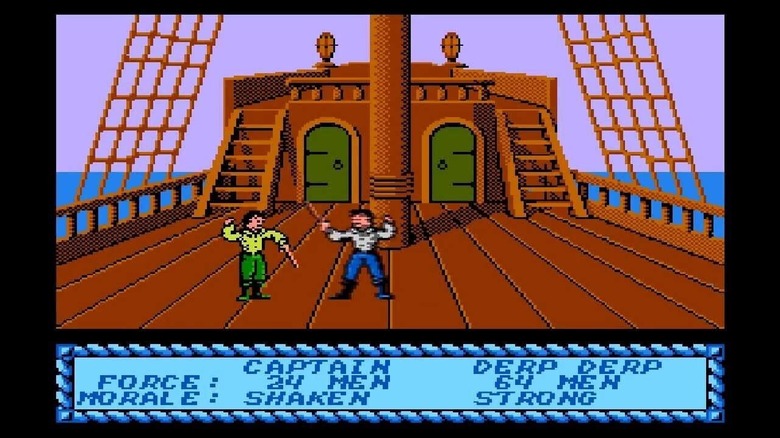
While influential video game creator Sid Meier may be best known for his turn-based "Civilization" series, the first game to feature his name in the title was "Sid Meier's Pirates!." An early open world game, players choose which nation they operate for as a privateer in the 16th through 17th century Caribbean. Players can change loyalties or operate independently as a pirate as the game progresses, raiding enemy ships and coastal towns. An additional gameplay mechanic has the player character steadily age, with their legacy dictated by their score and actions when they inevitably retire.
The sheer breadth of options that players have when playing "Sid Meier's Pirates!" was virtually unrivaled for its time. From shifting loyalties to changes in oceanic supremacy, depending on what year players choose to start, the MicroProse title ensures that gameplay experiences rarely play out exactly the same. Groundbreaking for its time, the game was relegated to early home computers until 1991 and wouldn't enjoy the same long-lasting legacy as Meier's subsequent "Civilization." The game has been remastered and remade intermittently since its 1987 debut, but that original version of "Sid Meier's Pirates!" still holds a special appeal.
Zelda II: The Adventure of Link

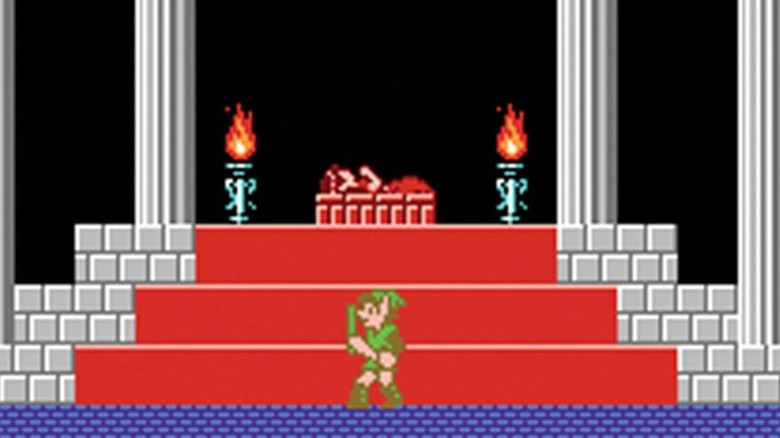
The same year that North America got the original "Legend of Zelda" on the NES, Japan got its sequel "Zelda II: The Adventure of Link." Set several years after the first game, Link finds an ancient Princess Zelda who has been enchanted to sleep for years. Link must venture into six palaces around Hyrule before entering the Great Palace to obtain the Triforce of Courage and awaken Zelda. This final test involves Link battling his own shadow to prove he is worthy to claim the Triforce and break the sleeping spell on Zelda.
"The Adventure of Link" is consistently ranked with the worst mainline "Zelda" games, but that's a bit unfair, especially when "Phantom Hourglass" exists. A set formula for the franchise hadn't been established yet, with the sequel trying to mix things up with side-scrolling combat and exploration sequences. While this certainly makes the 1987 game an outlier for the series, that doesn't necessarily make it a bad game overall, particularly in comparison to other contemporary NES titles. While not at the same level as the more celebrated "Zelda" games, the strength of "The Adventure of Link" is that it provides its own fun twist to the franchise.
Castlevania II: Simon's Quest
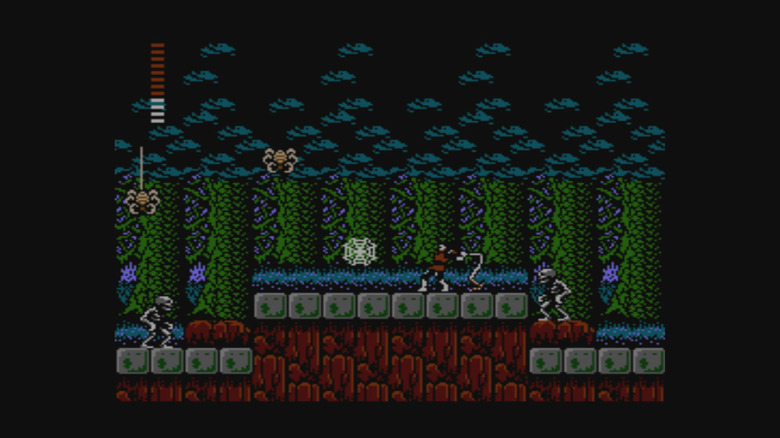
1987 may have been the year when the United States finally got the debut "Castlevania" game, but Japan already got its direct sequel that August. Originally released for the Famicom Disk System, "Castlevania II: Simon's Quest" takes place seven years after the original game on the "Castlevania" timeline. With vampire hunter Simon Belmont cursed by Dracula before the count's death, Simon is forced to resurrect the legendary bloodsucker and slay him again to lift the curse from himself. This involves Simon recovering parts of Dracula's body and reviving him in the heart of Dracula's abandoned castle.
While the obtuse instructions in "Simon's Quest" may be among the worst crimes committed against "Castlevania," it's not a bad game on its own merits. The gameplay in handling Simon feels slightly smoother than the first game and the difficulty is a bit more forgiving overall than the original's hardest sections. "Castlevania II" is also one of the first nonlinear games around, even boasting a day-night cycle, years before the franchise revisited either concept. "Castlevania II: Simon's Quest" definitely deserves more love from the classic era — just be sure to play it with a strategy guide handy to figure out what to do next.
Maniac Mansion
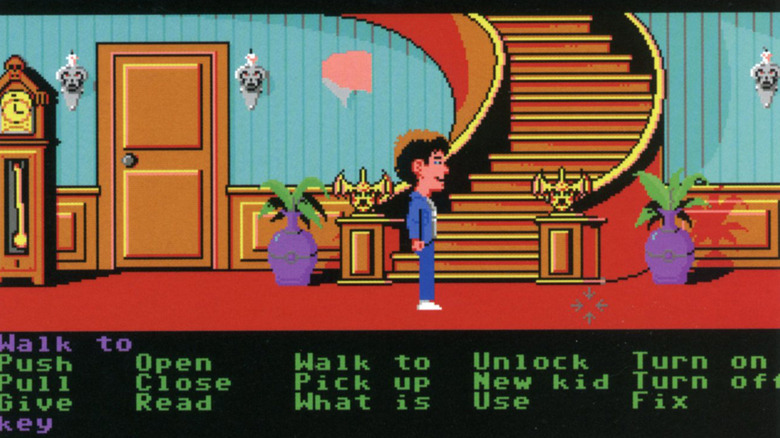
Long before it created the "Monkey Island" franchise, Lucasfilm Games first entered the point-and-click video game space with "Maniac Mansion." Inspired by popular horror films and B-movies, the game has protagonist Dave Miller lead his friends to rescue his girlfriend Sandy Pantz. Sandy is held by mad scientist Dr. Fred in his mansion, which is full of death traps, as he continues his lethal experiments. Dave must elude and outwit Fred and his dangerous family if he and his friends hope to not only save Sandy but escape the homicidal house alive.
Everything from Telltale Games' vast library to Lucasfilm's subsequent point-and-click games owe a huge creative debt to "Maniac Mansion." Beyond its influence, the horror comedy elements remain strong and its nonlinear progression and multiple endings encourage multiple replays. Some may find the largely text-based gameplay and presentation crude now, but the title's immense charm still shines through. Though it has since received a re-release on modern platforms, "Maniac Mansion" is a horror game that needs the "Resident Evil 2" remake treatment.
Phantasy Star
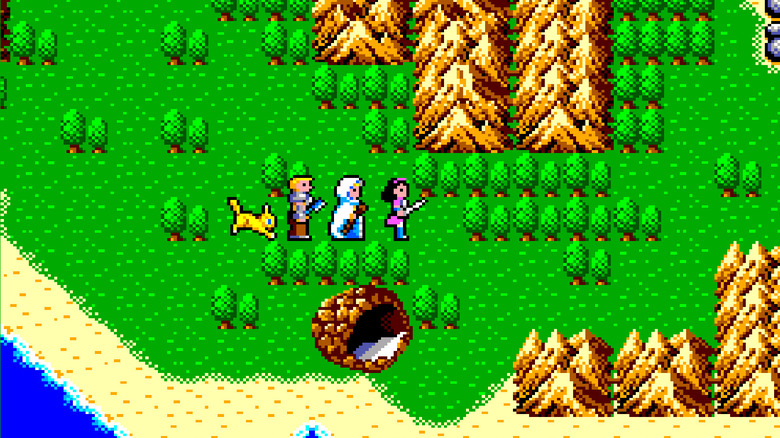
In addition to the previously mentioned "Final Fantasy," 1987 also saw the release of the best-selling "Dragon Quest II." This put Sega's own RPG title "Phantasy Star" in an unenviable position, coming out two days after the original Japanese launch of "Final Fantasy." Combining fantasy and science fiction elements, the first game takes place in the Algol star system, which is ruled by the tyrannical King Lassic. Protagonist Alis vows to overthrow Lassic to avenge her brother, forming a hearty band to build support through the system and depose the despot.
In addition to coming up against stiff competition in the RPG space in 1987, "Phantasy Star" also was restricted by its console. The game was released on the Master System, with Sega's first console already off to a shaky start even on the stronger Mark III. The game's higher price compared to its contemporaries on other platforms also raised eyebrows, but it was critically lauded for its innovations. Fortunately, Sega continued to support the "Phantasy Star" franchise through its subsequent console generations, making it something of a staple within the company.