
5 Hit '80s Video Games That No One Remembers Today
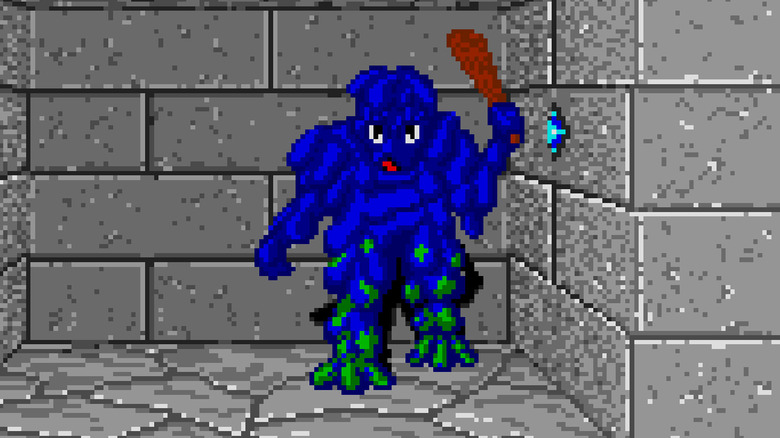
The '80s solidified the presence of the gaming industry in mainstream pop culture with everything from coin-op arcades to the expansion of home console and PC gaming. This was the decade that Nintendo moved into the home and handheld console markets, exploding worldwide and completely revitalizing and revolutionizing the industry. The early days of Atari quickly gave way to 8-bit gaming experiences and significantly advanced the technical possibilities of the medium. Many games from the decade continue to endure as fun-filled experiences for players new and old all these years later.
But we're not here to talk about the '80s games that everybody still recalls from this era. For every game that continues to stand the test of time, there are scores of titles that have fallen into obscurity. This includes games that were enormously successful back in the day, no matter how foundational they were for generations of titles to follow. Many best-selling console titles and arcade games that used to attract crowds of eager gamers on the weekends have been largely forgotten over the years. Here are five hit '80s video games that no one remembers today, decades after their blockbuster heyday.
Pole Position
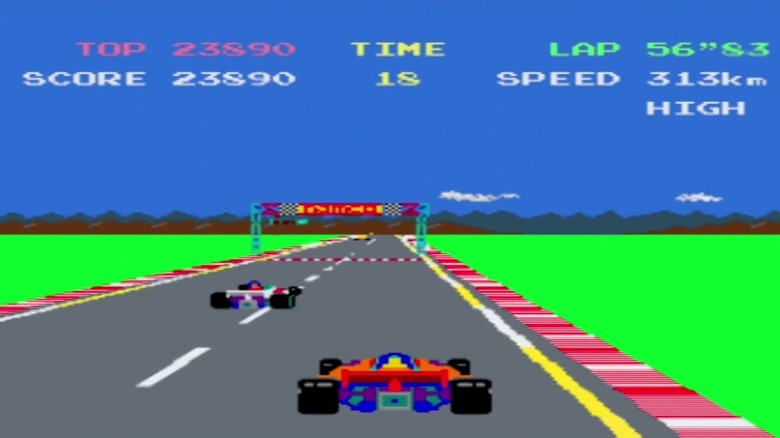
Racing games were huge draws in arcades worldwide for much of the '80s, with the biggest being "Pole Position." Players controlled a nameless Formula One driver navigating the Fuji Speedway, an actual racetrack in Japan, for a high-octane race. After qualifying for the race through a one-lap time trial, players compete against other computer-controlled racers for a multi-lap competition on the track. The original 1982 "Pole Position" was followed by a similarly successful sequel the following year, the aptly titled "Pole Position II."
Released worldwide in 1982, "Pole Position" became the most played arcade title in the United States in 1983 and 1984. This popularity extended to the game's home console port on the Atari 2600 and Atari 5200 in 1983. But as the field filled with other racing games and publisher Data East turned its attention elsewhere, "Pole Position" fell by the wayside. While fans wonder whatever happened to the "Burnout" games and other long-dormant racing franchises, the real question is whatever happened to "Pole Position," especially given its success.
Karate Champ
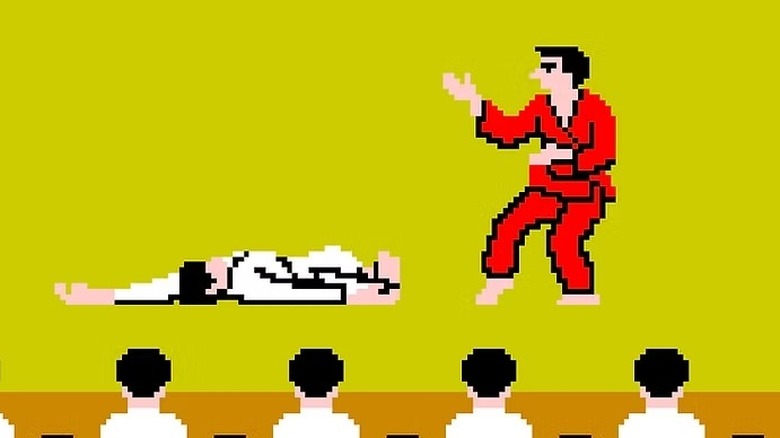
Fighting games are a staple in the industry, whether it's technical titles built for hardcore players or fighting games that you should play as a beginner. One of the most foundational fighting games was 1984's "Karate Champ," initially released for arcades before receiving personal computer ports in 1985 and an NES port in 1986. The game has a fighter in a white gi duel an opponent in a red gi, either in a dojo or martial arts tournament setting. In contrast to subsequent fighting games, like "Street Fighter," which saw its own stunning transformation, "Karate Champ" had players use two joysticks instead of button inputs to fight.
"Karate Champ" sold 10,000 arcade cabinets within its first two months on the market alone, going on to become publisher Data East's best-selling arcade game of all time. But "Karate Champ" didn't get much of a follow-up beyond its multiplayer-oriented update "Karate Champ: Player vs Player," also released in 1984. Instead, developer Technōs Japan focused on its subsequent "Double Dragon" franchise, shifting from one-on-one fights to a full-on side-scrolling beat-'em-up. Nowadays, "Karate Champ" is best known as the arcade game that Jean-Claude Van Damme plays in the 1988 martial arts movie "Bloodsport."
Gauntlet
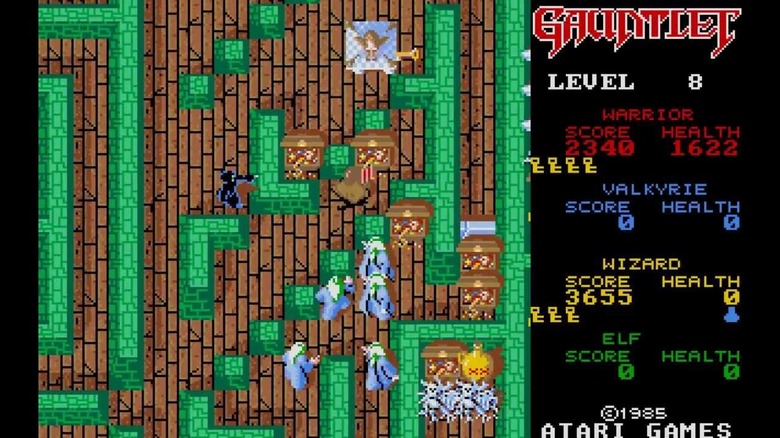
A huge arcade game hit in 1985 was "Gauntlet," developed and published by Atari Games, which shipped thousands of units worldwide. In a rarity for its time, the original arcade cabinets supported up to four simultaneous players to get in on the fantasy action at once. Players can choose from four different high fantasy archetypes before progressing through a series of levels from a top-down perspective, battling enemies as they search for an exit. Each level has its own kind of monsters and other enemies to defeat as the players acquire treasures strewn around the map.
If anyone knows of "Gauntlet" today, it's for the franchise eventually evolving into the 3D hack-and-slash titles of the late '90s, starting with "Gauntlet Legends." But beyond its continuations, "Gauntlet" laid the foundation for other hack-and-slash titles like "Diablo" and "Hades" to follow. The game would be ported over to virtually every major gaming platform after its successful arcade launch, including a version on the Nintendo Entertainment System. But though "Gauntlet" gradually evolved, it has remained largely dormant for years while the original's legacy has been quietly forgotten.
Dungeon Master
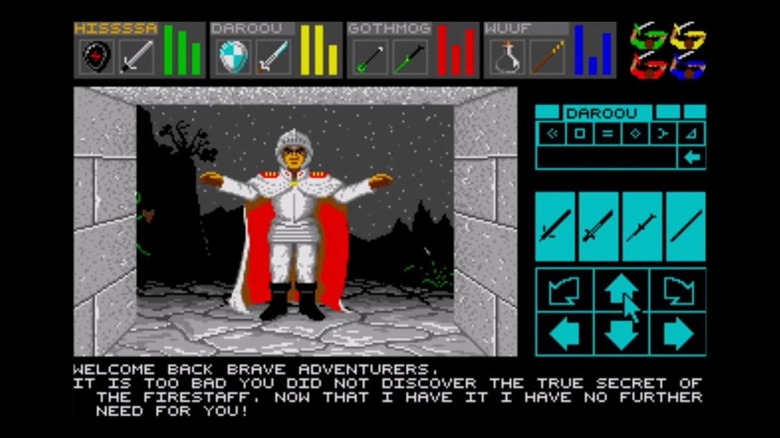
Dungeon crawlers really took off in the '80s during the early days of personal computer gaming, especially on Atari's line of gaming PCs, the Atari ST. The best-selling game for the ST was 1987's "Dungeon Master," which went on to sell over 40,000 copies in its launch year alone. An early first-person RPG, the game had players control a small band of fantasy heroes as they navigated dungeons to recover the mythical firestaff. These dungeons were, of course, full of fantasy monsters — led by the villainous Lord Chaos — for the party to vanquish in their quest.
After its successful Atari ST launch, "Dungeon Master" was made available on virtually every major gaming PC of the era, eventually even getting a Super Nintendo version. The game spawned plenty of imitators, including "Eye of the Beholder," and revolutionized "Dungeons and Dragons"-inspired RPGs to follow. But as the '90s progressed, the idea of first-person RPGs fell by the wayside in favor of early first-person shooters like "Wolfenstein 3D." An early triumph for PC gaming, "Dungeon Master" helped the industry make inroads onto the platform but didn't evolve with the times.
Populous
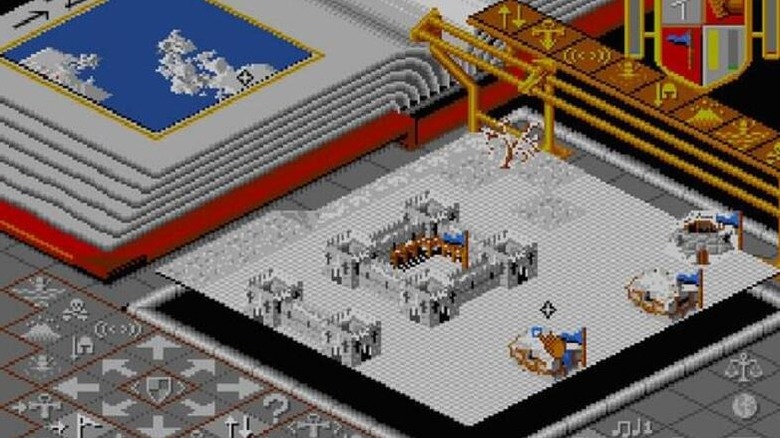
One of the best-selling PC games of the '80s was released at the very end of the decade, with 1989's "Populous." The player controls a deity that leads their followers to safety and prosperity across hundreds of levels. More than just issuing directions for the followers, the player can reshape the landscape and have their loyalists build and strengthen their civilization — which includes taking on hostile factions that follow other rival deities who reign supreme in their local kingdoms.
"Populous" paved the way for subsequent world-building god games, with its most comparable successor being 2001's "Black and White" by "Populous" designer Peter Molyneux. "Populous" received several direct sequels and was launched on numerous platforms, including the Super Nintendo in the '90s. But as influential as the game was, real-time strategy titles that followed, like "Age of Empires" and "StarCraft," have overshadowed it. A pioneer in the RTS space, "Populous" deserves far more credit for revolutionizing the industry.