
5 Arcade Games From 1985 That No One Remembers Today
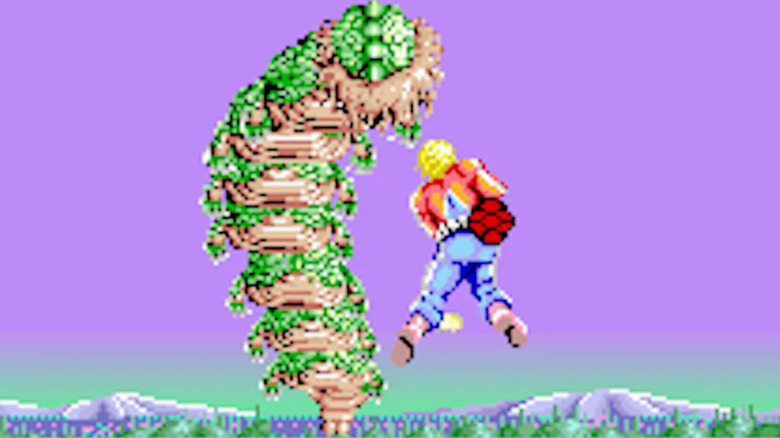
After the video game crash of 1983, the industry began to significantly rebound and recover by 1985, as advances in console hardware and personal computers took shape. This recovery extended to the arcade video game scene, which saw its own wave of well-received titles arrive throughout the year. Several of these games left a major impact in terms of solidifying the developers' foothold in the industry and influencing subsequent projects. But even though these arcade titles were commercially successful upon their initial release, they haven't had the same staying power as some of their contemporaries in terms of modern recognition.
Not every game released in 1985 has had the longevity of "Super Mario Bros." or "Tetris," especially arcade titles. The passage of time dooms many formerly popular games to the void of obscurity, no matter their foundational influence or lucrative success. That said, many of these games are still available to play on modern platforms and are still definitely worth your time. Here are five arcade games from 1985 that no one remembers today, despite their contemporary success and influence on the industry.
Paperboy
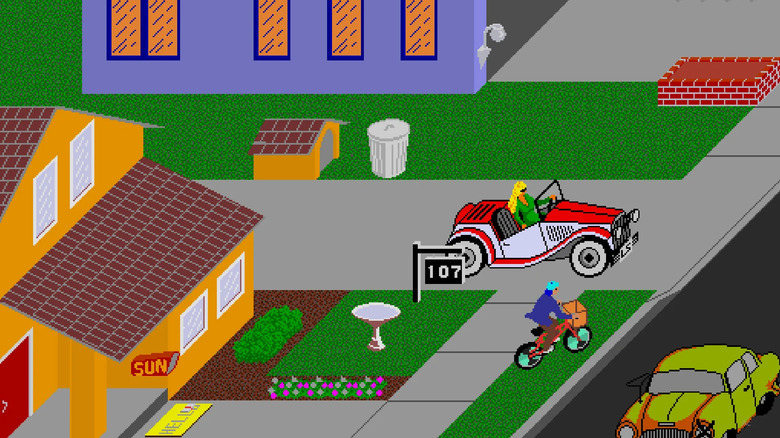
"Paperboy" was a big deal in the '80s, though many gamers probably are unaware that the title started as an arcade game in 1985. Players control a paperboy running a suburban paper route, delivering newspapers to the homes of subscribers by flinging papers on either their front porch or mailbox. In a state of constant motion, the player must avoid all sorts of obstacles as they bike through the street. Players can score extra points by damaging the homes belonging to non-subscribers, which are more drably colored than subscribers' houses.
"Paperboy" is probably best known for its Nintendo System Entertainment port in 1988, if it's known by modern gamers at all. One of the untold truths of "Captain N: The Game Master" is that the show's protagonist was originally supposed to be the player character in "Paperboy." This demonstrates how popular the game was in the mid-to-late '80s but, as games became more sophisticated, the franchise couldn't keep up with the times. "Paperboy" grew obsolete faster than print newspapers themselves, another often forgotten footnote from the arcade era.
Commando
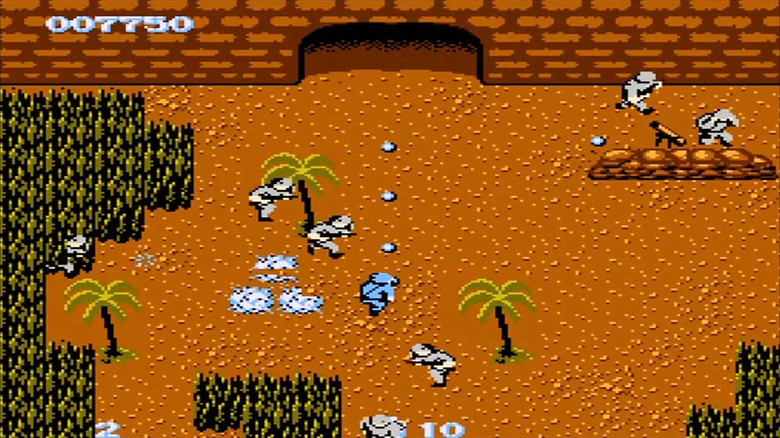
Just to clarify, the 1985 Capcom arcade game "Commando" has nothing to do with the Arnold Schwarzenegger-starring action movie of the same name released the same year. The game is a top-down shooter with players controlling a soldier known as Super Joe who's deployed to an unspecified jungle setting. Progressing through the terrain, Super Joe battles through waves of enemy soldiers, with each level ending with Super Joe blasting through a heavily fortified defense emplacement. Along the way, Super Joe rescues prisoners of war as he maintains his reputation as a one-man army obliterating the opposition.
"Commando" proved to be an immensely popular release for Capcom worldwide in 1985, shipping thousands of cabinet units by June after launching a month earlier. Like many arcade games of its era, the title was ported to virtually every major gaming computer or home console of its time. Capcom had another arcade hit later in 1985 with "Ghosts 'n Goblins," which spawned an entire franchise for the company. But while we're still playing various "Ghosts 'n Goblins" games now, "Commando" has been relegated to being one of the more obscure titles in Capcom's various arcade collections.
Space Harrier
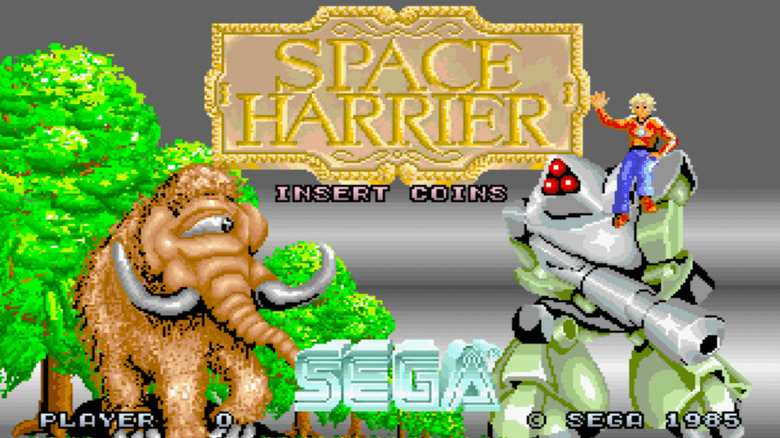
Sega was a major player in the global arcade market well before the arrival of "Sonic the Hedgehog" and other console-based classics. One of Sega's biggest arcade hits was "Space Harrier," an early third-person on-rails shooter that had players controlling a character armed with a laser cannon that also lets them fly. Cruising across a fantasy world populated by monsters, players blast through incoming beasts like cyclopean wooly mammoths and dragons, facing a boss at the end of every stage. "Space Harrier" used 16-bit graphics to help create a pseudo-3D effect as players advanced, something of a technical innovation for its time.
Like many arcade games on this list, "Space Harrier" was ported to a variety of platforms, including the Sega Master System. But given what was available for the home market at the time and the revolutionary technical presentation involved, the game was best experienced in the arcades. As graphical advancements, including true 3D gaming, became more prevalent, "Space Harrier" fell by the wayside while Sega focused on its other properties. Sega has made several big mistakes across its extensive history, but the original "Space Harrier" certainly isn't one of them.
Gauntlet
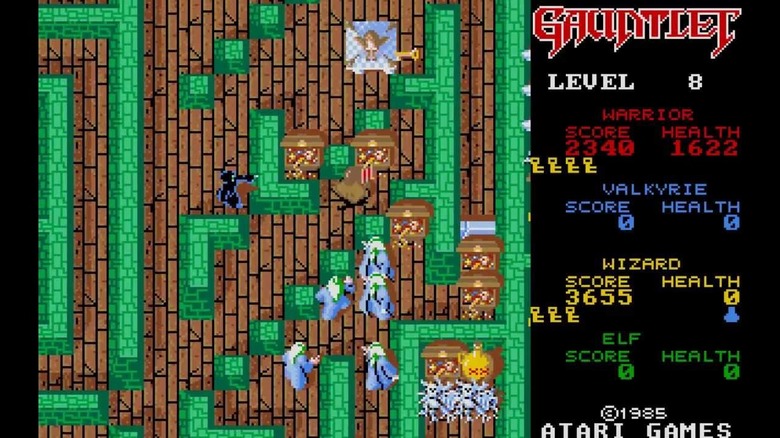
Long before there was "Diablo," fantasy fans lived out their dungeon-crawling adventures with "Gauntlet." The game had up to four players navigate a series of levels populated by monsters as they recovered stores of treasure. The game features a top-down perspective, with players given the option of choosing their characters from four high fantasy archetypes. With a mechanic that allowed players to restore health by putting in additional quarters, "Gauntlet" was enormously profitable upon its release in October 1985.
Fueled by its arcade success, "Gauntlet" was eventually transferred to every gaming PC of its time, along with ports for the Nintendo Entertainment System and Sega Master System. The game received several sequels, transitioning to a 3D presentation with 1998's "Gauntlet Legends," but the franchise fell into obscurity soon afterward. The game's influence in hack-and-slash titles like "Hades" and "Diablo" can be seen, though its foundational impact on the genre is often overlooked. A major arcade presence towards the end of 1985, "Gauntlet" offered an addictive subterranean experience that thrilled gamers for much of the '80s.
Sky Kid
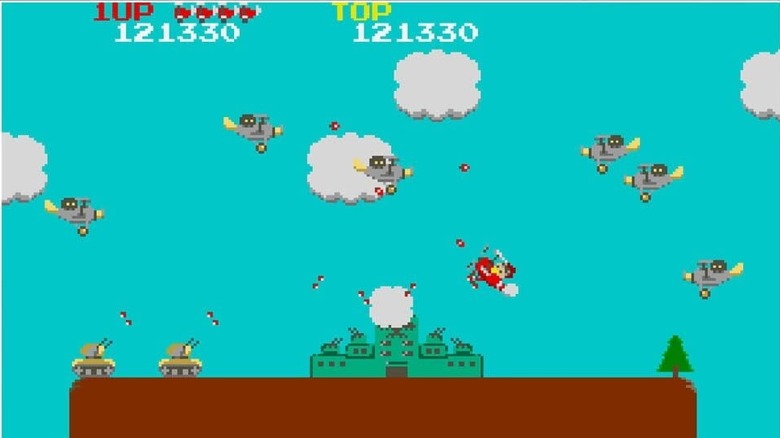
One of the last big arcade game releases of 1985 was "Sky Kid," which made its debut in December of that year in Japan. Players control two biplane pilots as they embark on missions to destroy various hostile targets. This involves the pilots going on bombing runs as they blitz through squadrons of enemy planes and ground defenses to reach their goal. The cabinet was the first Namco arcade title to allow simultaneous gameplay for two players as they worked together to take to the skies.
Like many of its contemporaries, Namco got its start in the arcade scene, with blockbuster hits like "Pac-Man" and "Dig Dug." But "Sky Kid" never quite had the same cultural staying power as Namco's preceding hits, even with its commercial success in Japan. While gamers are still debating what the "Pac" in "Pac-Man" stands for, "Sky Kid" has eroded from the public consciousness completely. An odd little vehicle-based shoot-'em-up, "Sky Kid" wasn't quite the enduring blockbuster as other Namco hits of the period.