
5 Best Sci-Fi Video Games Of All Time, Ranked
Dating all the way back to "Asteroids" and "Space Invaders," the science fiction genre has thrived in the video game medium. Whether it's vehicle-based shoot-'em-ups or action titles, there's just something about how well the genre meshes with video games across every generation. Some of the very best video games ever made have prominent sci-fi premises, utilizing genre tropes to create something imaginative and thrilling, while often pushing the technical limitations of their eras to live up to the storytelling ambitions and scope of the narrative.
Offering a variety of different gameplay styles, the sci-fi genre is just as malleable in video games as it is in any other medium. With all of this in mind, it's incredibly tough to narrow down which are the best sci-fi video games without omitting some of our absolute favorites. That said, we were able to pare down a selection of science fiction titles that not only impressed gamers upon their debut but have stood the test of time. Here are the five best sci-fi video games of all time, ranked and available for you to check out.
5. Half-Life 2
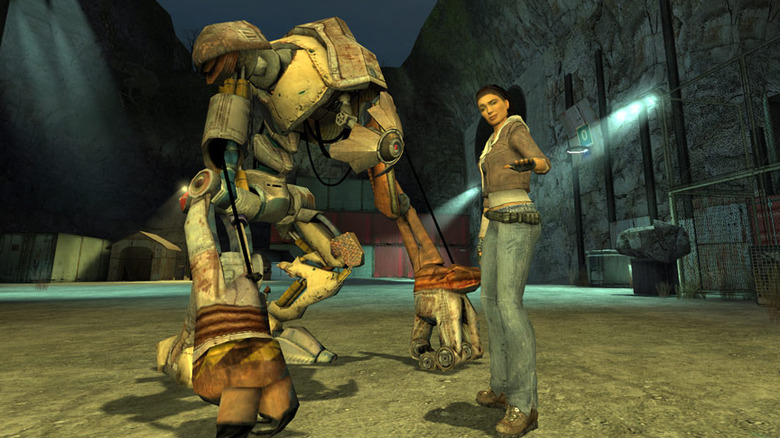
The original 1998 "Half-Life" played an enormously foundational role in PC gaming, including developer Valve's growing place in it. Its 2004 sequel, "Half-Life 2," took that foundation and completely brought the story and gameplay to a higher level. The sequel reveals that, after the events of the original game, an extra-dimensional alien empire known as the Combine has conquered Earth and subjugated humanity. The first game's protagonist, Gordon Freeman, is revived from a lengthy stasis to assist with a resistance effort and liberate the planet from the Combine's rule.
"Half-Life 2" played a pivotal role in the secretive, untold truth of the Valve Corporation, requiring users to install the company's digital storefront Steam onto their PCs. Beyond its history-making impact with how we play PC games, the 2004 title expands upon the dimension-jumping aspect of the story, occasionally veering into outright horror. The first-person gameplay is even more seamless, with the game's engine going on to become the industry standard for first-person PC shooters. While gamers still wonder why we never got to play "Half-Life 3," the 2004 title and its DLC expansions provide one of the most satisfying first-person sci-fi games around.
4. StarCraft
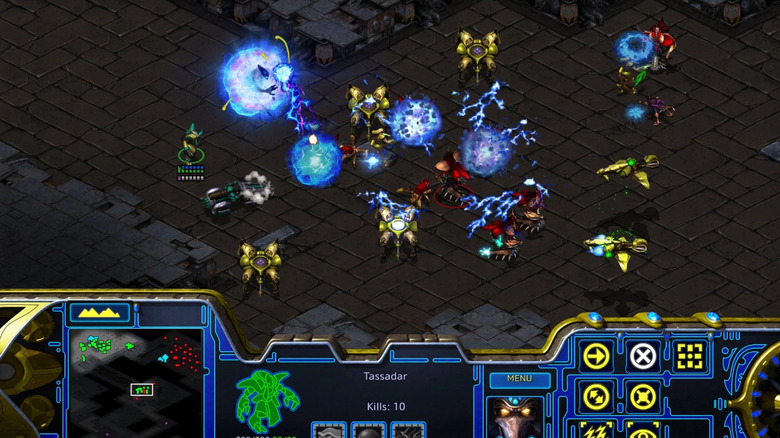
Though "Age of Empires" and "Warcraft" popularized real-time strategy games, the genre was effectively brought to sci-fi and perfected by 1998's "StarCraft." Heavily inspired by the 1986 movie "Aliens," the game has humanity expand into outer space where it becomes embroiled in an interplanetary conflict between two alien races. One faction, the monstrous Zerg, rely on techno-organic structures and overwhelming numbers to conquer their enemies, while the evolved Protoss use their advanced technology and psionic abilities to fight. Meanwhile, divisions within each of the factions threaten to upend each of their natural orders during the prolonged war.
Our hot take is that "StarCraft" is superior to 2010's "StarCraft II: The Wings of Liberty," at least with the original's 2017 remastered version. The gameplay remains balanced and accessible, boasting a vibrant online scene populated by everyone from newbies to seasoned pros. The differences between the three factions, more than just visual aesthetics, provide their own tactical advantages and wider sci-fi sensibilities. Decades after its initial release, the game is still the gold standard when it comes to real-time strategy games, while the entire story of "StarCraft" remains a sweeping sci-fi saga.
3. Mass Effect 2
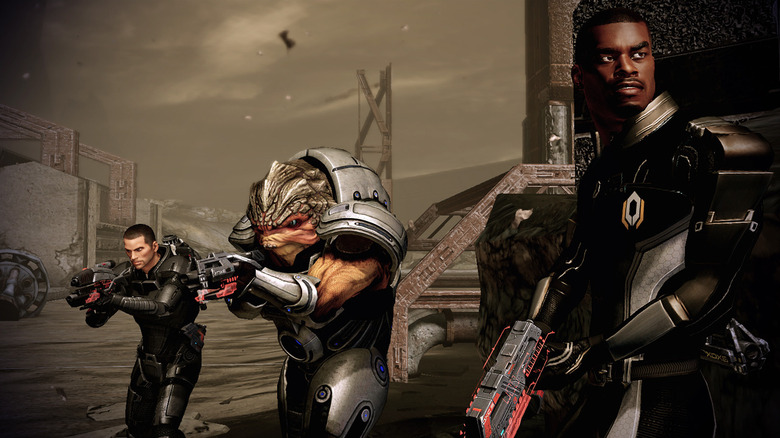
After an impressive, if somewhat overly ambitious, debut, the "Mass Effect" franchise leaned more into its action elements for 2010's "Mass Effect 2." The game opens with protagonist Commander Shepard ambushed and killed by a mysterious enemy ship, with his body recovered by the paramilitary organization Cerberus. Resurrected two years later in the "Mass Effect" timeline, Shepard agrees to work with Cerberus to investigate the disappearance of human colonists along the frontier. Assembling a largely new crew, Shepard learns the truth about these incidents' connection to the sentient machine race, the Reapers, and their plans to conquer the galaxy.
Aside from its placement in the trilogy, "Mass Effect 2" thematically feels like "The Empire Strikes Back" of its larger story. The sequel goes darker, deeper, and more intense than its predecessor, eschewing the exploration elements for a more focused and action-oriented experience. The game also delves more into Shepard's relationship with each of his main squad members, which has a direct bearing on the climactic final mission. "Mass Effect 2" set an unmatched bar — look at what went wrong with "Mass Effect: Andromeda" – with this second installment being one of the best sci-fi action games ever made.
2. The Outer Worlds
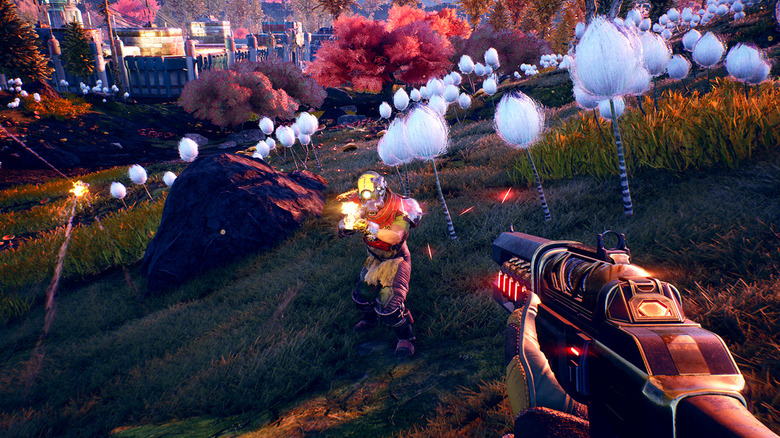
After developing the critically acclaimed "Fallout: New Vegas," Obsidian Entertainment teamed up with "Fallout" creators Tim Cain and Leonard Boyarsky for the 2019 sci-fi epic "The Outer Worlds." An action RPG in the modern "Fallout" mold, the game takes place in a distant solar system colonized by rival megacorporations. The player controls a colonist from a lost ship, flitting between planets in the system to rescue their fellow colonists and seek justice for the rampant corporate malfeasance. As the story of "The Outer Worlds" unfolds, the player builds up their reputation across the various factions, affecting their place in the system.
Mechanically and spiritually, "The Outer Worlds" feels like a successor to "New Vegas" on a much broader sci-fi canvas. Obsidian has crafted a rich world with a memorable backstory and factions that make the game stand out from its contemporaries. The game also doubles down on the morally ambiguous choices players need to make as they progress through the narrative. A beautiful combination of alternate history and hard science fiction elements, "The Outer Worlds" practically demands repeat playthroughs to enjoy the full experience.
1. Portal 2
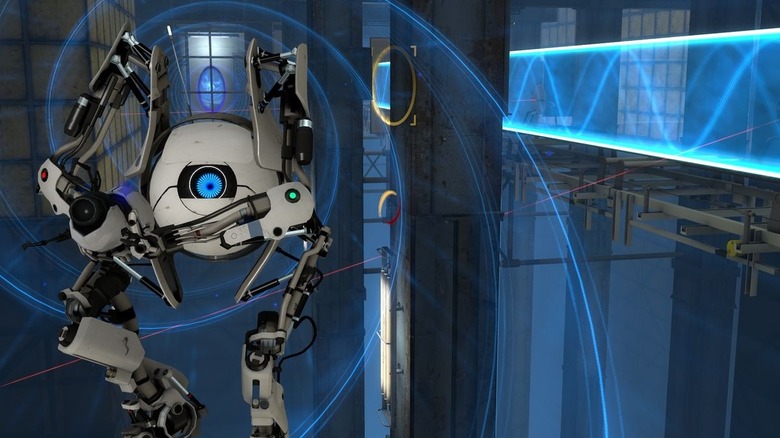
After creating the delightful puzzle game "Portal" in 2007, Valve completely upped the ante with its sequel "Portal 2" in 2011. The returning protagonist, Chell, is revived from suspended animation in the abandoned Aperture Science Enrichment Center by Wheatley (Stephen Merchant), a seemingly unassuming artificial intelligence. As Chell navigates through the facility with her portal gun, opening temporary teleportation portals, she and Wheatley accidentally reactivate the malevolent GLaDOS (Ellen McLain). Chell now has to find a way to escape Aperture and work with GLaDOS when they're faced with an even more powerful mutual enemy.
There are a lot of sequels on this list that take what the preceding game did and push it to ambitious new heights, which "Portal 2" absolutely does. The game's unique physics are given fresh and exciting challenges to explore while the story presents players with its own shocking twists. "Portal 2" even offers an exciting co-op mode for players to experience with friends, complete with its own set of puzzles. A fun, accessible, and innovative expansion of what's possible for sci-fi games, playing "Portal 2" even offers surprising health benefits alongside its mind-bending gameplay.