
This Video Game From 1984 Wouldn't Fly Today
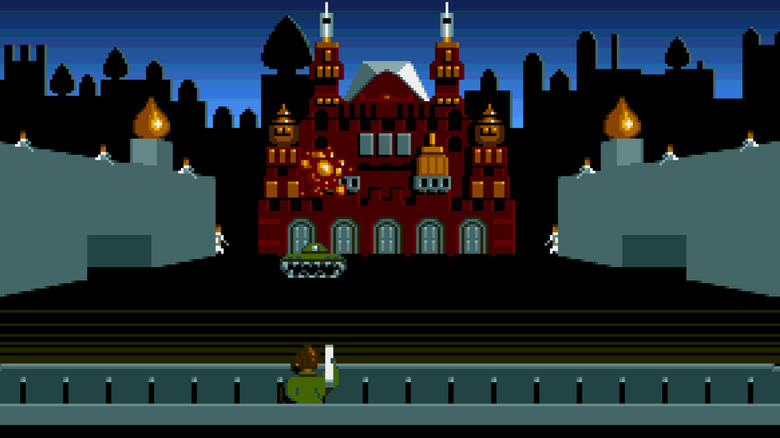
So much of the formative years of the gaming industry took shape under the shadow of the Cold War, from the video game crash of 1983 to its Nintendo-led resurgence. The tense geopolitical situation was reflected in many games of the era, from the Atari hit "Missile Command" to military shooters like "Commando." However, one game released in 1984 went a step too far in how it utilized the ongoing Cold War backdrop, "Raid Over Moscow." The controversy that the game elicited was so substantial that even the Soviet Union reportedly took notice.
Of course, there is no such thing as bad press and all the furor surrounding "Raid Over Moscow" provided free advertising, judging by its sales numbers. Still, the game did generate a bit of backlash, leading to a rebranding and several canceled ports. Over 40 years later, the title's release stands as a curious moment in gaming history that could only happen in the '80s. Here's why 1984's "Raid Over Moscow" wouldn't fly today and why it attracted controversy upon its release.
The story behind Raid Over Moscow
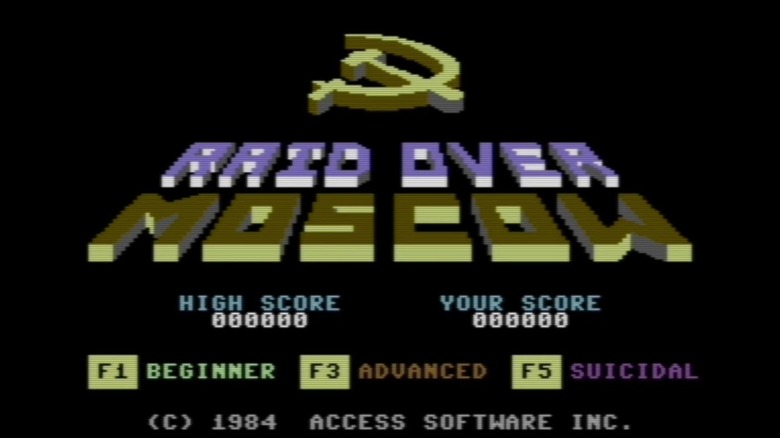
"Raid Over Moscow" opens with the Soviet Union launching multiple nuclear warheads at American cities, evidently unprovoked. The player controls an American military pilot who deploys from an intercept plane in outer space to stop the warheads. The controversy really lies in the game's latter two levels, with the player embarking on a retaliatory mission against Moscow. The player not only launches an all-out attack on Red Square but triggers a nuclear meltdown by targeting a reactor hidden in the Russian State Historical Museum.
"Raid Over Moscow" was developed and published by Access Software, designed by the company's co-founder, Bruce Carver, and initially released for the Commodore 64. The following two years, the game was ported to other early gaming computers, including the BBC Micro, the ZX Spectrum, and the Apple II. The game didn't receive contemporary home console ports, but given the fact that the Atari 5200 ultimately failed earlier in the year, that's not surprising. The game's subsequent controversy likely didn't make the prospect of a console port any more palatable for companies that wanted to avoid the notoriety.
Raid Over Moscow was controversial even in 1984
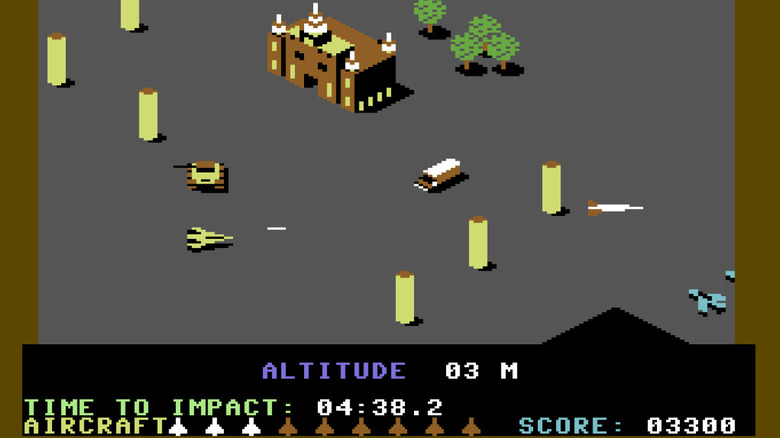
Upon its release, "Raid Over Moscow" received published fan complaints that it promoted nuclear warfare and capitalized on contemporary anxieties. When the game was made available for other gaming computers after the Commodore 64, its Cold War connection was downplayed with the title trimmed down simply to "Raid." The overall gameplay remained the same and, name change or not, the game was still a commercial success. But it was when the game was distributed in Europe that the controversy really picked up, particularly among gamers in Germany and Finland.
Pro-communist politicians in Finland denounced "Raid Over Moscow" and brought up the matter to the Finnish Parliament in 1985. This was followed by Soviet representatives privately asking the Finnish government if it could ban the game's distribution, a request that was denied. While the game was officially banned in West Germany until 2010, pirated copies were available. The proliferation of pirated versions of "Raid Over Moscow" reportedly spread to East Germany, despite East German authorities decrying the game.
The legacy of Raid Over Moscow
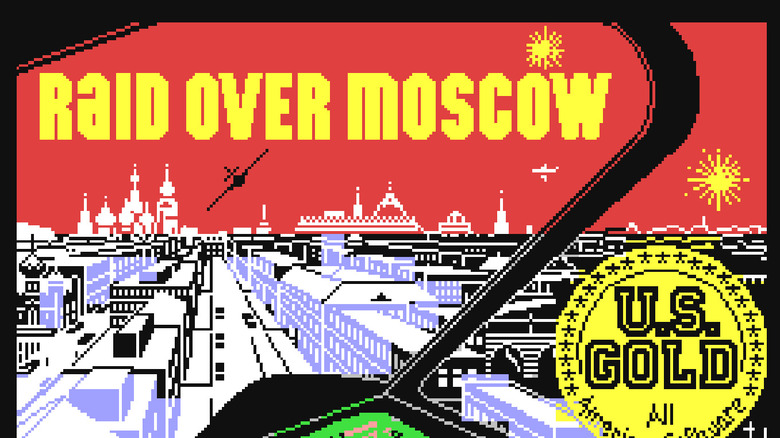
Even with all this controversy, "Raid Over Moscow" was the best-selling PC game in Finland for much of 1985, likely buoyed by all the political buzz around it. The game's success wasn't isolated to Europe, of course, with the title successful in the United States as well. By 1987, "Raid Over Moscow" was the second best-selling game for the Commodore 64, second only to the other Access Software military game by Bruce Carver, "Beach-Head." Controversy and political backlash didn't stifle "Raid Over Moscow" so much as help fuel its success.
As a controversial game that could have been banned (but wasn't in the U.S.), "Raid Over Moscow" uncomfortably played upon Cold War anxieties. Yet a game like "Raid Over Moscow" couldn't exist now, not with how increasingly tense the world has become, while acknowledging understandable sensitivities in how real-world countries are portrayed. A game that climaxes with a world capital being blown off the face of the planet in a harrowing nuclear war would be a step too far. Even as "Call of Duty" devs regularly break their silence on their own controversies, "Raid Over Moscow" goes even farther in its real-world combat than modern games would allow.