
'80s Horror Games That Were Too Disturbing For Kids
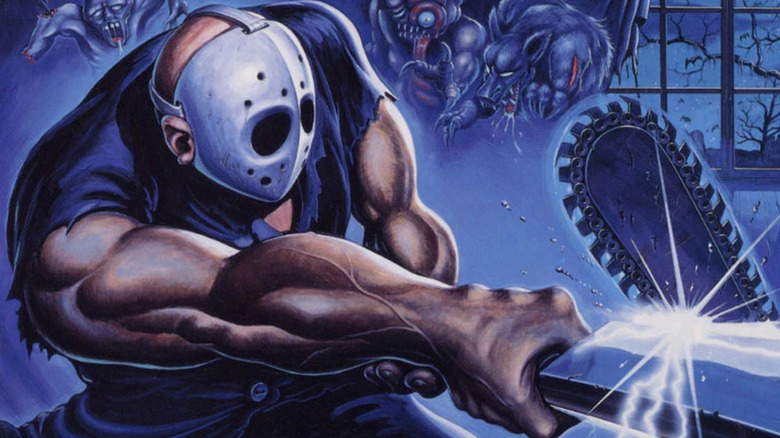
As the video game industry began to pick up in the '80s, it began branching into a multitude of genres, including horror. From titles that used common genre aesthetics, like haunted houses and creepy castles, to movie tie-in games, horror games carved a distinct place in the market. These developments didn't go unnoticed by overprotective parents and industry overseers at the time, who strictly enforced what games they found containing objectionable content. For the horror genre, which regularly delves into the macabre and murderous, this meant many games endured heightened scrutiny.
Chances are, if a horror game was released in the '80s, the industry paid extra attention to make sure that the experience wasn't too upsetting for families. This was met with heavy censorship and limited distribution, impacting the overall commercial viability of each scary game. For the purposes of this list, we're going to focus on games that were affected by their content during their initial release, not if they're too frightening for modern players. Here are '80s horror games that were too disturbing for kids, at least as far as contemporary sensibilities were concerned.
The Texas Chainsaw Massacre (1983)

Wizard Video had made its name producing VHS releases for predominantly cheap horror movies and branched into gaming in the early '80s. The company's first video game was an adaptation of the 1974 movie "The Texas Chain Saw Massacre" for the Atari 2600. Released in 1983, the game has the player actually control Leatherface, killing anyone who trespasses on his property while avoiding obstacles strewn around the level. Killing characters restores a portion of Leatherface's chainsaw fuel and the game ends when all of its fuel is consumed.
While graphics in "The Texas Chainsaw Massacre" aren't particularly gruesome at all, even by 1983 standards, its association with the slasher franchise didn't endear it to retailers and parent groups. This was exacerbated by the game putting players in the shoes of the killer, encouraging them to kill as many trespassers as possible. As a result, retailers ordered limited quantities of the game, severely hurting its commercial prospects and making it an after-market collector's item. In the meantime, fans are better off playing the well-received "Texas Chainsaw Massacre" game from 2023 to get their Sawyer family thrills.
Halloween (1983)
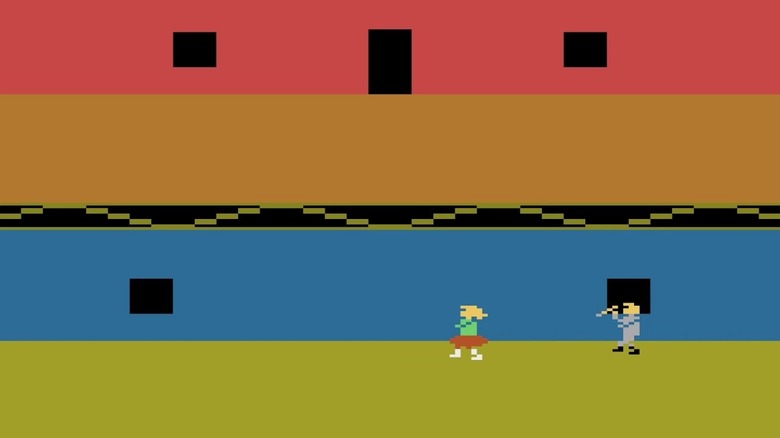
Wizard Video Games had trouble with another Atari 2600 game based on a slasher franchise that it released later in 1983. "Halloween," adapting John Carpenter's 1978 classic, had players control an unnamed babysitter stalked by a similarly unnamed killer. The game has players navigate a two-level house, rescuing children and putting them safely in locked rooms while avoiding the killer. Players can occasionally fight back if they pick up a knife, but this power-up is only temporary and the killer gets faster with each successive level.
By the time it produced "Halloween," Wizard Video was under tight financial pressures, meaning some distributed copies of the game had its title scrawled on cheap duct tape. To its credit, the game is gorier than "Texas Chainsaw Massacre," with the killer cutting off the player's head when he catches up to them. This, along with the overall cheap presentation, led to retailers ordering limited supplies of the game, making it another Atari rarity. "Halloween" fans are better suited using the scary Michael Myers skin in "GTA 5" than shelling out for this crudely made relic.
Chiller
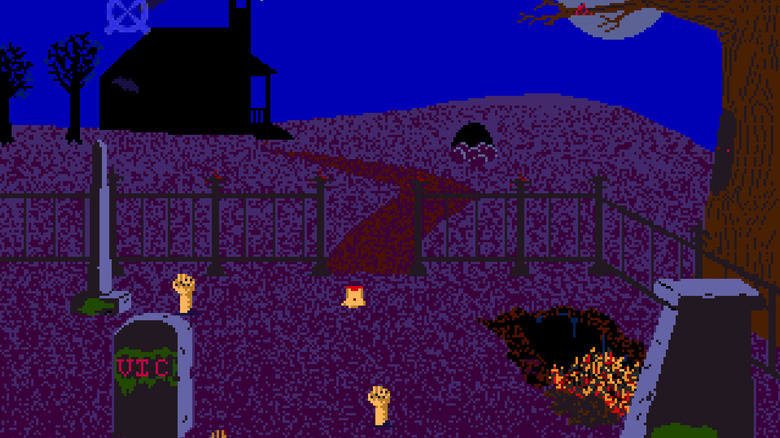
1986's "Chiller" is one entry where the backlash towards its horrific content is much more understandable. A light gun arcade game developed and published by Exidy, the game has players control a torturer who maims and kills hapless victims for the first two levels. Shooting targets dismembers them, but players are encouraged to use the light gun for more creatively grisly kills in the torture chamber. The game then transitions into more conventionally horror-themed levels, with the player blasting away zombies, mummies, and ghosts in tunnels and graveyards.
While "Chiller" was not banned in the United States, except as part of a blanket ban in the Massachusetts town of Marshfield, it wasn't ordered by many arcade operators. The gory violence against targets that largely couldn't fight back was justifiably considered in poor taste, with Exidy finding greater success overseas in selling its title. An official console release was out of the question, but an unlicensed Nintendo Entertainment System port was published by American Game Cartridges. A mean-spirited torture porn shoot'em-up, "Chiller" is easily the most sadistic game of its generation.
Maniac Mansion
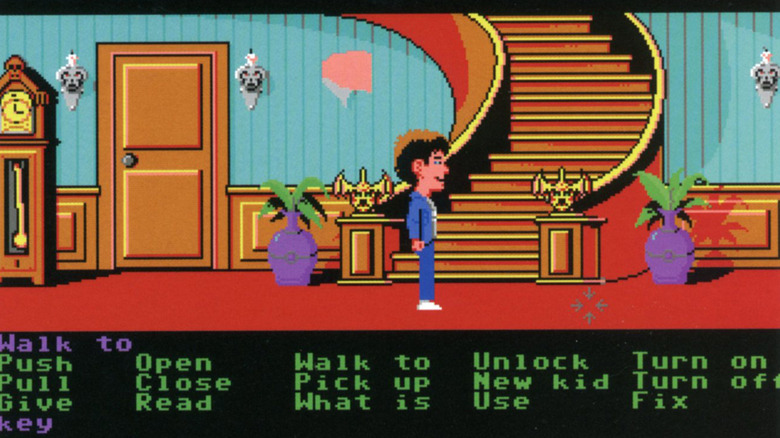
As LucasArts made a name for itself in the '80s, its first game not based on a movie was 1987's point-and-click adventure "Maniac Mansion." The game has teenager Dave Miller lead his friends into the home of mad scientist Dr. Fred to rescue his girlfriend Sandy Pantz. This leads the group to encounter Dr. Fred's deadly family and all the lethal traps within their mansion. If the character that the player is controlling dies, control shifts to the remaining ensemble until there are no heroic characters left to save Sandy.
The big problem for "Maniac Mansion" came with its port to Nintendo consoles in 1988, where it was heavily censored. LucasArts employee Douglas Crockford recalled online that, while working on the Nintendo of America localization of the game, any suggestions of sensuality or graphic violence had to be removed. This extended to neutering some of the game's dark humor — even the subtler gags hinting at child endangerment and that sort of thing. An underrated video game from 1987, "Maniac Mansion" was a precursor to LucasArts' greater success with point-and-click games and deserved to be released uncut.
Splatterhouse (1988)
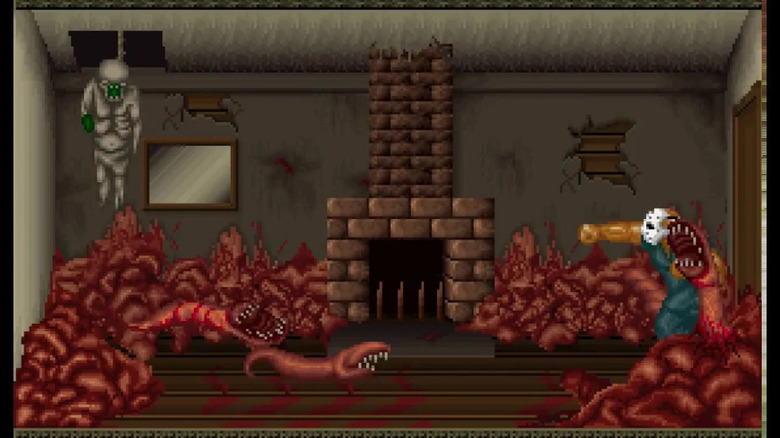
The 1988 arcade game "Splatterhouse" combined a myriad of horror movie influences, most notably slashers like "Friday the 13th" and the deliriously gory "Evil Dead" movies. Players controlled Rick, a college student mystically empowered by the Terror Mask, giving him superhuman strength and endurance. Trapped in a remote mansion and its cursed property, Rick battles through waves of monsters to rescue his girlfriend Jennifer. Eventually Rick discovers that the house itself is alive and evil, leading him to venture deeper inside to kill it.
The original "Splatterhouse" is another game where the controversy over its content was more understandable than other maligned contemporaries. From dungeons and torture chambers full of dismembered victims to gore-filled cabins and enemies designed around graphic body horror tropes, the original arcade version doesn't hold back. When the game was ported to home consoles, its gruesome content was significantly toned down, particularly in the United States. A love letter to '80s horror movies, "Splatterhouse" is a must-play for fans of the genre but not for the squeamish.