
5 Video Games From The '90s That Aged Terribly

The '90s were a watershed decade for the gaming industry, seeing tremendous advances in technological capabilities for the still-newish medium. The market also saw significant growth, with the arcade scene giving way to a wider selection of home and handheld consoles, as well as an upsurge in personal computer gaming. This upheaval meant that the types of games being produced were rapidly changing, including the content within each individual title. And just as there are games from the '80s that have aged terribly for modern audiences, this is also inevitably true of '90s games.
Video games, like any other piece of pop culture, are very much products of the time when they were made. Cultural perspectives and sensitivities are evolving all the time, and that means even successful games of their era might not connect with audiences a generation or two later. For this list, we're focusing on games that have aged poorly, despite relative commercial success during their initial release. Yes, games like "Plumbers Don't Wear Ties" and "Kasumi Ninja" would rub modern audiences the wrong way, but they were already dead on arrival for their respective launches. Here are five video games from the '90s that aged terribly when revisiting them decades later.
Night Trap
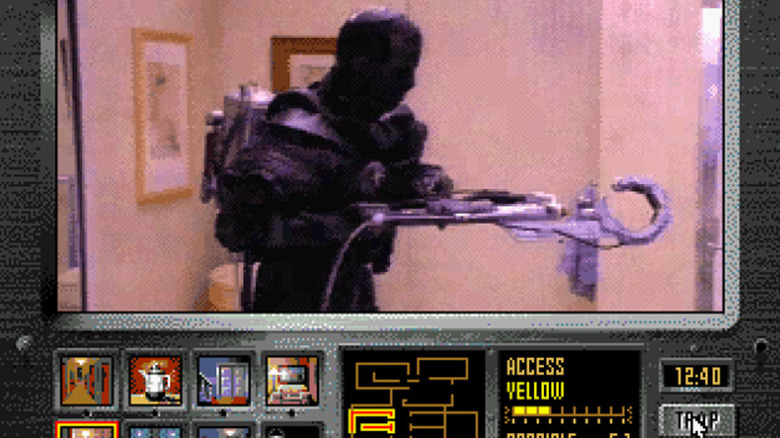
A precursor to the security camera-based gameplay of "Five Nights at Freddy's," 1992's "Night Trap" has players protect a teenage girl sleepover targeted by vampires. Switching between observational closed circuit cameras, the players try to detect and stop the bloodsuckers from claiming any victims with the house's elaborate security system. Even with its horror-oriented "Home Alone" setup, "Night Trap" generated a significant controversy for its implication of violence involving young women. This attempt at censorship backfired, with the controversy fueling game sales and leading it to being ported to even more platforms.
That the violence in "Night Trap" stirred up so much controversy is laughable by today's standards, a sign of how strict government oversight over gaming was at the time. There are misogynistic elements to the game, to be sure, but that's more of an unfortunate hallmark of the wider horror genre than anything else. What really didn't age well was the game's attempt at humor and its voyeuristic elements, which comes off as especially cringey in an effort to appeal to the "Saved by the Bell" crowd. A cult classic horror game that never got a sequel, "Night Trap" progressed from the subject of unwanted federal attention to a '90s novelty.
Phantasmagoria
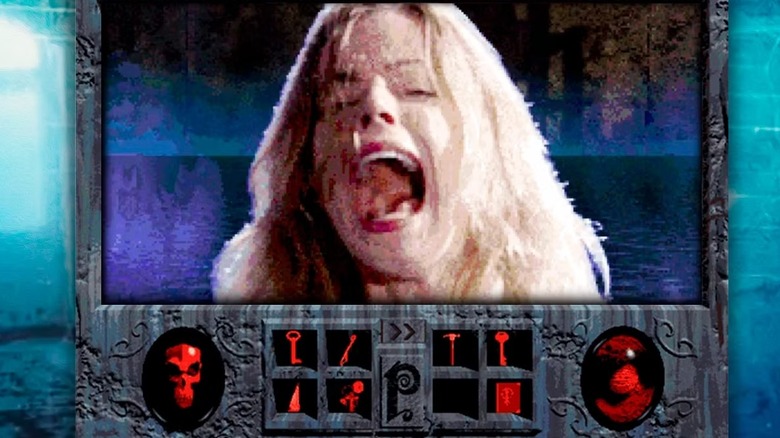
Throughout the '90s, point-and-click games really dominated PCs, with classics like "Monkey Island" and the later "King's Quest" titles. The most mature point-and-click game of the era was 1995's "Phantasmagoria," a horror game that follows writer Adrienne Delaney (Victoria Morsell) as she's tormented in a haunted house. After moving into the new home with her husband Don Gordon (David Homb), a demonic entity is accidentally unleashed which possesses Don, turning him murderously violent. This leads Adrienne to discover her home's bloody history while contending with the malevolent forces at work on the property.
"Phantasmagoria" is presented as an interactive movie, featuring live-action actors as players choose how to advance Adrienne on her horrific ordeal. Interestingly, it was Stephen King's rejection of an offer to collaborate that led to the classic game's creation, though King's influence can still be felt. Where the game does still raise eyebrows today is its depiction of sexual assault, including the demonically possessed Don raping Adrienne in the game. This scene feels like a step too far, one that throws off what is otherwise one of the best point-and-click games of its generation.
If you or anyone you know has been a victim of sexual assault, help is available. Visit the Rape, Abuse & Incest National Network website or contact RAINN's National Helpline at 1-800-656-HOPE (4673).
Tomb Raider (1996)
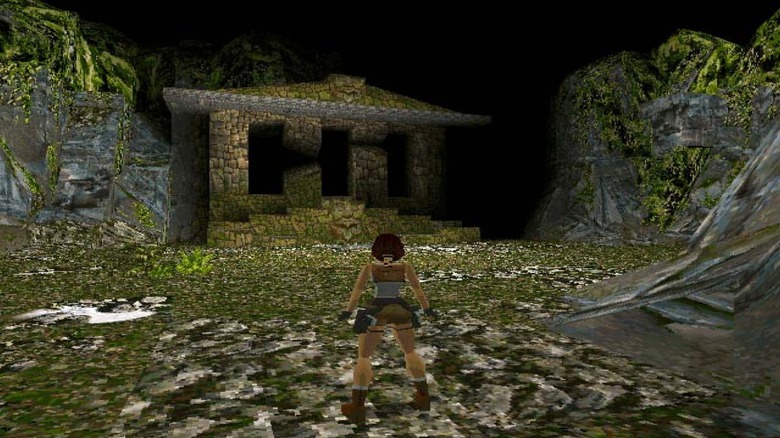
One of the most iconic video game characters introduced in the '90s is Lara Croft, the star of the best-selling "Tomb Raider" series. Lara made her debut in 1996's "Tomb Raider," as a British heiress who explored ancient ruins around the world and recovered fabled treasures for her personal collection. This often involves her acrobatically navigating the abandoned cultural sites and battling native wildlife, even dinosaurs that managed to survive extinction. Lara comes into conflict with the unscrupulous businesswoman Jacqueline Natla and her own team of heavily armed treasure hunters.
Revisiting the franchise's roots, it's fascinating to see the stunning transformation of "Tomb Raider" since its '90s origins. What hasn't aged as well is Lara stealing other cultures' artifacts for her own personal archives back in England, nor her gunning down virtually any animal in her way. Later "Tomb Raider" games have moved away from these troubling concepts, focusing on her confronting vicious mercenaries pillaging historical sites for their own gain instead. "Tomb Raider" has come a long way since these controversial elements, retaining the action-packed archaeology without the more questionable tropes.
Duke Nukem 3D
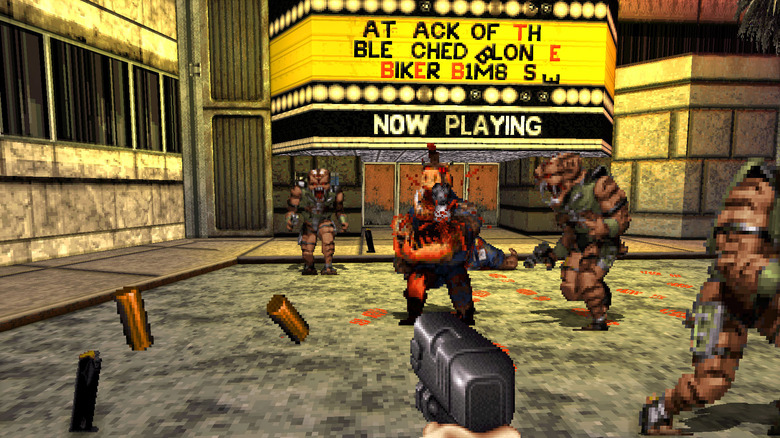
After starting out as a side-scrolling action title, testosterone-fueled hero Duke Nukem made the leap to the first-person shooter world with "Duke Nukem 3D." The 1996 game has Duke (Jon St. John) defending Earth from invading extraterrestrials, with the fight starting in an overrun Los Angeles. This involves Duke battling through the city's red light district, complete with strip clubs and adult video stores still in operation despite the rampaging aliens. These elements include plenty of erotic imagery and mild nudity, often accompanied by crude jokes from Duke in response.
While "Duke Nukem 3D" was far from the only violent first-person shooter on the market at the time of its release, its nudity and sexual content garnered backlash. When the game was ported to the Nintendo 64 in 1997, titled "Duke Nukem 64," the R-rated scenes were cut, at least in regard to sexual and drug references. Certain major American retailers released censored versions of the game, while several countries banned the game's sale outright. Looking back, "Duke Nukem 3D" is still far and away the best game in the franchise, but its more chauvinistic elements are definitely cringeworthy these days.
Carmageddon
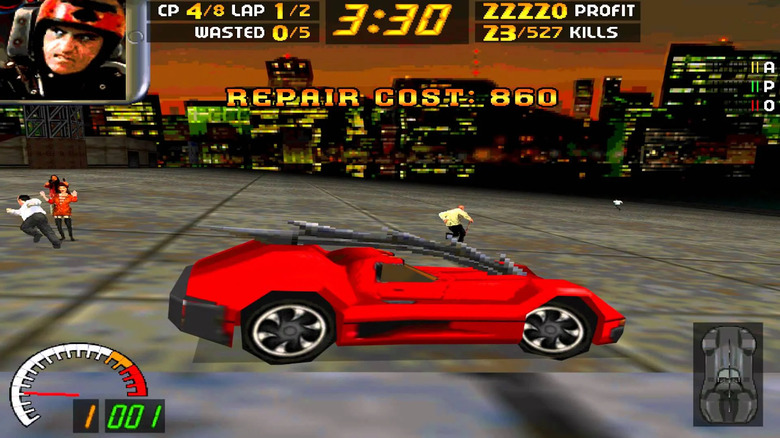
In the wake of the successful automotive smash'em-up "Twisted Metal," British developer Stainless Games created its own counterpart with "Carmageddon." Released in 1997, the game is primarily a racing game, albeit with more violent and edgy content than its contemporaries. Each race puts players on a time limit as they contend with rivals in a variety of environments, trying to either finish first or be the last functional car standing. Players can increase the time they have in each race by destroying competing cars or running over pedestrians.
Compared to "Twisted Metal" and "Vigilante 8," "Carmageddon" felt like the try-hard franchise of the demolition derby group, though its first game did sell relatively well. The game's concept of encouraging and rewarding players for killing hapless pedestrians feels graphic just for the sake of controversy. In response, several countries banned the game's sale while censored versions of the game replaced pedestrians with zombies and robots to kill instead. A game that tried to court controversy to elicit more attention, "Carmageddon" hasn't aged well nor is particularly well-remembered.