
'90s RPGs That Aged Surprisingly Well
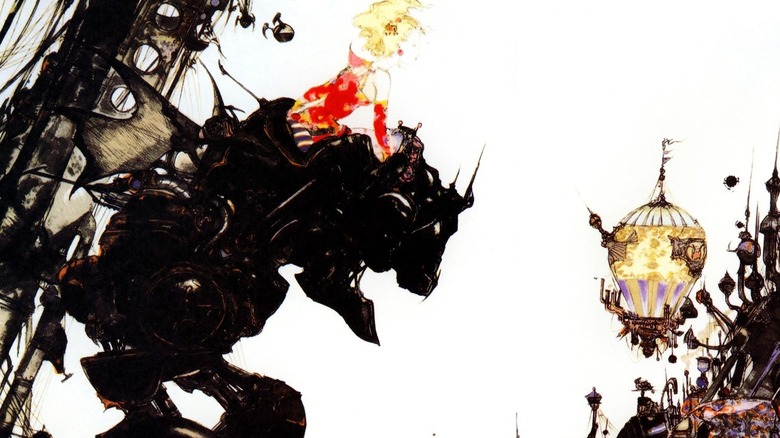
The '90s was an excellent decade for role-playing games, not just in terms of real-time action RPGs, but especially when it came to turn-based gameplay experiences. From fantasy RPGs continuing to make headway on PCs to tactical RPGs expanding the scope to entire battlefields, the genre thrived throughout the decade. Japanese-produced RPG titles also began to see wider success in overseas markets, with Square games leading the charge. This was coupled by significant advances in gaming technology, making these experiences more intuitive and immersive than ever before.
Many '90s RPGs have stood the test of time and continue to find new fans today, decades since their initial debuts. And as a testament to their enduring quality, the presentation and overall fun factor remains thrillingly intact under modern sensibilities. For the sake of the varying definitions of RPGs, we're focusing on games that feature turn-based gameplay and level-up mechanics for their playable characters. Here are '90s RPGs that aged surprisingly well and measure up with any games in the genre today.
Final Fantasy VI
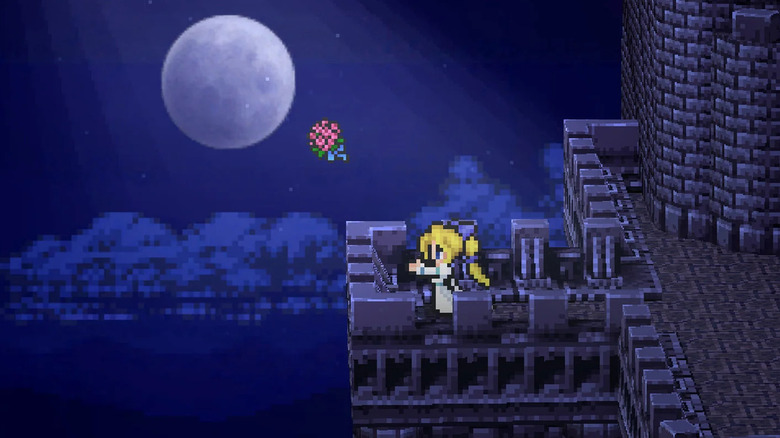
Originally released in North America as "Final Fantasy III," 1994's "Final Fantasy VI" is the last mainline "Final Fantasy" title to debut on a Nintendo home console in years. Set in a steampunk world, players control a group of 14 characters as they rebel against the dictatorial Gestahl Empire. This includes the villainous Kefka, who has his own twisted backstory and grows increasingly unstable as the game progresses. When Kefka's plot wreaks havoc on their world, the group rallies to overthrow Kefka and restore their planet from the harm that he's unleashed.
Still ranked as the best mainline "Final Fantasy" game, "Final Fantasy VI" captures so much of what makes the franchise great. From the sheer scope of the game's three continents to its wide bench of memorable characters, the title is an ambitious effort which lives up to its potential. Unlike later entries in the series that switch to polygonal models for the characters, the pixel art style holds up beautifully. An all-around masterpiece, "Final Fantasy VI" is the classic era installment in the franchise that still sets the tone and scale for the series.
Chrono Trigger
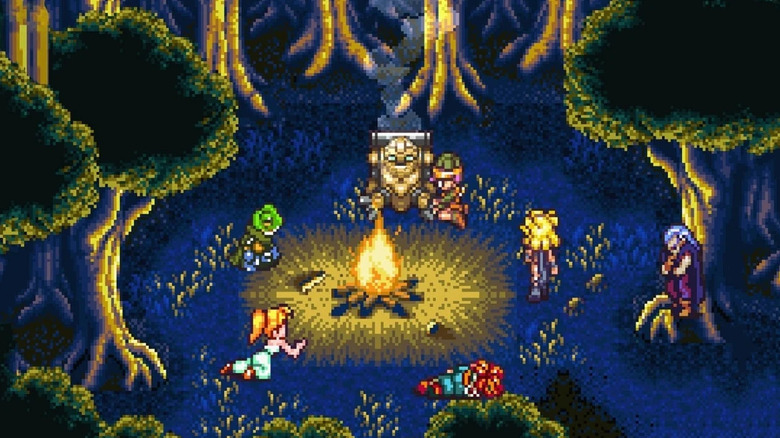
Arguably the best '90s RPG that Square made outside of the "Final Fantasy" franchise, 1995's "Chrono Trigger" is a Super Nintendo must-have. The game has protagonist Crono and his friends gain access to a time portal allowing them to travel to the past and future. Exploring their world centuries into the future, they discover that a villain known as Lavos is set to trigger the apocalypse. Recruiting a team of heroes from across time, Crono and his allies move to prevent the predicted destruction of the world and alter its destiny.
"Chrono Trigger" has all the pixelated grandeur of a SNES "Final Fantasy" game with an impressive scope that spans millennia. This extends to multiple endings depending on player choices, including a wild secret ending overlooked by many players. Boasting character and monster designs from "Dragon Ball" creator Akira Toriyama, the game has a gorgeously distinct art style compared to other contemporary Square titles. Released on a variety of modern platforms, "Chrono Trigger" is well worth checking out if you missed its initial release 30 years ago.
Final Fantasy Tactics
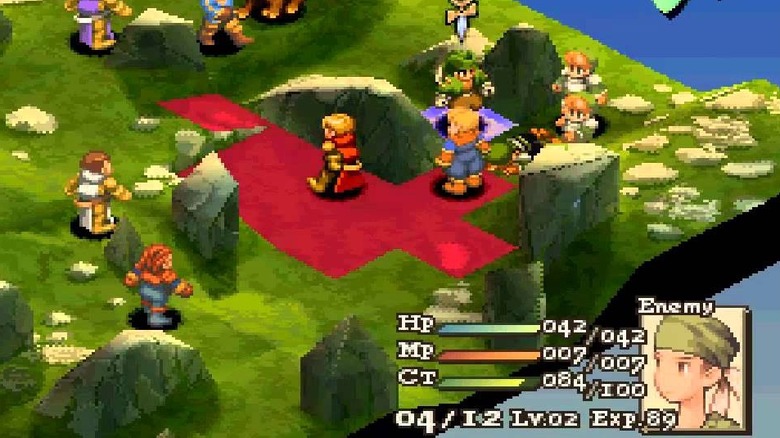
If you haven't guessed already, Square absolutely dominated the RPG genre during the '90s, particularly as the "Final Fantasy" franchise connected with global audiences. This included the 1997 spin-off title "Final Fantasy Tactics," which expanded the usual scope from squad-based combat to that of an entire battlefield. Taking place in the medieval realm of Ivalice, the game has the player control a group of characters caught in the middle of a war for the kingdom. Through turn-based gameplay, players position their characters around the battlefield, taking advantage of units' strengths and weaknesses to emerge triumphant from escalating skirmishes.
Tactical RPGs had certainly existed before "Final Fantasy Tactics," most notably with Nintendo's "Fire Emblem" franchise, but Square's 1997 title brought the subgenre to a wider audience. In retaining the turn-based action and level-up system while providing a more strategic emphasis, Square delved into a fresh way to enjoy RPGs with familiar narrative stakes. Recently, Square Enix revamped the game for modern platforms with "Final Fantasy Tactics: The Ivalice Chronicles," but the original game still holds up wonderfully. A key marker in the stunning transformation of "Final Fantasy" and what the franchise could be, "Final Fantasy Tactics" is one of the best tactical RPGs ever made.
Fallout
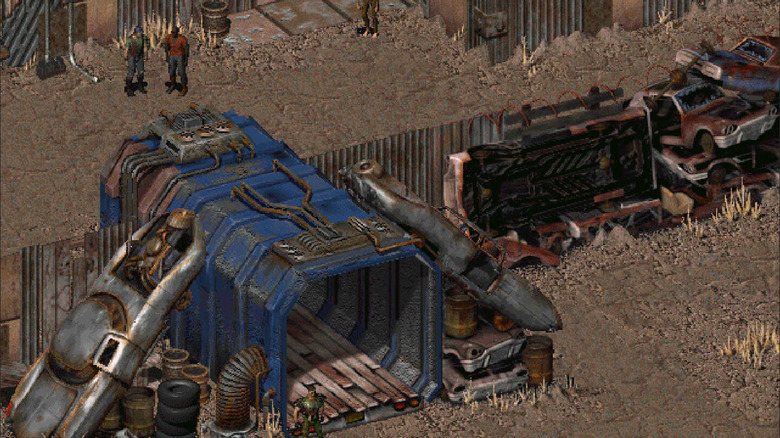
A post-apocalyptic alternate timeline is the setting for "Fallout," with the beloved RPG franchise beginning in 1997. Before the franchise moved to first-person shooter gameplay, it originally revolved around turn-based combat like many of its PC RPG contemporaries. Set in the 22nd century, approximately a century after a devastating nuclear war between the United States and China, the player character emerges from a fallout shelter in Southern California. Players navigate the tense dynamic between various factions and communities outside of the shelter as well as confronting the various perils of the wasteland.
While modern gamers might be thrown off by how different the original "Fallout" is from its revamp under Bethesda Softworks, the game still holds up magnificently. The franchise's dark sense of humor and post-apocalyptic aesthetics combined with retro 1950s kitsch is still present, but the gameplay is more of a conventional RPG. The sheer breadth of the choices that players can make to impact the story is impressive for a '90s game, while its presentation has throwback appeal of its own. Offering a unique perspective on the bizarre "Fallout" story, the original 1997 game is more than foundational, still providing hours of fun.
Baldur's Gate
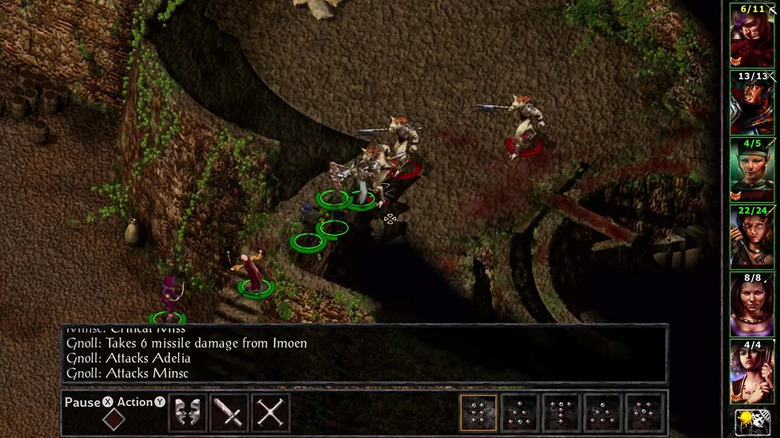
Before completely dominating the video game industry with 2023's "Baldur's Gate 3," the fan-favorite dark fantasy franchise got its start in 1998. Set within the Forgotten Realms from "Dungeons and Dragons," the original "Baldur's Gate" has the player character recruit a party of medieval fantasy heroes. The player investigates a mysterious crisis involving anything made of iron, tied to dark forces active in the region. Across seven chapters, the player learns of the powerful descendants from a dead god, dubbed the Bhaalspawn, figuring into the fate of the city of Baldur's Gate.
The original "Baldur's Gate" set the template for many dark fantasy RPG titles to follow, including "Icewind Dale" and "Dragon Age." For all its subsequent influence, the 1998 game is still a worthwhile title to revisit and play. Like many of Bioware's following titles, the level of player choice is incredible, including the 25 different characters players can recruit into their party. A remake of the original game was released in 2012, but that initial '90s classic still packs the fantasy thrills.