
5 Hit '90s Video Games That No One Remembers Today
From significant advances in technology to the continued growth of the console and PC market, the '90s were a pivotal decade for the gaming industry. The era started with the proliferation of 16-bit and FMV presentation before rapidly moving to 64-bit and early 3D capabilities. The rivalry between Nintendo and Sega reached a fever pitch, while Sony successfully launched its first PlayStation console. Many franchises that were launched or continued into the '90s are still industry powerhouses well into the 2020s.
But just because a game sees success at its launch doesn't mean that it has stood the test of time like many of its counterparts. That isn't an indictment on its quality, of course — there are games that just fell through the cracks of time through no fault of their own. With that in mind, there are a few games from the '90s that we'd like to shine a light on to give them their due retrospective attention. Here are five hit '90s video games that no one remembers today.
Gunstar Heroes
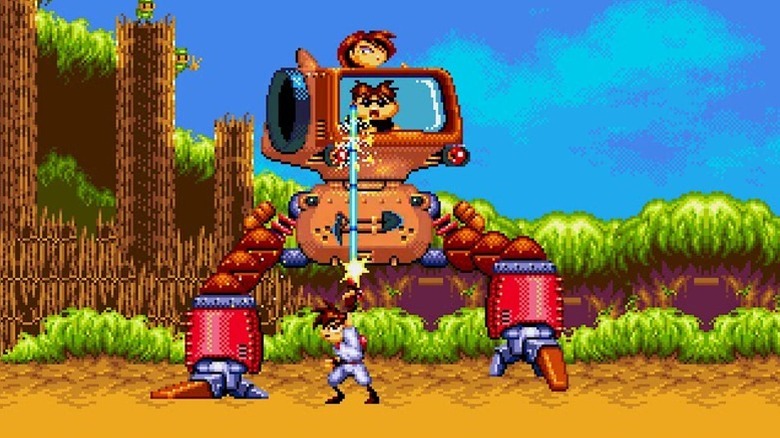
When it comes to run-and-gun games, few franchises have held up better than Konami's "Contra." But one of Sega's forgotten franchises in the genre is 1993's "Gunstar Heroes," which featured players controlling sci-fi heroes battling an evil empire. The game supports up to two-player co-op to double the firepower against a relentless wave of incoming enemies. Navigating the futuristic environments, players combine different weapon types to upgrade and alter their projectile patterns.
"Gunstar Heroes" is so good that it's worth buying a Sega Genesis to play, though it is available on Sega classic game compilations. However, outside of ports on the Game Gear and Nintendo 3DS, Sega hasn't done much with the property since its 2005 sequel "Gunstar Super Heroes" on the Game Boy Advance. The game provides a more vibrant presentation and accessible difficulty level than "Contra: Hard Corps," which was released on the Genesis the following year. A cult classic that deserves to be revisited by Sega on modern platforms, "Gunstar Heroes" is one of the best titles on the Genesis.
Terranigma
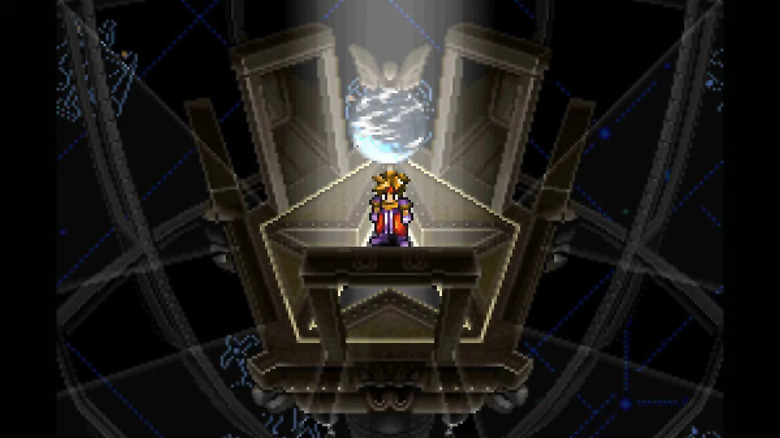
Quintet developed plenty of acclaimed action role-playing games for the Super Nintendo throughout the console's lifecycle. These include 1990's "ActRaiser" and 1993's "Illusion of Gaia," with its titles published by Enix as part of a fruitful partnership between the two companies. Quintet's last game for the SNES was 1995's "Terranigma," an action RPG focused on the conflict between the surface world and those living inside the hollow world. The protagonist is Ark, who finds himself manipulated by powerful forces as the world around him is reborn.
There's a good reason why "Terranigma" is a Super Nintendo action RPG that you've probably never heard of – it was never officially released in North America. This lack of distribution wasn't based on the game's reception in Japan or Europe, where it received favorable critical reception. Instead, it was because Enix shut down its North American subsidiary handling localization and distribution before it could secure a release. Attempts to get the game a digital release through Nintendo's Virtual Console or some sort of remaster, like "ActRaiser," have currently been unsuccessful.
Vectorman
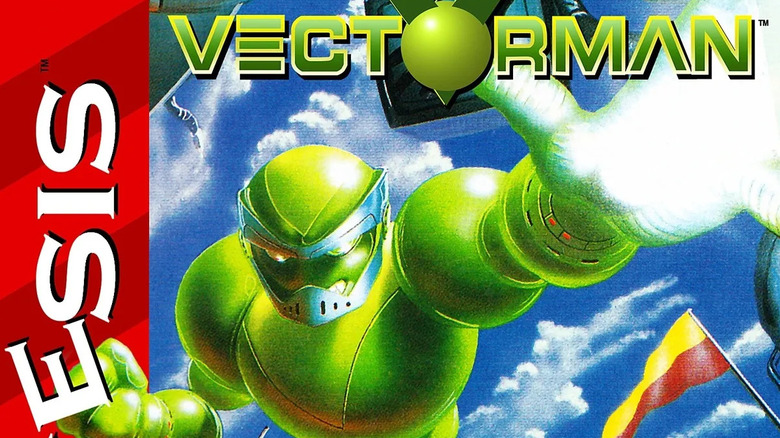
Another popular run-and-gun game for the Sega Genesis is 1995's "Vectorman," with the titular character a green entity composed of spheres. Similar to contemporary games like "Donkey Kong Country," the character models and environments are presented in a pre-rendered art style. The game takes place in a world where humanity has temporarily relocated from Earth, leaving robots to clean up the planet until it's sustainable for human life again. When the robot Raster's programming is malevolently corrupted after it interfaces with a nuclear warhead, it's up to Vectorman to stop it and its army from attacking humanity.
Even released late in the Genesis' lifecycle, "Vectorman" was successful enough to warrant a fast-tracked sequel. But since the release of "Vectorman 2" in 1996, 13 months after its predecessor, Sega hasn't really done anything with the franchise. There were early plans for a third title in the series, with successive intended platforms being the Saturn, Dreamcast, and PlayStation 2, but development was formally halted by 2003. Apart from Genesis-era compilations and digital re-releases, Vectorman remains a video game character still missing today, despite the franchise's past success.
PaRappa the Rapper
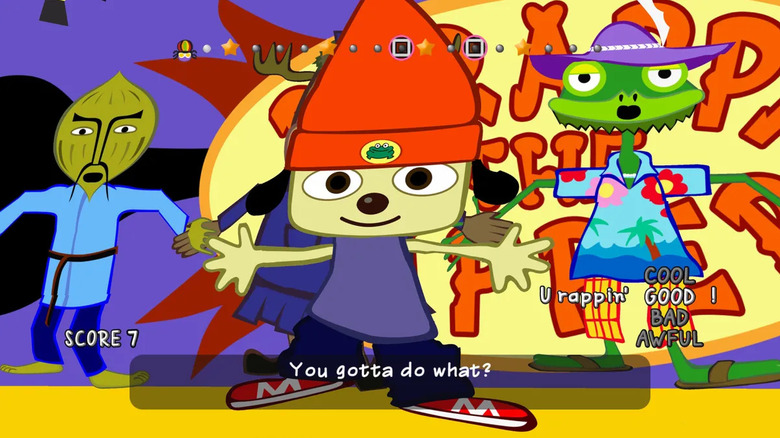
Before "Guitar Hero" or "Rock Band," one of the early major rhythm games on home consoles was 1996's "PaRappa the Rapper." Released for the original PlayStation, the game features a faux 2D art style years before Nintendo would employ a similar design for its "Paper Mario" series. The titular character gets through his day by rapping along with everything, from karate and driving lessons to earning money at a market, all to earn the affections of Sunny Funny. The player's timing on hitting input cues during each song are graded, determining their score and if they can advance to the next level.
"PaRappa the Rapper" got a rock music-oriented spin-off, "Um Jammer Lammy," in 1999 and a direct sequel, "PaRappa the Rapper 2," for the PlayStation 2 in 2001. But apart from the occasional port and remaster, there have been no new games in the series since then. PaRappa and his legacy have been referenced as Easter eggs in subsequent Sony games, including 2024's "Astro Bot." But with "Guitar Hero" and its sequels and spin-offs taking rhythm games to wider audiences, the time feels ripe for the paper-thin rapper's return.
Syphon Filter
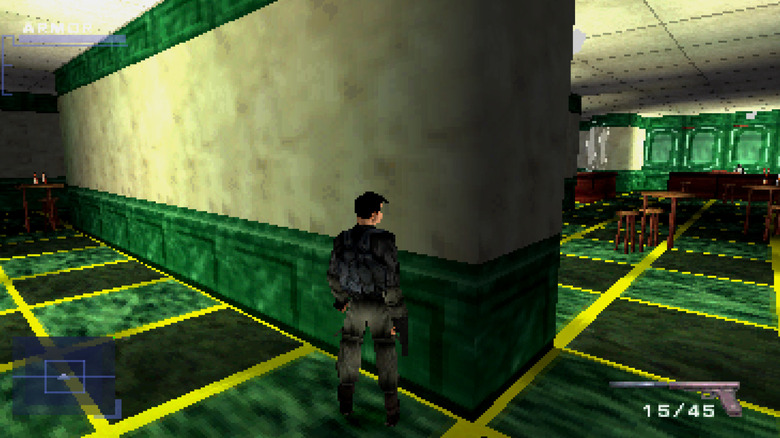
Though "Metal Gear Solid" still reigns as the most iconic action thriller franchise on the original PlayStation, it wasn't the only successful one. 1999's "Syphon Filter" was one of the last major franchise launches for the Sony console as it entered its twilight. The game follows American clandestine operative Gabriel Logan, who combats the terrorist organization Black Baton around the globe. Along the way, Gabe and his partner Lian Xing uncover a conspiracy involving Black Baton, the federal government, and a sinister pharmaceutical conglomerate.
Even as Sony turned its attention towards the upcoming PlayStation 2 launch, it commissioned two additional "Syphon Filter" games for the original PlayStation. The series also saw one title for the PS2 and two entries published for the PlayStation Portable, the latter of which was released in 2007. But since the last PSP game was ported to the PS2 in 2010, there has been nothing for the "Syphon Filter" franchise. Interestingly, "Syphon Filter" technically takes place in the same universe as "Metal Gear" and "Splinter Cell," meaning Gabe could resurface where fans least expect him.