
5 Hit '70s Video Games That No One Remembers Today
The foundation of gaming as we know the medium today really took shape in the '70s. This includes the birth of the arcade scene to the nascent home console and personal computing industries. More than just the launch of "Pong" in 1972, gaming steadily grew over the course of the decade, with its subsequent titles becoming more ambitious and sophisticated. The decade also saw the release of early industry hits like "Space Invaders" and "Asteroids" as gaming grew more popular.
But for every title that continues to hold recognition decades later, there are scores of games that are relatively forgotten. This isn't a critique on the individual games' quality but the fact that, even though they attained success upon their initial launch, they haven't maintained the same cultural hold. After all, not every game can have the same staying power as "The Oregon Trail" or "Breakout." Here are five hit '70s video games that no one remembers today and are well worth revisiting.
Shark Jaws
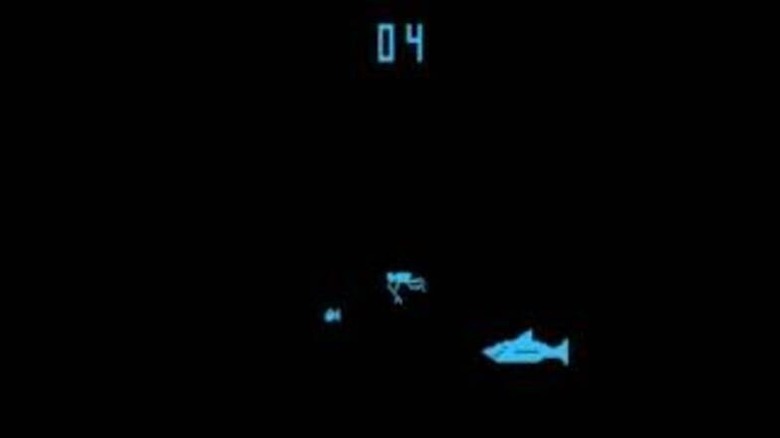
"Jaws" made a huge splash when it debuted in theaters in 1975, forming the template for the modern summer movie blockbuster. Atari commissioned an unauthorized movie tie-in game released later the same year, under the legally distinct title "Shark Jaws." The arcade game has players control a diver hunting for fish to collect points towards the high score. At the same time, the player has to avoid a large shark that is trying to devour them.
"Shark Jaws" didn't get a port for the Atari 2600, meaning it isn't even among the rare valuable games for the console. That said, the game was successful during its arcade run, even without possessing the official licensing from the movie. Atari remained a major presence in the industry for the next several years, until the eventual video game crash of 1983. "Shark Jaws" was an early standout title for Atari but, as the console found greater success elsewhere, it was left by the wayside.
Sea Wolf
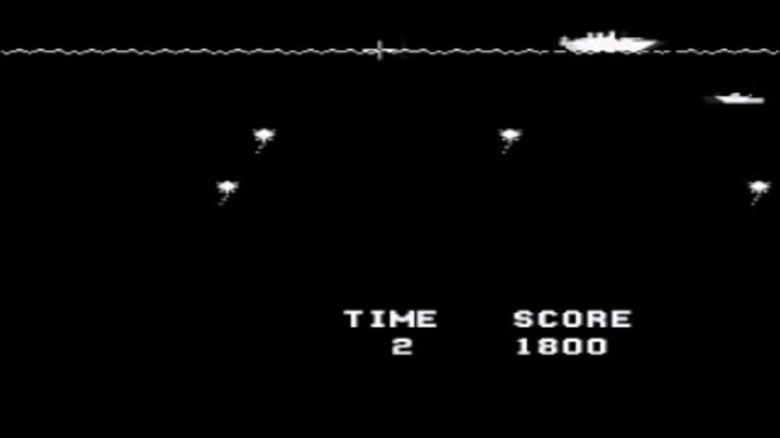
Another nautical-themed arcade game that was popular in the '70s was 1976's "Sea Wolf" published by Midway. The game has players control a submarine sinking warships on the ocean's surface by launching torpedoes at them. The player has to periodically reload and avoid sea mines as they try to sink as many ships as they can within the time limit. In original versions of the arcade cabinet, players peer through a periscope peripheral to serve as their screen during gameplay.
Across its initial arcade run, "Sea Wolf" sold over 10,000 units while its 1978 sequel, "Sea Wolf II," sold over 4,000 units. These were impressive sales figures for the era, making "Sea Wolf" something of an arcade staple throughout the '70s. But despite being ported to the Commodore 64 and VIC-20 in 1982, the franchise didn't really thrive as the industry moved into the '80s. Beyond its periscope novelty, "Sea Wolf" just didn't quite have enduring legs beyond the early arcade scene.
Combat
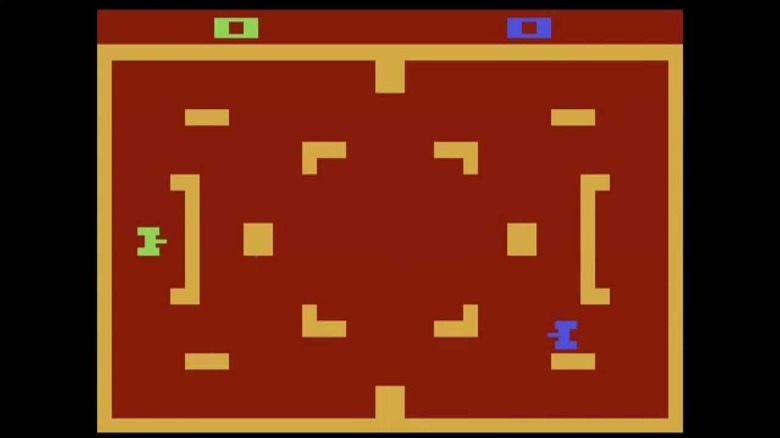
A foundational game for the Atari 2600 was 1977's "Combat," which was one of the titles that originally came bundled with the console. The game gives players a variety of military vehicles to pit against an opponent around an obstacle-filled level, including tanks, biplanes, and jet fighters. Players are awarded points every time they successfully shoot their opponents, with whoever possesses a higher score at the end of the time limit emerging triumphant. Players can either take on computer-controlled opponents or a second player with another controller for an early local multiplayer experience.
Given its status as a pack-in game for Atari 2600 consoles, "Combat" was a widely available title in the company's golden era. By the early '80s a sequel was in development, but it never saw a standalone wide release, with its prototype quietly included with Atari's 50th anniversary compilation in 2022. But apart from that, "Combat" doesn't just have the same staying power as other early Atari 2600 titles. This isn't to say that "Combat" is a retro game that aged terribly, but gaming sensibilities evolved rapidly going into the '80s, leaving it behind.
Space Wars
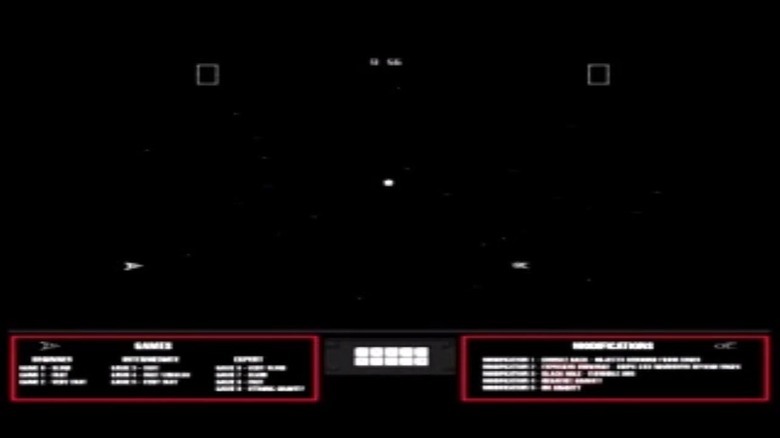
Vector-based graphics were a big deal in the gaming industry in the '70s and early '80s, with one of the bigger examples of this style being "Asteroids." One vector-based space shooter that doesn't get as much recognition decades later is 1977's "Space Wars," developed and published by Cinematronics. The game is essentially a duel between two players, who navigate around the screen in a multidirectional method similar to "Asteroids" to destroy one another. In addition to controls for flying and shooting, players can also jump to hyperspace, allowing them to avoid fire by teleporting to a different random spot on the screen.
Within its first year, "Space Wars" went on to sell over 10,000 arcade units, making it a commercial hit. But like many vector-based games from the era, "Space Wars" fell out of fashion as space shooters employed more pixelated and sprite-based designs. Apart from a 1982 port to the Vectrex, the game remained a largely arcade-driven experience. A fond favorite for anyone who grew up with it during its initial release, "Space Wars" rudimentary design doesn't have the same lasting appeal as "Asteroids."
Galaxian
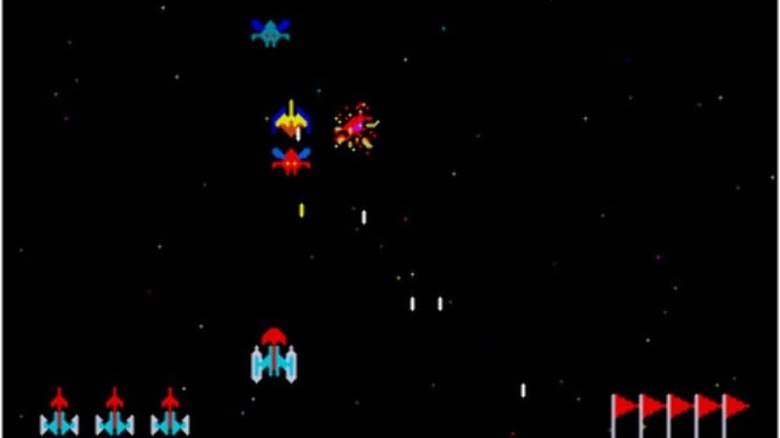
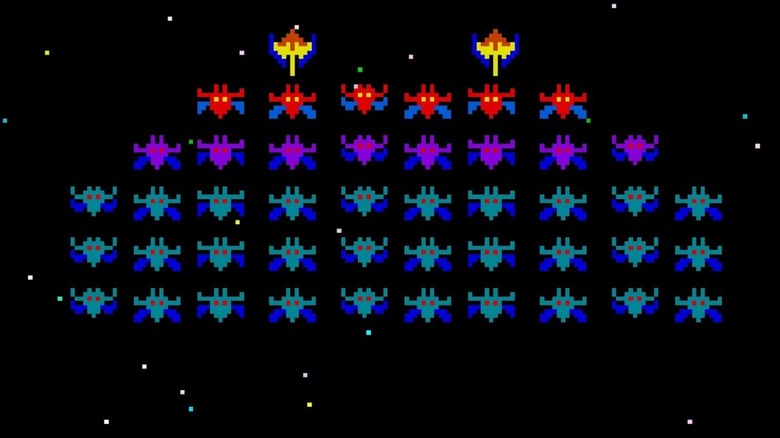
While 1981's "Galaga" is definitely an '80s game with endless replay value, many players today might not know that it's actually a sequel. The first game in the series was 1979's "Galaxian," developed and published by Namco partially in response to the enormously popular "Space Invaders." Like "Space Invaders" before it and "Galaga" after it, "Galaxian" is a fixed-position space shooter, with players moving along the bottom of the screen. They blast incoming waves of multi-colored enemy ships to achieve a high score, who periodically break formation to strafe the player's position.
"Galaxian" may have been a big deal when it first launched, but it was completely overshadowed by "Galaga" two years later. Namco ported "Galaxian" to virtually every major gaming platform of the era as a testament to the space shooter genre's continued popularity. Namco returned to the "Galaxian" branding in 1990 for "Galaxian3: Project Dragoon," but resumed its "Galaga" branding afterwards. A successful '70s game overtaken by its own '80s sequel, "Galaxian" is the forgotten origin for the series.