
5 Hit '90s Video Games Everyone Played But Nobody Remembers
The passing of time often reminds us that success and popularity can be fleeting. That's also true of the gaming industry, where even the biggest hit games can be quickly passed over as new waves of flashy titles drop and technological capabilities evolve — many of the most successful games from the early '90s looked and felt very different from titles released nearer the end of the decade. There are plenty of 1990s video games that aged flawlessly, but many were not so lucky in maintaining their cultural resonance.
Games becoming lost to collective memory over time is not limited to any single platform, company, or franchise. There are many different best-selling titles from throughout the decades that didn't retain the levels of recognition that they enjoyed in their heyday. This isn't a judgment of their quality, of course, just an observation that even acclaimed and commercially successful titles can easily get left by the wayside in the fast-moving world of gaming. These are five hit '90s video games that everyone played but nobody remembers today despite the success they once enjoyed.
Pilotwings (1990)
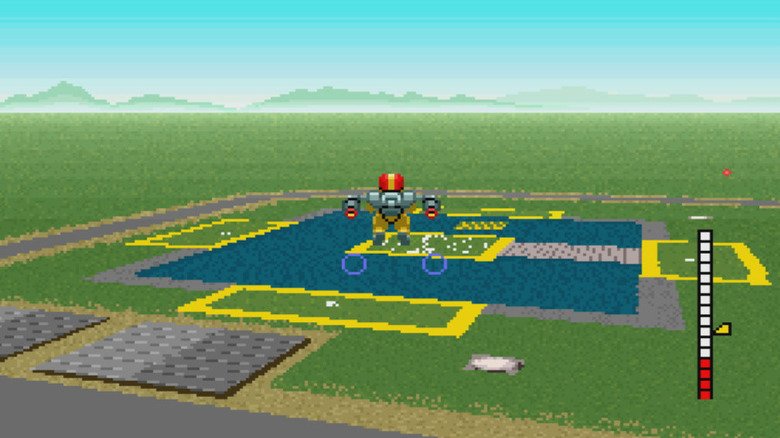
As one of the launch titles for the Super Nintendo, a lot of people played "Pilotwings," a flight simulator developed and published by Nintendo itself. The game showcased the console's Mode 7 graphical capabilities, impressively offering a faux 3D presentation as players engaged in a variety of aerial activities. Interestingly, the game's 1996 sequel, "Pilotwings 64," was a launch title for the Nintendo 64, and the series' third installment, 2011's "Pilotwings Resort," was among the launch titles for the Nintendo 3DS. Both follow-ups offered their own spin on the aerial action while employing a true 3D technical presentation.
Despite helping launch three different Nintendo consoles, the "Pilotwings" franchise has fallen into relative obscurity. The original "Pilotwings" sold over two million copies on the SNES across the console's lifetime, making it one of the best-selling games in its library. As flight simulators grew more sophisticated over time, Nintendo's high-flying franchise was quietly grounded apart from digital re-releases. "Pilotwings" showcased what three Nintendo consoles were capable of from a technical perspective, but that type of title is no longer needed by subsequent hardware.
Mario Paint (1992)
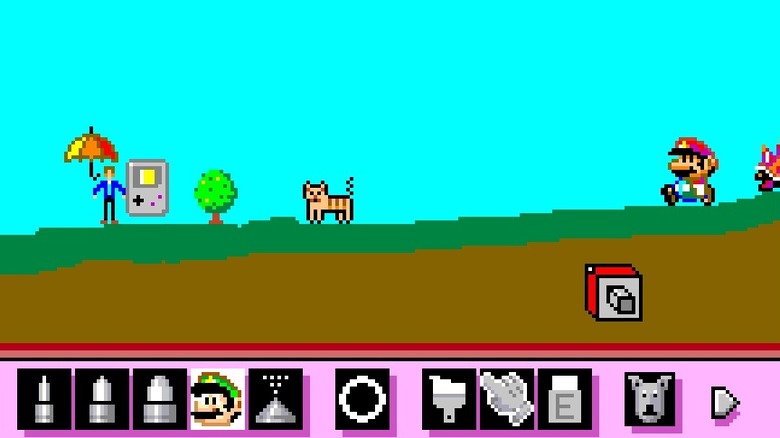
A SNES title that sold even better than "Pilotwings," 1992's "Mario Paint" is among the more original Mario spin-offs. Bundled with a mouse controller, the game allowed players to make their own visual art and compose music. The title also contained a surprisingly entertaining game allowing players to eliminate flies with a flyswatter controlled by the mouse, and it also let players make their own rudimentary animations. The game got two sequels in Japan — 1998's "Mario no Photopi" for the Nintendo 64 and 1999's "Mario Artist," which was exclusive to the Nintendo 64DD – but the sub-series has been dormant ever since.
One little-known truth about "Mario Paint" is that it was a reaction to all the lackluster educational games flooding the market in the early '90s. Capitalizing on the trend paid off, with "Mario Paint" selling over 2.3 million copies during the SNES lifecycle. That's an impressive feat for a title aimed at learning new skills, especially when you consider the necessity of having a game-specific peripheral in the mouse. The spirit of "Mario Paint" has lived on in other Nintendo hardware and games, including the Nintendo DS and Wii, but the artistic series itself has fallen by the wayside.
Ecco the Dolphin (1992)
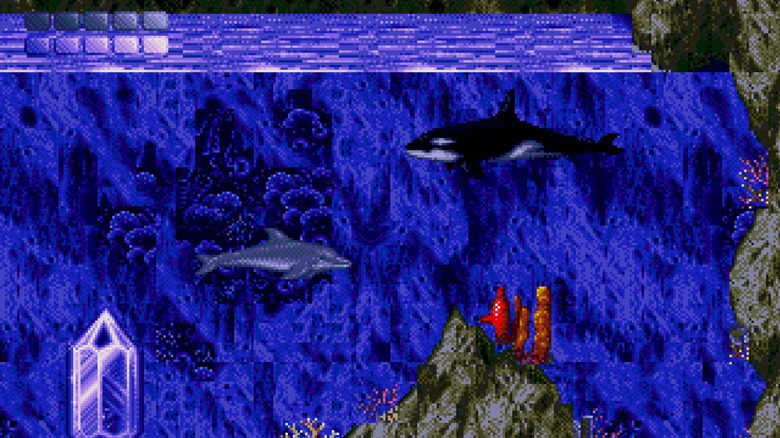
Video games saw their fair share of unconventional protagonists throughout the '90s, including Sega's Ecco. Debuting in 1992's "Ecco the Dolphin" for the Sega Genesis, which sold over a million copies, the eponymous protagonist has his peaceful life under the sea disrupted by an invading alien targeting marine life. Traveling back in time, Ecco has his signature sonar sense upgraded so he's capable of fighting back against the aliens. The game spawned a 1994 sequel, "Ecco: Tides of Time," and a 2000 Dreamcast sequel, "Ecco the Dolphin: Defender of the Future," as well as a couple of edutainment mid-90s spin-offs following a younger version of Ecco.
Despite being such a prolific Sega property for much of the '90s into the Dreamcast era, Ecco hasn't resurfaced in decades. Gamers today won't know about the tension in trying to constantly find oxygen for the titular character in the original "Ecco the Dolphin" or the disturbing moments in this E-rated game. As Sega has seen its own resurgence in the past several years, hopefully Ecco will make his return, but this has yet to be officially confirmed. What was once a fixture on the Sega Genesis has since become largely relegated to that era.
Eternal Champions (1993)
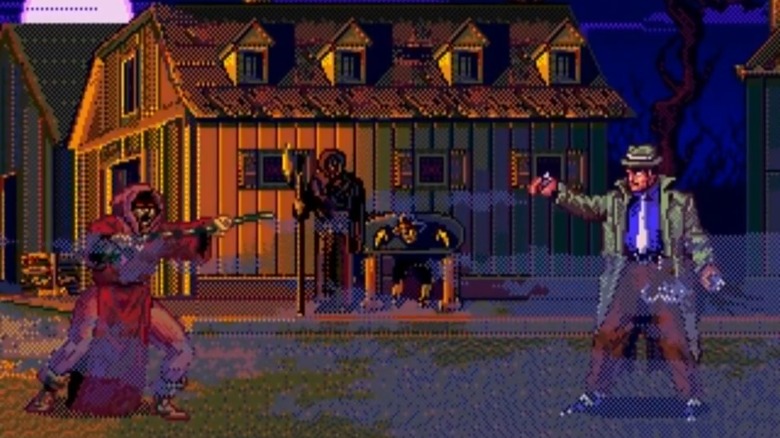
In the wake of successful fighting games like "Street Fighter" and "Mortal Kombat," Sega published its own fighting title with 1993's "Eternal Champions." The game's titular omnipotent overseer plucks a group of humans from throughout history who were stopped from achieving greatness in their respective lifetimes. For a chance to return to life and fulfill their destinies, the Eternal Champion pits them against each other in one-on-one combat. The game received an enhanced remaster on the Sega CD in 1995, adding even more characters, stages, and finishing moves in addition to improving the technical presentation.
With its own set of finishing moves and memorable cast of characters, "Eternal Champions" is one of the best video games like "Mortal Kombat." Despite this, outside of a couple action-oriented spin-offs in the '90s, Sega hasn't done anything with its fighting game franchise. Contemporaries like "Virtua Fighter" and "Killer Instinct" have lived on in the modern era, but "Eternal Champions" has not gotten its own revival. According to Deadline, a movie adaptation has been in the works for a couple of years, but there's been no movement on it since Derek Connolly ("Pokémon: Detective Pikachu") was tapped to write the script in 2024.
Earthworm Jim (1994)
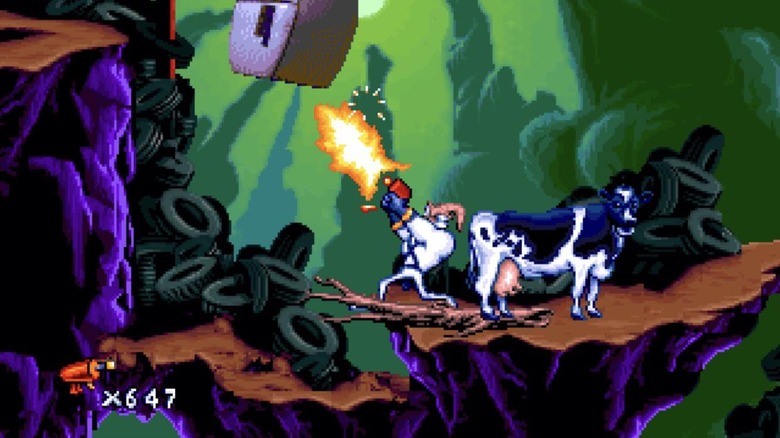
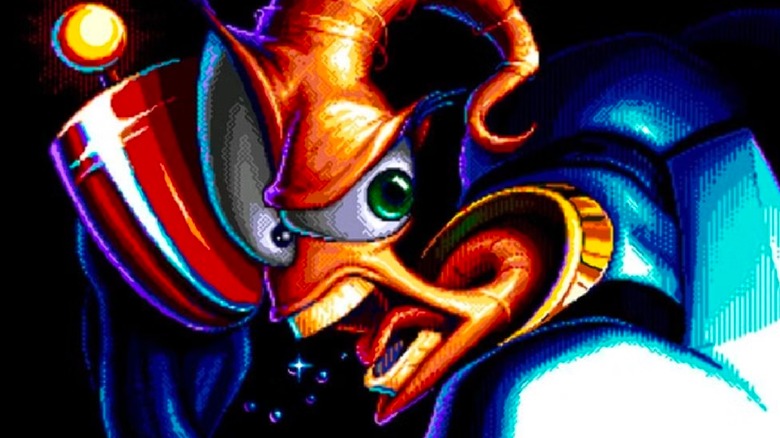
Another unusual video game protagonist from the '90s, Earthworm Jim debuted on the Sega Genesis and Super Nintendo in 1994. The game starred a seemingly ordinary worm who is upgraded by a futuristic spaceship and armed with a raygun as he takes on a variety of comedically garish villains. It was the first title to score a perfect 100% rating in "GamesMaster" magazine and lots of people were playing it — the quirky run-and-gun game shipped over a million copies in less than 12 months. It was such a big success that it was ported to other consoles and received a fast-tracked direct sequel the following year.
If you played this game at the time, you may be wondering what happened to Earthworm Jim. The franchise spawned an animated series when it was at its height, but then it seemed to vanish. There was a 1999 sequel titled "Earthworm Jim 3D" for the Nintendo 64, and a Game Boy Color game called "Earthworm Jim: Menace 2 the Galaxy" was released the same year. They attempted to bring Jim into a new era, but both games were pretty lackluster and the series dried up after that. Earthworm Jim felt like something that could really only come from and thrive in the '90s, and, in the decades since, there has been little to change that distinction.