
5 Arcade Games From The '90s That Vanished Almost Overnight
The '90s featured the last major push of arcade games as home consoles and PCs grew more technically comparable and widely available. As such, there were some arcade games released throughout the decade that didn't last all that long on the market compared to their '80s predecessors. From fighting games to side-scrolling beat'em-ups, no titles were safe from being quietly shelved in the wake of a lackluster response.
There are plenty of hit '90s games that no one remembers today, and that extends to arcade titles. This isn't a commentary on the quality of the games themselves — at least for most of the titles that we're covering here. The idea behind this article is to take a look at some arcade games that felt like they came and went very quickly as the ever-evolving industry left them behind to rust. Here are five arcade games from the '90s that vanished almost overnight.
Knuckle Bash (1993)
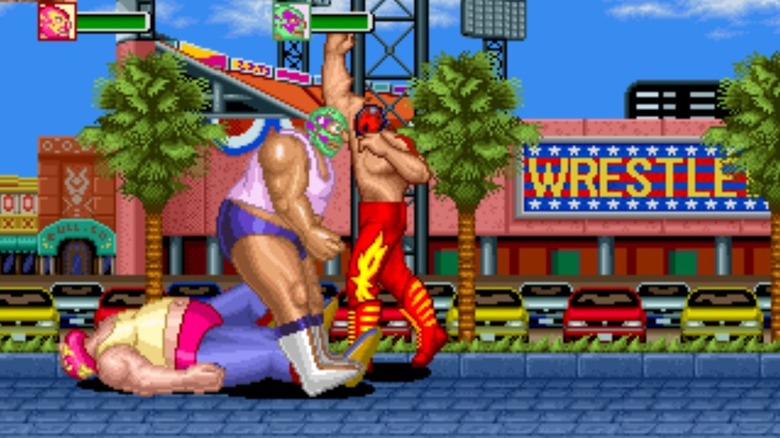
The beat'em-up "Knuckle Bash," developed and published by Toaplan, combined fighting game aesthetics with side-scrolling action. The game follows a group of heroic professional wrestlers who take on a crime syndicate looking to corrupt the sport for their own selfish ends. Playable characters include a luchador, a former pro football player, a ninja, and an Elvis impersonator, for some reason. Players select different sets of paths, each with their own specific stages as they clear waves of enemies.
"Knuckle Bash" might not stand out as prominently as its contemporaries like "Streets of Rage" or "Double Dragon," but it's still a solid beat'em-up title. Unfortunately, Toaplan went bankrupt in 1994, roughly a year after the release of "Knuckle Bash," putting its properties and production in disarray. The game never saw a console port as its arcade presence quietly diminished in the face of bigger beat'em-ups. Overlooked and with its future uncertain following the closure of Toaplan, "Knuckle Bash" is a fun take on a familiar genre.
Pac-Man VR (1996)
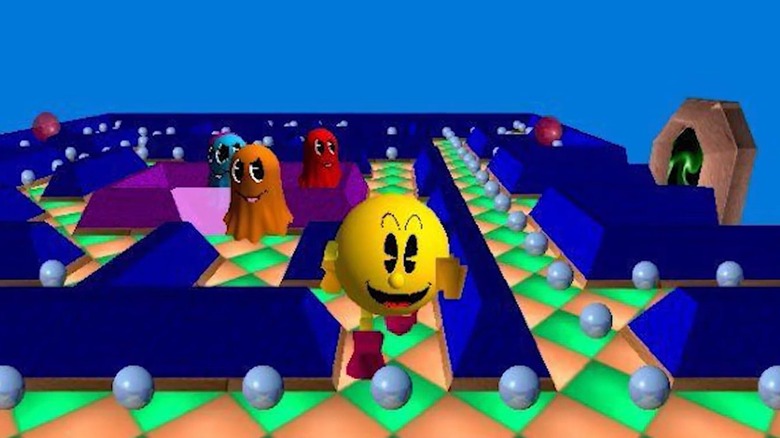
"Pac-Man" is still a billion dollar franchise for Bandai Namco Entertainment, though it has seen its ups and downs across its lengthy history. One of the more curious experiments the series took on was the 1996 arcade game "Pac-Man VR," offering a more immersive twist on the familiar franchise. Using a virtual reality headset, players controlled Pac-Man from a first-person perspective as they navigated the usual labyrinth, eating dots and avoiding ghosts. The game allows for up to four players working together to complete levels and outmaneuver the ghosts.
Rather than pouring in quarters every time players lost a life, "Pac-Man VR" charged them each $5 for five minutes of gameplay. This, combined with the title's high production costs, meant that the game was something of a commercial failure. In the face of sales not meeting expectations, the Virtuality machines and their games were quietly sent back to their manufacturers. "Pac-Man" has endured some major hiccups, but "Pac-Man VR" was a low point for the franchise's arcade titles.
War Gods (1996)
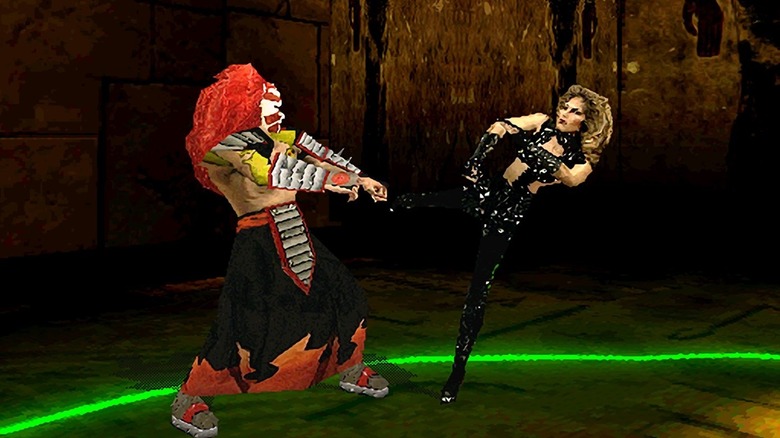
After its successful launch in 1992, there were many '90s video games that tried to copy "Mortal Kombat." This includes the 1996 fighting game "War Gods," which was developed and published by Midway Games — the same company that made "Mortal Kombat" at the time. The game has an ancient extraterrestrial ore being unearthed, transforming a group of individuals into a set of demigods, each with their own powers. As the newly minted deities battle each other for the rest of the ore, they find themselves defending Earth from the aliens responsible for leaving it on the planet.
"War Gods" evokes a 3D fighting game style predating Midway employing a similar presentation for "Mortal Kombat 4" the following year. The game even has its own finishing moves for each of its playable characters as previously popularized by "Mortal Kombat." Unfortunately, that established appeal didn't carry over. Despite a lot of hype, "War Gods" became a commercial flop due to its limited distribution. The game was later ported to the PlayStation, Nintendo 64, and PC, but reviews were similarly tepid about the console version.
Ninja Baseball Bat Man (1993)
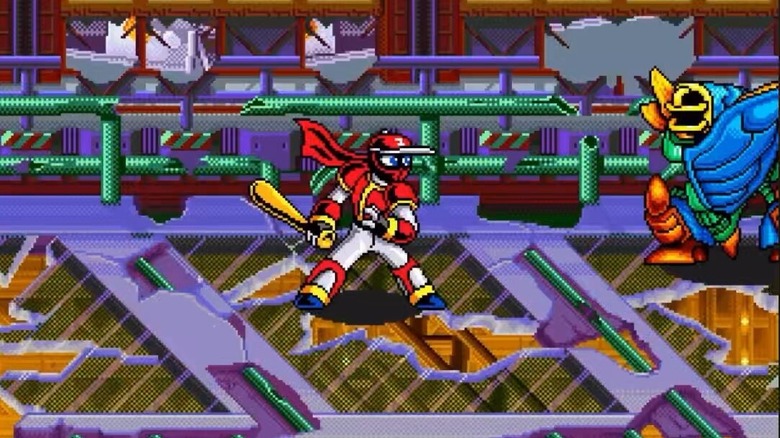
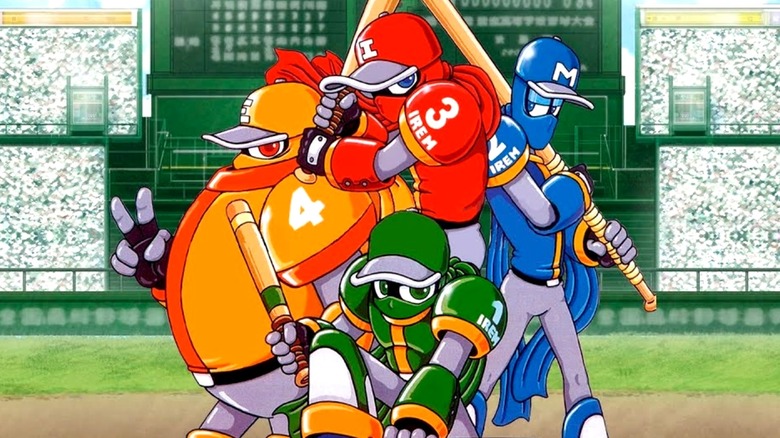
The side-scrolling beat'em-up genre features some of the most enduringly beloved arcade games around, including "Teenage Mutant Ninja Turtles" and "Final Fight." One title that unfortunately didn't experience the same level of popularity and success was 1993's "Ninja Baseball Bat Man." Players can control up to four different baseball-themed heroes to recover items stolen from the Baseball Hall of Fame. This involves battling through waves of similarly baseball-inspired enemies, using power-ups like baseballs and ballpark concessions to even the odds.
With its admittedly absurd concept and title, "Ninja Baseball Bat Man" is something of a cult classic at best instead of an industry blockbuster. The game's designer Drew Maniscalco revealed that the game only sold 43 cabinet units in the United States, finding more of an audience in Asia instead. Further adding to the game's obscurity is the fact that it was never ported to a home gaming platform. A vibrant and certainly unique title in the jam-packed side-scrolling beat'em-up market, "Ninja Baseball Bat Man" sadly struck out in North America.
Street Fighter III: New Generation (1997)
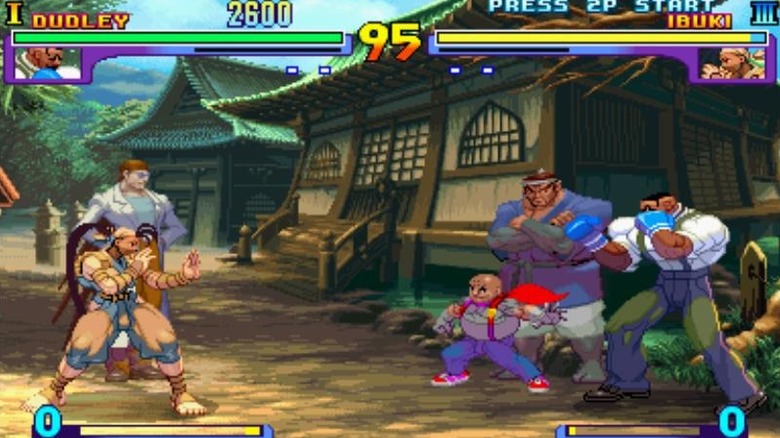
A critical turning point in the "Street Fighter" story, 1997's "Street Fighter III: New Generation" featured a largely new roster of playable characters. The only two returning characters were Ryu and Ken, with the friends looking for a fresh challenge. The game added a parrying mechanic to the gameplay and each character was given multiple super arts to pummel their opponents.
After the success of "Street Fighter II," hopes were high for "Street Fighter III." Unfortunately, the game's commercial performance didn't meet those lofty goals, especially in the U.S., where it only sold around 300 units. "Virtua Fighter" — the first 3D fighting game — had already been out for a few years and 2D fighting games were seen as a thing of the past. "If we were going to beat 'Virtua Fighter,' we had to make something that would go down in the annals of gaming history," Capcom's Akira Yasuda told Polygon. "I knew it was a battle we weren't going to win, but we had to fight it anyway."
Looking to turn around lackluster impressions of the game, Capcom basically wrote off "New Generation" and put out an updated version, "Street Fighter III: 2nd Attack," seven months later. "Street Fighter III: 3rd Strike," which further tweaked the experience, followed in 1999. "When we released '2nd Impact' and '3rd Strike,' I think the overall project became more profitable at that point," Capcom's Shinichiro Obata told Polygon. "I remember the producer at the time saying we were lucky that the game didn't bring us into the red."