
5 Nintendo Games From The '90s That Aged Worse Than Anyone Expected
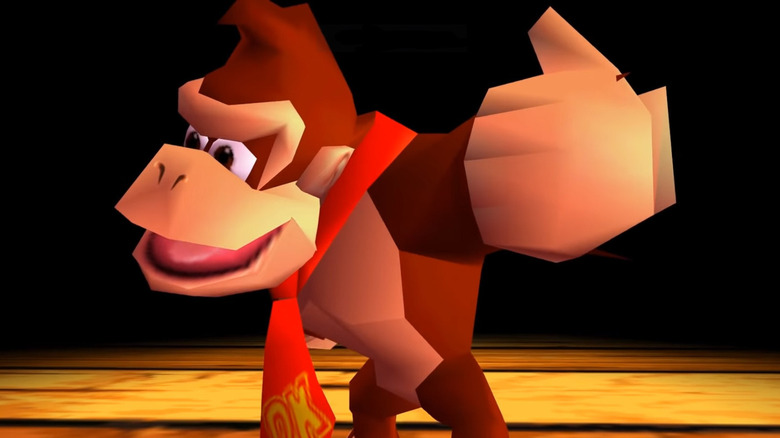
Video games that once dazzled us with their amazing graphics and gameplay for their era will inevitably feel increasingly dated with every passing year, and Nintendo titles are no exception. Though some 1990s games have aged flawlessly, including classics from Nintendo, the same cannot be said of all the Japanese powerhouse's offerings from that decade. Even Nintendo's marquee characters starred in games that are nowhere near as well-received retrospectively as they were when they debuted.
We've already covered video games from the '90s that aged terribly, but this time we're focusing on different titles released specifically for Nintendo consoles. Games that were multi-platform during their initial release are not included here. As always, this isn't to say that these are bad games, just that they don't shine as brilliantly as they did upon their respective launches. From formerly beloved run-and-gun side-scrollers to early 3D offerings that look terrible now, here are five Nintendo games from the '90s that aged worse than anyone expected.
Super Star Wars (1992)
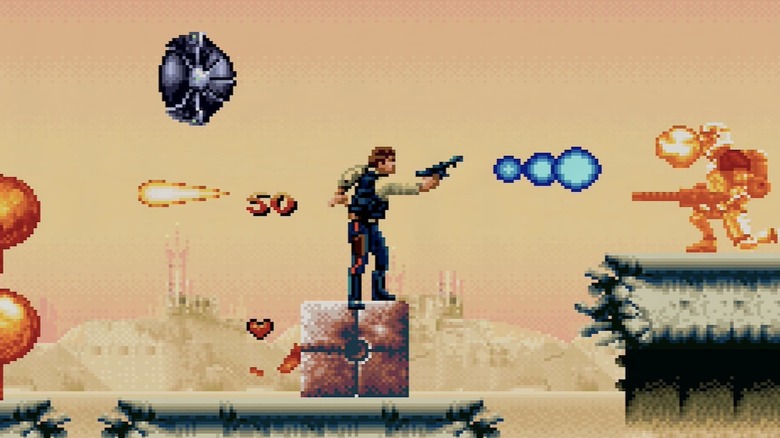
In the early-to-mid '90s, video games were helping keep the Star Wars franchise alive, with some of the best Star Wars games released during this period. This includes the "Super Star Wars" trilogy, a trio of titles for the Super Nintendo each adapting an entry in the classic movie trilogy. The first installment was 1992's "Super Star Wars," recreating key moments from the original 1977 movie. Players get to choose between various fan-favorite film characters on side-scrolling action levels and vehicle-based levels, including the Rebel Alliance's climactic attack on the Death Star.
On its own merits, "Super Star Wars" is a great game, one that made great use of the SNES' Mode 7 graphical capabilities. However, the 1992 title falls short because it lacks a password save system unlike its two sequels. That means, in its original incarnation, players had to play through the entire game in a single sitting, with no way to jump to later levels if they rebooted it. The intense difficulty of the game and its limited number of continues makes the omission all the more frustrating. It massively ages the game, which is maddening to play nowadays.
Mario Is Missing! (1993)
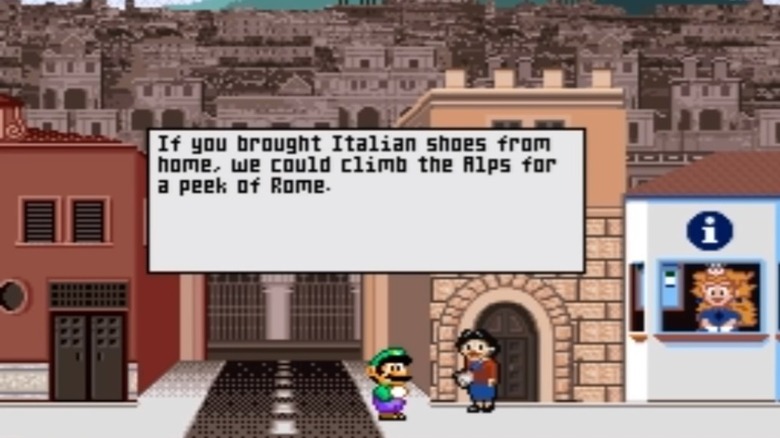
As educational games grew more popular in the early '90s, Nintendo licensed out several properties to capitalize on the trend. 1993's "Mario Is Missing!" was developed and published by The Software Toolworks and released for PC while being a console-exclusive on the NES and SNES. True to its title, Mario is kidnapped by Bowser ahead of King Koopa's plan to steal international artifacts and famous landmarks after invading the real world from the Mushroom Kingdom. It's up to Luigi and Yoshi to travel around the world and find clues so they can foil Bowser and rescue Mario.
Reusing assets from "Super Mario World," "Mario Is Missing!" initially looks like a Mario game, at least based on sprites of its Nintendo characters. However, the gameplay itself is more like a poor "Where in the World Is Carmen Sandiego?" Despite this, the console versions of the game earned over $7 million in the first two months of release. If you sit down to play it together, the only mystery you'll want to solve is how it made that much money. A Mario game Nintendo would probably want us to forget, "Mario Is Missing!" is an uninspired effort to bring the franchise to the educational game space and it hasn't aged well.
ClayFighter 63 ⅓ (1997)
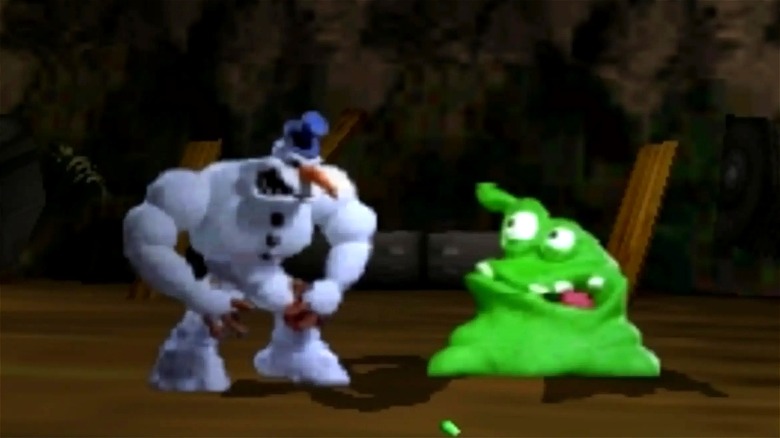
Yes, 1993's "ClayFighter" was released for both the Super Nintendo and Sega Genesis, but its 1995 sequel was a SNES exclusive. Similarly, 1997's "ClayFighter 63 ⅓" was a Nintendo 64 exclusive, as was its 1998 update (with the latter becoming the rarest N64 game of all time). The series revolves around stop-motion animated clay figures who brutally battle each other in a side-scrolling fighting game experience. Playable characters include a sinister snowman, an Elvis impersonator, and a sentient piece of taffy, each with their own unique moves.
While the stop-motion animation technique used to bring "ClayFighter" to life is an impressive production detail, the wow factor behind its presentation has diminished considerably. Taking away the flashy faux 3D visuals highlights how awkward the gameplay mechanics are, particularly for the titles on the N64. The game is also deeply rooted in the humor of the day, including veering into scatological gags, which haven't aged well. A fighting game series that could only thrive in the '90s, "ClayFighter" dying on the N64 underscored shifting sensibilities.
Castlevania (1999)
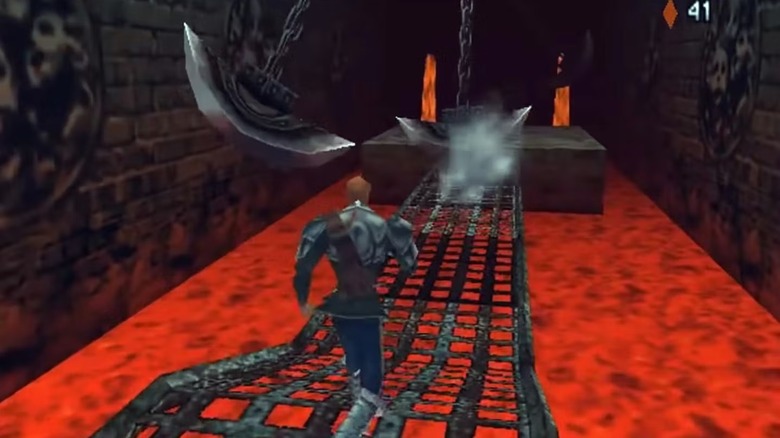
In the wake of "Super Mario 64" revolutionizing the industry, it felt like every classic video game property tried making the jump to 3D in the late '90s. This includes "Castlevania," with the horror-themed side-scrolling platformer going 3D with its 1999 game on the Nintendo 64. Colloquially known as "Castlevania 64," the game has new heroes Reinhardt Schneider and Carrie Fernandez taking on Dracula when he resurfaces in the 19th century. Venturing into the undead count's Transylvanian castle, Reinhardt arms himself with the legendary Vampire Killer whip while Carrie uses her powerful magic to fight the forces of darkness.
Though "Castlevania 64" received largely positive reviews upon its launch, opinion of the game has soured over the years. Its unintuitive camera positioning is among the worst crimes committed against the "Castlevania" franchise, especially given the amount of precise platforming. Less than a year after its initial release, the game received an expanded and refined version on the N64 called "Castlevania: Legacy of Darkness." It fared much better from a technical standpoint, but still hasn't aged very well. The game was later removed from the official "Castlevania" timeline, hinting at what Konami thinks of the N64 title.
Donkey Kong 64 (1999)
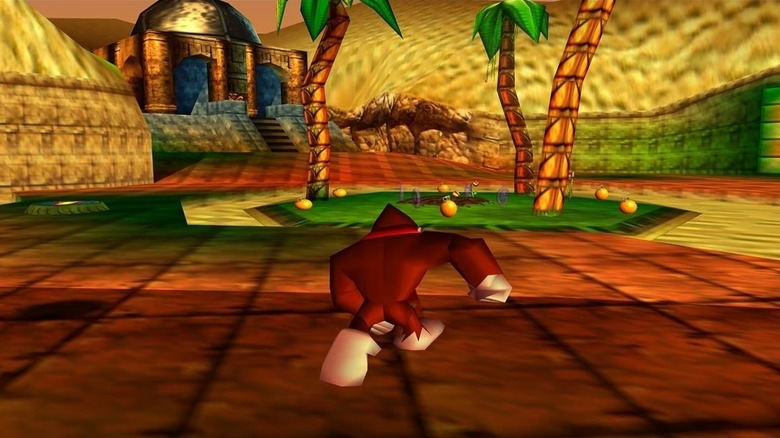
Rare revolutionized Nintendo's venerable icon Donkey Kong with the "Donkey Kong Country" trilogy on the Super Nintendo. Revamped with then-stunning pre-rendered graphics, the Kong clan were among the most visually impressive looking characters of the 16-bit era and all three games hold up well to this day. Three years after "Donkey Kong Country 3," Rare brought the gorilla into fully 3D adventures with 1999's "Donkey Kong 64." The game has Donkey and Diddy Kong joined by Tiny, Lanky, and Chunky Kong to defend DK Isle from the latest attack by King K. Rool and his Kremlings.
"Donkey Kong 64" earned widespread critical acclaim when it launched in time for the 1999 holiday season, but retrospective opinion surrounding the game has gradually changed. Functionally, the game is a more overt collect-a-thon than the beloved "Super Mario 64," requiring backtracking across the same levels with all five Kongs for full completion. The game came with a set of multiplayer modes, but none of them are all that fun — they're essentially rushed versions of existing single-player minigames from the campaign mode. "Donkey Kong 64" deserves a remake but any such project should ignore the more tedious elements of the original game.