
5 Underrated '90s Video Games That Should Have Been Huge Hits
With multiple handheld and home consoles hitting the market, competing companies trying to one-up each other, and some big advances in PC gaming hardware, the '90s was a huge period for the video game industry. This was the decade where games truly got embraced by the mainstream, demonstrating what the medium was capable of. There are many hit games from the '90s that have aged flawlessly and are remembered fondly. However, there are also numerous fantastic titles from the time that never got the love and attention they deserved.
Every major gaming platform from the '90s had some overlooked gems that should have been appreciated a whole lot more: Whether they were overlooked for flashier titles or bigger franchises, or they just lost in the shuffle, they all deserve reappraisal. Some of the titles we've gathered here have been reintroduced to modern audiences in some shape or form but still remain largely underappreciated in the gaming community. Here are five severely underrated '90s video games that should have been huge hits at the time.
Sol-Feace
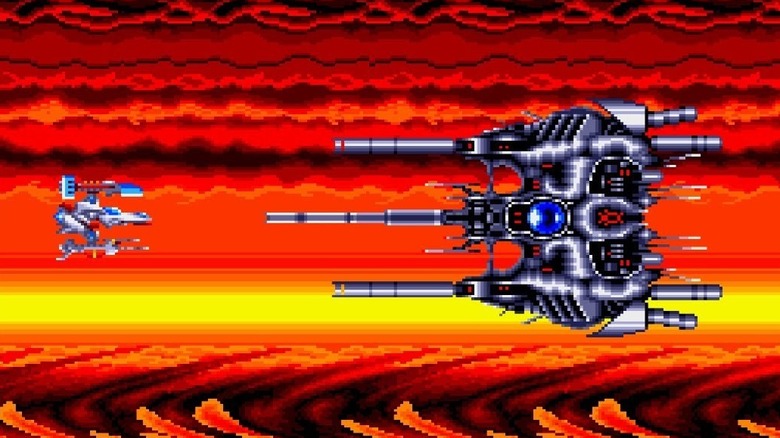
The space shooter genre of video games popularized by "Galaga" and "Gradius" in the 1980s was still relevant by the time the following decade arrived, though one title that got overlooked was 1990's "Sol-Feace," which was ported to Sega consoles over the next couple of years. A horizontal shoot'em-up, the game has players pilot a starfighter out to stop a rogue artificial intelligence from subjugating humanity. The game offers plenty of fast-paced action along with a solid soundtrack and standout visuals, particularly for its Sega CD version. So why wasn't it a hit?
One thing that may have held "Sol-Feace" from finding success in North America, besides having to compete with titles like "Super R-Type," was its unusual title, which was slightly modified to "Sol-Deace" for its Sega Genesis version. The game was also known for being very difficult. On top of that, it came out at a time when fighting games and side-scrolling platformers were starting to gain more traction, vying for attention with space shooters. Of course, the title being positioned for the divisive Sega CD peripheral didn't help it receive much attention, either. Ultimately, despite being a very enjoyable and rewarding game for those who stuck at it, "Sol-Feace" is one of the games that died along with the Sega CD.
Blackthorne
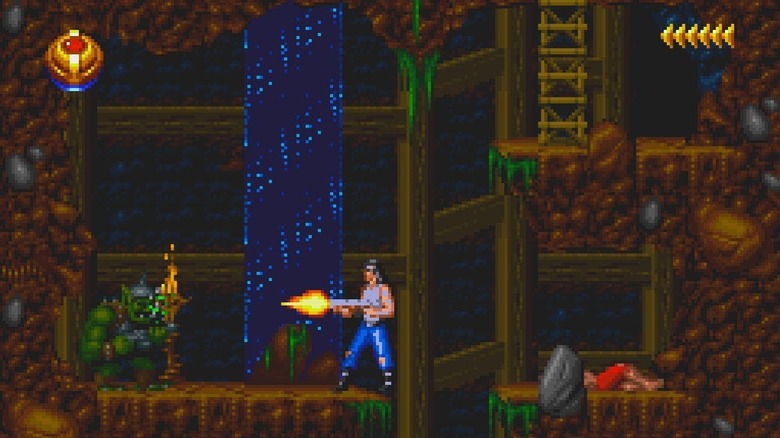
Before becoming a real-time strategy juggernaut with its PC properties, Blizzard Entertainment developed a number of cult classic console games. This includes 1994's "Blackthorne," initially released for the Super Nintendo before being ported to other consoles. A side-scrolling platform action game in the tradition of "Prince of Persia," players control the titular sci-fi hero as he explores maze-like environments looking for keys to advance. Kyle Blackthorne's primary weapon is a shotgun and he can lean against walls and other forms of cover to avoid incoming enemy gunfire.
"Blackthorne" is a Blizzard SNES game that many people never played, but not because of its quality. The game was named as Electronic Gaming Monthly's game of the month for September 1994 and it received largely positive reviews upon release, with critics praising its emphasis on combat over puzzle-solving, smooth animation, and darker tones. That latter quality may have been a factor in the game failing to stand out to Super Nintendo owners upon its debut. In 2021, Blizzard Entertainment included "Blackthorne" in its compilation title "Blizzard Arcade Collection," bringing the title to modern audiences.
Secret of Evermore
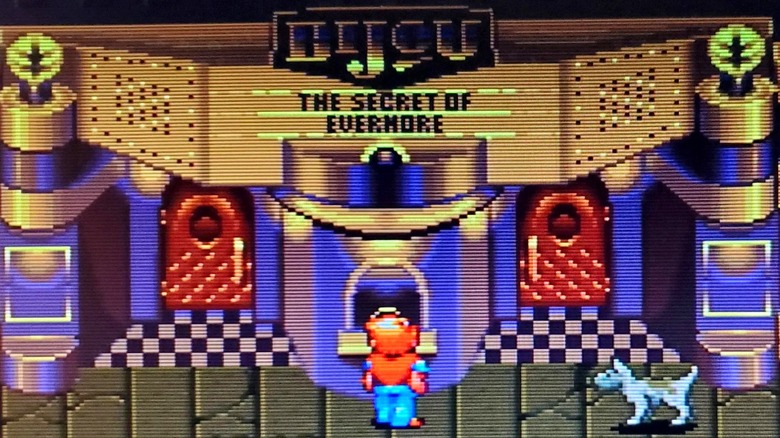
With franchises like "Final Fantasy" and "Chrono Trigger," Square was absolutely dominating the RPG space in the '90s. One overlooked gem released in 1995 was "Secret of Evermore," an action RPG similar to Square's previous title "Secret of Mana." The game is named for its primary setting of Evermore, a composite world with regions resembling different eras of human history. The player character is a teenage boy. He and his shape-shifting dog are trying to return to the real world after crashing on Evermore, facing monsters threatening the realm's stability.
"Secret of Evermore" is an underrated Super Nintendo RPG that flew under the radar upon its debut despite some glowing reviews. Electric Playground was full of praise for the game, giving it a score of 8/10. "The graphics for Evermore are standard Square fare. That is to say, they're brilliant. Every pixel on the screen carries weight and meaning. In a game with as much terrain to cover as this, it is truly astonishing to see how much the detail is agonised over." The gameplay echoes "Secret of Mana" while putting its own twist on its real-time combat system. Providing players with an innovative two-character mechanic and a world that memorably blends sci-fi and fantasy to explore, "Secret of Evermore" is a game that deserves a modern remaster.
Doom 64
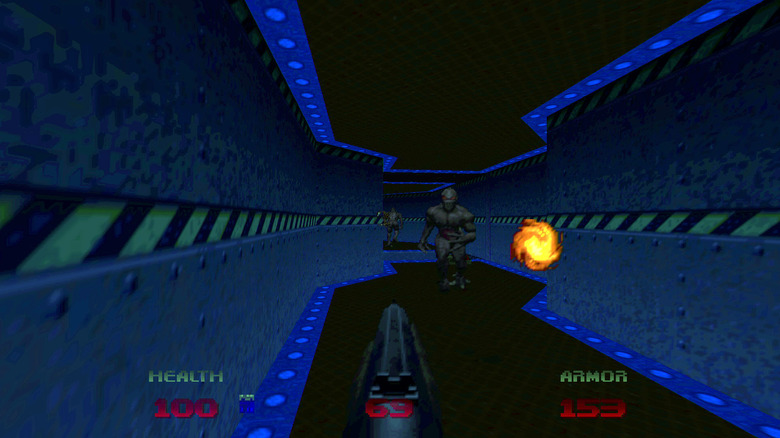
1997's "Doom 64" for the Nintendo 64 continued the story after 1994's "Doom II" and 1996's "Final Doom." The nameless space marine is lured into a trap by the forces of Hell. Blasting through waves of monsters, the marine confronts the Mother Demon, armed with the refined weapons arsenal from "Doom II." The game was widely praised at the time, with IGN calling it the best-looking entry in the franchise to date. "The 3D engine is ultra slick, the backgrounds scroll by smoothly and there is no pixelation up close. The texture maps are nicely detailed, and everything is now true 3D, which means things stick out from the walls and there are rooms and walkways above rooms."
The game took full advantage of the N64's hardware, but there was more to it than just that. The darkest entry in the classic "Doom" titles from the '90s, "Doom 64" is superbly atmospheric, with an appropriately moody soundtrack adding to the overall experience. Perhaps the reason that it got overlooked at the time was that it came out the same year as the megahit "GoldenEye 007," which sold over 8 millions copies — way more than the 470,000 "Doom 64" shifted. Another reason could be that it lacked a multiplayer mode (it almost got one, but it never happened). "Doom 64" was remastered for modern platforms in 2020, reminding everyone just how good this largely overlooked gem actually is.
Threads of Fate
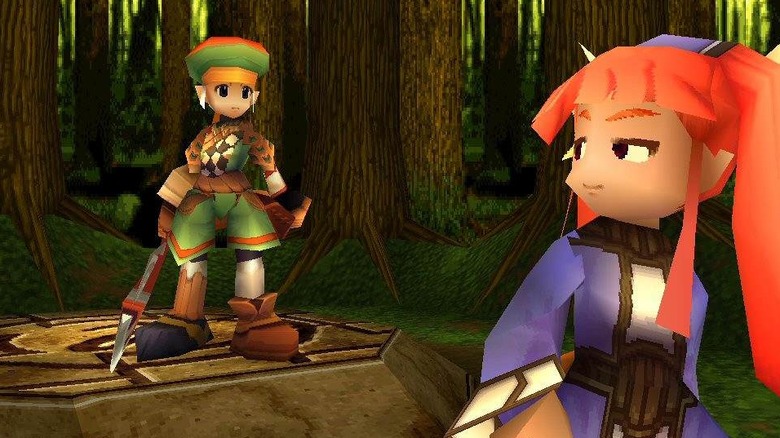
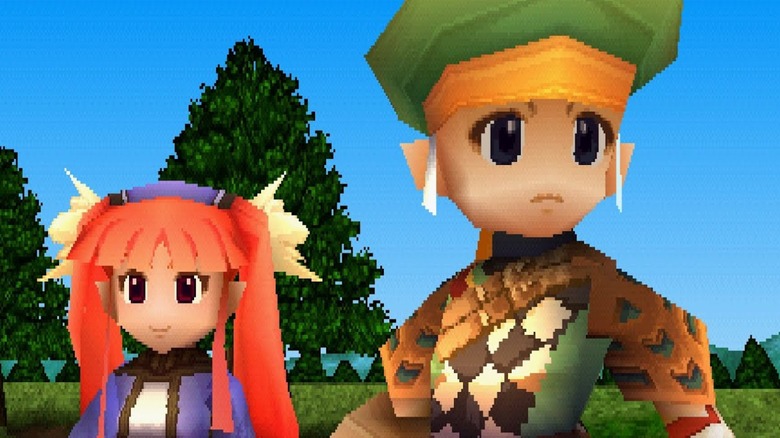
While it was busy transforming the "Final Fantasy" franchise on the original PlayStation, Square released separate RPG titles alongside it. Among these games is 1999's "Threads of Fate," a dual-protagonist action RPG. Players can choose between the amnesiac Rue or Princess Mint, with each character possessing their own unique story campaign and ending. The two characters also have their own gameplay mechanics as they independently search for a relic reputed to grant any wish.
"Threads of Fate" provided players with an accessible and straightforward dungeon-crawling experience and was met with critical praise, with Next Gen magazine saying that Square had "finally given PlayStation owners an action-RPG capable of standing toe-to-toe with Nintendo's Zelda series." Despite this, "Threads of Fate" didn't sell well. In fact, when the initial figures got back to Square, it made for grim reading.
"On the first day of release, we received a sales report saying, 'It was a complete disaster,'" director and programmer Koji Sugimoto told Game Business in 2020. "However, when we conducted market research afterwards, the results showed that there was a complete lack of awareness of the quality." The game's reputation improved over the years as more people discovered how good it actually is. Today, "Threads of Fate" is considered to be among the most underrated video games of the 1990s.