
5 Underrated '80s Video Games That Deserved More Success
Between the arcade scene hitting its heyday and home consoles becoming increasingly prominent, the gaming industry cemented its placement in worldwide entertainment in the '80s. Rebounding after the video game crash of 1983, the industry saw Japanese companies like Nintendo take prominence globally with its home and handheld platforms. Arcades and personal computers also saw their own beloved titles, but, for every game that saw widespread success, there are countless others that fell into obscurity. This isn't an indictment of their individual quality, just an observation that they were greatly overshadowed by their more popular contemporaries.
To be clear, we're not talking about the hit '80s games that no one remembers today. Instead, we're looking at '80s games that are great in their own way but never quite got the level of recognition that they deserved. Whether it's titles that never received a wide North American release or games that didn't make waves on the home market, these games are all ready for a positive reappraisal. Here are five underrated '80s video games that deserved more success and are ripe for revisiting.
Anteater
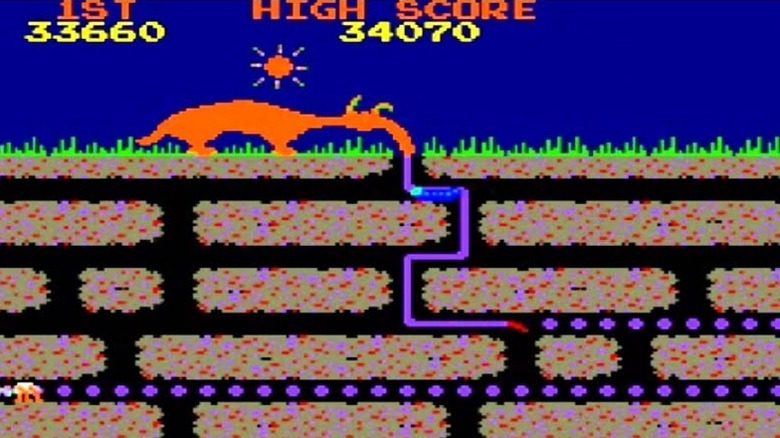
There are plenty of arcade games built around strange concepts and mascots, but, even by '80s standards, 1982's "Anteater" was odd. Players control an anteater at the top of the screen and navigate their tongue through a vast system of tunnels dug out by bugs. Only the tip of the anteater's tongue can be used to consume ants and players must avoid ants touching other parts of the tongue as well as spiders also lurking underground. The goal is to eat all the ant larvae before the time limit expires, with the queen ant and worms worth significant bonus points.
There's no doubt that "Anteater" has a unique charm and it is way more fun to play than it has any right to be. Despite this, the game didn't reach the same levels of success as "Dig Dug" or "Q*Bert." "Anteater" designer Chris Oberth speculated that subsequent arcade games like "Oils Well" were directly inspired by his game, particularly given the layout and gameplay mechanics. "'Anteater' was the first and all the rest were clones," he told Retrogaming Times Monthly. A bizarre but entertaining little arcade game from the early '80s, "Anteater" is something of a cult classic these days and deserves to be loved by a lot more people.
Black Tiger
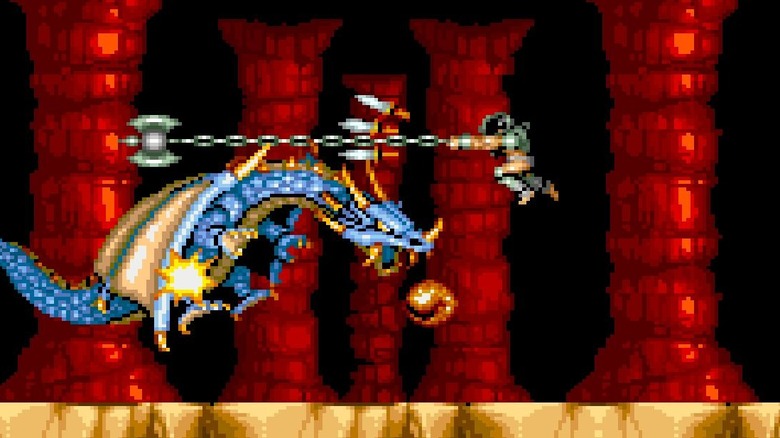
After developing and publishing the supremely difficult "Ghosts 'n Goblins" in 1985, Capcom created another fantasy platformer for arcades with 1987's "Black Tiger." The game has players control a medieval adventurer who sets out to fight the monstrous armies that have subjugated his kingdom. While upgrading his weapons and armor across his epic journey, the player character navigates a group of levels from a side-scrolling perspective. This culminates in harrowing battles against three dragons who are commanding the monsters.
While it's superficially similar to the arcade version of "Ghosts 'n Goblins," right down to its perspective and fantasy aesthetics, "Black Tiger" distinguishes itself through its overall experience. While certainly a tough game, the 1987 title's difficulty doesn't feel like it's just trying to steal your quarters, largely thanks to its upgrade system. The game is also noticeably more visually impressive than the original "Ghosts 'n Goblins." Sadly, Capcom never fully revisited the title: While "Ghosts 'n Goblins" remains a celebrated franchise in Capcom's stable of popular properties, "Black Tiger" never was expanded into its own series.
Guerrilla War
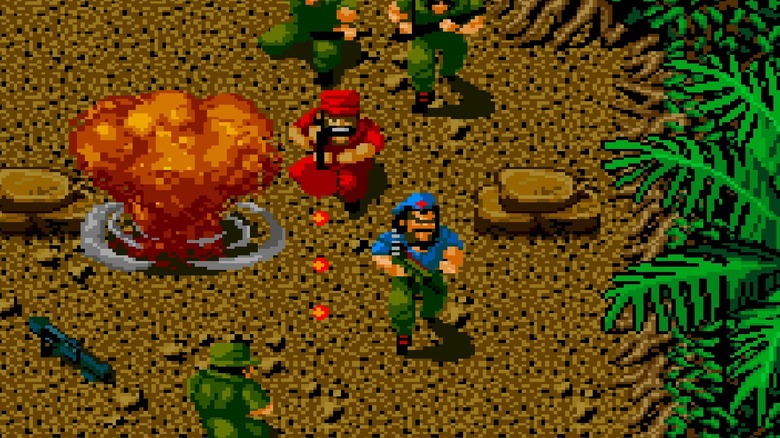
Shoot'em-ups from a top-down perspective moved beyond the space shooter genre in the '80s with titles like 1985's "Commando." After developing and publishing 1986's "Ikari Warriors" (a game that's actually more fun if you cheat), SNK launched another title the following year: "Guerrilla War." The players control revolutionaries who move to topple a Caribbean island dictator, battling a growing number of enemy loyalists. The pair of freedom fighters rescue hostages as they advance to a final showdown against the tyrant in an explosive last stand.
Rather than double down on "Guerrilla War," SNK returned its focus to the "Ikari Warriors" series moving forward. "Guerrilla War" did get an international release and was ported to gaming PCs and the Nintendo Entertainment System, but, in an increasingly crowded market, the game didn't rise to stand out from its contemporaries. Compared to other shoot'em-ups of its time, there just wasn't enough to distinguish "Guerrilla War" from the competition and it's become a lesser known SNK property.
Escape from the Planet of the Robot Monsters
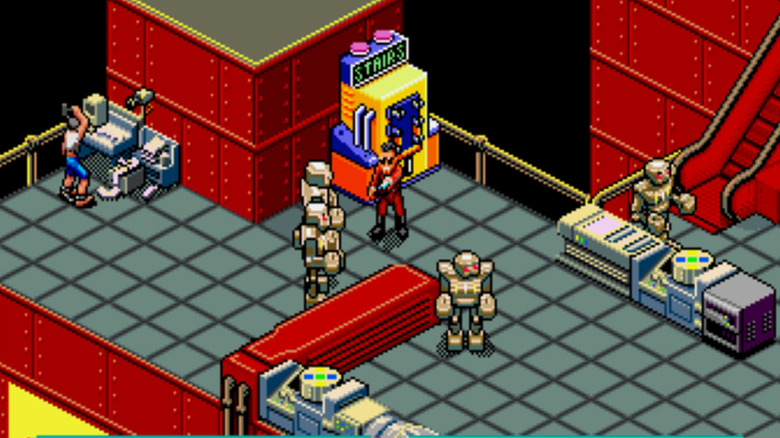
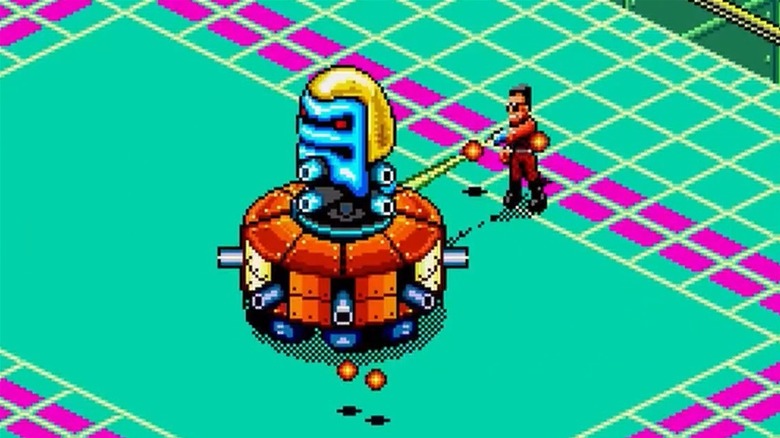
One of the quirkier shoot'em-ups released towards the end of the '80s was "Escape from the Planet of the Robot Monsters." Developed and published by Atari in 1989, the game was visibly inspired by cheap sci-fi movies from the '50s and '60s, as the title hints at. Heroes Jake and Duke team up to rescue a group of human hostages from a research facility on Planet X. Players blast through waves of aliens and robots with their rayguns, occasionally jumping into the cockpit of a spaceship.
"Escape from the Planet of the Robot Monsters" embraces its B-movie inspirations to deliver a fast-paced and fun shooter. The game's shoot'em-up action from an isometric perspective — which made it stand out from more popular titles like "Contra" — is endlessly fun and should have made this a more renowned release. A sci-fi shooter with a pronounced sense of humor about itself, "Escape from the Planet of the Robot Monsters" definitely leans into a more memorably irreverent tone.
Sweet Home
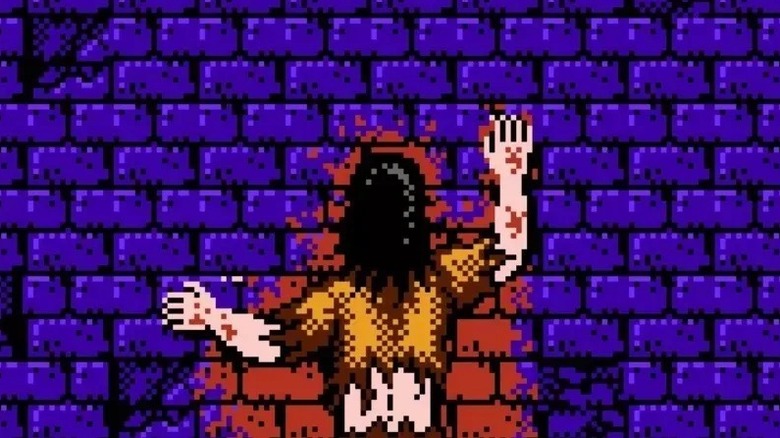
One of the untold truths about "Resident Evil" is that the game was directly inspired by the 1989 Capcom game "Sweet Home." A tie-in title for the Japanese horror movie of the same name, the game has a team of five filmmakers exploring a haunted mansion. Each of the characters carry an item necessary for progressing through the mansion and players can alternate between characters as they delve deeper into the house by solving puzzles. The characters encounter a variety of supernatural monsters and combat is conducted in a menu, RPG-style as they discover the house's tragic history.
"Sweet Home" never saw an official release outside of Japan, even despite its clear thematic connection to "Resident Evil." The game does feel advanced for its time, especially for a title released on the Famicom, evoking a similar gameplay experience as "Earthbound." Owing to its cinematic source material, the game runs heavily on atmosphere and features an engrossing story at its core. The granddaddy of home console-based survival horror games, "Sweet Home" could definitely benefit from a modern remaster, including an official translation.