
5 Arcade Games From 1983 That Changed Gaming Forever
The '80s were an enormously pivotal decade for the gaming industry, from the explosion of home console and gaming computer availability to the emergence of major companies and franchises. The early '80s proved to be tumultuous for the industry in North America, culminating in the video game crash of 1983, which deeply affected companies like Atari. Despite this far-reaching setback, the arcade scene still saw numerous influential titles released throughout 1983.
Whether it was through significant advances in gaming technology or the introduction of innovative gameplay mechanics, several arcade games in 1983 made a resonating impact. And even with the industry in a state of recovery, several of these games were successful in their own right. Here are five arcade games from 1983 that changed gaming forever, with many of their legacies still felt on some level today.
Astron Belt
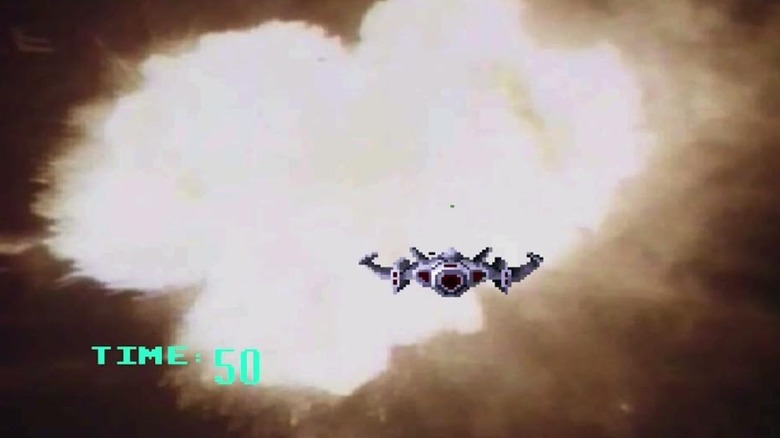
The very first game to use laserdisc technology instead of the usual chip and cartridge-based formats was the space shooter "Astron Belt." Developed and published by Sega, players move forward in a rail shooter format, taking on incoming spaceships and other obstacles. Enemies come in waves in front of pre-rendered backgrounds, with some footage taken from the films "Star Trek II: The Wrath of Khan," "Battle Beyond the Stars," and the Japanese sci-fi flick "Message from Space." It was this mix of recycled footage and original animation that helped make "Astron Belt" stand out from other genre titles.
Chips and cartridges would still be the primary format for video games, particularly for home platforms, for the next several years. But "Astron Belt" demonstrated what technical advances for the medium were possible, especially as disc technology improved. A month after its release, the game topped arcade revenues in Japan, but its North American launch was delayed until the end of 1983. In that time, other laserdisc arcade titles beat it to punch in the market, though it remained a clear example of what was possible with the technology.
Star Wars
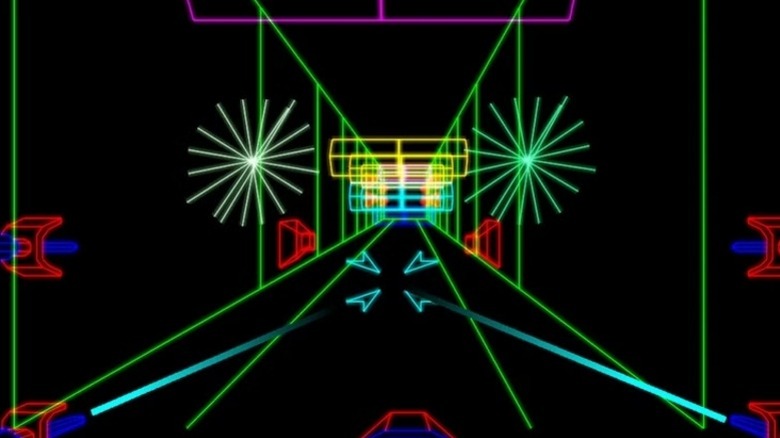
Ever since the franchise's launch, "Star Wars" has had good and bad video games hit the market. An early standout for the space opera property is its 1983 arcade game by Atari, simply titled "Star Wars." Featuring a sit-down cabinet, the game takes place in the 1977 movie's climax as Luke Skywalker attacks the Death Star in his X-Wing starfighter. Unfolding across three different levels, Luke battles TIE Fighters while approaching the Death Star, moves across its surface, and enters the battle station's trench towards its weak point.
With its cockpit-styled setup, brightly-colored vector art design, and surround speakers, "Star Wars" definitely stood out from contemporary space shooters. The game became Atari's best-selling new title of 1983, shifting over 12,000 cabinets and becoming a much-needed success amid the company's compromised fortunes during the crash. With three clear levels directly evoking a sequence from its cinematic source material, the game was also a landmark movie tie-in for its time. More sophisticated and ambitious "Star Wars" games would eventually follow, but the 1983 arcade game definitely set a high bar for the franchise.
Mario Bros.
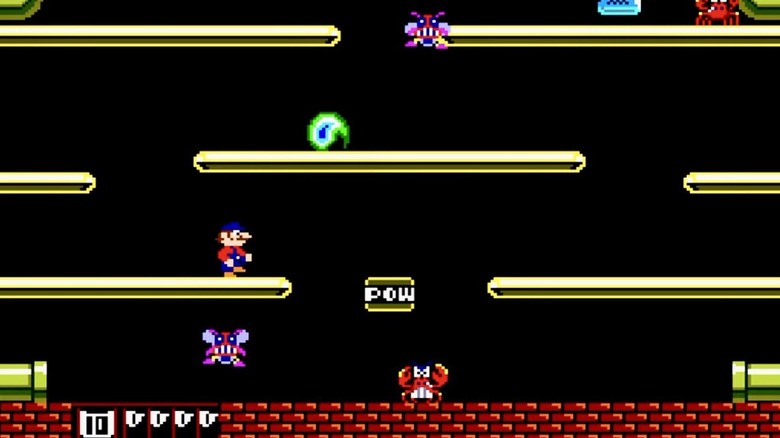
Not to be confused with 1985's "Super Mario Bros.," the 1983 "Mario Bros." was a competitive game between Mario and Luigi. Unfolding in a single screen setup, the brothers overturned various enemy types by hitting the floor under them and then kicking them to destroy them. Players compete to get the highest score as the speed of the enemies and obstacles in each stage grow progressively more perilous. In addition to receiving a Nintendo Entertainment System port, the game would be replicated as bonus stages in "Super Mario Bros. 3."
Mario had made his debut in 1981's "Donkey Kong," but it was "Mario Bros." that finally put the character's name on the marquee. The game also introduced Luigi, the concept that the brothers were plumbers, and the turtle, pipe, and coin motifs that became commonplace in the subsequent franchise. In just two years, Mario took over Nintendo with "Super Mario Bros.," revitalizing the industry after the 1983 crash. The foundations of the franchise can be seen clearly in the arcade game "Mario Bros."
Dragon's Lair
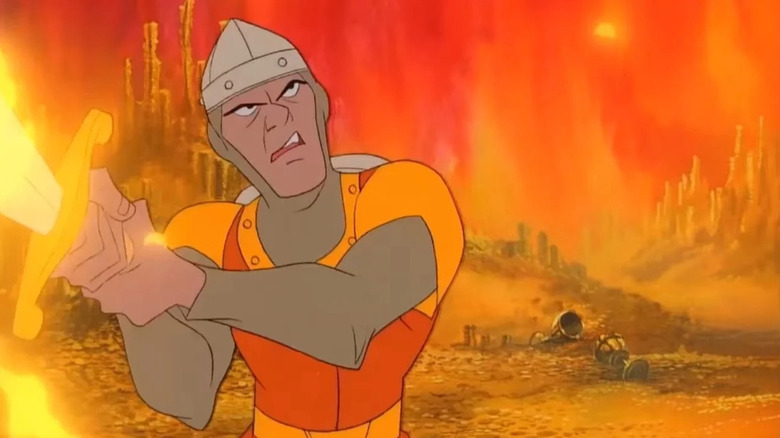
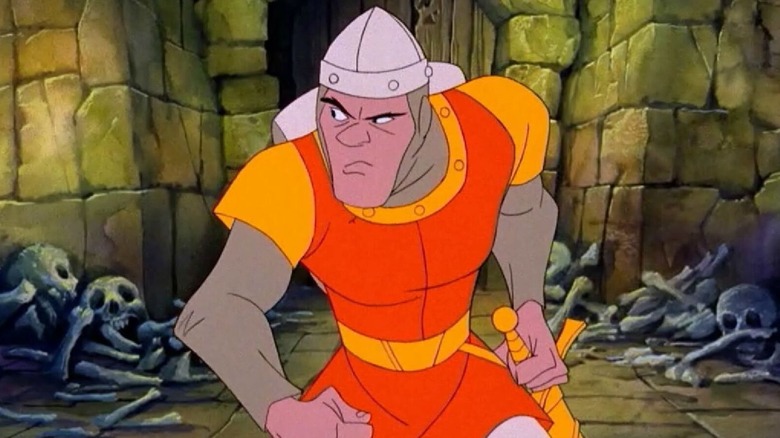
While "Astron Belt" may have led the charge for laserdisc technology being used in arcade games in Japan, it arrived in North America several months after "Dragon's Lair." The fantasy game has a medieval knight named Dirk the Daring enter a haunted castle to rescue Princess Daphne from an evil dragon. At certain moments throughout the game, players must input a quick-time event command to avoid Dirk meeting a grisly end. With little player control over the actual progression of the story, gamers can only persevere through memorization and trial-and-error.
"Dragon's Lair" is an arcade game that was way too hard, excelling at getting players to pour in their quarters just to see the next scene. It became a top money-maker in 1983, helping keep the industry alive through its widespread implosion. A big factor is that nothing else on the market looked like "Dragon's Lair" at the time, with Hollywood animator Don Bluth as its director, designer, and producer. Visually, arcade titles began to up their presentation and offer a more cinematic experience overall in the wake of Bluth's popular game.
Bega's Battle
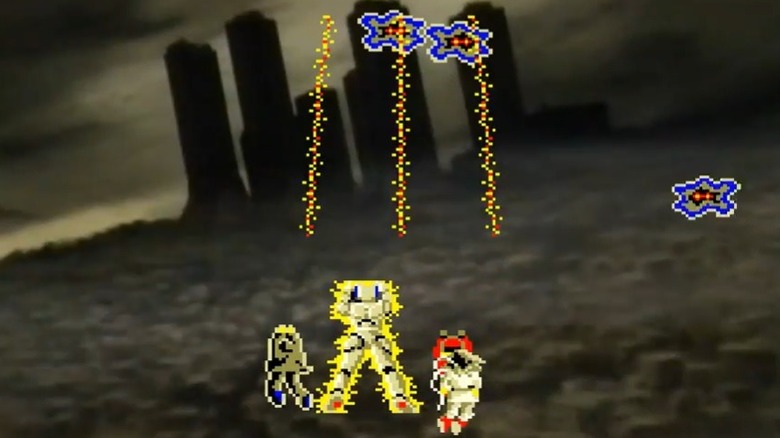
Originally released under the title "Genma Taisen" in Japan, "Bega's Battle" was a tie-in game for the 1983 animated movie "Harmagedon: Genma Wars." Another laserdisc-based title, the game has players control a robot taking on alien invaders in service of Genma. The player character and enemy sprites are superimposed over footage and imagery from the movie, evoking a more sci-fi cinematic art style. The gameplay itself has enemies descend from the top of the screen in the style of "Galaga," one of several '80s games with endless replay value.
While not as visually impressive as "Astron Belt" or "Dragon's Lair," "Bega's Battle" brought its own innovations to the laserdisc format. The game features full-motion video cutscenes between levels and branching paths based on the players' choices and performance. These features became more commonplace as the industry progressed, while full-motion video became a storytelling standard, especially on Sega CD. Another step forward for laserdisc technology and disc-based games in general, "Bega's Battle" arguably exceeds the legacy of its source material.