
5 Titles That Prove 1998 Was The Best Year In Gaming
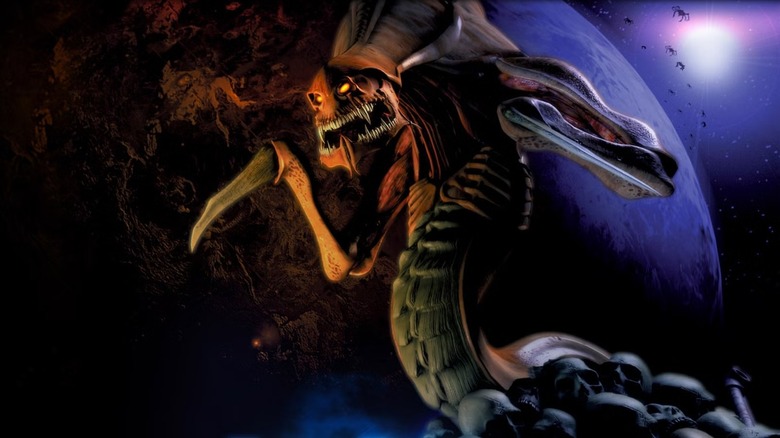
While the '90s was a pivotal decade for the video game industry, the number of landmark titles released in 1998 is particularly staggering. Both home consoles and PCs saw the release of major games that quickly grew to become influential in various ways. These titles range from sequels that completely redefined their respective franchises, to the start of new game-changing properties altogether. Some of these games were groundbreaking in what they brought to the medium while others served as an enduring distillation of what makes video games great.
1998 saw the release of video games that aged flawlessly, with plenty of titles that we're still talking about decades later. While other years in the '90s certainly had their highlights, this one just hit differently across the board. Across the multitude of stellar titles, we've narrowed it down to a handful that continue to loom large and boast vocal, still-active fan bases. Here are five titles that prove 1998 was the best year in gaming, taking the medium to new heights.
Resident Evil 2
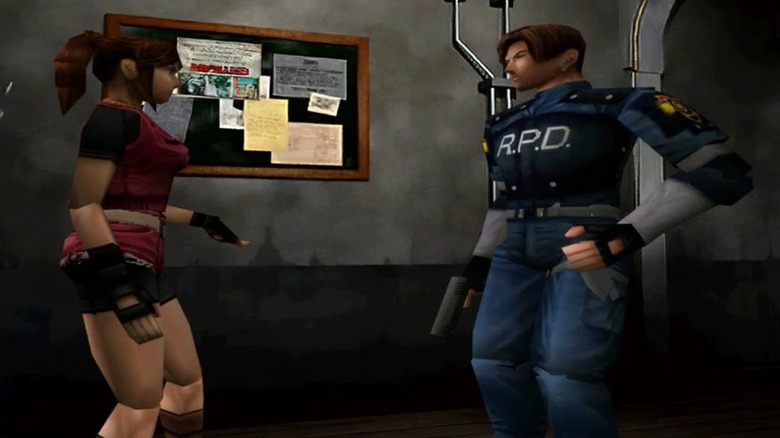
While the original "Resident Evil" debuted in 1996, Capcom's survival horror franchise underwent a stunning transformation with "Resident Evil 2" in January 1998. Whereas the first game confined the zombie action to a remote mansion, its sequel expanded the narrative to the nearby Midwestern metropolis of Raccoon City. Players can choose between protagonists Leon Kennedy and Claire Redfield as they seek shelter in the local police station to look for a way to escape from the overrun city. After completing the game with one character, players can complete the story's second campaign with the other, serving as narrative complement.
The original 1996 "Resident Evil" is a pivotal title, to be sure, but "Resident Evil 2" is where the franchise's scope and refined mechanics truly take shape. Everything about the 1998 sequel outdoes its predecessor, extensively expanding upon its foundation while doubling down on the action. After being remastered and ported to various platforms, the game received a full remake in 2019, retaining much of the 1998 game's core concepts and narrative. Even after this remake, the original "Resident Evil 2" still ranks highly among the best "Resident Evil" games. That's a testament to its legacy.
StarCraft
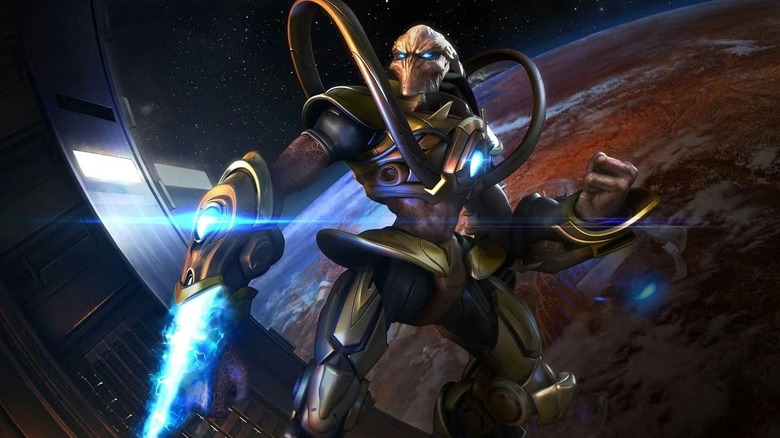
After launching the fantasy real-time strategy game series "Warcraft" earlier in the '90s, Blizzard Entertainment brought those sensibilities to science fiction with "StarCraft." Debuting in March 1998, the game features three playable factions, each vying for control of the galaxy — the Terrans, the psionically evolved Protoss, and the animalistic Zerg.
Each faction has their own unique units and structures, along with their own effective strategies in combatting opposing players. In addition to online multiplayer, the game has single-player story campaigns for each of the factions, introducing the story of "StarCraft" and its complex web of inter- and intra-faction conflicts.
"StarCraft" is one of those sci-fi video games that everyone needs to play at least once, even if they aren't real-time strategy fans. Blizzard took their own familiar formula and extensively refined it as they brought "Warcraft"-style gameplay into a futuristic sci-fi narrative. By the end of 1998, the game received an ambitious expansion with "Brood War," continuing the story while adding new units and gameplay balances, improving the experience even further. When Blizzard remastered the game and its expansion in 2017, they did so with minimal overt changes, wisely recognizing that "StarCraft" still stands in a class all its own.
Metal Gear Solid
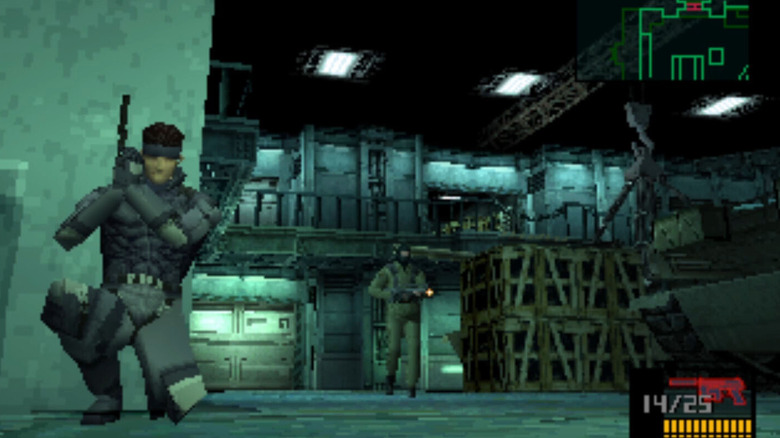
After debuting in the 8-bit era, the "Metal Gear" franchise was completely revamped with its September 1998 title "Metal Gear Solid." Creator Hideo Kojima served as the project's director, producer, writer, and designer, bringing returning special ops protagonist Solid Snake into an immersive 3D adventure. Snake infiltrates a remote Alaskan island whose nuclear facility has been seized by the rogue special forces unit FOXHOUND. Facing the organization's enigmatic leader Liquid Snake and his formidable associates, the veteran hero must prevent a nuclear strike and rescue FOXHOUND's hostages.
"Metal Gear Solid" saw a meteoric rise with its 3D rebirth on the original PlayStation, standing out from other action games of the era. This was a title that favored stealth and strategy over mindless running and gunning, setting the stage for future franchises like "Splinter Cell" and "Hitman."
Kojima was also able to bring more cinematic storytelling sensibilities to the franchise, thanks to advanced hardware capabilities compared to the series' early days on NES. With its reinvigorated direction, the "Metal Gear Solid" franchise would continue to take its cues from the 1998 game. The original title still largely holds up today.
Half-Life
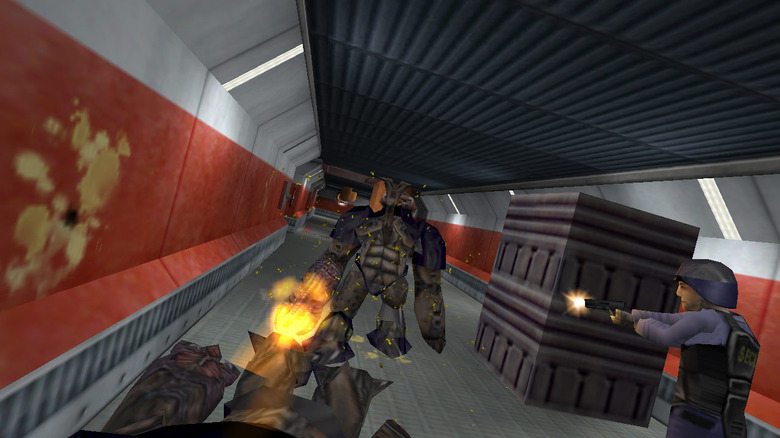
While first-person shooter titles dominated PCs throughout the '90s, the original "Half-Life" took the genre to the next level. The game's protagonist is Gordon Freeman, a scientist at a remote top-secret government laboratory that accidentally triggers an alien invasion after experimenting with an otherworldly crystal. As Freeman fends for his life, the government dispatches soldiers to completely cover up the incident by indiscriminately wiping out monsters — and the lab's personnel. In addition to its story campaign, as was standard with first-person shooters of the era, "Half-Life" also came with a competitive multiplayer mode.
What made "Half-Life" stand out from the countless other sci-fi first-person shooters of the '90s was its intuitive gameplay mechanics and an engrossing story, uninterrupted by cutscenes. For a generation that grew up with "The X-Files," the game's plot appealed to their sensibilities immediately. Meanwhile, the action was more polished and fun than many "Doom" successors.
The game's engine would serve as the foundation for subsequent games like "Counter-Strike" and "Team Fortress Classic," evolving the shooter genre to great effect. We may never get to play "Half-Life 3," but the 1998 original and its sequel are a decent consolation prize.
The Legend of Zelda: Ocarina of Time
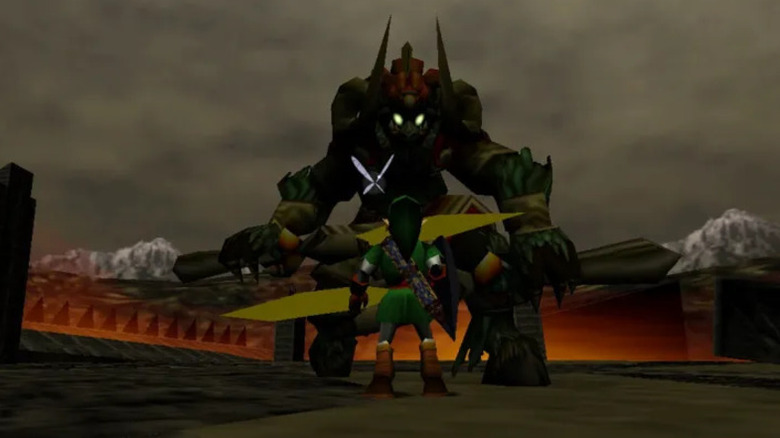
While Nintendo's fantasy franchise "The Legend of Zelda" was conspicuously absent when the company launched the Nintendo 64 in 1996, the inevitable N64 title proved to be worth the wait. Released in November 1998, "The Legend of Zelda: Ocarina of Time" brought the series into full 3D gameplay, providing a fresh take on Link's battle against the evil Ganondorf. The game opens with Link as a child, teaming up with Princess Zelda to prevent the villain from obtaining the mystical Triforce. After inadvertently playing right into Ganondorf's scheme, an adult Link moves to liberate the kingdom of Hyrule from the tyrant's rule seven years later.
"Ocarina of Time" is a retro game that everyone needs to play at least once and the perfect jumping-on point for "The Legend of Zelda." The game handles the transition from an overhead perspective to 3D gameplay beautifully, particularly with its lock-on mechanic significantly aiding combat. Nintendo created a lush version of Hyrule to get lost in, providing distinct regions and communities for Link to explore and interact with. An epic fantasy adventure that the subsequent franchise entries are still judged by, "The Legend of Zelda: Ocarina of Time" is an unequivocal masterpiece.