
5 Video Games From The '90s That Tried To Copy Doom
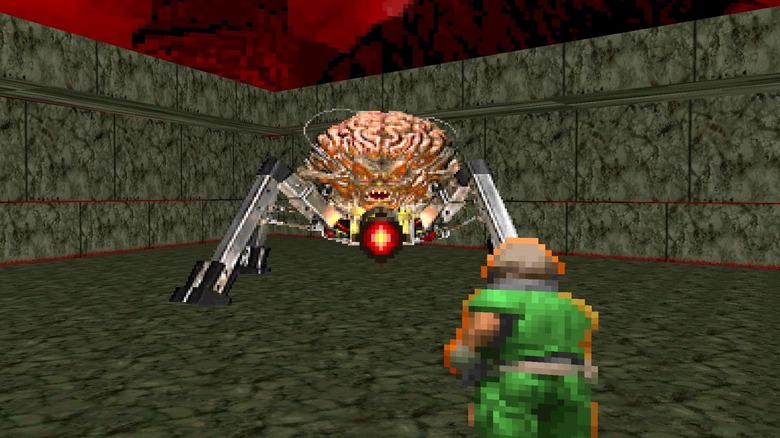
When id Software released the 1993 first-person shooter "Doom," it made waves in the video game industry and became a global phenomenon. It was a game that parents hated when it first came out, but that didn't stop it from selling well. Its success led to a direct sequel 10 months later, with "Doom II" becoming the best-selling PC game of 1994. In the face of these blockbuster sales numbers, other video game developers wanted a piece of the first-person action, flooding the market with clear imitators.
There were a ton of games released throughout the '90s that visibly followed in the footsteps of "Doom." This ranges from titles that shamelessly copied id Software's instant classic to others that were inspired by it to bring their own franchises to the realm of first-person shooters. In some cases, outside developers licensed id Software's technology to make their own game, expanding on the foundation set by "Doom." Here are five video games from the '90s that tried to copy "Doom" with varying levels of success.
Star Wars: Dark Forces
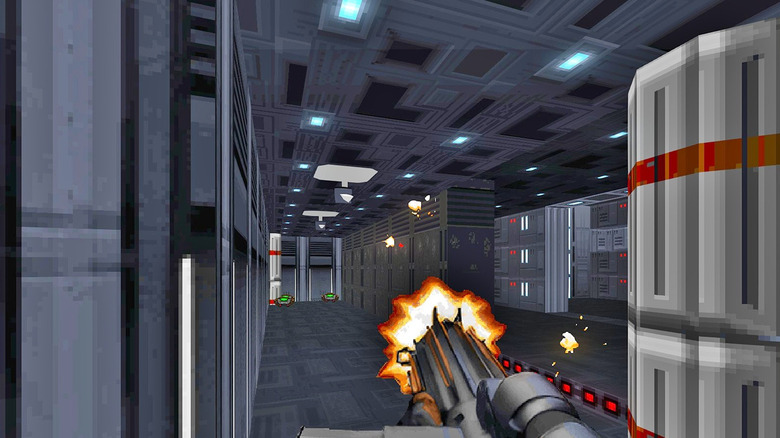
"Star Wars" made the leap to the first-person shooter space with the 1995 game "Star Wars: Dark Forces." The game introduces mercenary Kyle Katarn, who begins working for the Rebel Alliance against the Galactic Empire after learning the Empire was behind the murder of his parents. The game's story takes place around the events of "A New Hope" as the Rebels score their first major victories, including the destruction of the first Death Star. Kyle moves to dismantle a program developing Dark Troopers, an experimental shock trooper poised to turn the tide of the war.
Development on a first-person shooter "Star Wars" game was inspired by "Doom" fan mods that put players in the Death Star. Combining the space opera property with FPS gameplay worked well, as players blasted through waves of Stormtroopers in familiar franchise settings. "Dark Forces" would spawn its own series of games starring Kyle Katarn, while the original title was remastered for modern platforms in 2024. Easily one of the best "Star Wars" games from the '90s, "Dark Forces" still holds up relatively well decades after its release.
Heretic
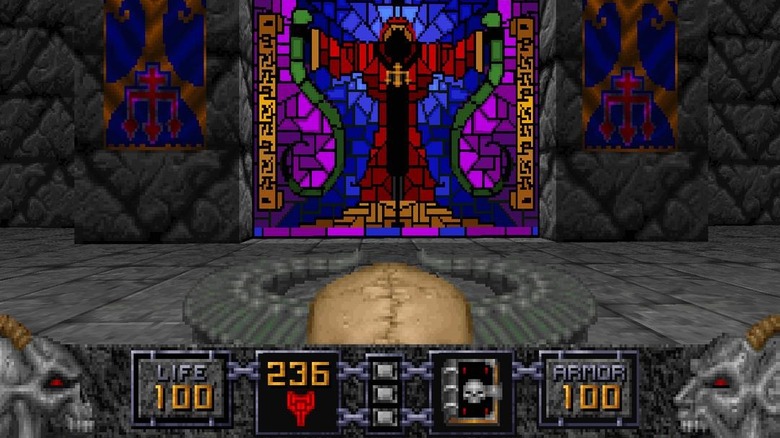
1994's "Heretic" is a "Doom" inspired title that received the full blessing of id Software, which published the game after licensing its tech to developer Raven Software. Rather than revolving around sci-fi horror like the "Doom" story, Raven's game is firmly set within the realm of dark fantasy. The player controls an elvish protagonist as he strives to bring down three evil brothers known as the Serpent Riders, who have secretly possessed the kings of his homeland, Parthoris, and declared his kind heretics, hence the title.
While "Heretic" does do some things differently to "Doom," the two games still have an awful lot in common, notably the way players advance by finding keys and the use of an armor system. There are also plenty of concealed chambers filled to the brim with enemies, which will feel very familiar to seasoned "Doom" players. The similarities are not surprising when you consider that "Heretic" was produced by "Doom" designer John Romero, as was the 1995 follow-up "Hexen: Beyond Heretic," another game that essentially copied "Doom."
Duke Nukem 3D
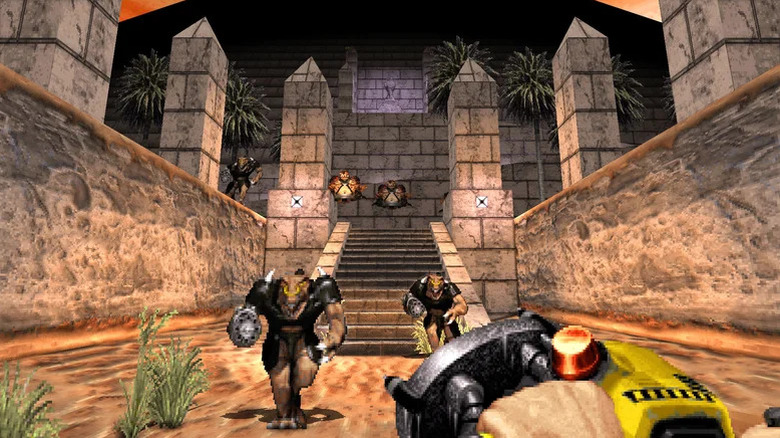
The "Duke Nukem" franchise didn't start out as a first-person shooter series, but after the 2D platformer "Duke Nukem II" was significantly outsold by "Doom," plans for its follow-up shifted to match id Software's first-person experience. What resulted was the aptly titled "Duke Nukem 3D," with Duke defending Los Angeles from invading aliens. In between gorily dispatching extraterrestrials with a whole arsenal of weapons, Duke cracks plenty of jokes, usually heavy on sexual innuendo and pop culture references.
With its crude humor and violence towards women, "Duke Nukem 3D" is one of several '90s video games that have aged terribly, but critics and consumers alike lapped it up at the time, with the title selling around 3.5 million copies. The franchise flourished after this successful move to a first-person perspective, though later spin-offs would move towards third-person gameplay. This is one '90s game that would never be made today, though it will always be remembered for essentially being an edgy version of "Doom."
PowerSlave
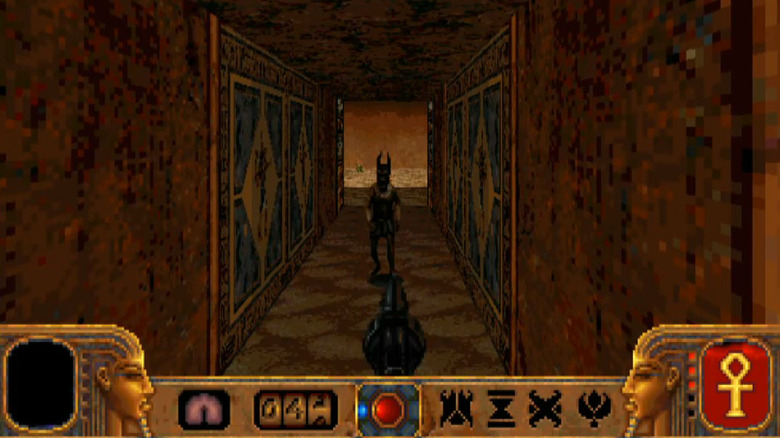
The 1996 first-person shooter "PowerSlave" roots its story and design in ancient Egyptian iconography. The game has the spirit of ancient Egyptian King Ramses working with a race of insectoid aliens known as the Kilmaat towards resurrecting him in a plot to conquer the world. Seizing control of the city of Karnak, Ramses and the extraterrestrials initiate a resurrection ritual, prompting the player character, a special forces soldier, to stop them. Players use a variety of weapons, combining conventionally modern and mystical armaments to reflect the genre-blending premise.
The combat in "PowerSlave" is relatively smooth and intuitive, with players going up against mummies, spirits, scorpions, and jackal-headed warriors all in the service of the Kilmaat. The distinct art design really sets it apart from other '90s first-person shooters. The game has seen a lot of healthy reappraisal decades after its debut and is well worth checking out. If you're still waiting patiently for "In the Valley of Gods" (which still has no release date despite its high-profile announcement years ago), then you should definitely give "PowerSlave" a shot.
Chex Quest
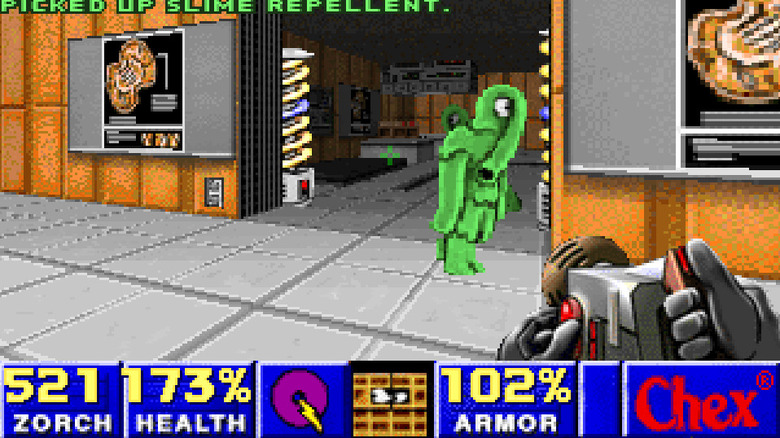
Certainly the most offbeat "Doom" clone but not without its fans, "Chex Quest" mixes the first-person shooter experience with a cereal-based sci-fi adventure. The game follows the so-called Chex Warrior, who wears a protective suit resembling a gigantic piece of Chex. Players explore the distant planet of Bazoik, which is infested by sentient mucus monsters known as Flemoids. Rather than shooting enemies to bits, players are armed with a teleporter which they use to transport Flemoids back to their home planet.
Apart from its decidedly unique and wacky premise, "Chex Quest" holds the distinction of being the first game of this kind designed to be completely family friendly. General Mills included a copy of the game in approximately six million boxes of Chex at no additional cost to customers. This move reportedly increased sales for Chex cereal by 248%. The game, which is surprisingly fun to play, got a high-definition remake in 2020 for modern platforms, and, like the original, it was totally free.