
5 Hit Video Games From The '80s That Are Nearly Unplayable Today
While many video games first released in the 1980s continue to resonate as beloved classics, there are plenty of titles that haven't stood the test of time. Aside from just being hit games that nobody talks about anymore, these are titles that haven't enjoyed the same remaster and re-release treatment as their more popular counterparts. Even several games developed and published by Nintendo have yet to be revived, at least in the form that players originally experienced them. In some cases, this comes down to licensing issues, while in other instances it's just a matter of developers not taking the time to re-publish games for modern platforms.
This is all to say that even the biggest commercial successes aren't guaranteed to get an official re-release, and are still relegated to their original retro platforms. This means that unless gamers have those consoles and functional copies of those games, they're out of luck in revisiting these classic titles. One note: while unlicensed emulators for many of these titles are available online, we're talking about legitimate re-releases for these games. Here are five hit video games from the '80s that are nearly unplayable today by legal means.
Popeye
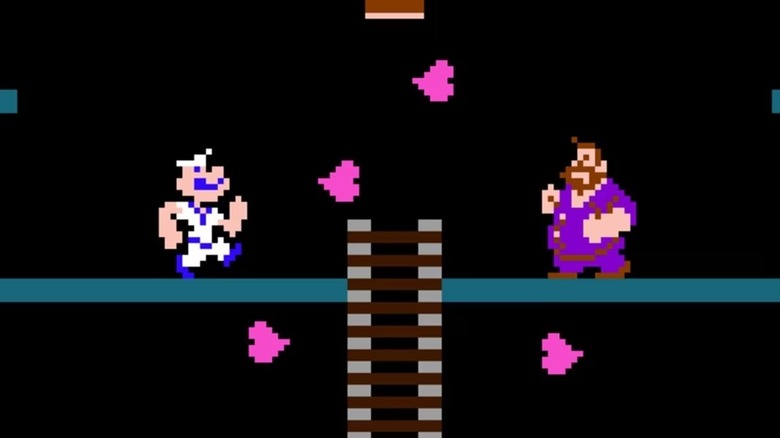
The popular 1930s comic strip and animated character Popeye the Sailor got his own arcade game developed and published by Nintendo in 1982. The game has Popeye catch objects thrown from the top of the screen by Olive Oyl, including hearts and musical notes. Popeye can punch through obstacles around the levels and temporarily power up when he consumes a can of spinach. This allows him to fight back against enemies like Bluto who could normally defeat him with a single touch.
It was "Popeye" that led to the creation of Mario, with "Donkey Kong" originally intended to be a game based on the cartoon character before becoming an original IP. When Nintendo did get the chance to make a Popeye game, it performed well in arcades, maintaining a strong commercial performance well into 1983. Though the game was ported to a variety of home platforms, including the Nintendo Entertainment System, these ports of the original arcade game didn't go past the '80s. "Popeye" played a huge role in Nintendo's formative history but due to licensing, the 1982 game hasn't lived on past its initial decade.
Munch Man
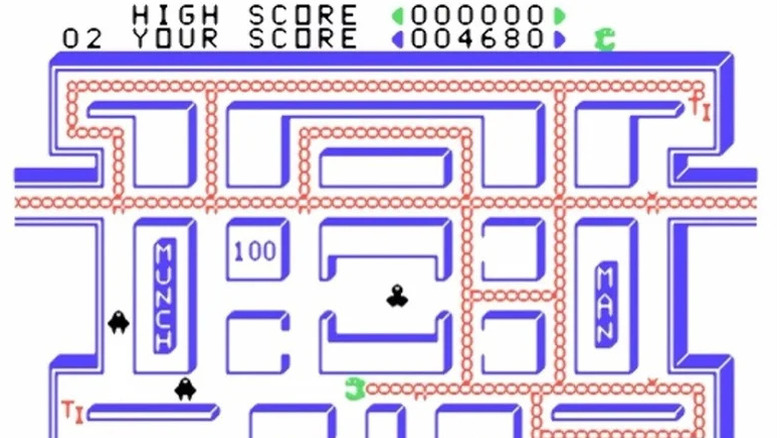
Throughout the '80s, there were a lot of video games that tried to copy "Pac-Man," with one of the more successful being "Munch Man." The game was developed and published by Texas Instruments for its early personal computer, the TI-99/4A. Rather than eating dots strewn around a maze, the goal of the game is to fill the maze with a colored trail left by Munch Man as he moves. Munch Man is pursued by black monsters, known as Hoonos, though he can temporarily attack them when he uses an energizer power-up.
"Munch Man" was successful enough to get its own sequel but the original 1982 game never was officially ported from the TI-99/4A. This was likely due to the game being developed and published in-house by Texas Instruments, who preferred the title being on its own proprietary platforms. This means that while "Pac-Man" became a franchise worth billions, "Munch Man" is now an obscure cult classic. Nowadays, Texas Instruments is best known for its programming calculators, and not so much for its personal computers and their accompanying games.
Mike Tyson's Punch-Out!!
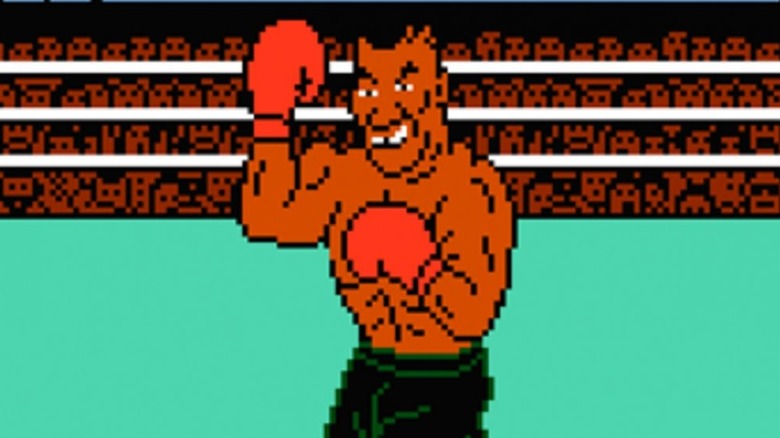
"Mike Tyson's Punch-Out!!" is one of the 1987 games that defined Nintendo's rise as the dominant home console publisher worldwide. The game has players control diminutive boxer Little Mac as he trains and steadily works his way up to fight progressively more formidable opponents in the ring. This culminates in a showdown against heavyweight champion Mike Tyson himself, an extremely overpowered classic character that's haunted many NES owners' dreams. Moving faster than the boxers preceding him, Tyson is capable of felling Little Mac with a single punch, leaving no room for error as the ultimate final boss.
To be clear, an NES version of "Punch-Out" is still readily available on modern platforms, just not the original 1987 NES version. The licensing deal that Nintendo secured with Tyson expired in 1990, meaning any future versions of the game had to omit his name and likeness from them completely. Starting in 1990, the game was rebranded simply as "Punch-Out!!" while Tyson was replaced by new final boss Mr. Dream. This is the version of the game that's been re-released on Nintendo platforms ever since, leaving the Mike Tyson-branded iteration in the '80s.
Fester's Quest
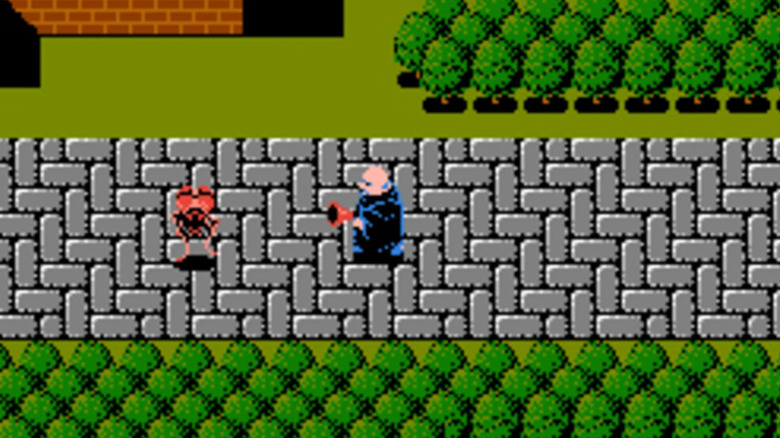
Of all the directions in which to take an Addams Family game on the Nintendo Entertainment System, a top-down shooter was certainly a unique choice. Yet this is how the 1989 title "Fester's Quest" positioned the franchise on the NES, with Uncle Fester moving to defend a town from an extraterrestrial invasion. As he travels around town, Fester can meet other members of the family who provide him with power-ups and upgrades to his weapon. After defeating the five bosses leading the invasion, Fester boards the alien spaceship to defeat the remaining invaders.
In including "Fester's Quest," it's important to point out that we're focusing on games that were considered commercial hits, not necessarily critical ones. While the game was critically lambasted for its strange premise and frustrating difficulty, it did manage to sell one million copies. But the combination of being both a cult title and linked to a licensed property have kept the game from getting an official re-release. Those who, for whatever reason, want to re-experience "Fester's Quest" in the Nintendo Switch's NES library are out of luck.
Batman: The Video Game
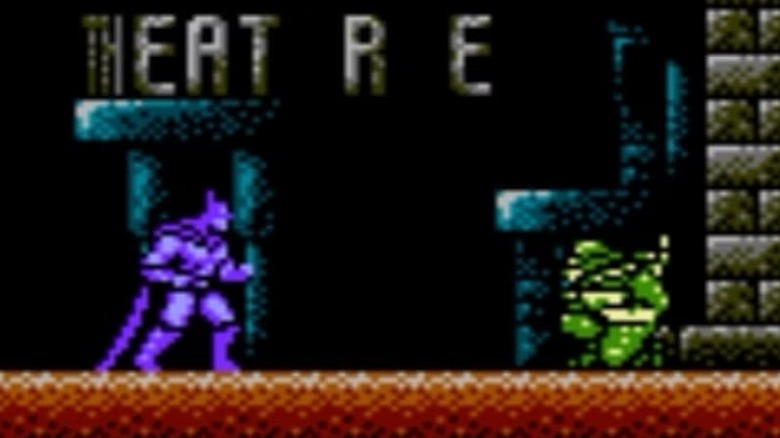
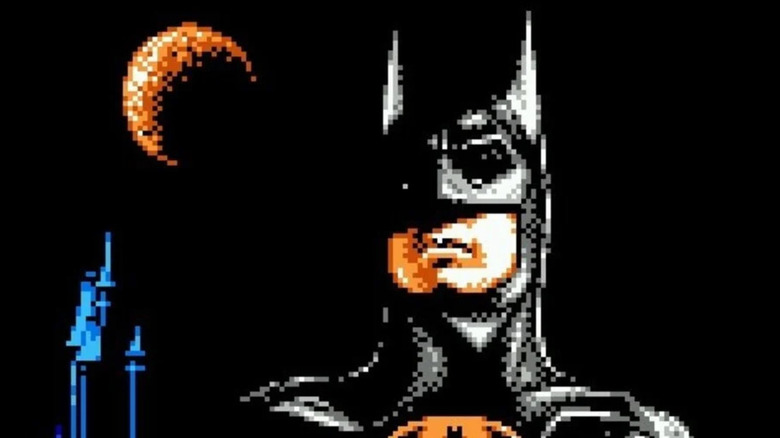
The 1989 superhero movie "Batman" was a huge deal when it hit theaters, so it was inevitable that the film would spawn tie-in games. Sunsoft developed and published the aptly titled "Batman: The Video Game" for the Nintendo Entertainment System in time for the 1989 holiday season. The game loosely recreates the movie's story, with Batman fighting the Joker's goons across Gotham City, culminating in a showdown against the Clown Prince of Crime atop a cathedral. The "Batman: The Video Game" original cutscenes did the film justice, hewing closer to the movie's story before alterations were made.
"Batman: The Video Game" was both a critical and commercial success, with contemporary reviews regarding it worthy of the Dark Knight's legacy. The game went on to sell over 500,000 copies in its first year on the market, making it a solid financial success for Sunsoft. That all said, with the licensing for Batman games now handled primarily in-house by Warner Bros., it hasn't been ported beyond the NES. As good a movie tie-in as it is, both the movie licensing and wider Batman IP rights make it unlikely that "Batman: The Video Game" will make it to modern platforms.