
5 Video Games From 1987 That Felt Revolutionary At The Time
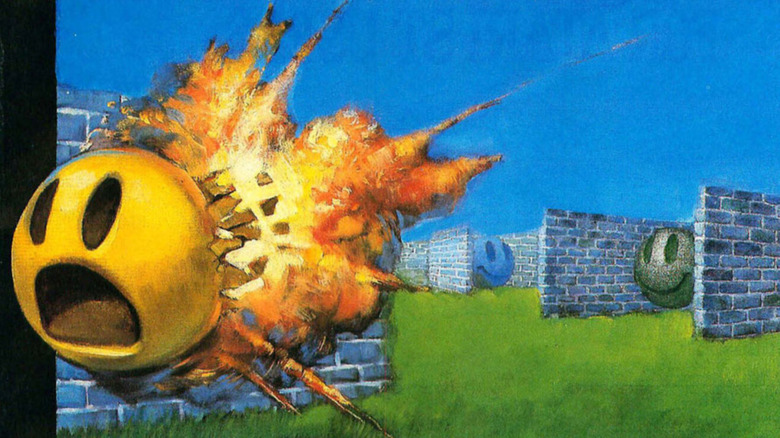
By 1987, the industry had rebounded from the video game crash of 1983, with home gaming platforms seeing a rise. There were plenty of memorable titles released throughout the year, including games that defined Nintendo's rise as the premier home console publisher on the market. But more than enduring fun factor, 1987 saw technological advances and increased storytelling sophistication that took the industry to new creative heights. A major factor in these innovations was the growing proliferation of personal gaming computers like the Commodore 64 and Apple II.
Home platforms weren't exclusively relegated to consoles, and early personal computers offered more technical capabilities. These platforms led the way in terms of what was possible for video game experiences at the time, influencing the industry. Many of these titles would not only inspire the home console market, but then be ported to several of these newer platforms as well. With that in mind, here are five video games from 1987 that felt revolutionary at the time.
Maniac Mansion
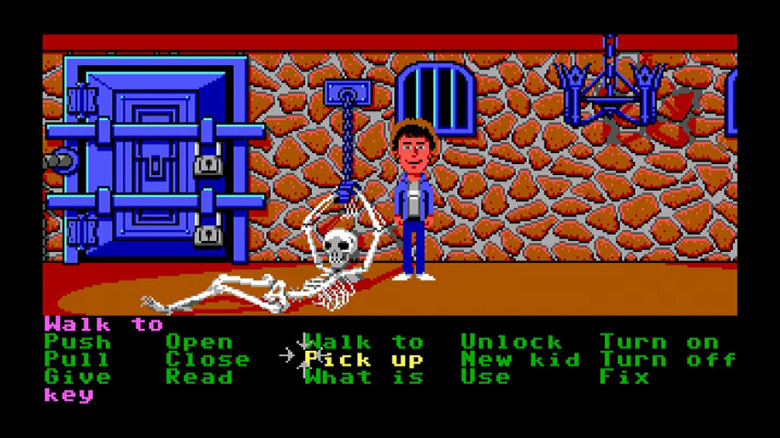
Lucasfilm Games' first title not based on an existing movie was "Maniac Mansion," a horror comedy game initially developed for PCs. The game follows teenager Dave Miller who enters a sinister mansion to rescue his kidnapped girlfriend, Sandy Pantz, from mad scientist Fred Edison. Dave is accompanied by six of his friends, each equipped with their own unique abilities to help solve puzzles and progress deeper into the mansion. Along the way, Dave and his buddies must avoid deathtraps and the Edison family to save Sandy from Fred's gruesome experiments.
Point-and-click games existed before "Manic Mansion," but the 1987 title took the genre to another level with its quirky sense of humor and depth of gameplay. The game strongly encouraged replayability, with multiple routes and endings players could take, based on which of Dave's friends players chose to use for each playthrough.
"Maniac Mansion" was eventually ported to the Nintendo Entertainment System, but it was heavily censored compared to its original PC version. A precursor to Lucasfilm's later "Monkey Island" series, "Maniac Mansion" set the template for point-and-click games for the genre through to the early days of Telltale Games.
Dungeon Master
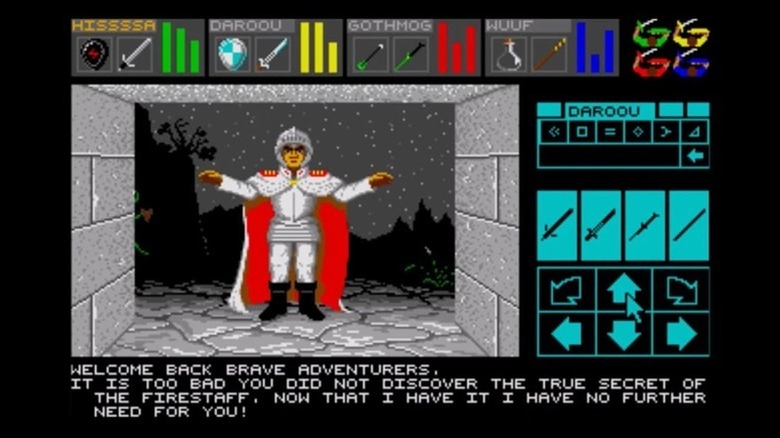
While turn-based dungeon crawlers had existed earlier in the '80s, the PC title "Dungeon Master" took the action into real-time. The game has protagonist Theron venture into a dungeon to resurrect four fallen champions who were trying to retrieve a powerful firestaff. Upon resurrecting the champions, Theron must lead them deeper into the dungeon to finish the job of recovering the staff and defeating the villainous Lord Chaos. The game features a dynamic progression system, with characters' skills and abilities improving the more players use them rather than a standard level-up system.
"Dungeon Master" brought plenty of innovations to the table, and for more than just for contemporary dungeon crawlers. A first-person RPG with real-time navigation, coordinating across the player's entire party, the title marked a big leap forward for fantasy games. Fans took notice and the game sold 40,000 copies for the Atari ST in its year of release alone. An enormously influential RPG showcasing the kind of games that were possible on early PCs, "Dungeon Master" provided a much more immersive experience.
MIDI Maze
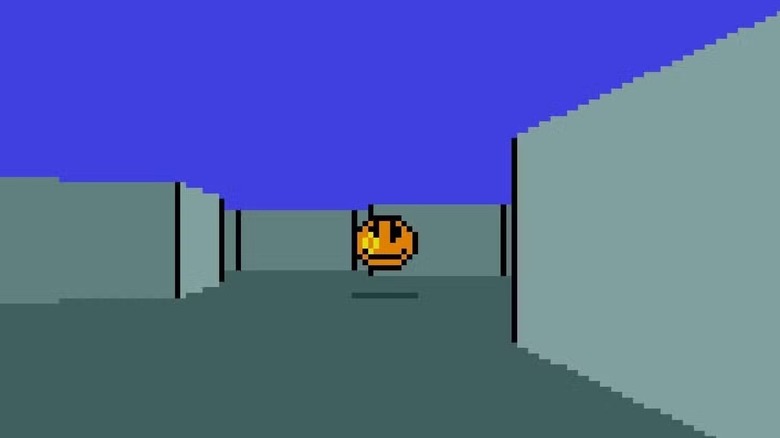
Before "Doom" popularized LAN deathmatches in the '90s, developer Xanth Software F/X provided an early version of this interlinked gameplay with "MIDI Maze." Published for Atari's personal gaming computer, the Atari ST, the game has a group of different colored smiley faces navigate a maze from a first-person perspective. Players hunt each other in the labyrinth, blasting opponents either solo or as part of a team. The game supports networked Atari STs but does also provide computer-controlled opponents as necessary for solo players.
Though not the first first-person shooter, "MIDI Maze" revolutionized gaming with that LAN networking feature. Up to 16 Atari STs could be daisy-chained together through the computers' MIDI ports, giving the game its title. This was an early introduction to deathmatch multiplayer mode, which became a staple for first-person shooters on PC and consoles moving forward. It wouldn't be until 1991 that "MIDI Maze" was ported beyond Atari platforms, but its influence on gaming overall can't be understated.
Driller
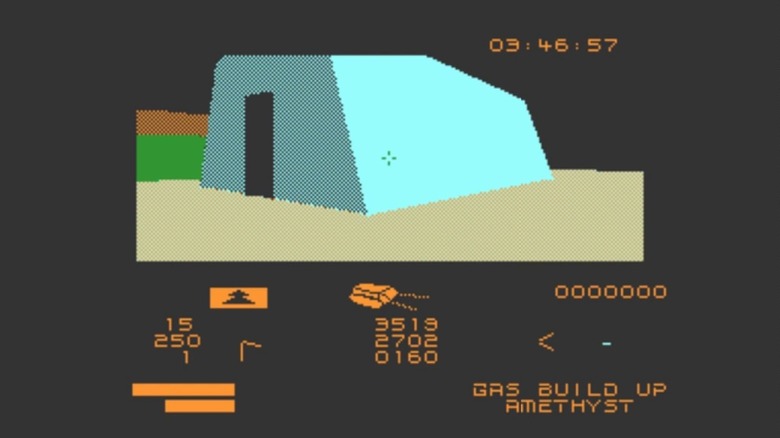
The '80s saw 3D games as one of the new frontiers for the medium, with one of the titles leading the charge being the puzzle game "Driller." The game takes place in a far-flung future where humanity has settled on the planet of Evath, which has the volatile moon Mitral. With the gas build-up on Mitral threatening to trigger a cataclysmic disaster on Evath, the player has to place 18 drilling stations around the moon. Players have to analyze the best locations to place each of the drilling rigs while avoiding the hostile security system.
Published by British studio Incentive Games, "Driller" is the first game to use the company's Freescape engine. This software engine provided 3D environments for players to navigate in, filled with polygonal models. Players could move freely in multiple directions in this sci-fi environment, upping the immersion and scope. More innovative for its introduction of the Freescape engine than the game around the gameplay, "Driller" advanced 3D experiences considerably.
Sid Meier's Pirates!
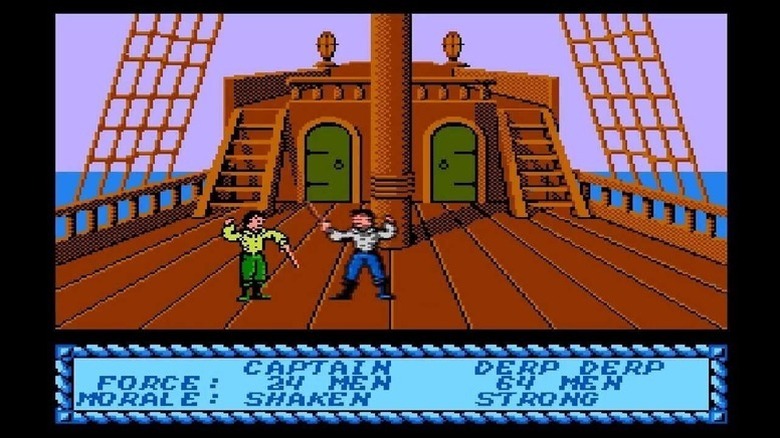
Years before prolific game designer Sid Meier created the "Civilization" franchise, he helmed the swashbuckling adventure title "Sid Meier's Pirates!" The player character is a privateer for a major European power of their choice with a colonial presence in the Caribbean. An open-ended and open-world game, players recruit a crew to raid enemies' coastal towns and ships to build their legacy. Each playthrough ends with the surviving players retiring, with their social ranking based on the treasure and reputation they were able to accumulate.
The amount of options available to players throughout "Sid Meier's Pirates!" truly is extraordinary, and it's another title on this list best experienced through multiple playthroughs. Beyond choosing the initial country of allegiance and starting time period, players can switch loyalties, go rogue and become a pirate, or dedicate themselves towards hunting pirates. There are ship-to-ship combat and swashbuckling mechanics, as well as a mercantile system as an alternative towards accumulating wealth through raids. With its dynamic and randomized system, no two playthroughs of "Sid Meier's Pirates!" is the same, making it an underrated game from 1987.