
5 Arcade Games From 1987 That Were Way Ahead Of Their Time
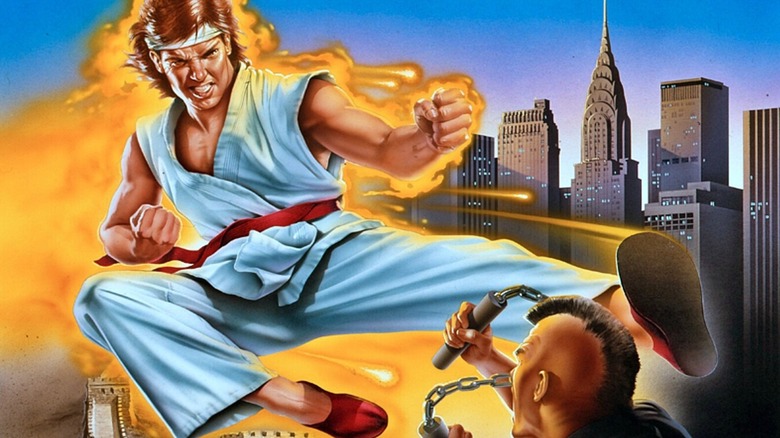
The arcade scene remained a popular draw worldwide throughout the 1980s, surviving the video game crash of 1983 that had hit the entire industry hard. As the decade progressed, arcade games steadily grew more sophisticated, rather than just churning out games that tried to copy "Pac-Man." This included technological advancements that drove the industry forward, rethinking what kind of gameplay experiences the medium could deliver. By 1987, arcade games had advanced by leaps and bounds from what the market was putting out at the start of the decade.
We're focusing here entirely on arcade-first titles, not the console ports that several of these entries subsequently produced. Whether it was innovations in technical presentation or gameplay mechanics, arcade games still played an influential role in the overall video game industry. These are titles that, while not necessarily critically or commercially successful, teased the future for games to come. Here are five arcade games from 1987 that were way ahead of their time, compared to their contemporaries.
Yōkai Dochuki
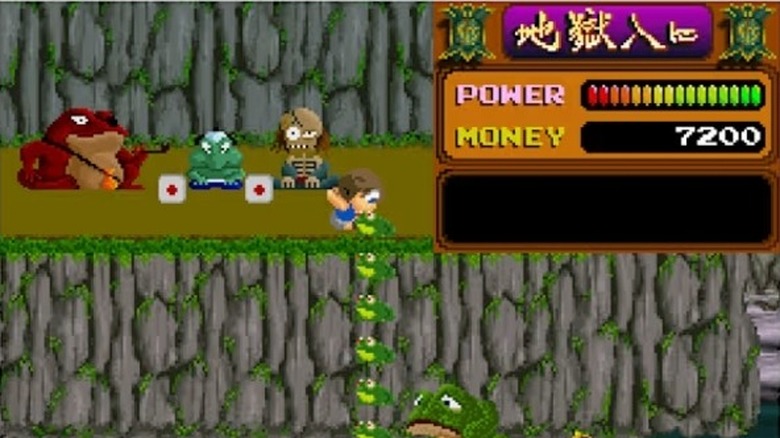
The '80s were ruled by 8-bit gaming platforms like the Nintendo Entertainment System, Sega Master System, and Atari 7800. That made early 16-bit games, even in the arcade setting, really pop visually compared to their contemporaries. This included the Namco arcade title "Yōkai Dochuki," which really distinguished itself from the competition at the time. The game is a side-scrolling platformer with a protagonist named Tarosuke, who is condemned to Hell and tries to appeal his fate to a deity overseeing the afterlife.
Likely because of its strong religious themes, including the game's entire premise, "Yōkai Dochuki" wasn't released outside of Asia. But back when Nintendo was still producing 8-bit Mario games and 16-bit consoles were years away, the Namco game looked more visually impressive. The title was ported to the Famicom, albeit downgraded for its 8-bit hardware, with its once-vibrant color palette considerably muted. It became clear that 16-bit games would be the future for the medium, but the console hardware just wasn't quite there yet.
Double Dragon
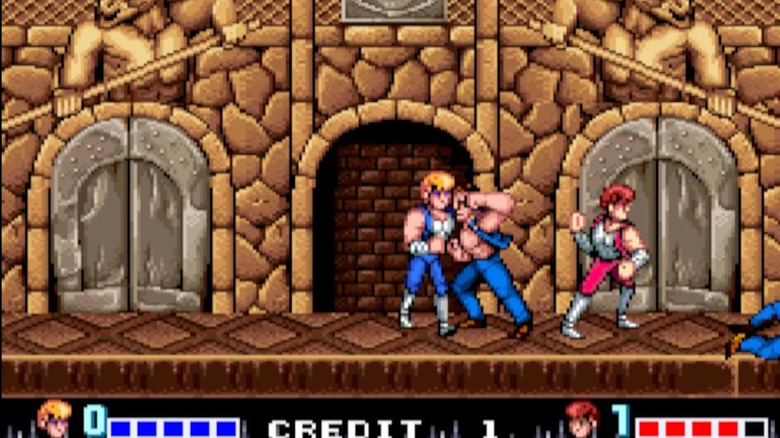
When it came to '80s side-scrolling beat-'em-up franchises, "Double Dragon" was one of the era's most prominent. The game has twin siblings Billy and Jimmy Lee set out to rescue Billy's girlfriend Marian from a notorious street gang named the Black Warriors. Players battle through waves of enemies as they progress from their city towards the gang's headquarters. If two gamers are playing simultaneously at the end of the game, the final boss forces the brothers to fight each other first.
The original arcade version of "Double Dragon" was noticeably different from the version ported to the Nintendo Entertainment System the following year. The NES version saw a significant downgrade in the technical presentation, including fewer enemies on-screen at once. Most egregiously, because of technical limitations, the NES version didn't allow for two-player co-op, making the first game a solo experience only. This didn't stop the game from being a commercial success, with future console installments rectifying the co-op omission — but the arcade version of the game is still far superior.
Street Fighter
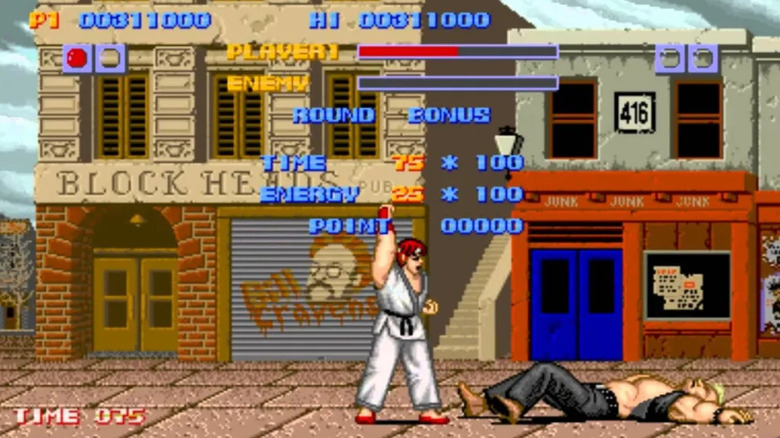
Capcom's "Street Fighter" series stands as one of the biggest fighting game franchises in the world nearly 40 years after its launch. The original "Street Fighter" arcade cabinets had punchable pads instead of buttons, measuring the strength of the players' blows to determine the characters' corresponding hits. Using this unique input system, players control Ryu or Ken as they fight enemy martial artists from all over the world. This culminates in a harrowing showdown against the Muay Thai champion Sagat in Thailand, with the winner recognized as the best fighter in the world.
The combat mechanics of "Street Fighter" games, featuring physical blows of multiple strengths, became a cornerstone in the franchise. What wouldn't remain is the punch pad inputs, with Capcom producing more conventional six-button input cabinets that became the series' standard moving forward. The original "Street Fighter" also had a relatively advanced technical presentation for its time, with the TurboGrafx-CD the only contemporary console it was ported to. "Street Fighter" underwent a stunning transformation after its inaugural 1987 title, but pressure-sensitive inputs were wisely discarded.
Pac-Mania
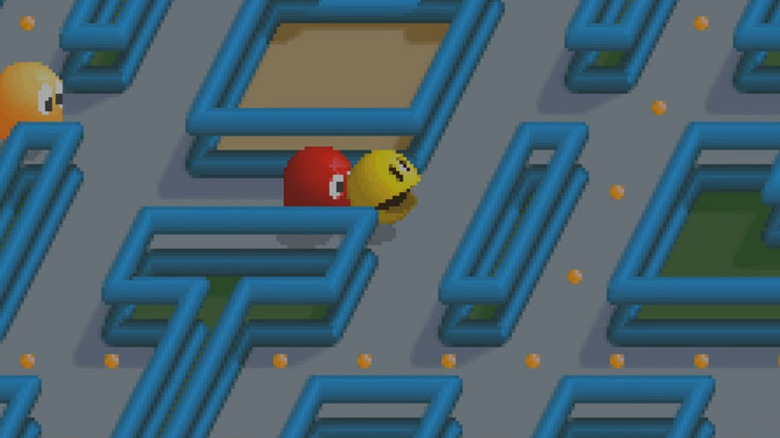
The original "Pac-Man" was an early '80s arcade game that defined the scene's golden age, leading Namco and Midway Games to produce several follow-ups. Among the most innovative during the decade was "Pac-Mania," which provided major twists to the classic formula. Rather than being played from a top-down perspective, the gameplay unfolds from an oblique angle, creating a faux 3D effect. The gameplay is relatively the same as past entries, with Pac-Man consuming dots in a maze while pursued by ghosts, though Pac-Man can now jump over ghosts to evade them.
That slanted perspective really made "Pac-Mania" stand out from its contemporaries and reinvented the original game's concept. It wouldn't be until the early '90s that home consoles were capable of replicating the game's then-impressive visual presentation. Arcade operators took notice, with 1,412 units sold in 1987 alone in the United States. This helped propel the "Pac-Man" franchise to be worth a fortune, while the faux 3D presentation began appearing more prolifically throughout the industry.
Xybots
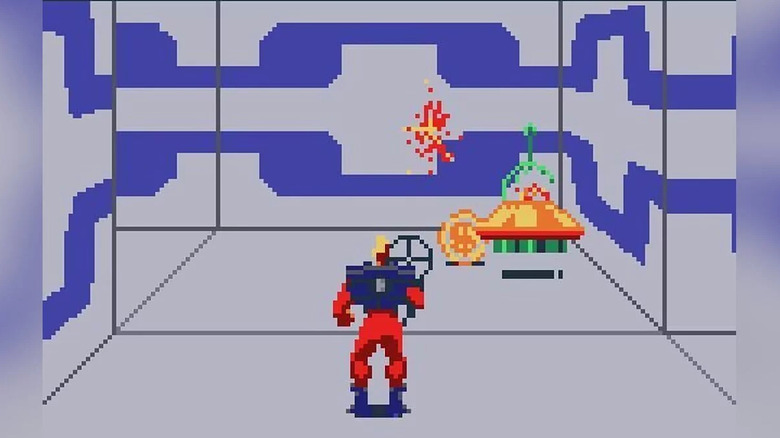
After designer and programmer Ed Logg created the landmark fantasy game "Gauntlet," he shifted to science fiction for "Xybots." Players navigate a maze from a third-person perspective, blasting robots as they search for each level's exit. Players can take cover to avoid enemy fire as they progress through the 3D labyrinth, eventually facing a boss robot that must be defeated. The cabinets support a second player to join the fun, working together to explore the maze and clear out all the robots.
With its third-person gameplay and early 3D level design, "Xybots" was a striking maze crawler, far different from the top-down perspective in "Gauntlet." The addition of two-player co-op doubled the arcade experience fun but the level of technical achievement would be hard to replicate on home platforms. Downgraded versions were ported to personal computers, but an emulated version of the arcade game wouldn't arrive until 2004. An early third-person shooter, with co-op multiplayer no less, "Xybots" is a forgotten '80 arcade game despite its innovations.