
5 Tetris Video Game Spin-Offs That Nobody Talks About Anymore
The '80s classic "Tetris" is a retro game that everyone needs to play at least once in their life and has been ported to countless platforms since its debut. The quintessential puzzle title, the gameplay revolves around players forming complete rows from differently shaped blocks cascading from the top of the screen. The rate of descending blocks accelerates as players progress and the game ends once incomplete rows completely fill the screen. Despite its relatively simple design and premise, "Tetris" is an '80s game with endless replay value.
Given the game's success, "Tetris" expanded to more than just ports and remasters on successive platform generations. The franchise has seen numerous spin-offs since its launch, reflecting evolving technology and gamer sensibilities. In some cases, these spin-offs diverge from the "Tetris" formula considerably, but still just aren't as memorable as the iconic original. With that in mind, these are five "Tetris" video game spin-offs that nobody talks about anymore, offering their own brand of fun to the franchise.
Welltris
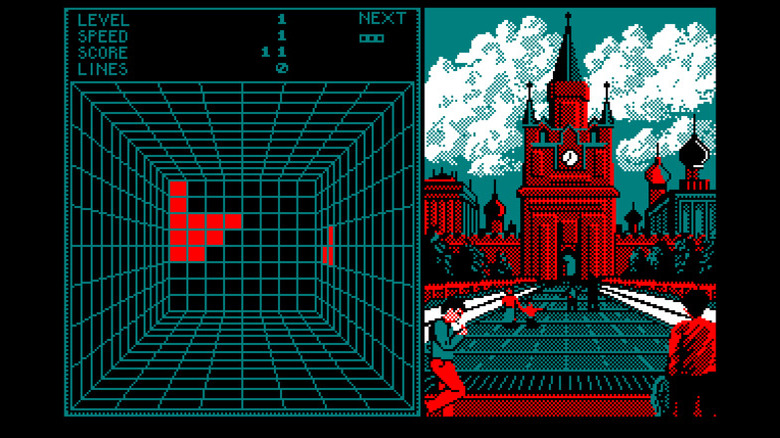
"Tetris" creator Alexey Pajitnov continued making puzzle games, including the 1989 title "Welltris," initially released for PCs. The game takes the basic falling block concept from Pajitnov's previous creation but expands it to a four-wall display working in early 3D. The blocks themselves, while in the same classic shape, remain 2D and can be moved from wall-to-wall to complete rows accordingly at the bottom of the screen. While this gives players more avenues to move blocks and avoid becoming overwhelmed, it also gives them more sides to keep an eye on.
Another awesome game created by very few people, "Welltris" feels like a natural progression for the "Tetris" formula, particularly as 3D gaming became the industry's next frontier. The game's release was relegated to early PCs and the arcade, even as the original "Tetris" found success on Nintendo consoles. This likely informs "Welltris" becoming something of an obscure title, going unreleased on modern platforms until its inclusion in the 2024 compilation "Tetris Forever." The franchise's first foray into 3D gameplay, "Welltris" expands rather than fundamentally alters the classic formula.
Hatris
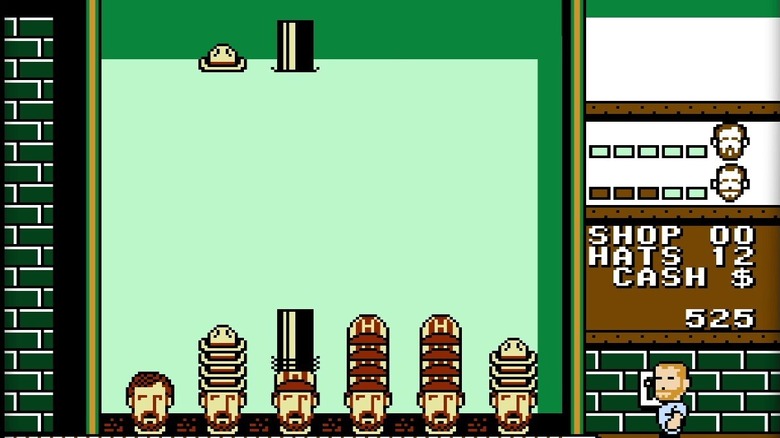
Pajitnov's next puzzle game was the 1990 title "Hatris," moving away considerably from the "Tetris" gameplay formula despite its shared suffix. In this game, a row of men line up at the bottom of the screen while hats descend from the top. Stacking five identical hats clears them from the screen and adds to the player's score. Each of the various hat types stack in amusingly chaotic ways, from top hats stacking neatly, while Stetsons pile on top of each other.
Initially released for arcades, "Hatris" was ported to PCs and consoles, though the NES and Game Boy ports were single-player only. Looking back, the gameplay is fun enough, but it doesn't have anywhere near the same charm nor replay value as "Tetris." Like "Welltris," "Hatris" was included in "Tetris Forever," marking its first official release in nearly 20 years. A huge departure from Pajitnov's usual puzzle gameplay formula, "Hatris" is a curio in the influential game developer's extensive body of work.
Tetris Attack
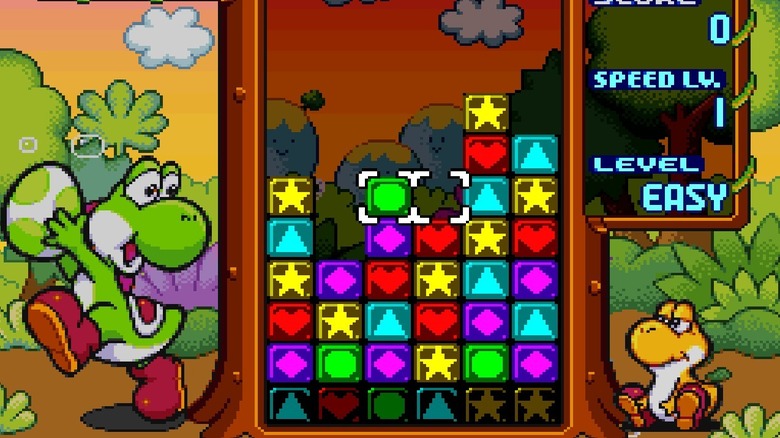
"Tetris" saw a lot of initial success on Nintendo platforms, particularly with its Game Boy version which eventually sold 35 million copies. As Nintendo was positioning its own puzzle game "Panel de Pon" for an international release, it obtained the "Tetris" license to rebrand the title. This resulted in 1996's "Tetris Attack" for the Super Nintendo, swapping out original characters from "Panel de Pon" for the more recognizable figures from "Super Mario World 2: Yoshi's Island." Rather than clearing lines by completing rows, the gameplay involves clearing lines by aligning three blocks of the same color and symbol.
"Tetris Attack" is really a "Tetris" game in name only, eschewing the gameplay that franchise fans have come to love. This international version of "Panel de Pon" is a reskin to appeal to overseas audiences, similar to how Nintendo handled "Super Mario Bros.: The Lost Levels" on the NES. This isn't to call "Tetris Attack" a bad game, it's just not the experience players anticipated based on its familiar title. Available to play on the Switch Online's SNES library, you can experience the original version of "Panel de Pon" for yourself.
Tetrisphere
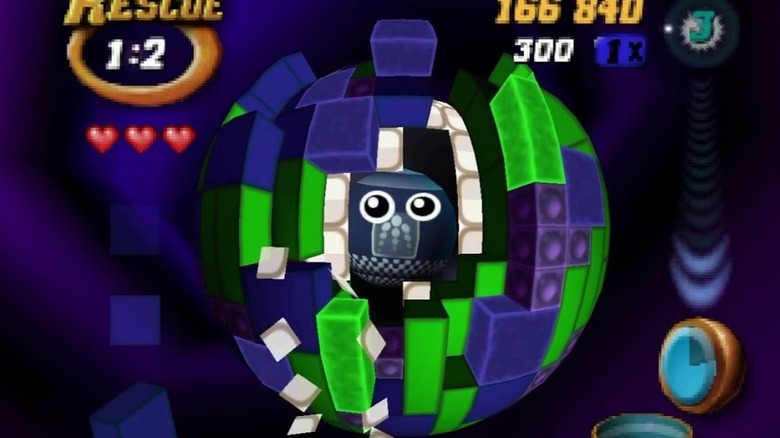
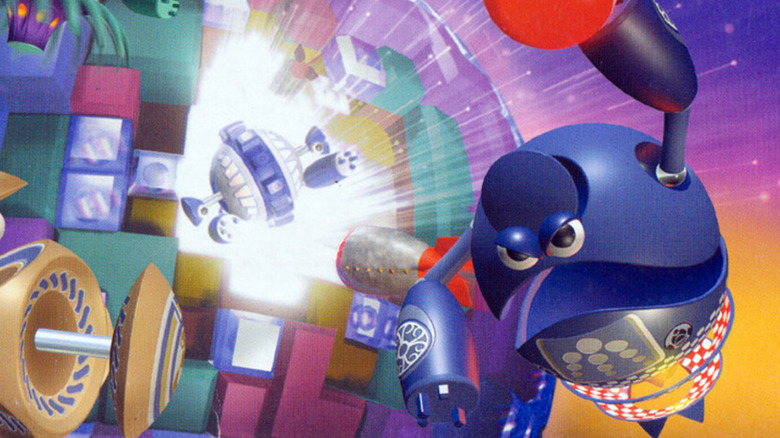
There is actually a trilogy of "Tetris" games for the Nintendo 64, the first of which being 1997's "Tetrisphere." The game entails players dropping blocks on a sphere and, instead of clearing lines by completing rows, they do so by putting three matching pieces together. Clearing out enough of the sphere's blocks frees the robotic character that's trapped inside of the floating object. In addition to the single-player campaign and practice modes, "Tetrisphere" also has competitive multiplayer modes with players racing to see who can open up their sphere first.
A thorough reinvention of what "Tetris" can be, "Tetrisphere" didn't start out its development as a "Tetris" game at all. Instead, the title was planned to be a completely separate project known as "Phear" for the Atari Jaguar. Nintendo, which still held the "Tetris" license, as had been the case with "Tetris Attack," acquired the project and repurposed it accordingly for the Nintendo 64. A hidden gem for the N64, "Tetrisphere" is one of the most creative twists on the core "Tetris" concept.
Magical Tetris Challenge
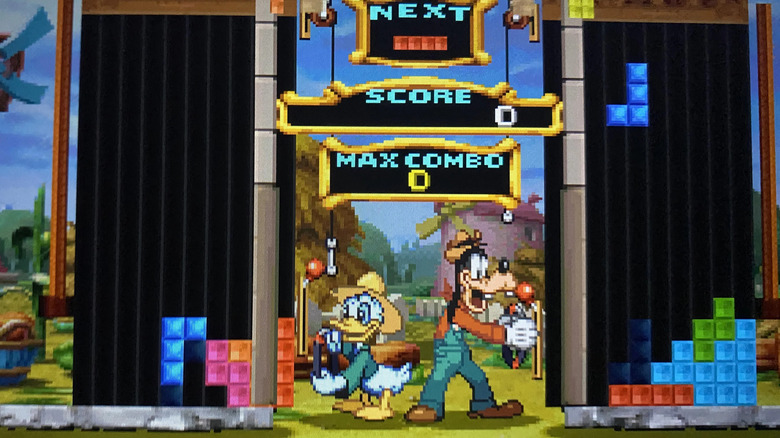
The 1998 game "Magical Tetris Challenge" has the franchise crossover with classic Disney characters and provides players with a story mode. Choosing between Mickey Mouse, Minnie Mouse, Goofy, and Donald Duck, players face opponents, trying to outlast them in games of, well, "Tetris." This culminates in a showdown with Mickey's nemesis Pete for a frenetic round of puzzle-solving, with each playable character having their own narrative campaign. True to the game's title, the gameplay includes magical blocks that fill players' magic meters and can be used to clear out lines by filling up any gaps.
"Magical Tetris Challenge" was released for the Nintendo 64, Game Boy Color, and PlayStation, with the initial version of the game developed and published by Capcom. The game doesn't change up the franchise's formula all that much, to its benefit, with its other modes sticking to exactly what fans would expect, with an endless, classic, and versus modes. The idea of a Disney-branded "Tetris" game made by Capcom should have more staying power than it does. Instead, "Magical Tetris Challenge" is an overlooked curiosity, mashing together properties as it provides its own safe spin on a classic.