
5 Video Games That Pushed The Nintendo N64 To Its Limits
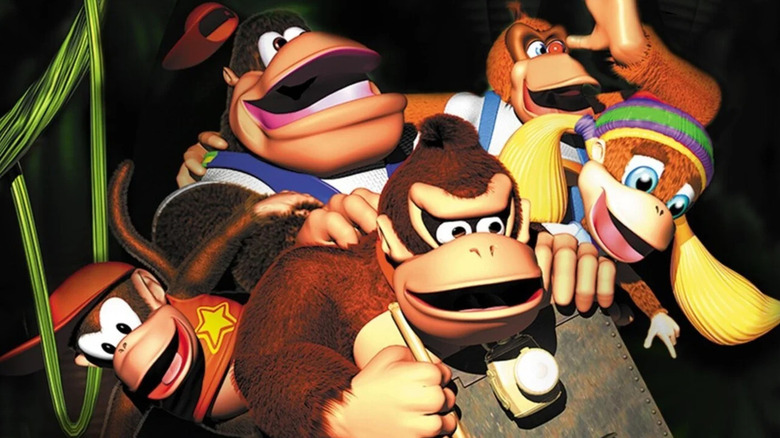
With the launch of the Nintendo 64 in 1996, Nintendo catapulted home console gaming into the 64-bit arena. Many established franchises leapt into 3D gameplay experiences and more advanced technical capabilities, with "Super Mario 64" leading the charge. For gamers at the time, these technological advances seemed revolutionary, with the rest of the industry quickly following suit on their own platforms. Towards the end of the N64's life cycle, it was releasing games that pushed the capabilities of its hardware to match the competition.
Whether upgrading the standard N64 cartridges or adding console peripherals to boost its hardware capacity, Nintendo was innovative in making the most of the console's performance. There were a handful of games that took advantage of these possibilities, creating their own memorable titles for the platform. Looking back, these releases are among the most celebrated games of their generation, in no small part because of what they pulled off. These are five video games that pushed the Nintendo N64 to its limits, standing as their own technical marvels.
Resident Evil 2
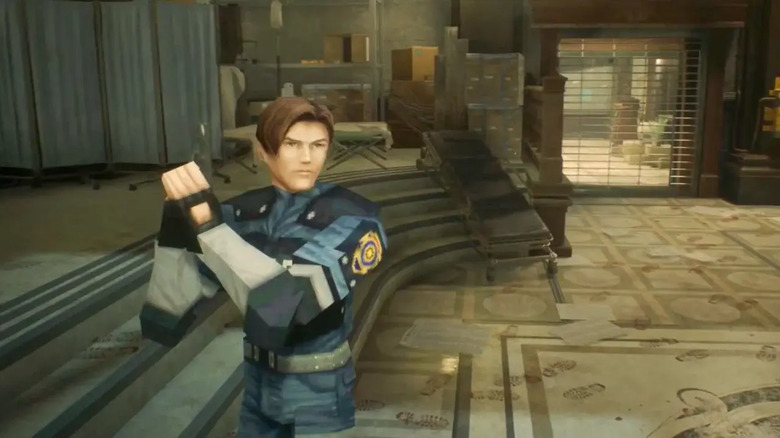
When "Resident Evil 2" was released on the PlayStation, it was split across two different discs, each with more storage capacity than a typical N64 cartridge. But since it was one of the titles that made 1998 the best year in gaming, Capcom wanted to spread that success to Nintendo platforms. The small team at Angel Studios had 12 months to port the game to a single cartridge and bring the Capcom classic to the Nintendo 64. Their hard work and quick thinking transferred Leon S. Kennedy and Claire Redfield's Raccoon City adventures in full, with some additional bells and whistles.
Angel Studios used innovative data compression programming and took advantage of the N64's native cartridge-based processing, in comparison to the PlayStation's disc-dependent hardware. Not only that, but the N64 port offered additional story files, alternate costumes, an item randomizer, and options to toggle the blood and gore. Beyond its visual presentation and content, the N64 port also is the only iteration of the original game that offers surround sound. The untold truth of "Resident Evil 2" is that, after the Herculean task to create it, the classic game's best version is on the Nintendo 64.
Donkey Kong 64
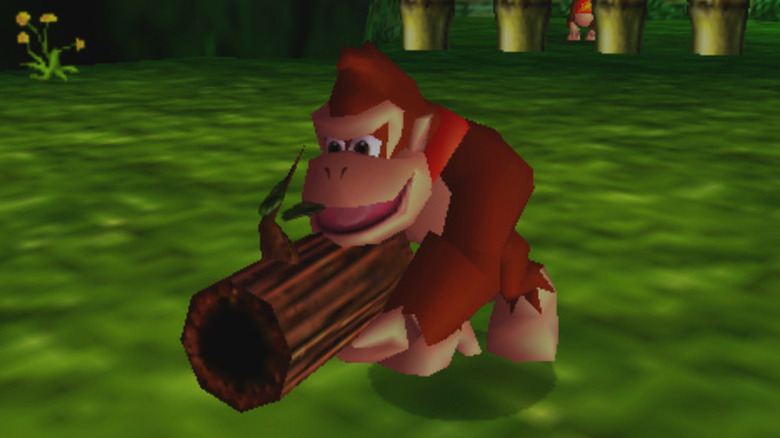
The truth behind the Nintendo 64's Expansion Pak peripheral is that it only added 4MB of RAM to the console's virtual memory. But while that may seem like a paltry amount now, this boost made games playable that weren't normally accessible on a base N64. This included making the 1999 game "Donkey Kong 64" possible to play on the console, which is why the peripheral was included with the title, initially at no additional cost. This upgrade didn't just introduce gamers to the infamous DK Rap, but more practically, helped the console handle its numerous 3D models.
The "Donkey Kong Country" trilogy on the Super Nintendo had employed pre-rendered graphics, even to display its character models. "Donkey Kong 64" needed to render these 3D models in real time from all angles, which is much more system-intensive. The 1999 game had the Expansion Pak help the console render 3D models, particularly those at a distance, and improved the frame rate and resolution. The Expansion Pak was utilized by many late stage N64 games, with "Donkey Kong 64" popularizing its use.
Perfect Dark
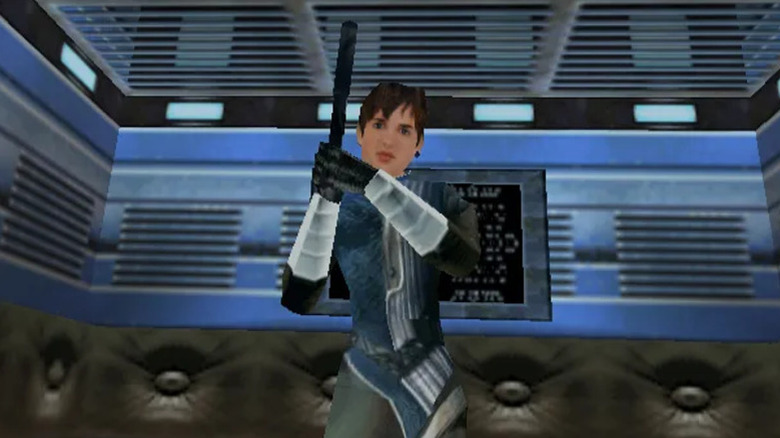
Another Rare game that heavily relied on the N64's Expansion Pak was "Perfect Dark," the spiritual successor to the studio's prior title, "GoldenEye 007." Unlike "Donkey Kong 64," the 2000 game was playable without using an Expansion Pak, albeit with significantly less content available. Gamers playing the shooter without the peripheral could only do four-player multiplayer on the car park stage, with no additional modes or computer-controlled participants and a limited selection of weapons. Simply put, "Perfect Dark was sabotaged by the hardware limits of the N64 without the Expansion Pak.
"Perfect Dark" featured real-time lighting effects and much larger environments for both its single-player and multiplayer modes. The Expansion Pak peripheral helped integrate those innovations more seamlessly into the overall experience. This upgrade also facilitated the inclusion of computer-controlled allies and enemies in the multiplayer modes, along with both co-op and counter-op modes for the campaign. An impressive technical feat, even more than 25 years later, "Perfect Dark" stands as the N64's most advanced multiplayer experience.
The Legend of Zelda: Majora's Mask
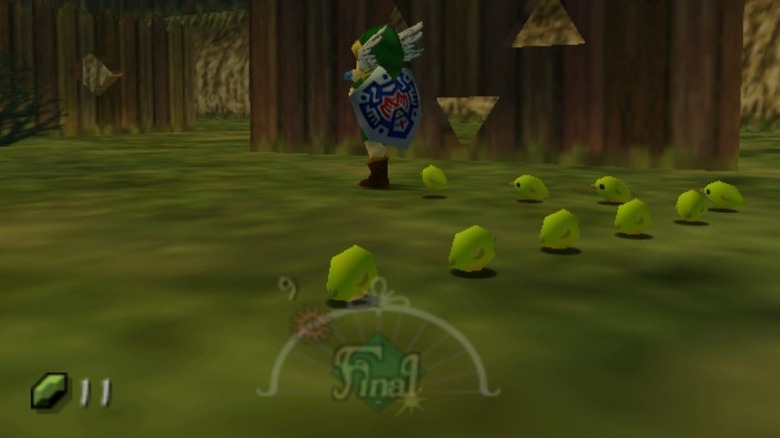
After the "Legend of Zelda" franchise's triumphant revolution with "Ocarina of Time," it went deeper rather than bigger for its 2000 direct sequel, "The Legend of Zelda: Majora's Mask." After traveling to the strange world of Termina, Link is forced to relive the same three days repeatedly, leading up to the collision of a hostile moon with the kingdom. This unique structure meant that the game's numerous NPCs were each on a set schedule across the three days and nights leading up to the fateful event. Beyond maintaining these individual itineraries, the game featured additional technical upgrades that required the installation of the N64's small red peripheral.
"Majora's Mask" is the second and last game to require the use of the N64's Expansion Pak in order to play. The game features improved lighting effects and much greater draw distances, while its textures are much more cleanly rendered and detailed than they had been in "Ocarina of Time." Environments like the dream-like moon's surface and Great Bay really showcased what the improved engine was capable of. The subtly deceptive "Majora's Mask" was the better-looking "Zelda" game on the Nintendo 64, and a technically impressive title.
Banjo-Tooie
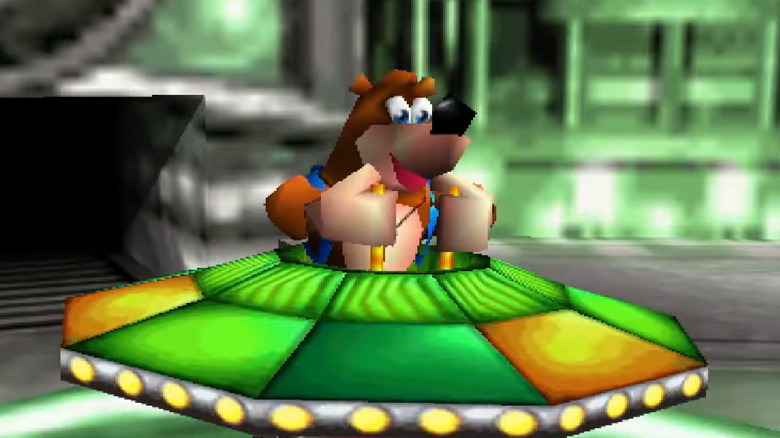
Before Nintendo lost Rare to Microsoft, the British developer made some of the most celebrated games for the Nintendo 64. One last title by Rare to mention here is the 2000 sequel to "Banjo-Kazooie," the cheekily titled "Banjo-Tooie." The game has the evil witch Gruntilda revived as an undead wraith who seeks revenge on Banjo and Kazooie for her defeat two years prior. This leads to an adventure spanning ambitiously designed new levels with their own 3D platforming twists and challenges to overcome.
"Banjo-Tooie" is an all-around technical upgrade from the preceding game, with larger and more detailed levels to explore. One of the game's key innovations was that several of its levels were directly connected rather than relying entirely on the hub world to reach them. On top of these improvements, the game also added a competitive multiplayer mode, including a four-player first-person shooter mode. With all of these features and enhancements in mind, the game didn't require the installation of the Expansion Pak, making "Banjo-Tooie" all the more impressive.