
5 Retro Video Games That Were Better Than Their Reviews
As with other forms of entertainment media, while professional game reviews provide clearly articulated opinions about certain titles, they are still just subjective opinions. That means that reviews don't always reflect the overall fun factor or actual common appeal of a given game. Sometimes games lambasted by contemporary reviewers have found vocal fans regardless of published critiques at the time. This is certainly true of games released decades ago, many of which gaining more favorable reception retrospectively.
We've gathered video games that received middling to poor critical reviews from the time of their debut that players today should consider giving a try. Though these titles may not be 1990s video games that aged flawlessly, they do provide their own amount of fun. For the purposes of this article, we're defining retro as releases that took place before the year 2000. With that in mind, these are five retro video games that were actually better than their reviews suggested back when they were first released.
Sol-Feace
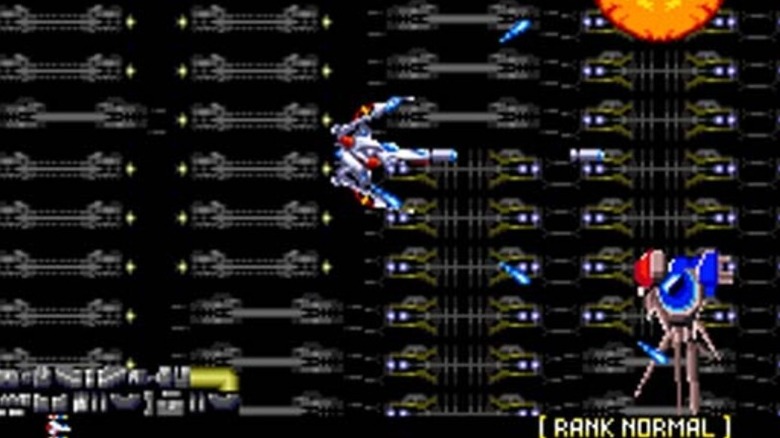
Side-scrolling shoot'em-ups were definitely in vogue going into the '90s, led by series like "R-Type" and "Gradius." One genre game that was lost in the shuffle is the 1990 title "Sol-Feace," originally released for the Japanese X68000 home computer. The game features a superficial space shooter premise, with players battling a rogue supercomputer plotting to subjugate organic life. "Sol-Feace" eventually made its way to North America in 1992 on the Sega Genesis and an enhanced version on the Sega CD.
Reviews of "Sol-Feace" observed that the game does little to distinguish or elevate it from similar titles. The difficulty curve can be unforgiving, the soundtrack isn't particularly inspired, and the gameplay is relatively generic. But for fans of the side-scrolling shoot'em-up genre, these are quibbles at best. For fans looking to keep the retro space shooter thrills coming after beating "Gradius III" or "Super R-Type," "Sol-Feace" holds up decently as an underrated '90s video game.
M.C. Kids
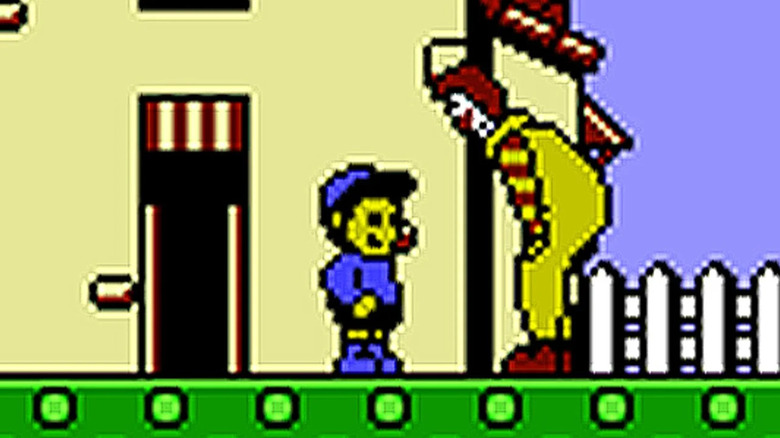
There was no shortage of '90s games that tried to copy Mario, and that includes 1992's "M.C. Kids." A licensed title for none other than the fast food titan, McDonald's, the game was initially published for the Nintendo Entertainment System and features franchise-themed power-ups. The game follows two children as they traverse a variety of platforming levels to see familiar McDonald's characters like the Hamburglar. In between meeting figures like the Grimace and Birdie, the game culminates in the kids defeating a rogue magic bag and returning it to Ronald McDonald.
"M.C. Kids" is visibly a cheap reskin of "Super Mario Bros. 2," dolled up to make it more fast food-friendly. The game wasn't widely derided but it also wasn't particularly warmly received, receiving middling critical feedback at best. Constant fast food tie-ins aside, the game is a decent late-stage NES platformer riffing on the "Super Mario" legacy. An oddity in the NES library to be sure, "M.C. Kids" rises above the novelty of its ridiculous premise.
The Sword of Hope II
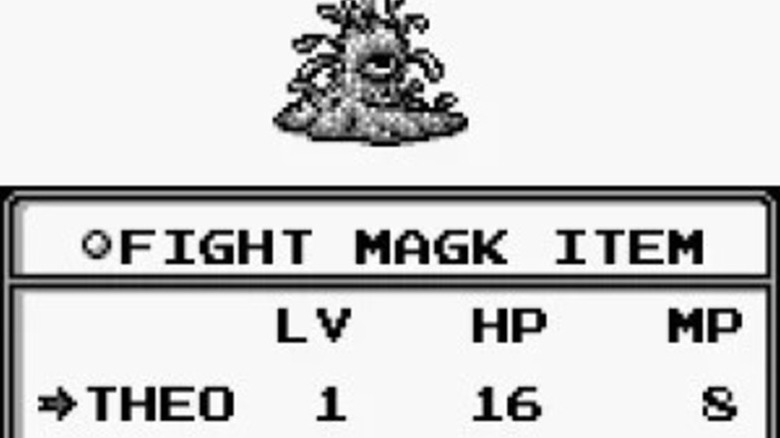
As "Dragon Quest" and "Final Fantasy" popularized the fantasy RPG genre, Kemco released its own pair of RPGs for the Game Boy, "The Sword of Hope." After starting in 1989, the initial title received a direct sequel with 1992's "The Sword of Hope II." Returning protagonist Prince Theo is called back into action after an ancient evil is unleashed on his kingdom. Theo's quest takes him from the deep underwater and to the stratosphere as he recruits new allies to join his cause.
Though a visible improvement over the original game, "The Sword of Hope II" was criticized for being a generic and uninspired Game Boy RPG. Admittedly, the sequel's combat is repetitive and menu-driven, but there is a rudimentary charm to it. This is an old-school, turn-based RPG, with simple puzzles to solve and a relatively linear path to follow, with fantasy archetypes making up the player's party. Appealing to RPG fans of the genre's early handheld titles at the dawn of the '90s, "The Sword of Hope II" doesn't reinvent the wheel, but it does provide steady fun.
Final Fantasy Mystic Quest
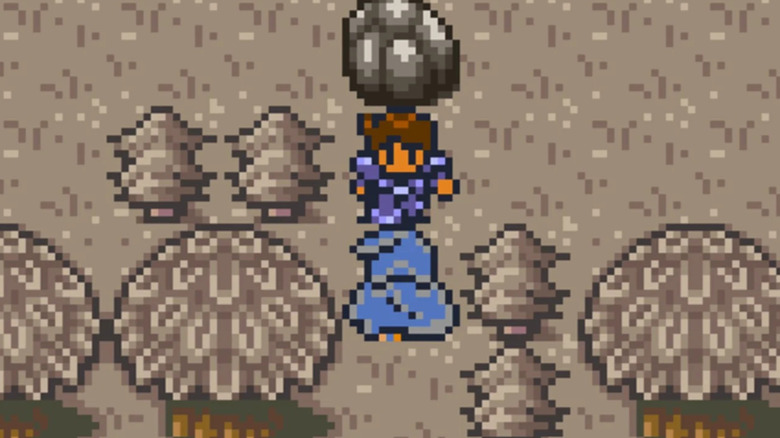
After releasing "Final Fantasy" and "Final Fantasy IV" in North America, Square wanted to reach larger levels of commercial success in the market. For this purpose, it produced the 1992 spin-off game "Final Fantasy Mystic Quest," the first game in the series to debut outside of Japan. Providing a more stripped-down experience to appeal to American gamers, "Mystic Adventure" doesn't have random battle encounters or the classic robust party system, while its difficulty is scaled down considerably. The game follows a protagonist named Benjamin as he sets out to recover magical crystals and purge the land of darkness.
Both contemporary and modern assessments of "Final Fantasy Mystic Quest" haven't been kind, with some decrying it as the worst "Final Fantasy" title. Some fans feel outright insulted by how much the game dumbs down the usual franchise experience, laughably low difficulty, and short length. That all said, "Mystic Quest" certainly isn't the unplayable farce that some gamers make it out to be, but a simplistic relic from the franchise's early '90s history. A curious detour in the stunning transformation of "Final Fantasy," "Mystic Quest" doesn't deserve all of the contempt that it gets.
Final Fight 3
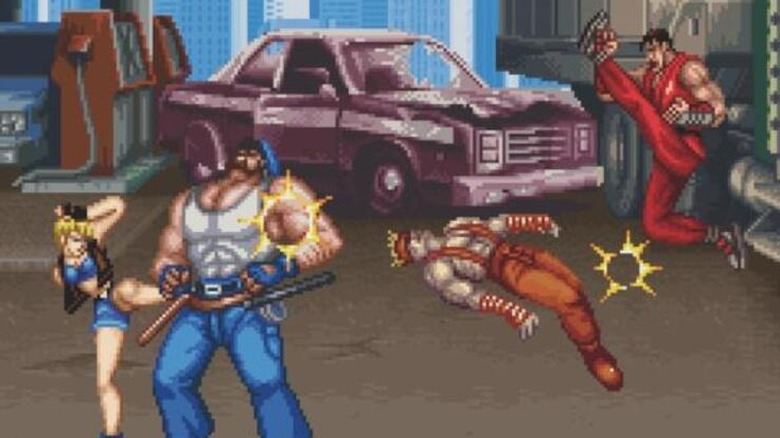
Another genre that was big in the early '90s was side-scrolling beat'em-ups, with properties like "Streets of Rage" and "Double Dragon" fueling its popularity. Capcom had several beat'em-up franchises of its own, most notably with "Final Fight," which began in arcades in 1989. Closing out the series' classic era was 1995's "Final Fight 3" for the Super Nintendo before Capcom tried to reinvent the property a couple of times. The game has returning protagonists Guy and Haggar, with new playable characters Lucia and Dean, facing a deadly new street gang in Metro City.
Contemporary critics were lukewarm on "Final Fight 3," with common criticism citing overly repetitive gameplay and not enough changes or improvements on offer since the preceding entries. This comes even with a bigger playable roster, multiple endings, branching paths, the option to have a computer-controlled partner, and the series' penchant for brutal continue screens. Retrospective reviews have been much kinder to the 1995 release, with some even naming it as the best of the entire franchise. A strong capper to Capcom's beat'em-up trilogy, "Final Fight 3" is an absolute gem for fans of the genre and franchise.