
5 Video Games From The '90s That Didn't Live Up To The Hype
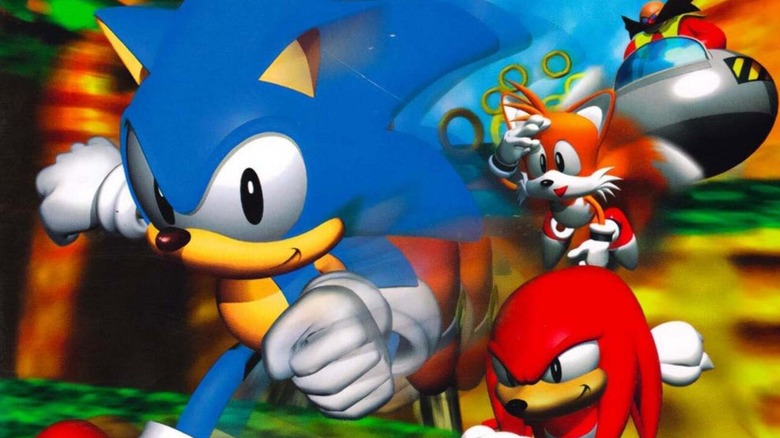
With the video game industry in full swing in the '90s, and the console wars between Nintendo and Sega in high gear, there were countless quality releases in the decade. As the gaming medium had been increasingly crowded since the '80s, publishers amped marketing to get their titles to stand out. Major franchises tried to reinvent themselves for discerning gamers while new consoles touted their exclusive releases. Unfortunately, not every widely advertised launch lived up to fan expectations once these games actually debuted.
The '90s had no shortage of games that saw a significant amount of buzz but failed to deliver when they finally saw the light of day. In some cases, these disappointments aren't necessarily a reflection of the games themselves but speak to the lofty expectations around them. At any rate, the 1990s featured plenty of games with considerable publicity that didn't make waves like their publishers had hoped. Here are five video games from the '90s that didn't live up to the hype around their respective releases.
Mario's Tennis
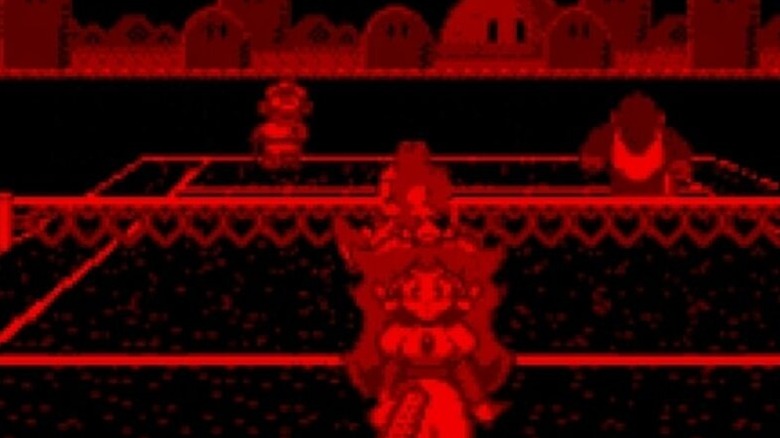
With virtual reality becoming one of the big buzz areas for gaming throughout the '90s, Nintendo took the leap into this immersive technology with the Virtual Boy. A stationary-mounted headset that displayed games in a red and black presentation, one of the console's launch titles was "Mario's Tennis." The game revolves around one-on-one and two-on-two tennis matches, with players able to choose from seven familiar Mario characters. Compared to subsequent titles, like "Mario Tennis" on the Nintendo 64, there are no power-ups in the Virtual Boy game, instead relying on the console's stereoscopic 3D for its appeal.
The failure of "Mario's Tennis" is more reflective of the Virtual Boy as a whole rather than being a remark on the quality of the game. Looking back, "Mario's Tennis" is one of the better titles on the console, but that didn't get curious gamers excited enough to pick up the platform. The Virtual Boy was a complete failure, and is still one of the biggest missteps Nintendo has ever taken. "Mario's Tennis" isn't responsible for the full extent of this disaster, but, as the North American pack-in title, didn't attract the attention Nintendo had hoped.
Street Fighter III: New Generation
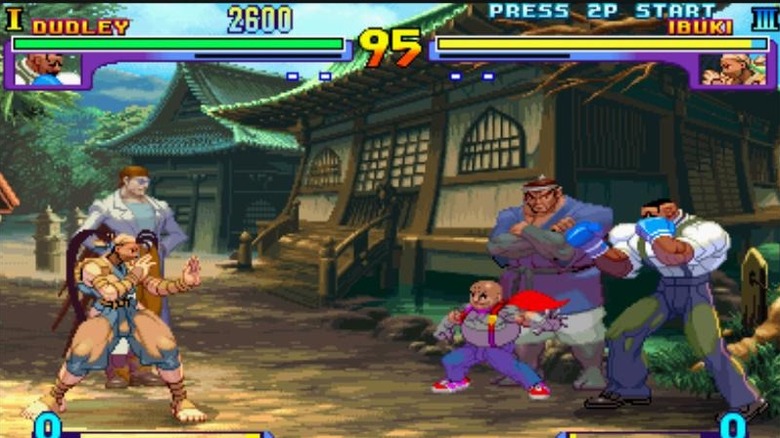
"Street Fighter II" catapulted the fighting game genre into the mainstream and inspired countless copycat video games throughout the '90s. After a wave of updates and spin-offs, including the prequel "Street Fighter Alpha" trilogy, Capcom produced a direct sequel with 1997's "Street Fighter III: New Generation." In development for more than two years, the game used the company's new CPS-III arcade hardware, officially bringing the franchise into a 32-bit presentation. The game had returning fighters Ryu and Ken enter a new global martial arts tournament, facing other formidable challengers culminating in a duel against the villainous demigod Gill.
Assuming the ubiquity of the franchise among gamers, the initial arcade cabinets for "Street Fighter III" simply read "Three" in the series' familiar font. Unfortunately, these assumptions and expensive production didn't pan out for Capcom at first, with the game only selling 1,000 cabinets at launch. Fortunately, the company continued to refine the experience with additional updates, including 1999's "Street Fighter III: Third Strike," a '90s game that's aged flawlessly. It took years for "Street Fighter III" to find its audience, as both the arcade scene and fighting games were on a downturn at the time.
Sonic R
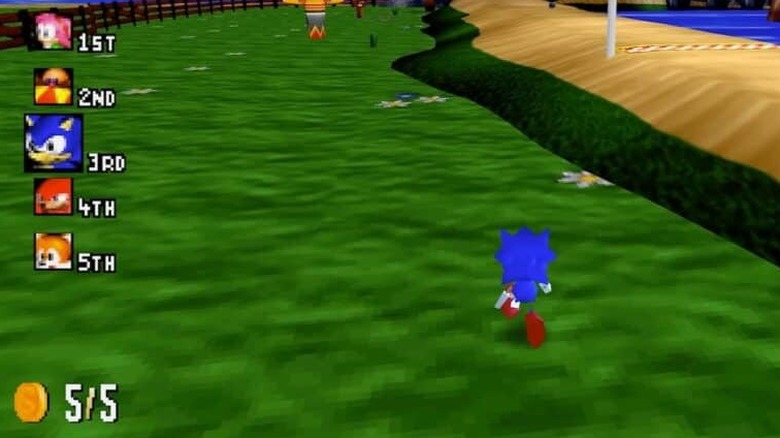
One of Sega's biggest mistakes was the cancellation of "Sonic X-Treme," which was intended to be the flagship franchise's big title on the Sega Saturn. Instead, they released "Sonic R." The game is the first 3D racing spin-off in the series, with up to 10 playable characters from the franchise, several of which needing to be unlocked. With tracks in familiar environments from the series, many levels feature multiple routes and shortcuts for players to find as they race each other. In addition to its variety of single-player modes, the game also allows for two-person competitive multiplayer.
Like "Mario's Tennis," "Sonic R" also speaks to its console's reputation. In this case, the Sega Saturn would completely fail, in no small part because of the lack of a real "Sonic" game. "Sonic R" isn't much of a standout in the Saturn library, with only the franchise's biggest fans finding it an overall enjoyable experience. To its credit, the game does boast a strong original soundtrack, but its actual gameplay could've used significant refinement. "Sonic R" signaled that Sega's support for the Saturn was approaching its end, with the Dreamcast in the company's near-future.
Castlevania (1999)
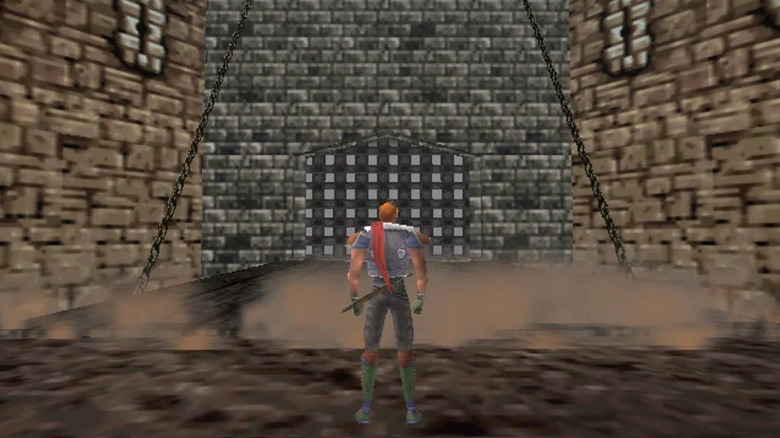
Colloquially known as "Castlevania 64," Konami's long-running franchise made the leap to 3D on the Nintendo 64 in 1999. Set in the 19th century, the game has vampire hunters Reinhardt Schneider and Carrie Fernandez venture into Dracula's castle when it resurfaces in Transylvania. Reinhardt is the latest wielder of the Vampire Killer flail, a weapon passed down for generations by the Belmont Clan, while Carrie uses magical attacks like her ancestors. If players beat the game in enough time, they receive the true ending, with a showdown against the disguised Dracula.
Konami had been hyping up its 3D "Castlevania" game since Tokyo Game Show 1997, showing early builds of the project. By 1998, playable demos of the project were available to gaming press as it settled on a March 1999 release date on the N64. Upon its launch, gamers were disappointed by the game's clumsy controls and camera handling, with Konami releasing an expanded version, "Castlevania: Legacy of Darkness," less than a year later. For its part, Konami has removed both versions of the game from the official "Castlevania" timeline, suggesting how they feel about it, too.
Shenmue
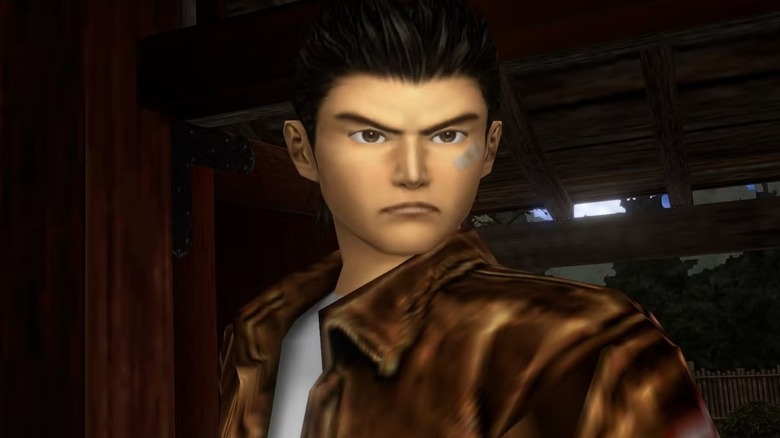
One of the most ambitious video games of the '90s was "Shenmue," released in 1999 for the Dreamcast. Set in an immersive vision of the Japanese city of Yokosuka in the '80s, the game follows protagonist Ryo Hazuki after he witnesses his father's murder. While gathering clues about the formidable murderer behind the killing, Ryo encounters other shady criminals around the city. In between his investigation, Ryo can work various jobs and partake in other daily activities throughout the community.
With a reported production and marketing budget of $70 million, "Shenmue" was the most expensive game project at the time of its development. Unfortunately, the game was a huge commercial failure when it launched, in no small part because of its bloated budget. The title has since become a cult classic and unofficially laid the groundwork for Ryu Ga Gotoku Studio's "Yakuza/Like a Dragon," a franchise with similar urban life simulator elements. Ahead of its time, if a bit overly ambitious with its scope and certainly its cost, "Shenmue" quietly marked the final days of the Dreamcast.