
5 Forgotten SNES Games That Pushed The Console To Its Limits
After the Nintendo Entertainment System took the world by storm in the '80s, Nintendo unveiled its follow-up home console, the Super Nintendo, as it progressed into the '90s. Processing its games in glorious 16 bits, the SNES featured vibrantly rendered games and significantly improved soundscapes compared to its predecessor. Many classic SNES games are considered must-plays, taking advantage of the improved hardware to deliver their memorable gameplay experiences. Across the console's library, there are a handful of titles that put the hardware through its paces, producing games that were technical achievements as much as they were entertaining ones.
With that in mind, we're highlighting the games that really demonstrated what the Super Nintendo was capable of. Gamers are likely already aware of titles like "Donkey Kong Country" and "Star Fox," both visually groundbreaking for their time. Instead, we're focusing on games that don't get the level of recognition they deserve for the feats that they accomplished with the SNES hardware. Here are five forgotten SNES games that pushed the console to its limit, showcasing its technical capabilities.
Axelay
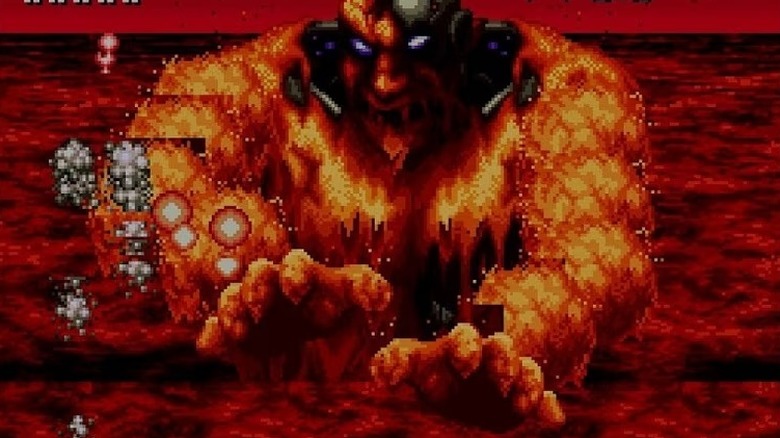
One of the most visually impressive shoot'em-ups on the Super Nintendo is "Axelay," which was released in 1992. The game has players blast through waves of enemies, known as the Armada of Annihilation as it approaches their home planet. Players can upgrade their ships between levels as they contend with progressively more dense and complex enemy patterns moving forward. In contrast to many space shooters of its era that stick to one perspective, "Axelay" features both top-down and side-scrolling gameplay sequences.
The Super Nintendo boasted a graphical animation technique referred to as Mode 7 graphics, an innovative way for the console to simulate a 3D presentation. "Axelay" used this technique for its overhead gameplay sections to simulate the feeling of flying over landscapes to great effect for a 1992 game. Boss fights also take advantage of this technology to appear as if they were moving back and forth from the background into the foreground as fights progressed. One of the most underrated space shooters on the SNES, "Axelay" is well worth checking out.
Stunt Race FX
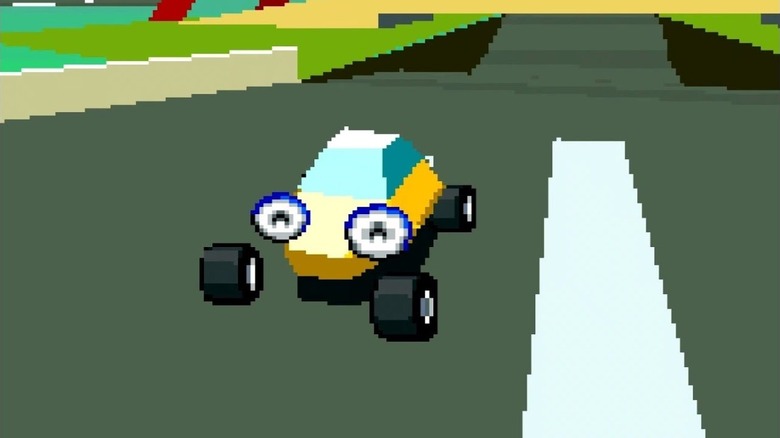
Starting with 1993's "Star Fox," a select number of Super Nintendo games had their cartridges fitted with the Super FX chip. The chip is a coprocessor that assists the console in running enhanced graphics. In the case of "Star Fox," it offered polygonal-based visuals. The console's second Super FX chip–enhanced title is the racing game "Stunt Race FX," which was released in 1994. Players pick from a small selection of vehicle types in a variety of game modes, including racing, test driving, and traversing obstacle courses.
Looking back, "Stunt Race FX" is a hit SNES game that didn't age well but did show Nintendo's continued commitment to the technology. The game is the first racing game developed and published by Nintendo to widely employ polygonal models, something made possible by the Super FX chip. This helped set the stage for more advanced 3D racers in the subsequent Nintendo 64 generation, like "Mario Kart 64" and "Wave Race 64." "Stunt Race FX" might not hold up as well over 30 years later, but it turned heads back in 1994.
Dragon View
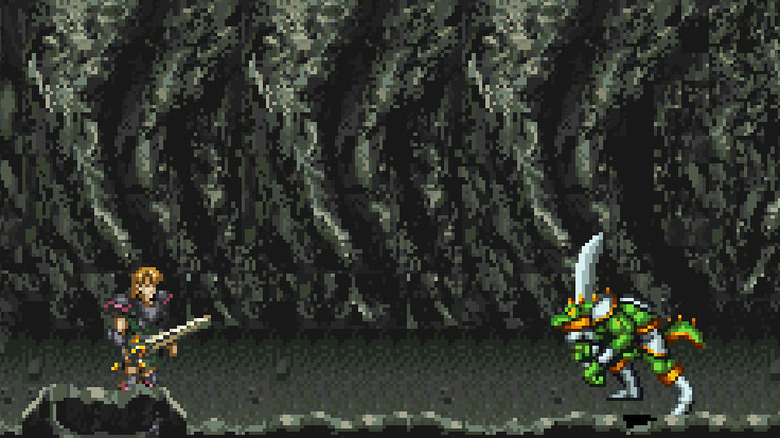
The Super Nintendo was home to many '90s RPGs that aged surprisingly well and even more that decidedly didn't. Among the SNES titles that aged like whole milk was "Drakkhen," but it did well enough to receive a 1994 sequel with "Dragon View." The game retained the pseudo-3D overworld from the preceding title but visibly refined and improved this time around. Featuring a prominent first-person perspective, players explored a fantasy realm while battling monsters from a side perspective.
The immersive first-person overworld in "Dragon View" featured a faux 3D presentation and it did so without the benefit of a Super FX chip. Instead, the game relied on sprite scaling to create the illusion of 3D, a technique that would be improved upon by the Sega Saturn for its own games. However, even with these innovative visuals and perspective, the "Drakkhen" franchise quietly came to an end with "Dragon View." Other RPGs featured their own techniques to visually pop and those overtook "Dragon View," with one notable game appearing later on this list.
Super Turrican 2
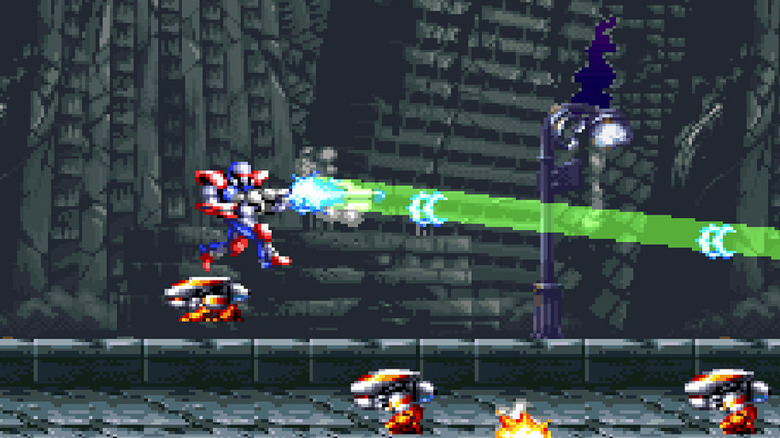
The 1993 sci-fi run-and-gun game "Super Turrican" received a sequel in 1995 as the Super Nintendo neared the end of its run. The player is the last survivor of a spec ops team sent to stop an interplanetary force known as the Machine. Equipped with a Turrican assault suit, the player character uses this exosuit and its arsenal of weapons to drive back the Machine and derail its efforts to conquer the galaxy. In addition to sequences on foot, the game contains gameplay sections where players are riding a variety of vehicles into battle.
"Super Turrican 2" is another game that showcased the eye-catching possibilities of the Super Nintendo's Mode 7 graphics. This is particularly noticeable in the game's vehicle-based sequences as players cruise underwater or in the cosmos while outmaneuvering waves of enemies. Unfortunately, outside of the occasional compilation or remaster, "Super Turrican 2" marks the end of the series overall, at least as far as brand-new games are concerned. But the 1995 game and its predecessor are visually vibrant SNES titles, reminding fans that there was more than just "Contra" in the run-and-gun genre.
Tales of Phantasia
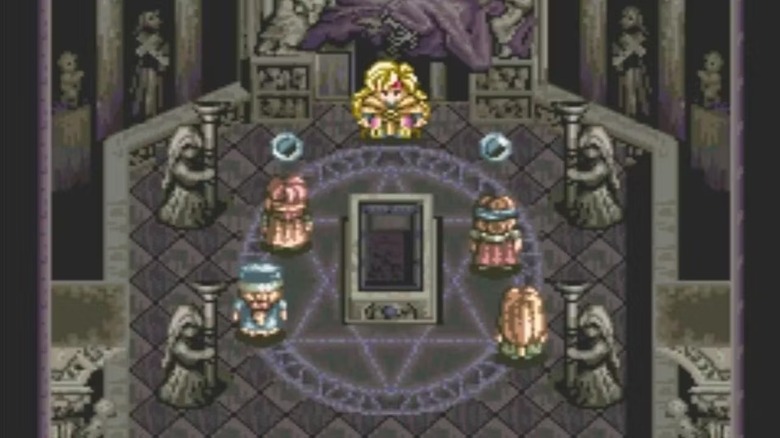
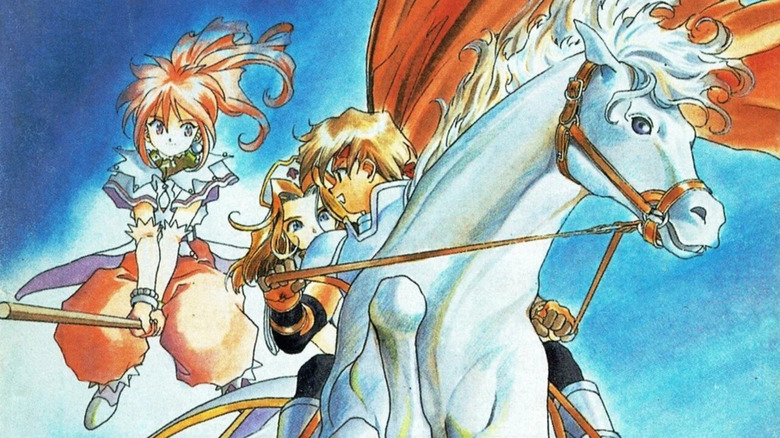
"Tales of Phantasia" is an RPG that launched late in the Super Nintendo's lifecycle and didn't get an official North American release until over a decade after its Japanese debut. Like "Chrono Trigger," the game is a time-bending fantasy adventure, with the evil knight Mars unleashing the imprisoned sorcerer Dhaos. With the defenders unable to stop Dhaos in this time period, protagonist Cress Albane is sent back in time to recruit allies from history to defeat the villain. In a change-up from combat in other major RPGs of its era, "Tales of Phantasia" has Cress controlled in real-time while computer partners can be set to different strategies.
In a rarity for the 16-bit era, "Tales of Phantasia" featured recorded dialogue and a soundtrack with clear singing. To make this possible, developer Wolf Team utilized a 48-megabit cartridge to program the game on, the largest published for the Super Famicom. Following the 1995 game's Japanese-exclusive release, it spawned a full-on franchise, including the valuable PlayStation game "Tales of Destiny." A game that didn't get widespread recognition in North American until its eventual debut in the market in 2006, "Tales of Phantasia" brought a more ambitious scope to the genre.