
5 Hit PS1 Games No One Remembers Today
After launching in 1994, Sony's PlayStation 1 accomplished something no other console could up until that point by selling over 100 million units worldwide. This record-breaking success cemented Sony's place in the video game industry, where it continues to thrive over 30 years later. Of course, consoles aren't sold on the strength of their hardware alone, with the original PlayStation boasting a robust library of games. Everything from "Resident Evil" to "Twisted Metal" got their start on the PlayStation, helping endear the new console to fans around the globe.
However, not every commercially well-received game on the original PlayStation has stood the test of time, at least as far as continued recognition is concerned. This isn't a critique on the quality of the games themselves, speaking instead to just how many iconic games graced the PS1 during its lifetime. With that in mind, we're highlighting games that connected with PlayStation owners but have since largely fallen out of our memories in comparison to their enduring contemporaries. These are five hit PS1 games no one remembers today despite the success around their launch.
Air Combat
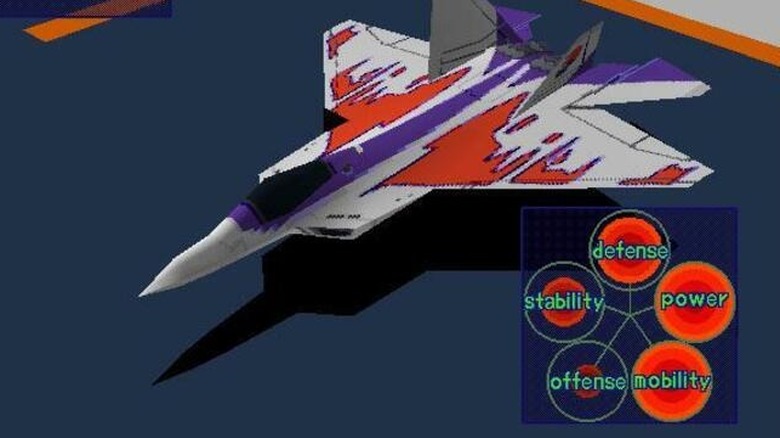
An early combat flight simulator for the PlayStation was "Air Combat," released in 1995 by Namco. The player character is part of a mercenary squadron which faces a terrorist organization staging a coup in a fictional country. Players receive money for successfully completing mission objectives and downing enemy aircraft, allowing them to unlock more fighters for subsequent use. The game also includes competitive multiplayer and various flying challenges for players to unlock even more aircraft as they progress.
With its 3D flying action and arcade-style pick-up-and-play format, "Air Combat" proved to be a hit with fans. This helped the game go on to spawn a franchise, after adopting the first game's Japanese title "Ace Combat" moving forward. By 2008, the original "Air Combat" sold over 2 million copies, making it another solid success for the Sony console. Helping flight simulators find their way to consoles after years of PC dominance, "Air Combat" set a new standard for the genre, even though it's the later "Ace Combat" games most fans remember now.
Jet Moto
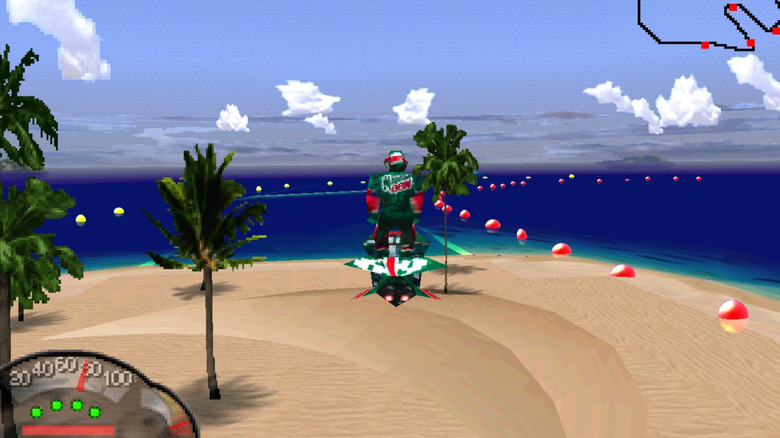
While one of the hidden gems on the Nintendo 64 was "Wave Race," the PlayStation had a similar racing game of its own with "Jet Moto." Whereas "Wave Race" revolved around jet skis, the PS1 title employed the use of futuristic hovercraft for its racing vehicles. This also tracks to unfold over both land and water as they speed over a variety of environments in the standard three-lap races. One innovative game mode has players run to the end of the track and back towards the start to complete laps, dodging the other incoming racers along the way.
"Jet Moto" was successful enough to warrant a PlayStation Greatest Hits edition re-release and went on to receive two direct sequels during the console's lifetime. Though the hovercraft physics do admittedly take some getting used to, the races themselves are engaging and present a healthy challenge. Amusingly, the game also employs prominent real-world brands for its in-game marketing, helping to reflect its era. A fun little sci-fi racing game that didn't reach the same long-running heights as console contemporaries like "Gran Turismo" and "Need for Speed," "Jet Moto" offers offbeat fun.
SaGa Frontier
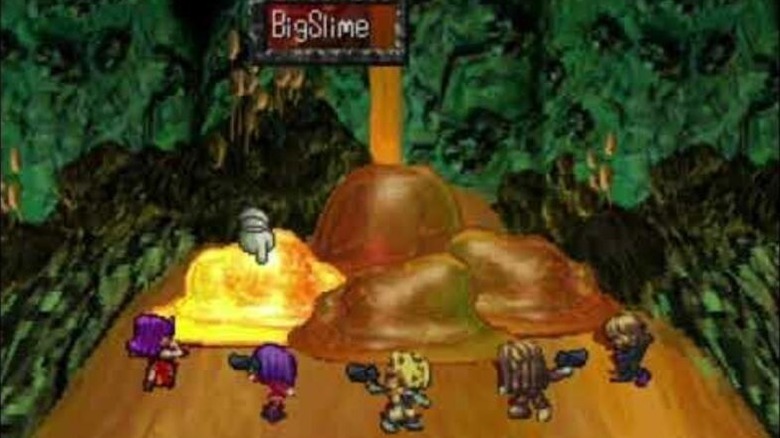
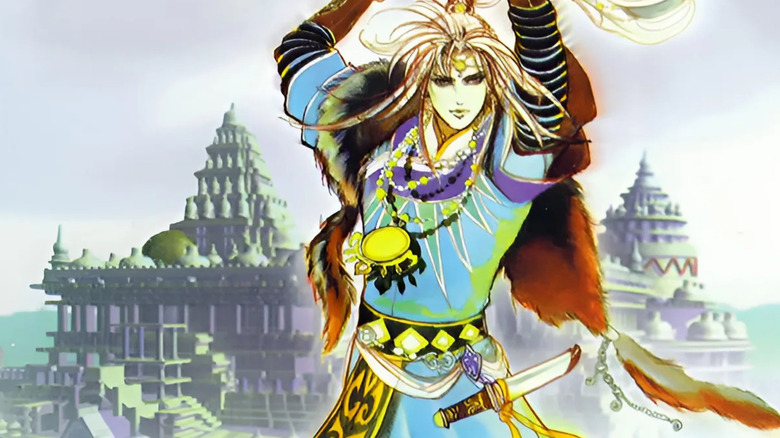
Square Enix's "SaGa" series, originally known in North America as "Final Fantasy Legend," made it to the PlayStation with 1997's "SaGa Frontier." The game is a turn-based combat RPG offering players seven protagonists, each with their own narrative saga. All of the characters hail from different planets within a solar system known as the Regions, each with their unique environments and cultures. Completing all seven protagonists' stories unlocks bonus content while rewards carry over to subsequent character campaigns.
With its set of distinct backstories and character arcs, "SaGa Frontier" feels like an inspiration to similarly scoped titles like "Dragon Age: Origins," though a bit more standalone per character. In essence, players are given seven RPG quests for the price of one, each leaning into sci-fi and fantasy in their own way. The game proved to be a relatively big deal in Japan, selling over one million copies in the country though never quite getting the same appreciation in America. Despite this, fortunately, the "SaGa" series has continued on and remains one of Square Enix's most unique RPG properties.
Frogger (1997)
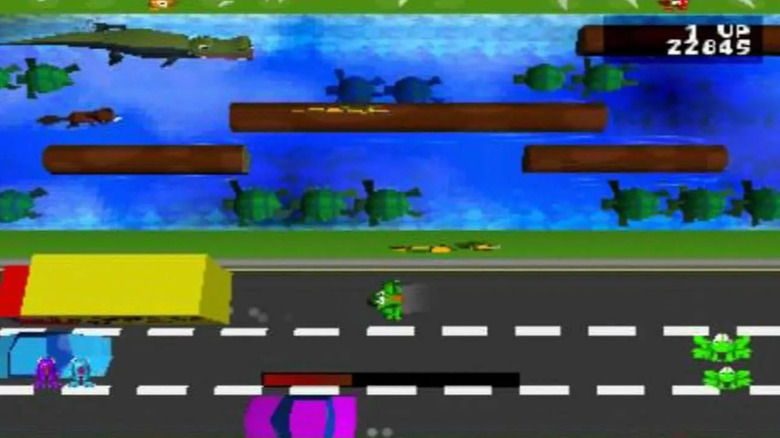
The original "Frogger" was an early '80s arcade game that helped define its golden age, providing countless hours of fun for fans pouring quarters into it. The franchise received a modern overhaul in the '90s, with a 1997 game for the PlayStation also simply titled "Frogger." The game starts with a 3D rendered twist on the original arcade title, with players guiding a frog across a busy street and river bustling with wildlife. This expands to a more ambitious experience as players progress into more varied and complex maps while searching for the frog's fellow amphibian buddies.
Though "Frogger" didn't review particularly well with contemporary critics, the game was a commercial success. The PlayStation version of the game went on to sell over three million copies, signaling there was still life in the classic arcade property. The game went on to receive a sequel three years later with "Frogger 2: Swampy's Revenge," which was also well-received commercially. Despite this, the franchise is really just known for its original arcade title nowadays, rather than its early forays into 3D on the PlayStation.
Crash Bash
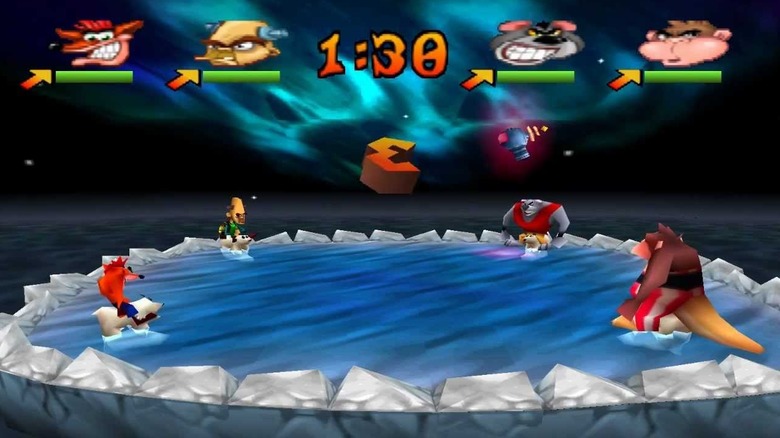
In the wake of Nintendo's hit "Mario Party" series on the Nintendo 64, Sony decided to take its own flagship franchise "Crash Bandicoot" in a similar direction. What resulted was the 2000 title "Crash Bash," which featured minigame-centric gameplay like the Mario-led spin-off series. Rather than rely on a board game format to steer the course of the competition and minigames involved, "Crash Bash" revolved around three distinct modes. This included an adventure mode for players to complete all the minigames in a set order, along with tournament and battle modes to go head-to-head against other players.
Like "Frogger," "Crash Bash" sold millions of copies despite bad reviews, with critics comparing it unfavorably to "Mario Party." To its credit, the party game was released at the arguable peak of Crash's popularity, fresh off of a trilogy of mainline games and a racing spin-off. But outside of a 2006 Nintendo DS title, "Crash Boom Bang!," the franchise has largely abandoned its party game aspirations. That leaves "Crash Bash" as an interesting, though financially successful, footnote in the series' history.