
5 Hit Sega Genesis Games No One Remembers Today
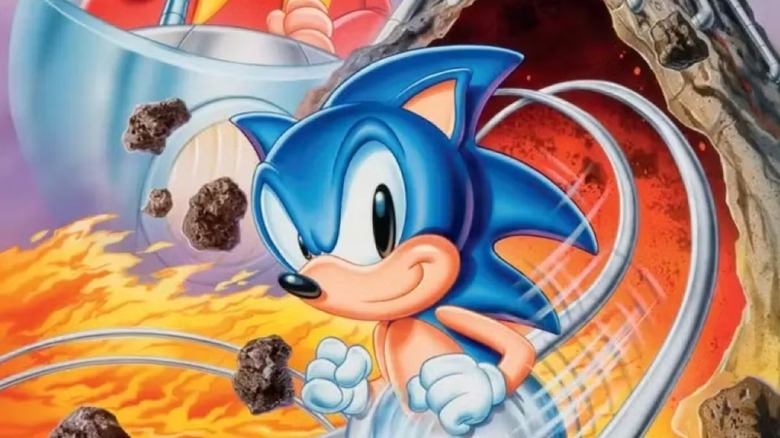
Nintendo's first serious home console competitor in the North American market was the Sega Genesis, a 16-bit platform that predated the Super Nintendo. Powered by hits like "Sonic the Hedgehog" and "Streets of Rage," the console was a major industry presence in the late '80s to mid '90s. The console also saw plenty of third-party franchises publish titles for it, including "Castlevania" and "Street Fighter," all taking advantage of the Sega Genesis' blast processing. An enduring fan-favorite for retro gamers, Sega was never quite the same after the Genesis, struggling to maintain its position as a major home console publisher in subsequent generations.
For as loaded as the Genesis' game library is, it's only natural that some beloved games have fallen out of our collective memory decades later. As always, this isn't a judgement on the quality of these games overall, but just speaks to the sheer breadth of titles available on Sega's 16-bit machine. With that in mind, we're highlighting the games that struck a chord with contemporary Genesis owners but aren't as well-remembered by the general public. These are five hit Sega Genesis games no one remembers today despite their initial commercial success.
Joe Montana Football
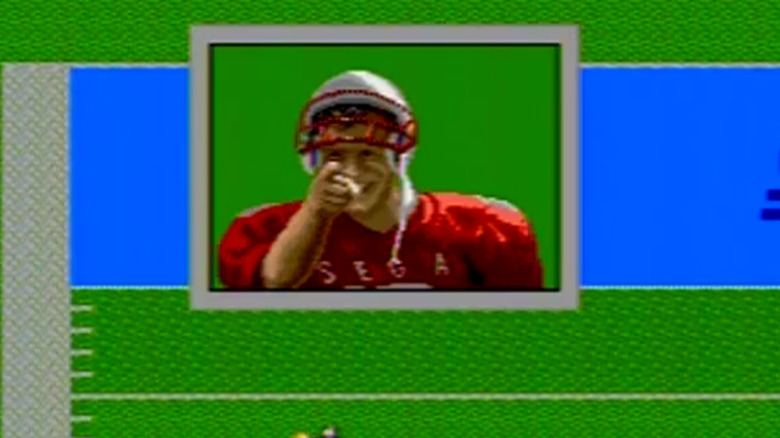
Though "John Madden Football" had been a staple on Sega platforms, including the Genesis, since 1990, it wasn't the console's only successful football game series. The month after "Madden" made it to the console, Sega also launched its own self-published football game with "Joe Montana Football." Like "Madden" at the time, "Joe Montana Football" featured generic football teams rather than NFL-affiliated squads, though Montana himself was a playable character. Compared to its Electronic Arts-published predecessor, "Joe Montana" favored slightly more grounded football gameplay, emphasizing pass-based offense.
Everyone remembers "Madden," but "Joe Montana Football" has become a more obscure title among modern gamers. That said, the game still connected with Genesis fans, selling over 250,000 copies in just under a year. This spawned its own Sega-exclusive football game series, though the association with Montana was dropped after 1994. Starting in 1999, Sega rebranded the franchise entirely as "NFL 2K." Unfortunately, the mainline series has been on ice since 2004.
Ms. Pac-Man (1991)
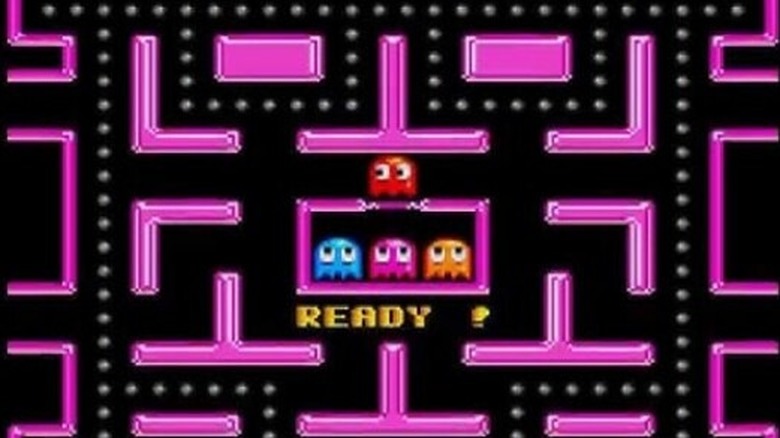
While "Ms. Pac-Man" itself isn't a forgotten game, the memory that the 1982 arcade game received a Sega Genesis port is. Released for the console in 1991, the Genesis version is, for all intents and purposes, a slightly upscaled version of the NES port released the preceding year. In addition to the usual mazes from the arcade game, the port included specially designed mazes, of both larger and smaller sizes, to keep players on their toes. As a fun added feature, the game also lets two people play simultaneously, with the one player controlling Pac-Man and the other his wife.
Even for an arcade game that was nearly a decade old by the time it reached the Genesis, "Ms. Pac-Man" was a strong seller. The game topped console sales charts for years after its launch, competitively priced at $19.95 in contrast to its noticeably costlier competition. Throughout its lifetime on the console, the game sold approximately one million copies as a testament to its continued relevance. Nowadays, the "Pac-Man franchise is worth billions and "Ms. Pac-Man" on the Sega Genesis certainly helped maintain that enduring legacy in its own way.
Sonic Spinball
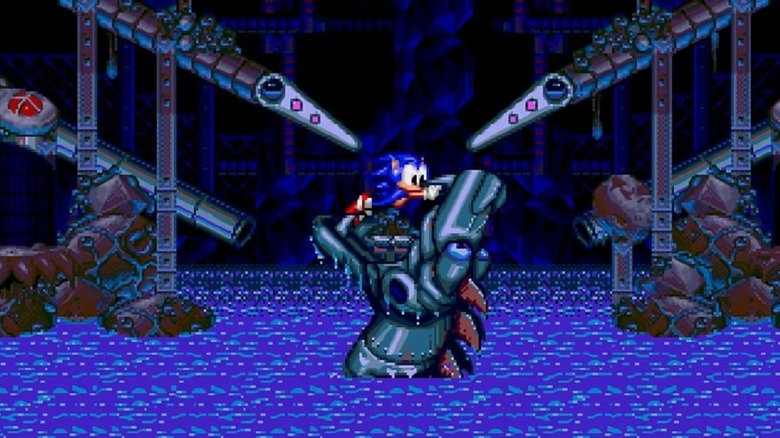
As Sega's flagship franchise Sonic not only starred in a number of sequels and spin-offs, some that tried to copy Nintendo's Mario and failed. One largely original spin-off at the time was "Sonic Spinball," a 1993 pinball game starring Sonic the Hedgehog. The blue speedster himself is propelled into obstacle filled stages, trying to obtain a high score and complete certain objectives to advance. The overarching story has Dr. Ivo Robotnik's latest scheme to trap the world in giant pinball machines because, of course he is, with Sonic entering the machines to dismantle them.
Whereas other Sonic spin-offs, like "Sonic 3D Blast" and "Dr. Robotnik's Mean Bean Machine" still have some staying power, "Sonic Spinball" is the forgotten, yet still successful, spin-off. Worldwide, the title sold over one million copies as a solid commercial hit as Sega continued work on the eagerly anticipated "Sonic the Hedgehog 3." The game even received a sequel of sorts a decade later with "Sonic Pinball Party" for the Game Boy Advance in 2003. An inventive use of the "Sonic the Hedgehog" license, "Sonic Spinball" helped fans with the two-year wait for the next mainline game.
Eternal Champions
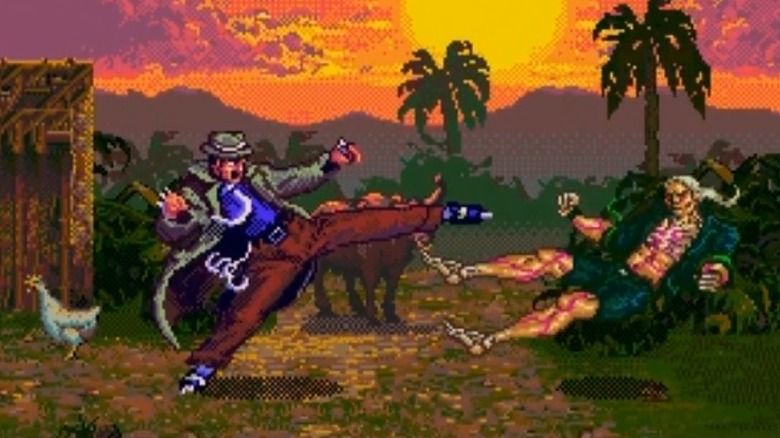
Throughout the '90s, many games tried to copy "Mortal Kombat" and "Street Fighter II" to replicate that fighting game success. Sega's answer to this trend was "Eternal Champions," which was released for the Genesis in 1993. The game's story has a cosmic figure, known as the Eternal Champion, pluck fighters from across human history moments before they die, leaving behind a life that had just barely failed to achieve greatness. In exchange for being the last fighter standing, the winner will be returned to their own time, revitalized and able to claim a better destiny than they were originally fated for.
"Eternal Champions" was successful enough on the Genesis to receive an enhanced version on the infamous Sega CD but little else. A sequel was advertised, but Sega chose to focus its fighting game efforts on its subsequent "Virtua Fighter" series instead. What gamers were left with was an odd cross between "Street Fighter" and "Mortal Kombat," as "Eternal Champions" blended gameplay sensibilities and presentation from both counterparts into its own failed destiny. Sega's first original foray into the fighting game space on the Genesis, "Eternal Champions" remains a quirky little fighter despite that brief life.
Mighty Morphin Power Rangers (1994)
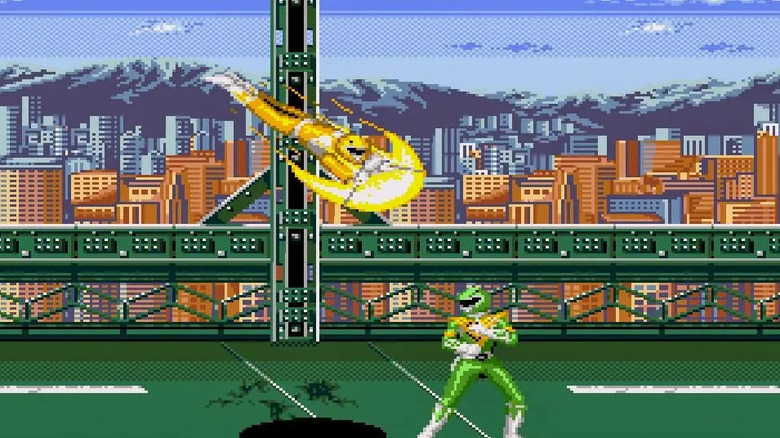
The "Mighty Morphin Power Rangers" franchise was everywhere in the '90s, with the super sentai show spawning a merchandising machine. This includes the 1994 Sega Genesis game "Mighty Morphin Power Rangers," which was markedly different from its Nintendo counterparts. Whereas the Super Nintendo and Game Boy titles were side-scrolling action games, the Genesis version is a fighting game in the style of "Street Fighter." The game features a story mode and competitive multiplayer, as well as the option for regular-sized or kaiju-sized battles.
The change-up in gameplay didn't dissuade fans, with the Genesis version of "Mighty Morphin Power Rangers" selling over one million copies. Interestingly, the Game Gear and Sega CD each received their own distinct titles in comparison to the Genesis title. The following year, four distinct tie-in games of "Mighty Morphin Power Rangers: The Movie" were released, including one for the Genesis. With so many different Power Rangers games floating around, it's easy to forget about the original Genesis title, despite its success.