
5 Retro Video Games That Changed Multiplayer Forever
Multiplayer has been a major part of the video game industry since the earliest days of the medium, from arcades to home gaming platforms. Since then, multiplayer experiences have only grown more ambitious and sophisticated, reflecting the evolution of video games overall. This ranges from massively multiplayer online titles to the best co-op video games to play with friends available now. The foundations of multiplayer video games can be traced back for decades, with some of the most iconic retro titles directly informing the experience's development.
With that in mind, we're taking a look back at the games that shaped multiplayer video games. Whether it's head-to-head competitive gameplay or cooperative titles, we're looking at the games that provided the building blocks for multiplayer titles as we know them today. Many of these games were incredibly popular in their own right, helping make their influence all the more prominent in the industry. These are five retro video games that changed multiplayer forever, with their ongoing legacy still felt today.
Pong
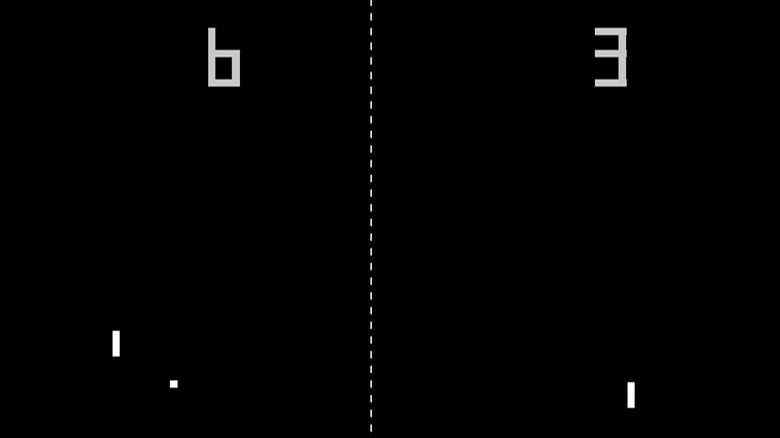
One of the most iconic games from the '70s is "Pong," an early hit for Atari that debuted in arcades in 1972. The game is a two-person heads-up multiplayer game, with each player controlling a single white paddle that can move vertically. A white ball moves across the screen, deflected by the paddles with the objective to get past the opposing player's paddle to score a point. By 1975, "Pong" was ported to home platforms, retaining the two-person multiplayer feature key to its appeal.
As crude as it may appear to modern gamers, "Pong" was a tremendously influential video game for its era. The Sears edition of the game sold 150,000 units in 1975 alone, reflecting how popular the title had become nationwide. Moreover, the game helped popularize the nascent video game industry, and it did so around the title's competitive multiplayer experience. "Pong" is still a foundational presence today, recently jumping on the portable bandwagon, while its 1v1 competitive gameplay remains as engaging as ever.
Karate Champ
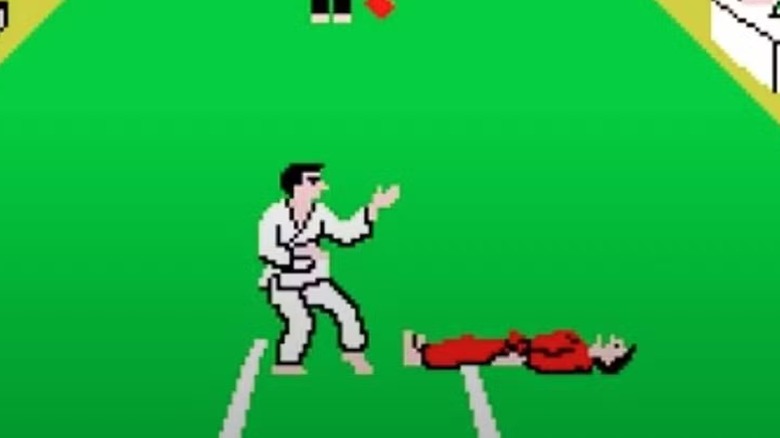
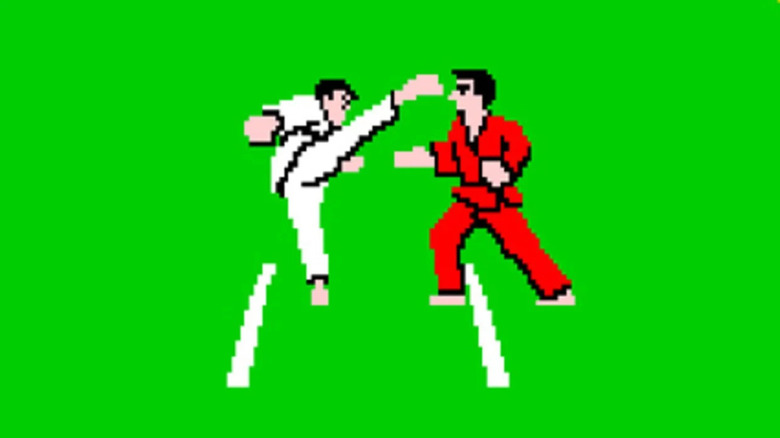
With loads of games like "Street Fighter" on the market today, it's a safe bet that fighting games have become a staple in the industry. The roots of the genre can be traced back to the 1984 arcade game "Karate Champ," published by Data East. The game has a pair of martial artists face off against each other 1v1 in a fighting tournament. Played out from a side-scrolling perspective, one contender wears a white gi while his opponent wears a red gi.
What distinguishes "Karate Champ" from prior 1v1 fighting games like "Heavyweight Champ" is the variety of moves available to players. Utilizing two joysticks per player to handle inputs, the fighters have 24 distinct moves at their disposal. Comparatively, titles like "Heavyweight Champ" only gave players the options of high and low blows, with defense usually employed automatically. Three years after "Karate Champ," Capcom released the first "Street Fighter" improving upon these foundations, and the rest is fighting game history.
Gauntlet (1985)
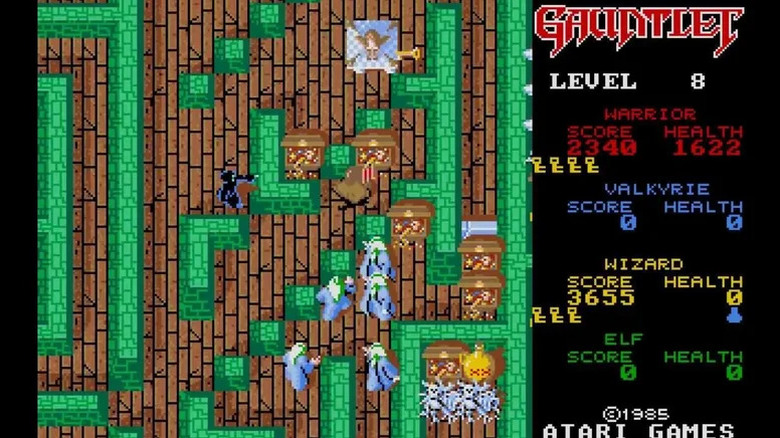
Four-person cooperative beat'em-ups became a major arcade presence in the late '80s and '90s with titles like "Teenage Mutant Ninja Turtles" and "The Simpsons." The origins of this level of cooperative multiplayer took shape with the 1985 dungeon-crawler "Gauntlet," an arcade title developed and published by Atari. Played from a top-down perspective, groups of up to four players, each operating a different fantasy archetype, battle waves of enemies and recover treasure. The game spawned a whole line of sequels and was ported to a variety of home platforms, with varying versions of its cooperative multiplayer kept intact.
Though "Gauntlet" is a hit '80s video game that nobody talks about today, it certainly made waves at the time. By the end of 1986, the game was cited as the highest-earning arcade title of the year. Four-person cooperative multiplayer experiences became more commonplace moving forward while the hack-and-slash genre helped inform the burgeoning beat'em-ups that took shape in 1987. A major step forward for cooperative multiplayer experiences, "Gauntlet" expanded the medium's scope beyond two-player titles.
Doom (1993)

Local area network, or LAN, deathmatch titles had existed since "MIDI Maze," but "Doom" took the experience to a significantly wider audience. Released in 1993 initially for PCs, the game is a first-person shooter that opens with research facilities on Mars' moons accidentally opening portals to Hell. As one does. The game features a now-famous but nameless space marine battling the demonic forces that invade the installations, using a variety of weapons to drive them back. Through LAN connections, up to four players could complete the campaigns cooperatively or go head-to-head in deathmatch mode.
Co-op shooter campaigns feel like the norm now, with "Halo" and "Call of Duty" continuing the feature that "Doom" effectively brought into the mainstream. But the deathmatch feature proved particularly popular, fostering a community around the game and its competitive mode. In the wake of its launch, "Doom" inspired countless copycat games, but known with quite the same legacy as the id Software title. Well worthy of its pervasive influence and impact on the gaming community, "Doom" is a cornerstone for first-person shooters and their accompanying multiplayer modes.
Sega Rally Championship Plus
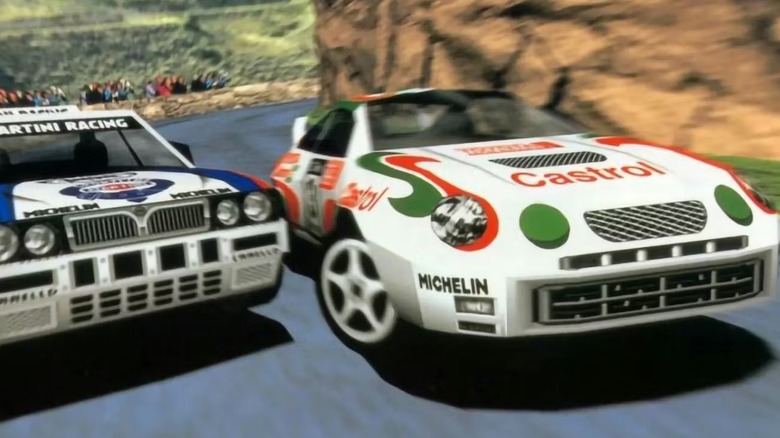
Sega had been producing racing games since the '80s with titles like "Out Run" and "Hang-On." This continued into the '90s with games like "Daytona USA" and "Sega Rally Championship," with the latter particularly important for the industry. While initially ported to the Sega Saturn in 1995, "Sega Rally Championship" received an enhanced console port in 1998 with online multiplayer. This was done through the Sega Net Link peripheral, which let players find opponents through a dial-up internet modem.
Along with "Virtual On: Cyber Troopers," "Sega Rally Championship" marked the advent of console-based online multiplayer. The year after "Sega Rally Championship Plus," the updated online version of the game, Sega doubled down on online multiplayer with the Dreamcast. The Dreamcast became the first home console with a built-in online modem, which eventually became the industry-standard. While not necessarily the flashiest game to feature online gameplay, "Sega Rally Championship Plus" helped prove the feature was possible for consoles and the industry followed suit.