
5 Forgotten Sega Dreamcast Games That Still Hold Up Today
Though the Sega Dreamcast completely failed, the company's last home console had a library full of stellar games. This ranged from Sega mainstays like "Sonic the Hedgehog" and "Virtua Fighter" to new franchises like "Crazy Taxi" and "Shenmue." The console also received a steady supply of third-party support, with games like "Resident Evil – Code: Veronica" and "Soulcalibur." Truly, the thing that killed the Dreamcast wasn't a lack of quality titles, becasue the console featured many fan-favorites in its relatively short lifetime.
This time around, we're not necessarily revisiting the best and near-perfect Sega Dreamcast games, but w're highlighting overlooked gems. These are the titles that often aren't seen on greatest games lists for the console, but they are still unabashedly fun in their own way. Worse yet, many of the games on this list haven't received a modern re-release, making them fall out of our collective memory even faster.
Here are five forgotten Sega Dreamcast games that still hold up today and are each worth revisiting.
Dynamite Cop
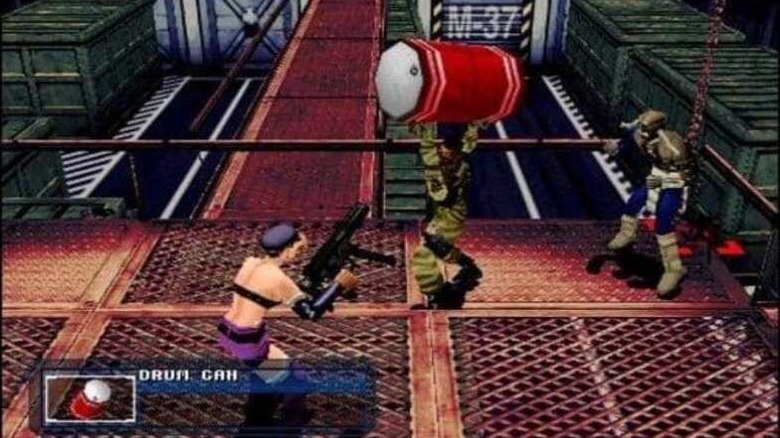
Sega was still developing beat'em-up games for arcades in the late '90s, including the 1998 title "Dynamite Cop." Ported to the Dreamcast the following year, the game has players control a group of heroes battling modern pirates on a cruise ship who have kidnapped the President's daughter. With up to two players able to get in on the action simultaneously, the characters blitz through enemies with everything from their fists to weapons they can temporarily pick up. This all culminates in a showdown on a remote island against the villainous White Fang Hongo.
Much of the gameplay and high-octane aesthetics in "Dynamite Cop" feel similar to Sega's 1996 game "Die Hard Arcade." Both games feature hero Bruno Delinger, though Sega is able to go wackier with the proceedings, no longer confined by operating within the "Die Hard" license. The game's length is relatively short, though there are multiple paths to keep players coming back for more. An unofficial sequel to "Die Hard Arcade," "Dynamite Cop" forges its own identity, even with its returning hero and antagonist.
Tech Romancer
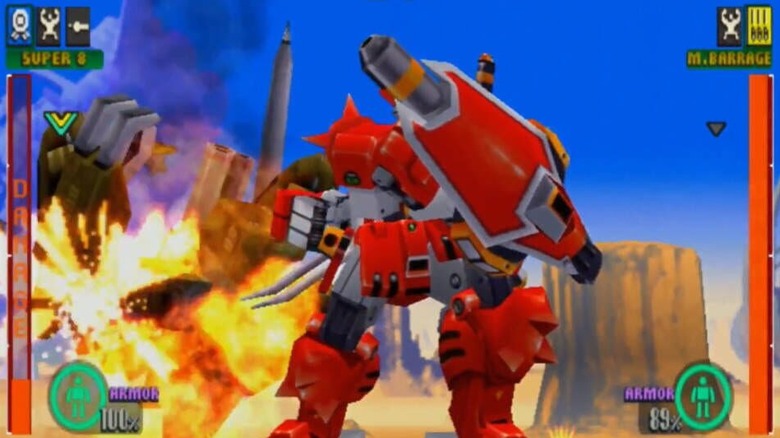
One of the most prolific third-party Dreamcast developers was Capcom, which ported a number of fighting games to the console in addition to developing new titles for the Sega platform. Among the arcade ports Capcom made for the Dreamcast is the 3D mecha fighting game "Tech Romancer," which was ported to the console in 2000. The game follows a group of humans in the future defending Earth from an invading interstellar warlord in their mechas. Inspired by mecha anime, "Tech Romancer" features a story campaign for each playable character and a straightforward arcade mode.
Another early foray into 3D fighting for Capcom, following "Star Gladiator" and "Rival Schools," "Tech Romancer" is one of the more obscure genre games the company published at the time. With its anime-style story mode, the developers took on a more narrative-driven approach to the experience, without compromising its hard-hitting gameplay. However, unlike "Rival Schools" or "Plasma Sword," Capcom hasn't given "Tech Romancer" the modern remaster treatment. With its flashy sci-fi presentation and revamp of the genre, the Capcom arcade port deserves to be reintroduced to contemporary audiences.
Outtrigger
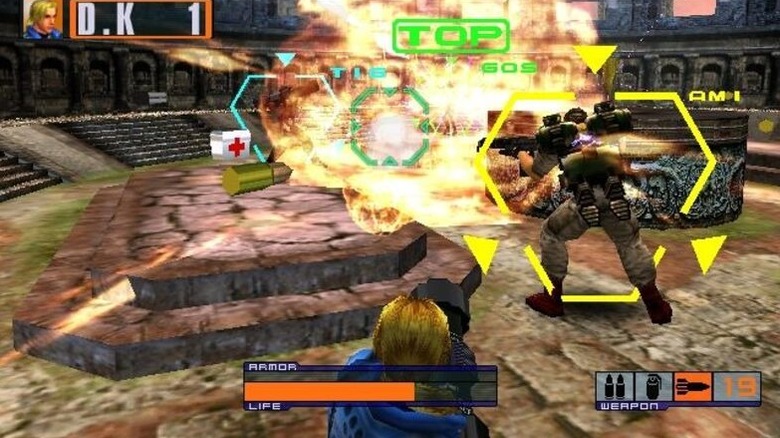
Another genre Sega continued to make arcade games for in the late '90s was shoot'em-ups, such as 1999's "Outtrigger." Ported to the Dreamcast in 2001, the game is a third-person shooter, with a mix of conventional and sci-fi weapons. Players can choose between four playable characters or create their own customized character as they battle terrorists in the game's story mode. The game also features competitive multiplayer modes for four-person local deathmatch and six-person online deathmatch using the console's built-in modem.
"Outtrigger" is one of the best-looking shooters on the Dreamcast, and with its online gameplay, it was an early pioneer in the multiplayer feature. The action is fast, chaotic, and appropriately explosive, with that fun factor only growing when more players are involved. The story mode is relatively standard, but when the gameplay handling is that intuitive, it makes for an engaging experience. Not as well-remembered as console contemporaries like "Unreal Tournament" or "Quake," "Outtrigger" brought its own vibrant carnage.
Cannon Spike
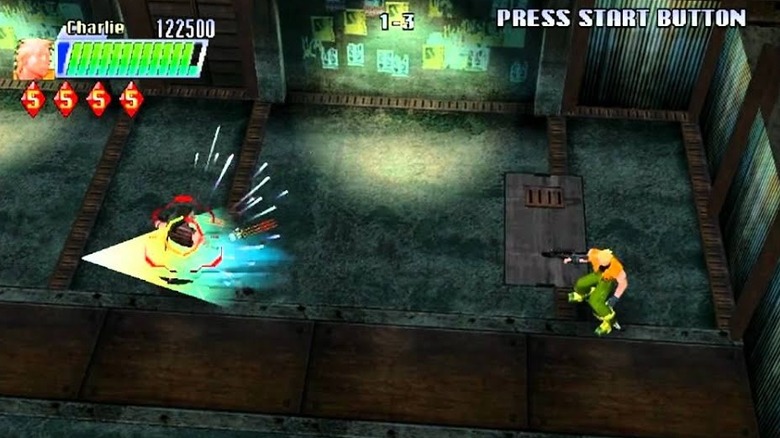
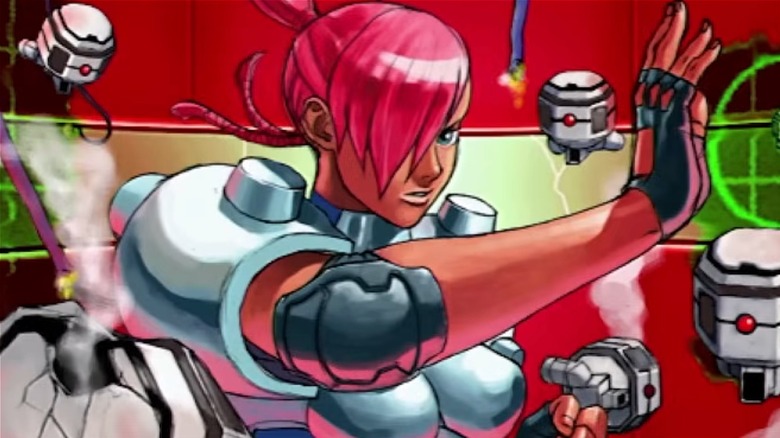
The rarest Sega Dreamcast game is actually an arcade-style shooter from Capcom featuring characters from some of their biggest franchises. Released in 2000, "Cannon Spike," named after one of the signature moves of Cammy from the "Street Fighter" series, is a top-down run-and-gun game. Players can choose between Cammy, fellow "Street Fighter" character Charlie Nash, B.B. Hood from "Darkstalkers," Arthur from "Ghosts 'n Goblins," and more. Working alone or with another player cooperatively, the heroes blast through villains, including bosses like the villainous Vega from "Street Fighter."
An arcade shooter might seem like an odd fit for what amounts to Capcom shooting all-stars, but "Cannon Spike" makes it work. This comes from its pick-up-and-play friendly approach, with accessible gameplay and engaging combat mechanics, especially in the game's boss battles. Like most arcade titles, the game is best experienced with a friend, coordinating clearing out enemies from levels with vibrant attacks. Unlike anything else Capcom was putting out at the time, "Cannon Spike" deserves a modern remaster.
Illbleed
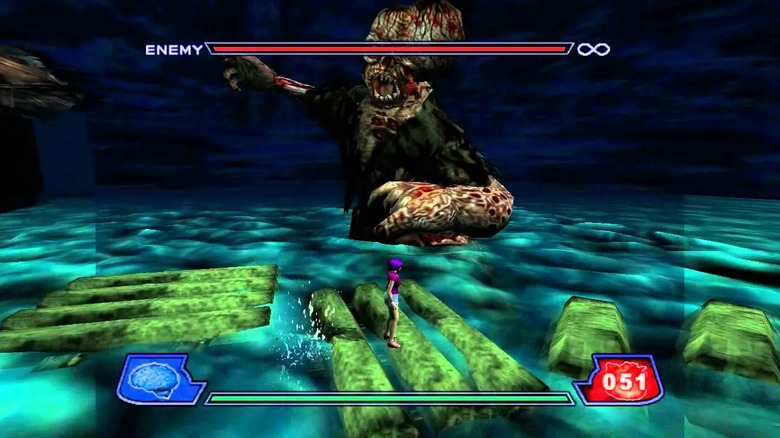
The Dreamcast had a number of impressive horror games but one of the most under-appreciated was the 2001 title "Illbleed." Developed and published by Crazy Games, the title follows high schooler Eriko Christy as she searches for her friends in an abandoned amusement park. Each of the theme park's six areas are inspired by different horror movies and filled with deadly traps and enemies. Using a sensory feedback monitor, players identify where traps are located and disarm them to proceed and battle monsters.
While "Illbleed" might not end up on a list of the most essential horror video games, it definitely has its own campy charm. The amusement park setting and visible horror influences in each attraction delivers an atmosphere set to be enjoyed by genre fans. This is elevated by trap and enemy locations being randomized in each playthrough, offering a level of unpredictability to the experience. Released late in the Dreamcast's lifecycle, "Illbleed" has yet to be ported to a different platform, adding to its obscurity.