
5 Gaming Predictions That Aged Horribly
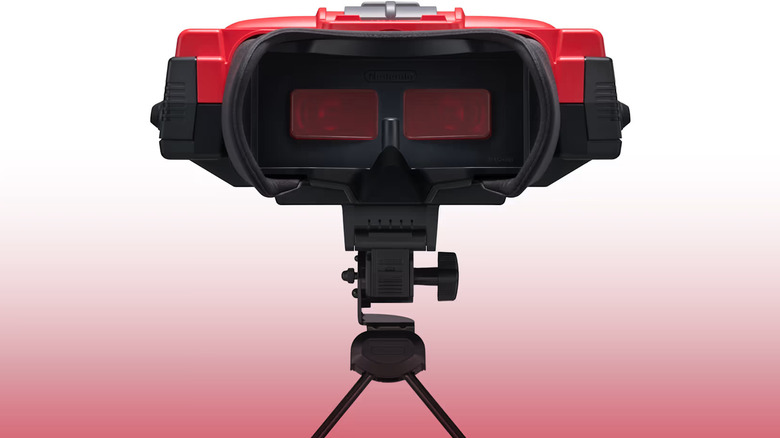
As much as we love seeing where the future of video games is going, sometimes figures and companies within the industry get it completely wrong. In trying to read the digitized tea leaves and stay ahead of the competition and consumer demand, game companies can stumble. These setbacks are sometimes borne from overconfidence but, more commonly, a misread or inaccurate prediction about the industry's trajectory. Not even powerhouses like Nintendo are immune to this, producing flops Nintendo was sure were going to be hits.
With the benefit of hindsight, we can see just how tone-deaf several of these predictions ended up becoming. In some cases, entire console generations were affected while, in others, companies retreated from the market. The video game industry is a fickle thing and it sure doesn't abide by big swings that fail to connect with consumers. Here are five gaming predictions that aged horribly, some becoming embarrassingly inaccurate almost immediately.
Nintendo thinks Philips is a better partner than Sony
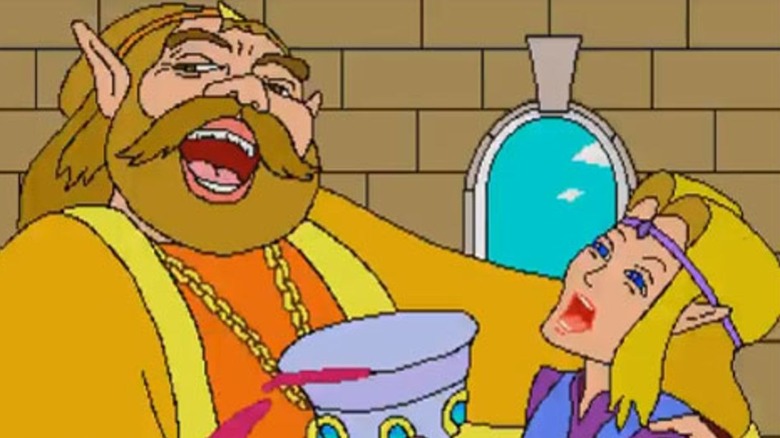
In what is probably the most poorly aged prediction on this entire list, Nintendo chose the wrong partner in an effort to develop a CD-ROM peripheral to the Super Nintendo. Initially, the company turned to Sony in helping to develop this hardware years before Sony created the PlayStation. Ultimately, Nintendo and Sony's failed partnership was triggered by Nintendo growing uncomfortable with the terms of the planned contract. Instead, Nintendo turned to Phillips for the possibility of developing a disc-based peripheral for its consoles.
In the end, Nintendo decided to stick with cartridges, ditching its plans for disc-based games at the time. Because of the tentative deal, Philips created its own console, the Philips CD-i, with games from licensed Nintendo properties, "Hotel Mario," and a trilogy of "The Legend of Zelda" titles. The CD-i and its maligned Nintendo-adjacent releases tanked and Nintendo's own effort to create a similar disc drive, the Nintendo 64DD, was a complete failure. In the meantime, Sony decided to enter the console market themselves with the PlayStation in 1994, becoming Nintendo's biggest competitor.
Atari claims to have the first 64-bit console
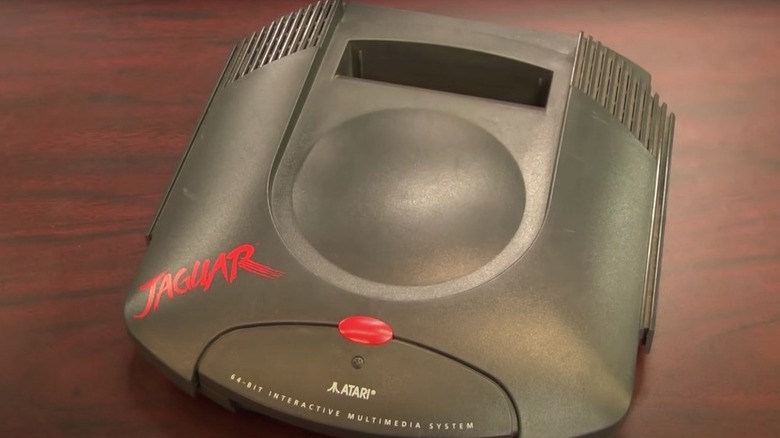
Throughout the '80s and '90s, consoles began to boast to players how many bits their hardware was capable of processing for its respective games. In attempting to stage a comeback in the '90s, Atari claimed it had the first 64-bit console with the Atari Jaguar. This bold claim was present on the console's branding and promotional materials, with the console's tagline telling gamers to do the math. The truth behind the Atari Jaguar is a bit more telling, with the console using two 32-bit processors instead of a true 64-bit processor, making its entire gimmick misleading.
Atari predicted gamers wouldn't notice how it achieved its 64-bit claim, but the Jaguar didn't revive the company's place in the console industry. With a lackluster library of games, including titles that didn't live up to the console's technical hype, the Jaguar flopped. The Nintendo 64 led the charge with true 64-bit processing two years later in 1996, while Atari was left in its dust. When the Atari Jaguar CD peripheral proved to be a complete disaster, the console folded completely shortly thereafter.
Nintendo believes virtual reality is the future of gaming
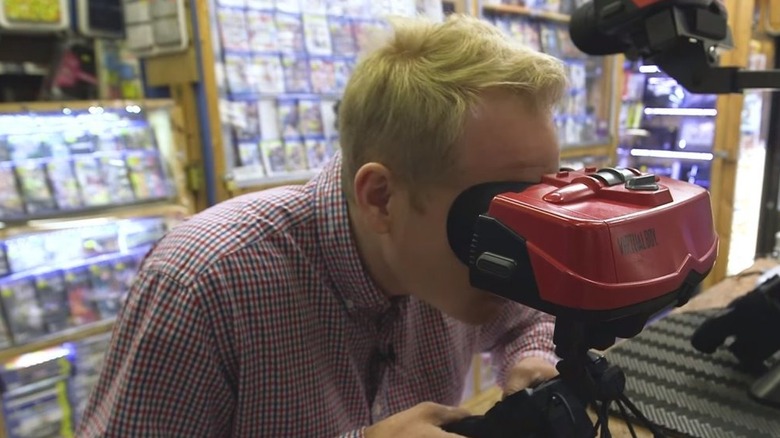
While Nintendo has endured plenty of setbacks over the course of its celebrated history, one of its most notorious is the short-lived Virtual Boy. Back in the early to mid '90s, it felt like virtual reality was shaping up to become the future of video games. Game Boy creator and respected Nintendo manager Gunpei Yokoi was particularly impressed by the technology and felt that it was revolutionary to the medium. This led to Nintendo producing the Virtual Boy, a console that rendered stereoscopic 3D effects through a stationary headset.
The Virtual Boy was a complete failure and the console only ended up receiving 22 games before it was discontinued. While marketed as a portable console, the Virtual Boy needed to be plugged in at all times during operation. Many titles didn't implement the stereoscopic 3D presentation well and users complained of suffering headaches and eye strain from playing it. Nintendo returned to the realm of stereoscopic 3D with the 3DS, albeit without a cumbersome headset and through a truly portable platform.
Apple tries to break into the console market
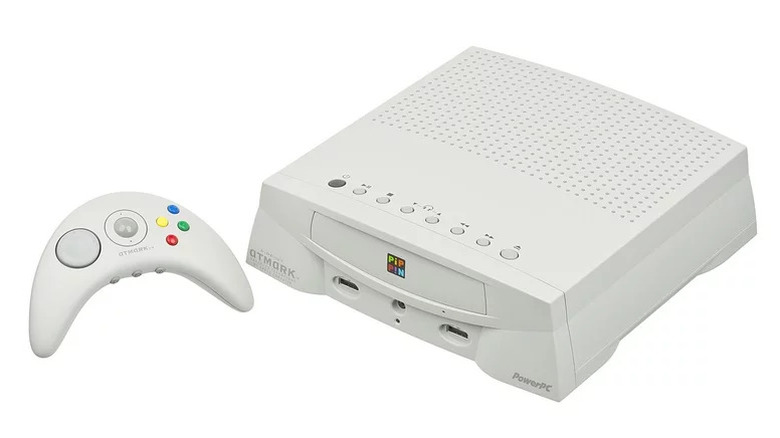
As far as the biggest console flops of all time go, it's hard to top the Apple Pippin. Before the company's resurgence with the iMac and the iPod years later, Apple tried its own hand at entering console gaming. In what was an innovative move, Apple envisioned its console as being open platform, licensing its technology to outside companies. Teaming up with Bandai, Apple co-developed the console, which debuted in Japan ahead of its American launch in 1996.
What ended up derailing the Apple Pippin was its presentation to consumers, with the hardware itself looking like a direct competitor to consoles like the PlayStation and Sega Saturn. In reality, the hardware was a repurposed computer running macOS rather than an exclusively dedicated gaming platform. All told, the Pippin sold an estimated 30,000 units in Japan and around 12,000 units in the United States, with approximately 50,000 manufactured units going unsold. Obviously, Apple eventually bounced back just fine, but it's wisely stayed away from the home console market ever since.
Microsoft predicts it will reclaim American video game dominance
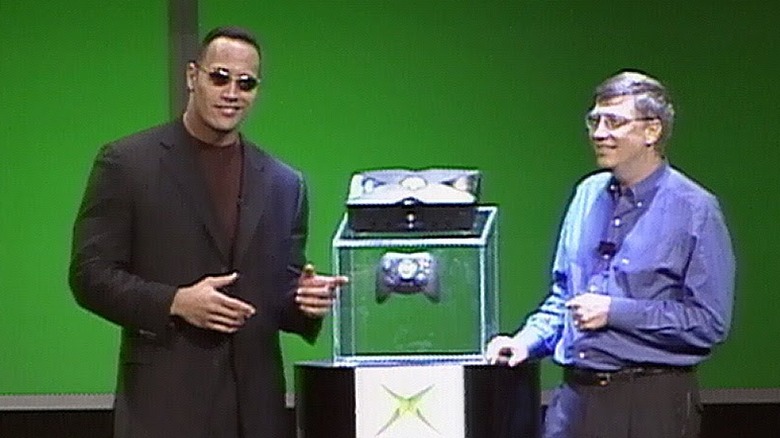
Microsoft had high hopes for the Xbox when it began developing its first home console in the late '90s. The company invested $4 billion into the development of the console and its attempt to quietly acquire Nintendo was rebuffed. In a bold internal prediction, Microsoft codenamed the Xbox project Midway in a direct reference to the pivotal World War II battle where Japan's advance in the Pacific was halted. With this project name, Microsoft anticipated ending the dominance of Japanese companies like Nintendo and Sony in the industry with its own console.
Though the Xbox remains a fixture in the modern console gaming landscape, the brand has yet to take the top spot in a given generation. The PlayStation 2 outsold the original Xbox, both the PlayStation 3 and Wii outperformed the Xbox 360, and the Xbox One and Xbox Series X|S fell behind their competitors. At the time of this writing, Xbox Game Pass is hemorrhaging millions of subscribers as Nintendo and Sony maintain the industry lead. To be fair, the Xbox brand has survived for 25 years, but retaking the top spot from Japanese companies has never been achieved.