
5 Best Retro Horror Games Of All Time, Ranked
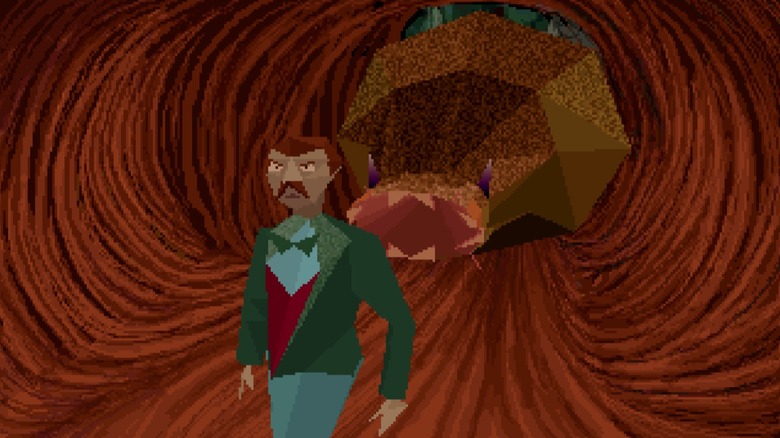
Since at least the early days of the Atari 2600, the horror genre has thrived in the video game medium. This ranges from horror-themed titles like "Haunted House" to '80s horror games that were too disturbing for kids. By the '90s, as gaming grew much more sophisticated, the genre became more pronounced in its ability to delightfully terrify and unnerve players with its gameplay experiences. Horror is one of those story types that significantly evolved alongside video games, making great leaps by the end of the '90s.
With that in mind, we're looking back at the greatest retro horror video games as experiences that have stood the test of time. Some of these games are more overtly frightening than others, but the familiar atmosphere and overall fun factor remain constant and enduring. For the purposes of this article, we're considering anything released before the year 2000 as retro. These are the five best retro horror games of all time ranked, each offering their own thrills and chills.
5. Sweet Home
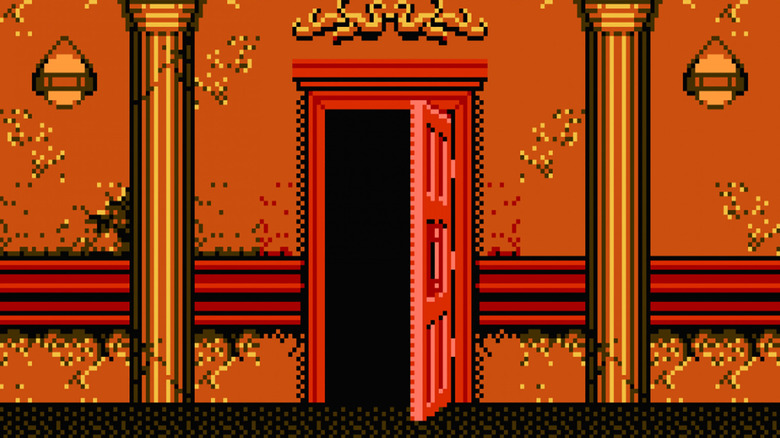
One of the untold truths of "Resident Evil" is that it was inspired by an earlier horror game developed and published by Capcom, "Sweet Home." A tie-in to the 1989 Japanese horror movie of the same name, the Famicom game retains the narrative premise of a film crew entering an old mansion to seek out its hidden artwork. The five-person ensemble discovers the house is haunted, encountering everything from ghosts to zombies trying to kill them. Each of the party members carry unique equipment to help on their quest to progress deeper into the mansion and ultimately escape alive.
"Sweet Home" never secured an official release in North America, though emulated fan translations of the game have since surfaced online. In getting the chance to play it, the game blends RPG and Metroidvania gameplay elements and stands as one of the most original titles on the Famicom. Players can also see how the game provided the foundation for "Resident Evil," including its combination of survival horror combat and puzzle-solving. The greatest horror game from the '80s, "Sweet Home" showcased what the genre was capable of.
4. Alone in the Dark (1992)
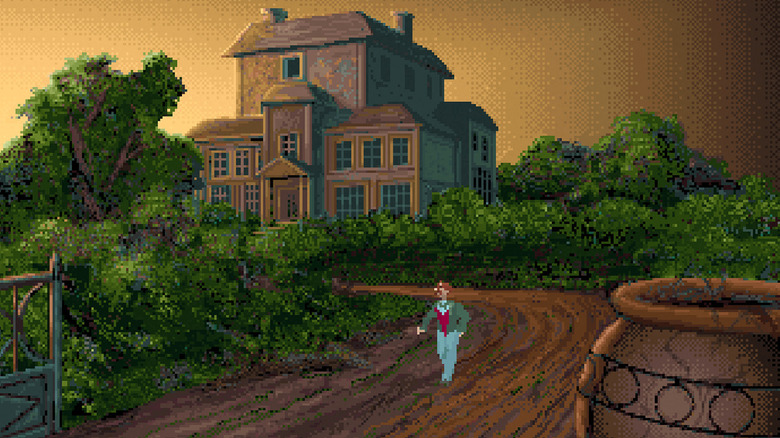
While "Sweet Home" provided gamers with an 8-bit haunted house experience, 1992's "Alone in the Dark" upped the ante considerably. Set in 1920s Louisiana, players have a choice between two protagonists, each with their own reason to venture into the game's mansion setting. Starting in the mansion's attic, the characters work their way down to the lower levels of the house as they look for a way to escape. The characters face various supernatural enemies as they solve puzzles and hunt for clues to find a way to leave the building in one piece.
"Alone in the Dark" is the ultimate haunted house game, with a rewarding sense of exploration with the suspense of delving into the unknown. There's a reason why recent attempts to revive "Alone in the Dark" only dimly succeeded, because they just can't recapture that mix of atmosphere and exploration. The period piece setting works wonders while the game's clear Lovecraftian influences make for a truly chilling adventure. Don't let the middling sequels and revivals fool you. The original "Alone in the Dark" is the real horror deal.
3. Silent Hill
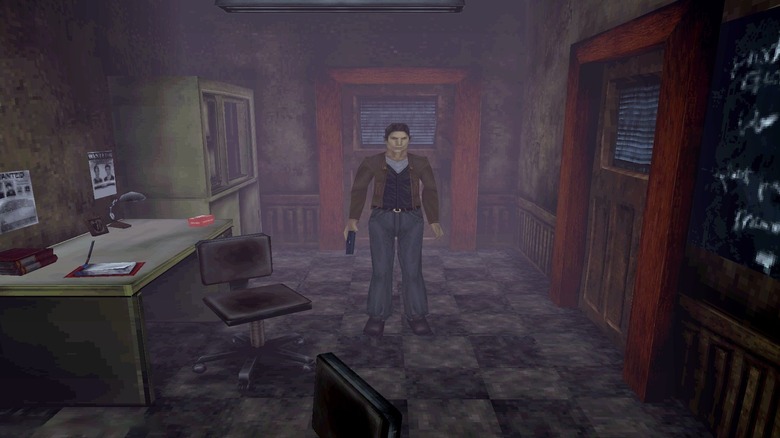
If there's a single geographic location that evokes horror gaming, it's the haunted town of Silent Hill. The franchise's inaugural title was released in 1999 for the PlayStation, following protagonist Harry Mason as he searches the eponymous town for his missing daughter. Harry progresses further into the fog-enshrouded community, battling monsters and solving puzzles to advance as he continues his search. A more unassuming protagonist than most horror games, every enemy encounter has an air of brutal desperation about it, incentivizing evasion over constant combat.
"Silent Hill" has undergone a rise and fall arc, followed by a recent comeback, but through it all, that original 1999 game still holds up. Even with its PS1-era graphics, the game maintains an enduringly foreboding atmosphere fueling the underlying unease. In that sense, "Silent Hill" thrives more on dread and psychological terror rather than the more visceral scares of "Resident Evil." The start of one of Konami's most iconic franchises, the original "Silent Hill" provides a more introspective horror experience.
2. Resident Evil 2 (1998)
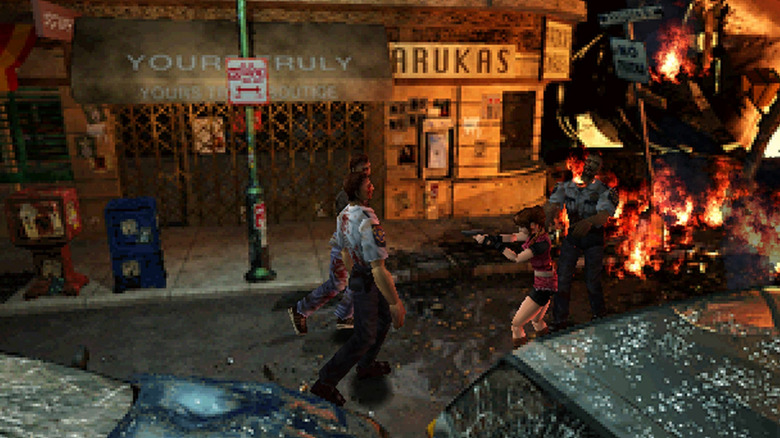
After Capcom launched the "Resident Evil" franchise in 1996, taking the survival horror genre into the gaming mainstream, they would completely blow it out of the water with "Resident Evil 2." The 1998 PlayStation game expands the zombie-infested action from a remote mansion to an entire city overrun by the undead. New protagonists Leon S. Kennedy and Claire Redfield try to escape from the city in one piece while uncovering the sinister truth behind the outbreak. Players are encouraged to play through the game a second time as the character they didn't initially choose, getting the full version of the story.
A huge chapter in the stunning transformation of "Resident Evil," the 1998 sequel takes everything the fan-favorite original game did and makes it bigger and better. From a greater variety in environments and enemies to more harrowing set pieces, "Resident Evil 2" takes the zombie-fueled scares to the next level. The game also introduces the concept of players being stalked by a seemingly unstoppable foe, something that grew into a franchise staple. "Resident Evil 2" made it clear that the Capcom property was no one-hit wonder, avoiding the sophomore slump entirely.
1. Castlevania: Symphony of the Night
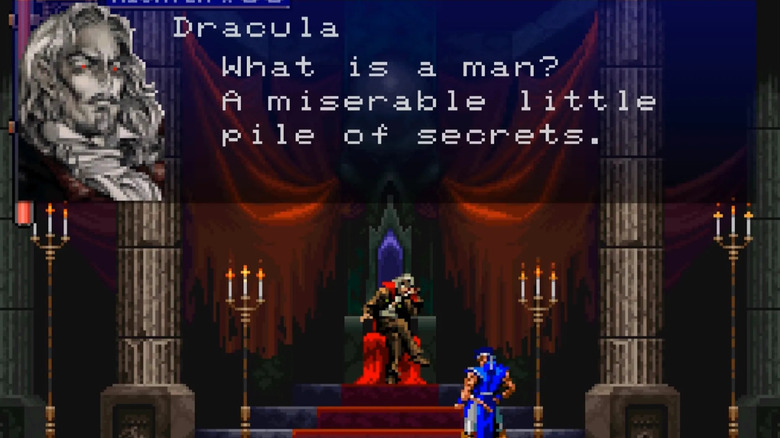
While some may scoff at "Castlevania: Symphony of the Night" being considered a horror game, the 1997 PlayStation title definitely has the macabre aesthetics in line with the genre. "Symphony of the Night" also has more grotesque and unsettling elements and sequences than any "Castlevania" game before it, taking advantage of the console's technical possibilities.
A direct sequel to "Castlevania: Rondo of Blood," the game opens with Dracula's dhampir son Alucard reviving from a lengthy slumber after his father's castle mysteriously reappears. Investigating the matter for himself, Alucard discovers an unholy plot to resurrect Dracula as he battles the vampire lord's monstrous associates.
From its haunted castle setting to eerie sequences involving Alucard revisiting his traumatic past, "Castlevania: Symphony of the Night" is among the most melancholic entries in the series. Something that often gets overlooked is that Alucard literally descends to Hell, battling Cerberus along the way, as part of his quest into his own heart of darkness. Underscoring the horror genre qualities to the overall game is a sweeping score composed by Michiru Yamane, from operatic arias to pipe organ-driven requiems setting the mood. While its genre placement may vary, what can't be denied is that "Castlevania: Symphony of the Night" is a '90s masterpiece that holds up today.