
5 Video Games From 1992 That Defined Sega's Golden Age
As the first serious competition for Nintendo's home console dominance, at least in the North American market, Sega was never the same after the Genesis. Launched in 1988, the 16-bit console brought franchises like "Sonic the Hedgehog" and "Golden Axe" to gamers worldwide. The console and its games were a staple throughout the early to mid-'90s, distinguishing itself in a crowded market with the Genesis' blast processing.
Decades later, many of those games are still enduring classics that continue to thrill fans of all ages. We're going to focus specifically on games for Sega platforms released in 1992. These are not necessarily the best games released during the year, but they do exemplify what fans enjoyed from the company. From Sega's biggest franchises to third-party titles that were initially exclusive to Sega consoles, there are a lot of highlights from 1992. Here are five video games from that year that defined Sega's golden age, both with the Sega Genesis and its continued presence in arcades.
Shining Force
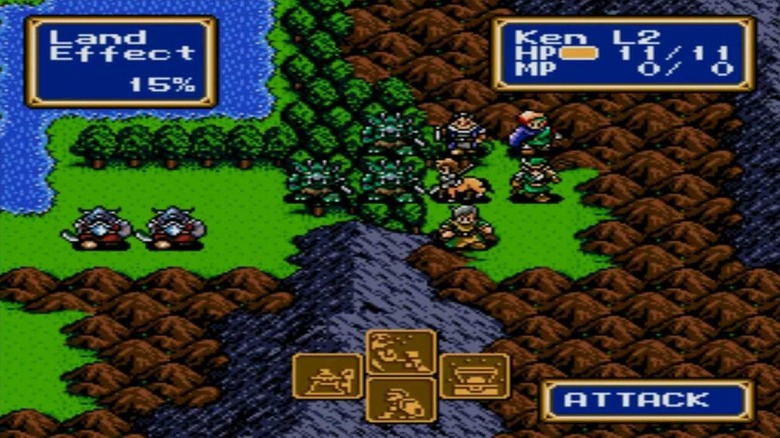
While Nintendo had its "Fire Emblem" turn-based tactical RPG franchise, Sega had its own line of RPGs, starting with 1991's "Shining in the Darkness." This was followed up by the standalone sequel "Shining Force," set in the Kingdom of Guardiana and following protagonist Max. Threatening this fantasy realm is a villainous entity known as Darksol, who seeks to revive the mythical Dark Dragon and plunge the kingdom into chaos. Along with a group of allies, Max navigates grid-oriented battlefields in turn-based combat, leveling up between skirmishes.
Sega already had a major RPG franchise of its own with "Phantasy Star," but "Shining Force" solidified the company's exploration into tactical strategy. The gameplay has a surprising amount of depth while the technical presentation takes better advantage of the Genesis' hardware. Compared to the dungeon-crawling gameplay of "Shining in the Darkness," the sequel proved that "Final Fantasy" wasn't the only console-based strategy RPG around. A successful pivot in gameplay, "Shining Force" expanded Sega's presence within the RPG space to great effect.
Virtua Racing
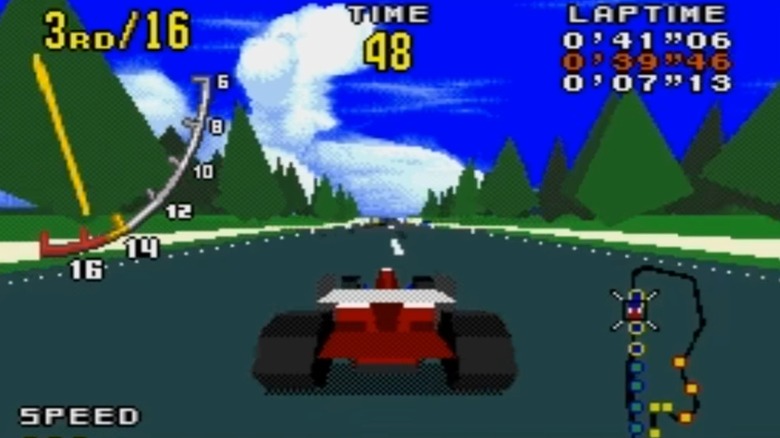
The arcade scene was still alive and well in 1992 and Sega remained a major player in it, developing and publishing a number of popular arcade titles throughout the '90s. Among these was the racing game "Virtua Racing," which utilized an early 3D animation presentation and art style. Players are given an option to choose between three different tracks, each with a different level of difficulty. There is also a small selection of cars, each with their own transmission type for their respective engines.
Before Nintendo's "Stunt Race FX," its own 3D racing title for the Super Nintendo, there was "Virtua Racing." It wasn't until 1994 that Sega finally ported the game to the Genesis, but the arcade version thrived upon its launch in 1992. Sega went on to produce subsequent lines of games using the "Virtua" moniker in other genres, including "Virtua Fighter" and "Virtua Cop." Another commercial success for Sega in the arcade market that proved its relevance wasn't isolated to home platforms, "Virtua Racing" maintained the company's presence in the coin-op scene.
Sonic the Hedgehog 2
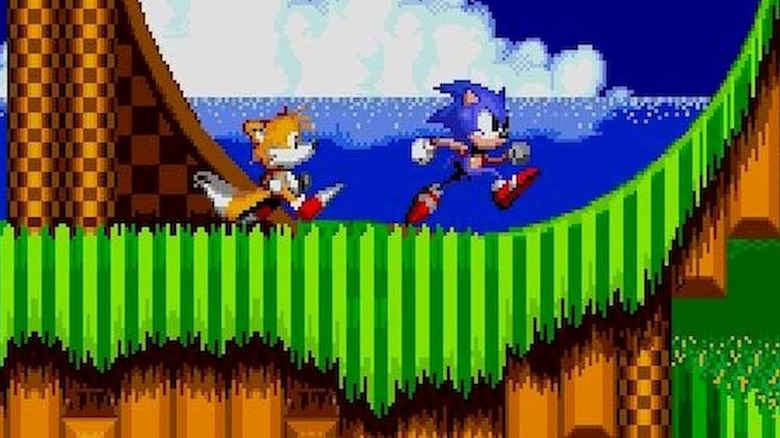
After several attempts by Sega to develop its first official mascot in the '80s, it finally found one with "Sonic the Hedgehog" in 1991. This successful debut was quickly followed up by "Sonic the Hedgehog 2" 17 months later, pitting the blue speedster against Doctor Robotnik once again. Fortunately, this time around, Sonic isn't alone, joined by the equally fast multi-tailed fox Tails on his latest quest. The duo venture into everything from the industrial Chemical Zone to the glittering metropolis of Casino Zone, gathering Chaos Emeralds as they battle Robotnik at the end of each zone.
With drop-in and drop-in two-player co-op, "Sonic the Hedgehog 2" was quietly revolutionary for its time. This distinction spread to its special stages, a major improvement over its predecessor, providing gamers with a faux 3D run to gather up enough rings while avoiding explosive obstacles. But beyond the addition of a second playable character and its bonus mode, the sequel featured better level designs, a more robust soundtrack, and a particularly crisp presentation. Early in the "Sonic the Hedgehog" timeline, Sega was still on fire with its new flagship franchise and avoided the sophomore slump.
Road Rash II
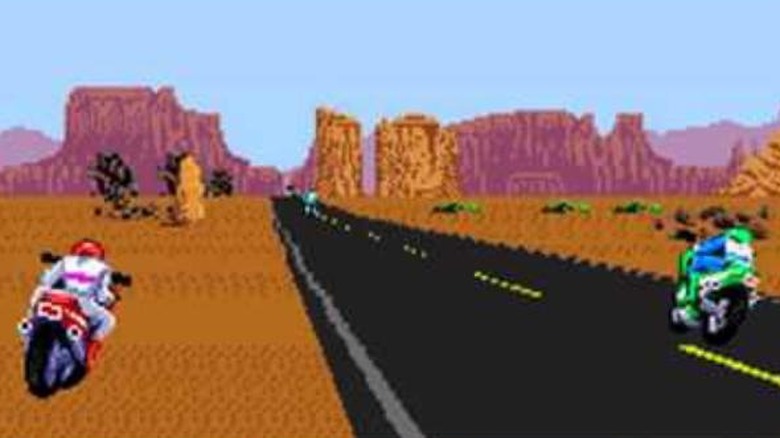
Among the franchises that Electronic Arts developed exclusively for Sega platforms was its combative racing series "Road Rash." After the successful inaugural title in 1991, EA followed it up with "Road Rash II" for the Genesis in time for the 1992 holiday season. The sequel retains the core premise of motorcycle racers allowed to attack their opponents with their fists and melee weapons. In addition to including new tracks and weapons for players to use, the game offers a two-player simultaneous co-op multiplayer mode.
With its split-screen multiplayer and the ability to boost speeds through nitrous oxide power-ups, "Road Rash II" is really where the series found itself. The game brings the hard-hitting, high-octane fun the franchise would come to be known for and is among the best Genesis exclusives, at least as far as racing games go. In the ensuing months since the first game, EA really learned how to run the game optimally on consoles, refining the gameplay and presentation. A tough and mean racing game reflecting the edgier attitude of the era, "Road Rash II" is a '90s game through and through.
Streets of Rage 2
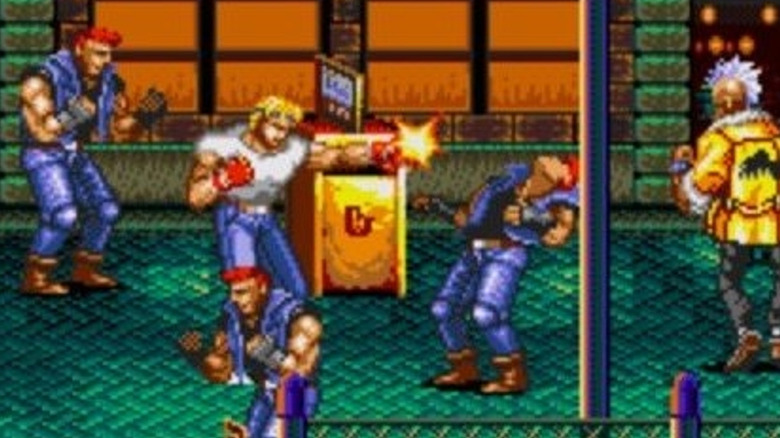
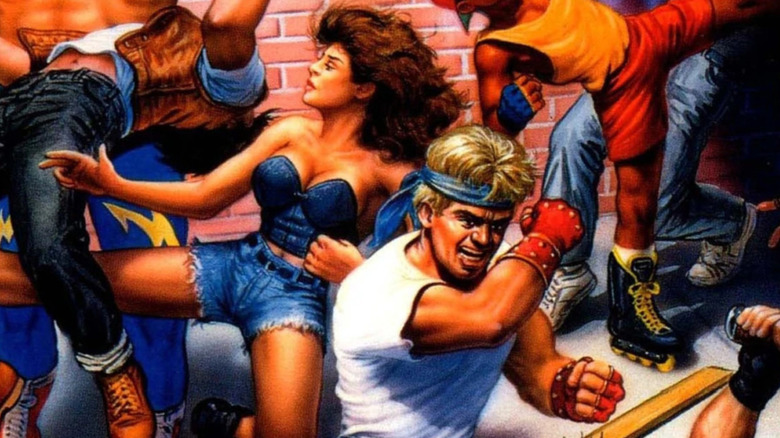
Side-scrolling beat-'em-ups were popular in the early '90s, led by franchises like "Double Dragon" and "Final Fight." Sega had a console-based beat-'em-up of its own with "Streets of Rage," which also started in 1991. Like "Sonic the Hedgehog" and "Road Rash," "Streets of Rage" put out a direct sequel the following year. "Streets of Rage 2" brought back Axel Stone and Blaze Fielding as protagonists, while bringing in two new playable characters, including a young rollerblader.
The best entry in the entire series, "Streets of Rage 2" subtly enhances the technical presentation and adds more variety to the gameplay and enemy types. This is done all while retaining and elevating the original game's sheer fun factor, making beating down baddies all the more satisfying. Like the first game, the sequel also features one of the best soundtracks in the whole Genesis library, with its pulsating beats setting the mood. Another sequel that goes bigger and better than its predecessor without coming off as overly derivative, "Streets of Rage 2" is a genre-defining highlight.