
5 Best Handheld Gaming Consoles Of All Time, Ranked
We may receive a commission on purchases made from links.
Ever since the days of the Milton Bradley Microvision in the late '70s, gamers have enjoyed handheld consoles. As gaming became increasingly popular, many of the industry's biggest companies have released their own portable platforms. Nintendo, Sega, Sony, and Atari have all produced handheld gaming consoles with varying levels of success. Today, we're taking a look at the best portable platforms in the history of the gaming industry.
From Nintendo's celebrated line of handheld consoles to more recent platforms boasting an unbeatable breadth of titles, there is no shortage of portables to revisit. And no, we're not counting mobile phones and tablets as handheld gaming consoles for this list. The primary purpose of each of these platforms is gaming first and foremost, even with whatever extra features and peripherals they may have. These are the five best handheld gaming consoles of all time, ranked, with each excelling at taking gaming on the go.
5. Game Boy Advance
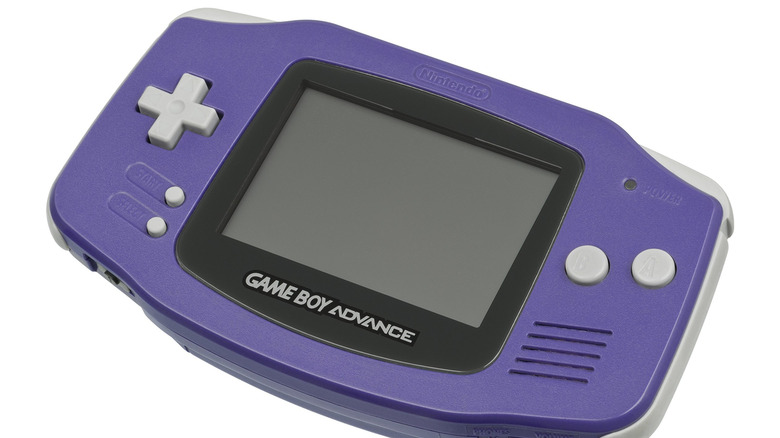
After the Game Boy and Game Boy Color dominated '90s handheld gaming, Nintendo followed it up with the Game Boy Advance in 2001. Powered by a 32-bit processor, the handheld was capable of running games that were more technically impressive than those on the Super Nintendo. The best Game Boy Advance games subtly revamped Nintendo's biggest franchises, including RPGs and side-scrolling platformers, with vibrantly detailed sprites. The GBA saw several revised models released during its lifespan, including the Game Boy Advance SP and the Game Boy Micro.
In addition to its impressive library of games, one of the big strengths of the initial models of the GBA is that it could play Game Boy cartridges. The idea of backwards compatibility wasn't an overly common one at the time, and given the prior Game Boy's success, Nintendo wisely didn't alienate the player base it built up. Backwards compatibility aside, the processing power that Nintendo was able to pack into the GBA without sacrificing performance is still an impressive achievement. The Game Boy Advance felt like a natural step-up from the Game Boy Color — and one with a robust library of games, to boot.
4. PlayStation Portable
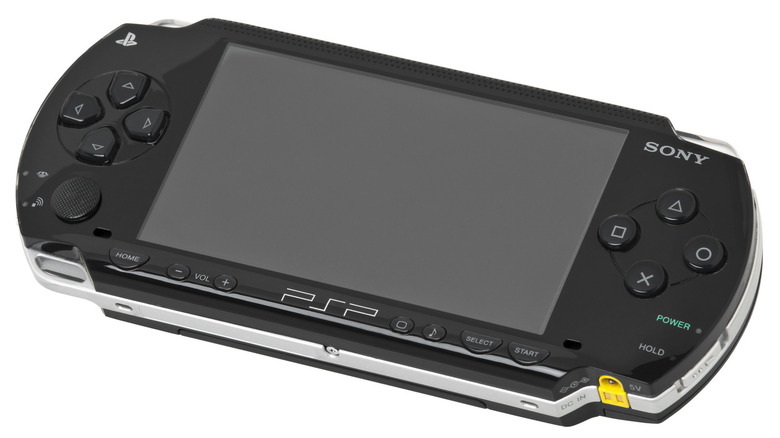
Sony's first handheld gaming console is still its best, with the PlayStation Portable giving Nintendo the most visible competition it had seen in that arena since Sega's Game Gear. Launched in 2004, the PSP impressively featured games roughly on par with less technically advanced PlayStation 2 titles. The handheld console could also be interfaced directly with the PlayStation 2 and PlayStation 3 through both a USB cord or wireless internet. The PSP also featured a built-in wifi modem and featured a line of movies produced to run on the console's proprietary Universal Media Disc (UMD) technology.
The best PSP games were just as good as the titles that Sony was releasing for the PS2 at the time. This includes some of the biggest franchises that Sony had going for its platforms, including "God of War" and "Metal Gear Solid." The PSP was succeeded by Sony's next handheld console in 2011, though the PS Vita completely failed to recapture the PSP's success. But during its lifetime, the PlayStation Portable made it clear that Sony's gaming dominance wasn't relegated entirely to home consoles.
3. Nintendo DS
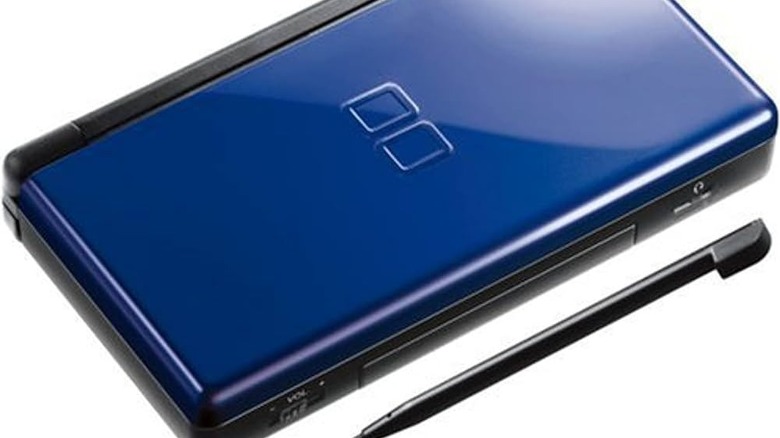
For over a decade, the then-best-selling Nintendo console in its history wasn't a home console but the Nintendo DS. Released in 2004, the DS' eponymous gimmick is that it was a dual-screen handheld gaming console, with its lower screen as a touchscreen. But beyond the dual screens, the platform boasted a 32-bit processor and was the first Nintendo console with a built-in wifi modem. The best Nintendo DS games incorporated these features organically into their gameplay experiences, from online multiplayer to intuitive use of the touchscreen display.
It wasn't until the end of 2025 that the Nintendo Switch surpassed unit sales for the Nintendo DS to become the company's current best-selling console. That's a reminder how much gamers loved Nintendo's first dual-screen console and its extensive library of games. Like the GBA before it, most of Nintendo's major franchises had a presence on the DS while the platform received significant third-party support. Helping Nintendo bounce back from the lackluster reception of the GameCube, the DS played an important role in the company's history.
2. Steam Deck OLED
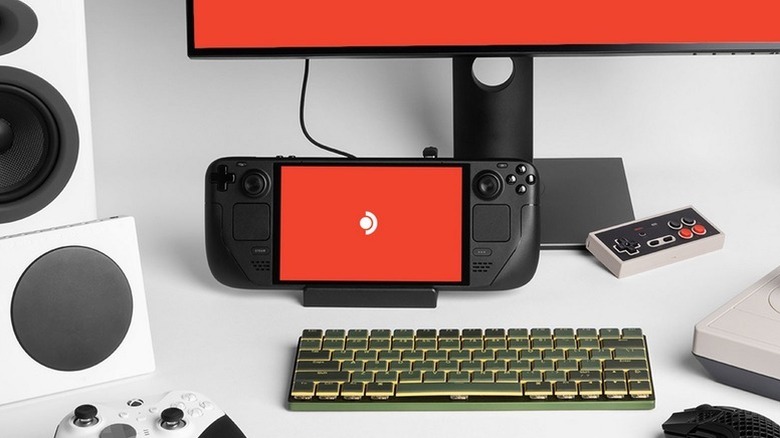
In the wake of the Nintendo Switch Lite, Valve Corporation unveiled its own portable gaming console to interface with its Steam library and digital storefront. Debuting in 2022, the Steam Deck essentially serves as a portable PC with a strong emphasis on gaming. While Valve has produced several different models of its handheld gaming console, we have to name the Steam Deck OLED as the best platform for the value. Through its OLED display, games played on the platform particularly pop as players take their favorite PC titles on the go.
Given the sheer breadth of titles available in the Steam library, the Steam Deck has a pretty unbeatable library of games, at least in terms of volume. (To clarify, not every game that's available to purchase and play through is compatible with the Steam Deck, but a significant number are.) And in terms of processing power, most of the models are roughly on par with that of the PlayStation 4 or Xbox One. Bringing a new competitor to the handheld gaming console party, the Steam Deck proves even PC purists can take their favorite games with them.
1. Nintendo Switch Lite
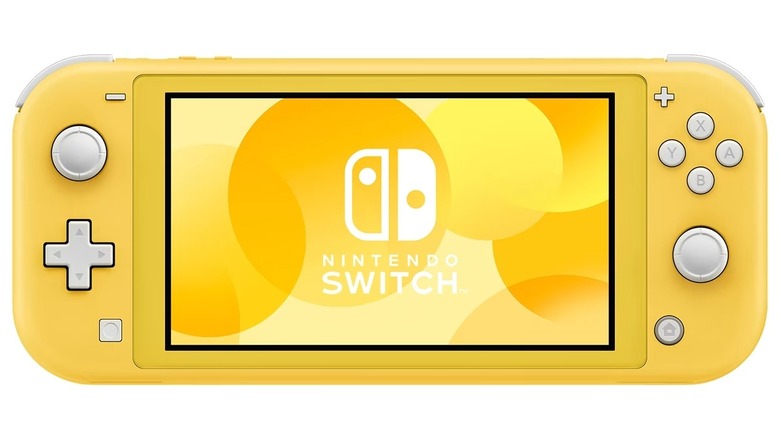
After the Wii U flopped, Nintendo doubled down on the concept of touchscreen gaming complementing a home console with the Nintendo Switch in 2017. After the Switch's launch, the company decided to make a version of the console that could be played entirely from its tablet display rather than interfacing with a television. The subsequent Nintendo Switch Lite was announced in 2019, launched later that year, and put an emphasis on portable gaming in contrast to its preceding model. Even better, this version of the console came at a noticeably cheaper retail price point than its television-compatible counterparts.
The Nintendo Switch Lite is all the joys of the original version of the console designed to be taken on the go. That means the console can play regular Switch game cards and have digital titles downloaded directly to its hardware, including supported purchases through the Nintendo eShop. For Nintendo Switch Online subscribers, all of those classic games are also available to play on the Switch Lite through its online functionality. Simply put, Nintendo envisioned the Switch Lite as the next step in its celebrated line of handheld gaming as its ultimate home console-equitable evolution.