
5 Forgotten PS4 Games That Pushed The Console To Its Limits
The PlayStation 4 marked a huge leap forward for Sony, furthering the company's commitment to high-definition gaming and online possibilities. As Sony's primary gaming platform from 2013 to 2020, the console has plenty of popular gems that are still fondly remembered. Moreover, because of the advances in technology and enduring appeal, there are loads of PS4 games that still hold up today. But not every game that pushed the technical boundaries of the PS4 hardware is as widely appreciated years later.
With that in mind, we're looking at the PlayStation 4 games that really took capabilities of the console's capabilities but aren't known for that achievement today. These advances range from how visually impressive they looked, compared to their contemporaries, to how well they ran with what they were each ambitious trying to do. Whatever the technical achievements these titles brought to the table, they don't get the appreciation that they each deserve. These are five forgotten PS4 games that pushed the console to its limits, without the widespread recognition they should have earned.
Killzone Shadow Fall
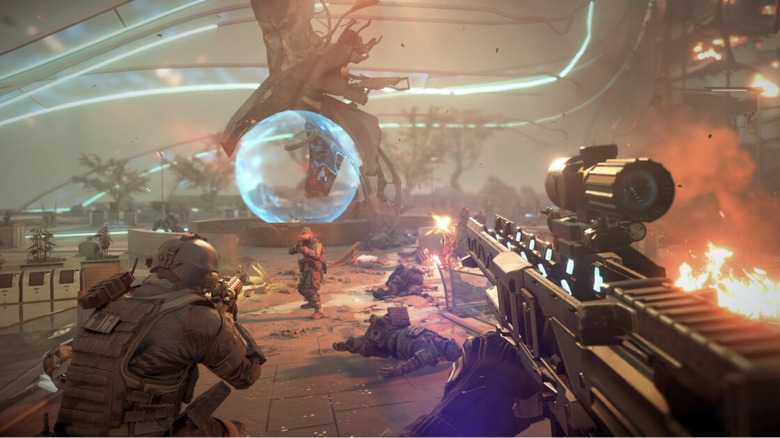
Despite being a first-party franchise, "Killzone" feels like a series that's largely discarded by Sony today, to the point where its PS3 games are unplayable today. One game in the series that's currently available to play is the franchise's lone PlayStation 4 entry, 2013's "Killzone Shadow Fall." A first-person shooter like the other titles in the series, "Shadow Fall" features a more open-ended level design for its single-player campaign compared to its predecessors. Also in contrast to preceding games, "Shadow Fall" utilizes a new game engine with improved physics and visuals.
"Killzone Shadow Fall" showcases how much the PlayStation 4 could improve upon the franchise's presentation compared to the PS3 era. With its open-ended level design, players can really appreciate how gorgeously rendered the environments are, providing a more immersive experience. Developer Guerrilla Games would later use its new engine for its "Horizon" games, which remain more widely recognized. But the honor of being the first game to use that engine goes to "Killzone Shadow Fall," the last in its series to date.
Infamous Second Son
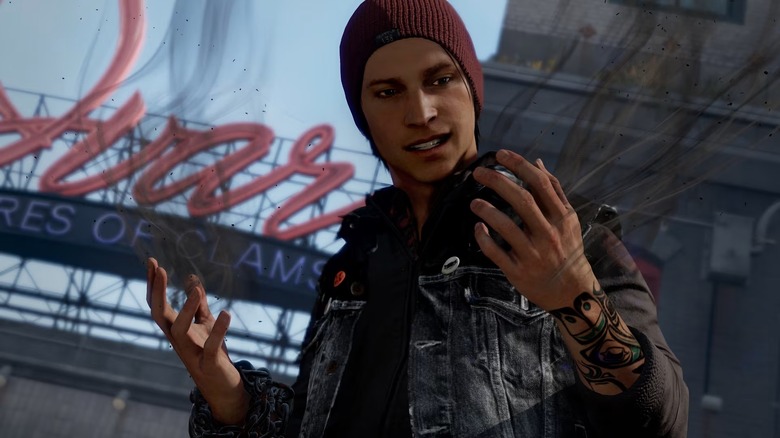
Another hit game from the 2010s that nobody talks about anymore is "Infamous Second Son," which was released in 2014. A standalone sequel to the "Infamous" games on the PlayStation 3, "Second Son" introduces new protagonist Delsin Rowe and relocates the action to Seattle. Delsin possesses the superpower to absorb other individuals' powers as he confronts an overzealous government official persecuting his community. The game received its own standalone expansion, "Infamous First Light," later in 2014 with a new protagonist and spin-off story.
Just like "Killzone Shadow Fall," "Infamous Second Son" highlights how much the series' presentation had improved with the more advanced PlayStation 4 hardware. The game offers a much more ambitious open-world to explore than the preceding titles, and one that was significantly more richly detailed, too. With so many of Delsin's powers linked to different elemental effects, the game takes advantage of that to visually pop whenever players tap into his powers. Another seemingly forgotten franchise that ended during the PS4 era, "Infamous Second Son" still looks really good over a decade later.
The Order: 1886
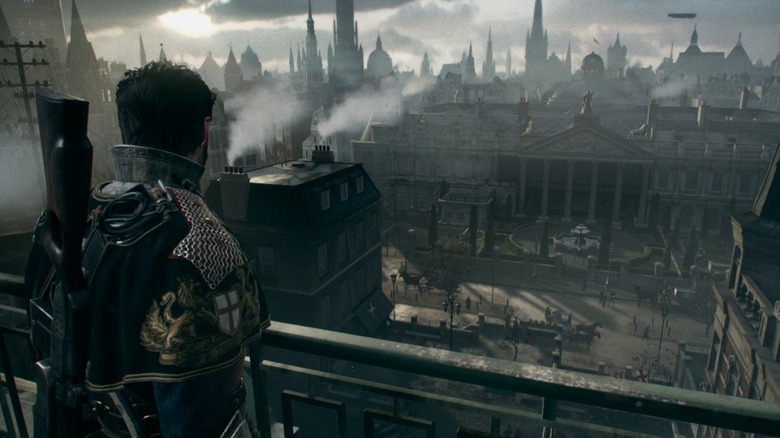
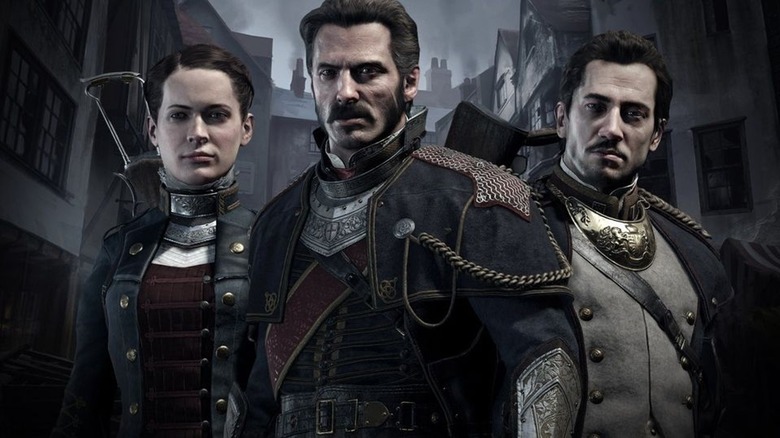
One of the most visually striking PlayStation 4 exclusives is the 2015 adventure game "The Order: 1886." Set in a steampunk vision of London, the game's story has the Knights of the Round Table defending England from supernatural monsters and rebellious threats. A third-person shooter title, the game has players control Sir Galahad as he uses a variety of weapons to vanquish his enemies. Along the way, Galahad encounters historical figures like Nikola Tesla and Jack the Ripper as he works to keep Britain safe.
While "The Order: 1886" may have had its sequel plans cancelled, the game itself at least still looks very good. Developer Ready at Dawn creates an immersive vision of London for players to explore, even if the game itself is relatively short. Blending Victorian London with steampunk and Arthurian elements makes for an unusual concoction, but one that continues to visually stun. A game that at least gets its atmosphere right, "The Order: 1886" takes advantage of its premise with its memorable environment.
Knack II
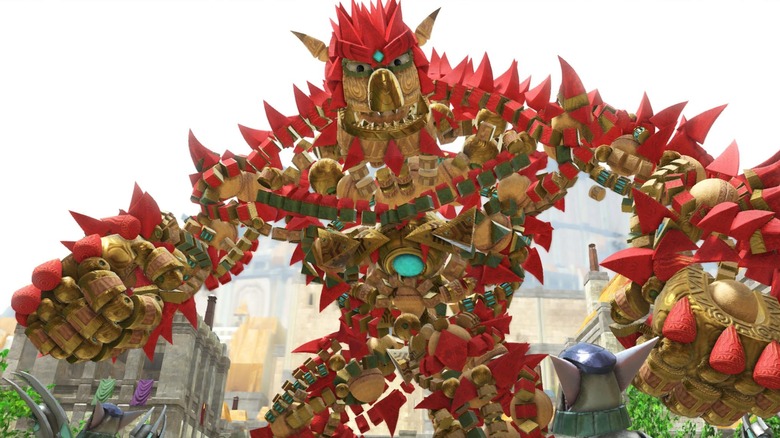
One of the obscure launch games for the PlayStation 4 was "Knack," a platforming beat'em-up game developed by Japan Studio. The game was successful enough to warrant a sequel, the aptly titled "Knack II," which was released in 2017. The sequel continues the story of its titular protagonist, a creature made from magical relics who fights enemies threatening his home. Knack gains different abilities depending on which relics he's channeling his powers from, which is then reflected in his physical appearance.
Some would consider "Knack" among the worst PlayStation launch titles ever, but at least the game's particle effects and environments looked terrific. While "Knack II" might not be a huge leap forward in terms of enjoyable gameplay, it improves upon its predecessor's visual presentation. The game also handles the increased emphasis on cooperative multiplayer well, maintaining its visual fidelity and performance with the addition of a second player. An odd little game that betters itself versus the original, at least technically, "Knack II" is a quirky PS4 exclusive.
Ni no Kuni II: Revenant Kingdom
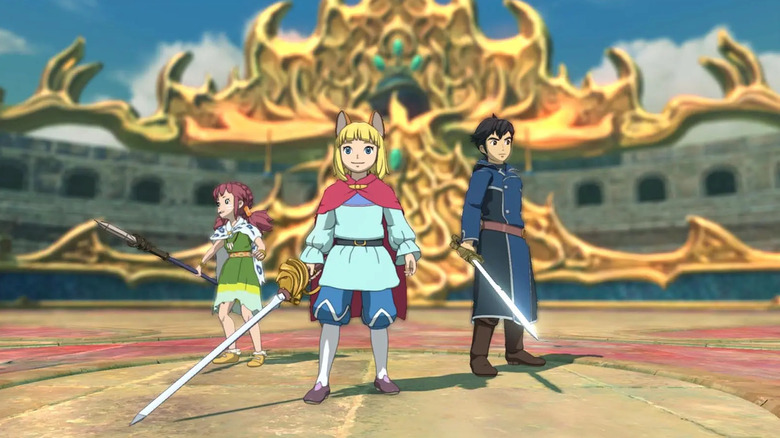
The 2011 action RPG "Ni no Kuni: Wrath of the White Witch" was a hit on the PlayStation 3, and enough of one to receive ports on several other platforms and a sequel. "Ni no Kuni II: Revenant Kingdom" expanded the action considerably when it was released for the PlayStation 4 in 2018. The game's story follows deposed young king Evan Pettiwhisker Tildrum who sets out to create a new kingdom after being usurped from the throne. The gameplay unfolds as Evan navigates a sweeping overworld map, transitioning to a more intensive combat perspective whenever battles take place.
The transition between overworld and combat mode is impressive enough, but where "Ni no Kuni II: Revenant Kingdom" excels is its character design. The use of cel-shaded graphics surpasses previous games that use the art style into something more fluid and eye-catching. That means the game practically looks like an anime (one from Ghibli, even) come to life as players set out to seize their royal destiny. A game that doesn't get talked about enough for its technical achievements, "Ni no Kuni II: Revenant Kingdom" pops from the screen.