
5 Arcade Games From 1992 That Were Way Ahead Of Their Time
With the arcade scene still thriving in the early '90s, some titles continued to push the boundaries of the medium's technological possibilities. This includes major games released for arcades in 1992, both in terms of visual presentation and the sheer scope of the gameplay. From fighting games to racing and on-rail shooters, every genre saw their own steps forward within the arcade format. In other cases, arcade games were ahead of their time regarding the type of content they were providing players, occasionally with controversial results.
Today, we're taking a look at several 1992 games that brought major changes to how we see games, starting from the arcades. These titles raised eyebrows and certainly got fans talking, but while many of the games that we're mentioning were popular for their time, they aren't all widely recognized for the innovations that they brought to the medium. These are five arcade games from 1992 that were way ahead of their time and are worth checking out.
Mortal Kombat
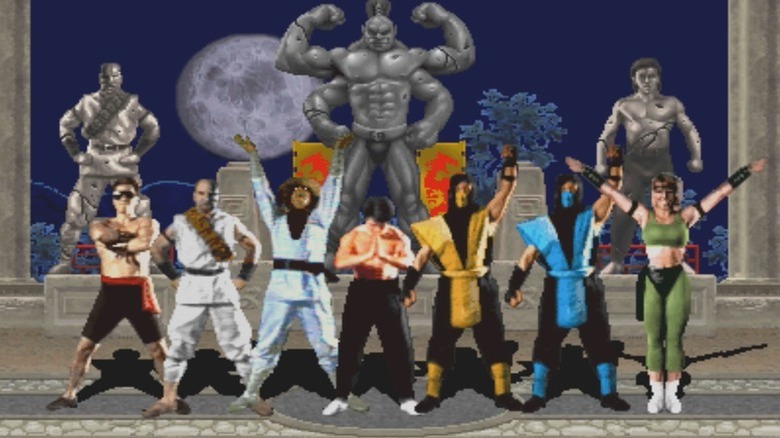
"Mortal Kombat" wasn't the first fighting game to utilize digitized sprites of real-life actors to serve as its characters, with "Reikai Dōshi: Chinese Exorcist" predating it by four years. But American arcades were never the same afterward "Mortal Kombat," thanks to the level of animation and variety in fighting moves seen in each individual character. There was nothing else in the arcade that looked like the Midway title and fans took notice, kickstarting the franchise. In its wake, there were plenty of games that tried to copy "Mortal Kombat," with even Capcom's "Street Fighter" experimenting with the art design.
The other arena where "Mortal Kombat" was ahead of its time was its depiction of graphic and gory on-screen violence. Fighters bled big globs of blood as they endured hits, and defeated characters could be gruesomely executed with finishing moves. With the backlash receiving federal government scrutiny, "Mortal Kombat" is one of the most controversial retro video games of all time. More prevalent violence in video games has become something of the industry norm, and it was "Mortal Kombat" that helped open the doors for that.
X-Men
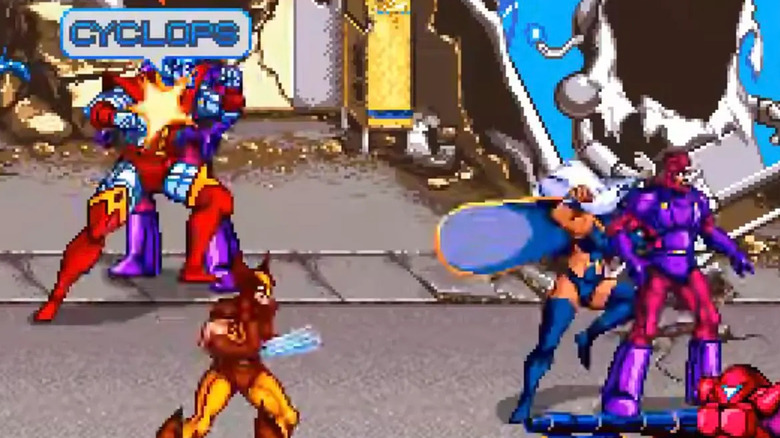
The X-Men have been adapted into video games for decades, and one of the best X-Men games ever made is the 1992 arcade title "X-Men." A side-scrolling beat'em-up, players can choose between Cyclops, Wolverine, Storm, Colossus, Nightcrawler, and Dazzler to battle through waves of enemies. Many of the X-Men's greatest villains serve as boss characters, with Juggernaut and Magneto among the most memorable. Every playable character has their own distinct fighting animations and screen-clearing moves, adding to the overall appeal.
There were plenty of four-player beat'em-up titles in arcades before "X-Men," including "Teenage Mutant Ninja Turtles" and "The Simpsons." But what makes the Marvel game so innovative and ambitious is that it allows for up to six-person simultaneous cooperative multiplayer across two screens. Few games would try to match the Marvel title's sheer scope, and it handled the workload of six players well. The game has since been re-released in the "Marvel MaXimum Collection" and is well worth revisiting, especially for Marvel fans.
Virtua Racing
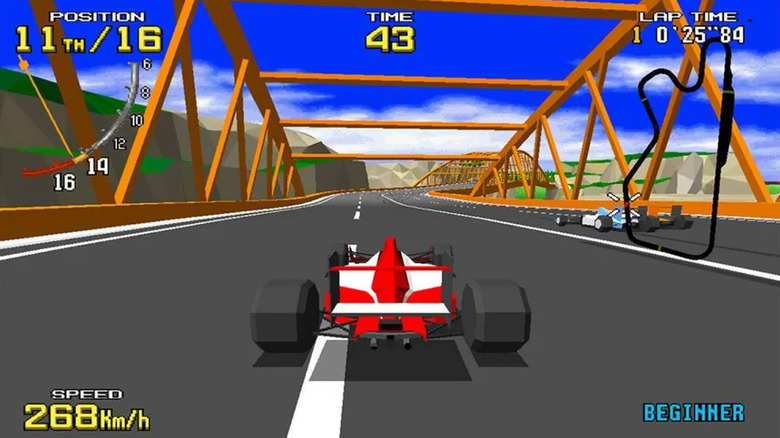
With franchises like "Daytona USA" and "Sega Rally," Sega produced several of the best retro racing games of all time. Before either of the two aforementioned series, though, Sega's big '90s racing arcade game was "Virtua Racing," a Formula One title. The game has an early 3D presentation for its vehicles and tracks that looked leagues better than any other major racing game in the arcades at the time. The game has three different circuits for players to choose from, each presenting a varying difficulty level.
With its early polygonal graphics, "Virtua Racing" was one of the most technically advanced games of its era, racing or otherwise. Sega was clearly impressed by these results because they utilized this engine on a line of other 3D titles, including "Virtua Fighter" and "Virtua Cop." Other racing games began to employ their own 3D technology, with titles like "Need for Speed" and "Cruis'n USA" following suit. "Virtua Racing" saw Sega take point in the 3D gaming space and helped establish the company as a major presence within arcade racing titles.
Lethal Enforcers
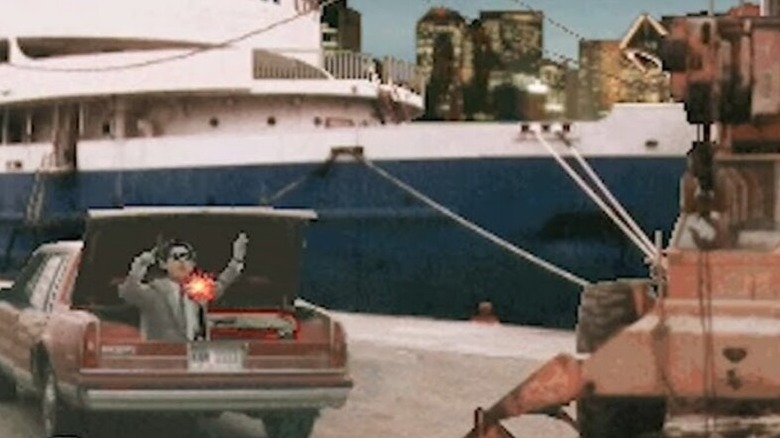
"Mortal Kombat" wasn't the only popular arcade game released in 1992 that prominently featured digitized sprites of live-action actors. Konami released a first-person rail shooter with "Lethal Enforcers," a light gun game with players controlling Chicago police officer Don Marshall. With a crime wave sweeping across the city involving heavily armed crooks that has already incapacitated much of the police force, it's up to Marshall to save the day. Players blast through enemies in a variety of levels, with digitized photographs of backgrounds serving as a backdrop to the digitized sprites.
The use of digitized versions of real-world elements, both for the enemies and levels was striking for its time. 1990's "Mad Dog McCree" also featured live-action actors and environments, but that game was a glorified LaserDisc movie, reacting to light gun inputs. "Lethal Enforcers" is the real deal and other arcade shooters took cues from it, most notably "Area 51." A much more responsive and intuitive use of live-action actors in an arcade shooter, "Lethal Enforcers" helped usher in a resurgence for light gun experiences.
Bucky O'Hare
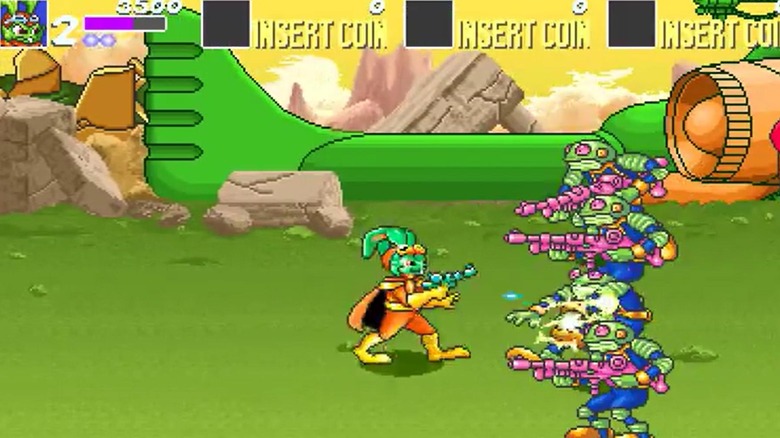
One last Konami-produced arcade game that hit the scene in 1992 is "Bucky O'Hare," a forgotten arcade game based on a cartoon. Interestingly, the game is completely different from the "Bucky O'Hare" video game for the Nintendo Entertainment System, also released by Konami in 1992. Players choose between four characters from the animated series, including Bucky O'Hare himself, as they battle the evil Toad Empire. Given its premise and title character's propensity for wielding ray guns, the gameplay mixes both beat'em-up and run-and-gun elements to keep players on their toes.
For the purposes of this list, "Bucky O'Hare" earns a spot both for its presentation and its gameplay variety. The game itself is vibrantly displayed, but it also contains animated cutscenes on par with its television source material, complete with the voice cast reprising their roles. The game also contains a slickly produced soundtrack that stands a cut above most arcade games of its time. Even if you're not necessarily familiar with the animated series the game is based on, "Bucky O'Hare" is an impressive piece of work.