
Super Mario Creator Shigeru Miyamoto's First NES Game Was Banned In The US
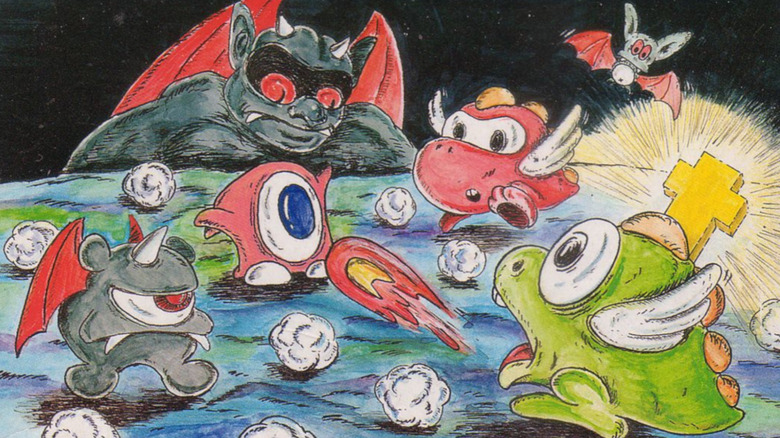
If there's a single creative figure associated with Nintendo, it's Shigeru Miyamoto, who designed, directed and produced many of the company's most beloved gaming properties. Miyamoto regularly combined child-like wonder with gameplay that emphasized accessibility and fun, making many of his creations so memorable and enduring. This can be best seen in the inspiration behind "The Legend of Zelda's" Link, with Miyamoto influenced by the literary character Peter Pan. But for the first game that Miyamoto designed specifically for a home console rather than an arcade, he turned to much more hellish inspiration.
1985's "Devil World" holds a strange place in Nintendo's history and among Miyamoto's realized projects, with Miyamoto serving as a director and co-designer on the game. Despite this pedigree, "Devil World" went without an official U.S. release for nearly 40 years due to content objections. Clearly, Miyamoto's legacy is fine with the game's North American omission, but it does mark a curious part of his early career. Here is the story behind "Devil World," from its development to why it was denied an American release and its legacy today.
The history of Devil World
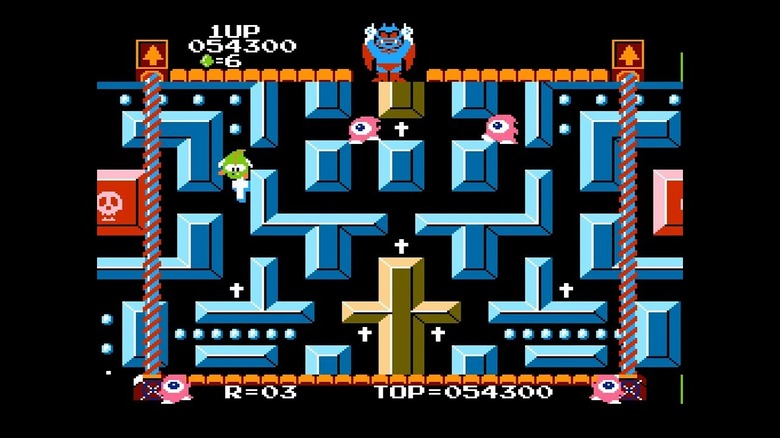
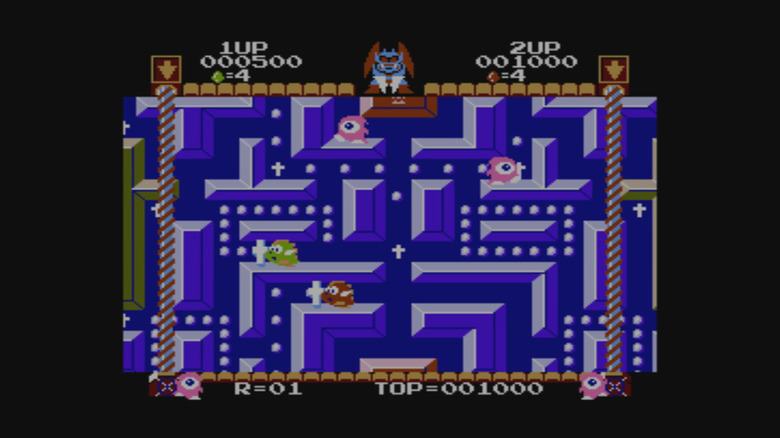
While not being designed for arcades, unlike "Donkey Kong" or the original 1983 "Mario Bros.," "Devil World" certainly feels like it was. The game has players navigate a maze from the top-down and eat dots, similar to "Pac-Man," with the players controlling dragons invading the titular Devil World. A demon at the top of the screen periodically points to which way the stage is going to move, with players scrambling to follow these directions before they're crushed. Players can grab crosses scattered around the stage to temporarily power up and burn monsters with fire breath.
Behind-the-scenes, "Devil World" teamed Miyamoto with several collaborators that he worked with before, and some partners that would help define his career. The game was one of the first projects for Takashi Tezuka, who went on to co-direct and co-design "The Legend of Zelda" with Miyamoto. The game's soundtrack was composed by Koji Kondo, whose subsequent Mario theme made music history, with Kondo also later working with Miyamoto and Tezuka on "The Legend of Zelda." But despite the all-star creative team behind "Devil World," plans for a release outside of Japan and Europe were quietly shelved.
Why Devil World never got a U.S. release
During the Nintendo Entertainment System's launch, the industry was still in recovery from the video crash of 1983 and stricter content standards were in place in North America. This included a policy from Nintendo of America banning any overt religious imagery in games for release in its market. This meant even innocuous tombstones that had crucifixes on them, as were common in the backgrounds of "Castlevania" games, had to have the symbol scrubbed. When it came to a game dealing explicitly with religious iconography and a Christian depiction of Hell, "Devil World" was a step too far for cheap censorship.
With common power-ups in "Devil World" being Bibles and crucifixes and prominently featured a Judeo-Christian demon, Nintendo of America decided not to release the game in the U.S. market. Given the industry's continued recovery and Nintendo taking its first steps into the U.S. console market, the company likely wanted to avoid any potential controversy that the game could bring. By 1986, Nintendo of America's stance on religious imagery in games it distributed softened somewhat, with "Ghosts 'n Goblins" and "Castlevania" both featuring crucifix-themed weapons. But even with this move, "Devil World" remained unreleased in North America until a digital Nintendo Switch release on Halloween 2023.
The legacy of Devil World
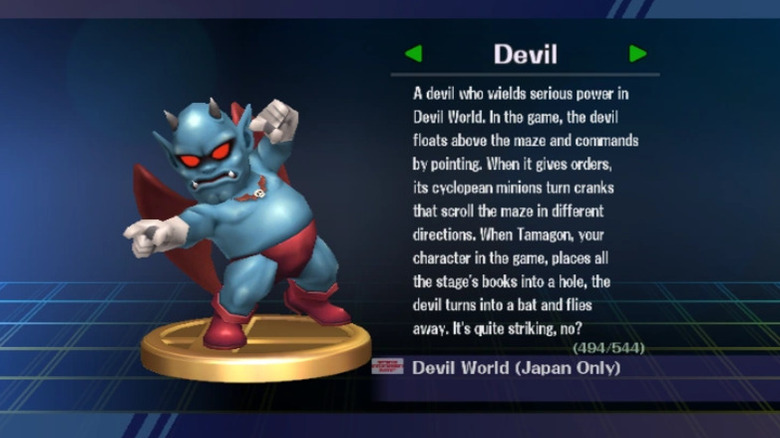
Even with its restricted distribution, "Devil World" is far from being included among Shigeru Miyamoto's biggest mistakes. Miyamoto and his team clearly went on to make bigger and better things shortly thereafter, including "Super Mario Bros." the following year. The title wasn't completely discarded to the forgotten depths of Nintendo history, either, with the demon from "Devil World" appearing as an assist trophy in "Super Smash Bros. Brawl" and its Wii U and 3DS follow-ups. The assist trophy later resurfaced in that game's Nintendo Switch sequel "Super Smash Bros. Ultimate" five years ahead of its global re-release in the Switch's digital library.
Beyond the Easter eggs and unassuming re-release on the Switch 39 years after its debut, "Devil World" holds an odd place in the Nintendo catalog. The game preceded the untold truth of "Super Mario Bros: The Lost Levels," which also featured the same creative team and had its American release delayed for years. But whereas the 1986 "Super Mario" sequel was shelved because of its incredible difficulty, "Devil World" is the only Miyamoto game stalled because of content concerns. For Nintendo's master of mirth and unbridled joy, that distinction is a bizarrely unique one.