
5 Forgotten Nintendo Games From Before Mario Took Over
While Mario may have been the protagonist of Nintendo's first blockbuster hit arcade game, "Donkey Kong," he wouldn't completely dominate the gaming scene until several years afterwards. It wasn't until the launch of 1985's "Super Mario Bros." and the subsequent release of the Nintendo Entertainment System later that year that Mario became ubiquitous with the industry. Before this, Nintendo produced plenty of games for arcades and its fledgling home console that didn't star its iconic overall-wearing hero. Many of these games have not enjoyed the longstanding cultural relevance and recognition as Mario, drifting into obscurity over time.
Even after Nintendo and Mario became household names, these games haven't received the same wide reappraisal as some of their contemporaries. Games featuring some of Nintendo's biggest icons, a number of which have even been revisited by titles like the "Super Smash Bros." series, remain buried by time. Nintendo had a robust history before "Super Mario Bros." that's not quite as fondly remembered by gamers now. Here are five forgotten Nintendo games from before Mario took over and effectively became the face of the company.
Donkey Kong 3
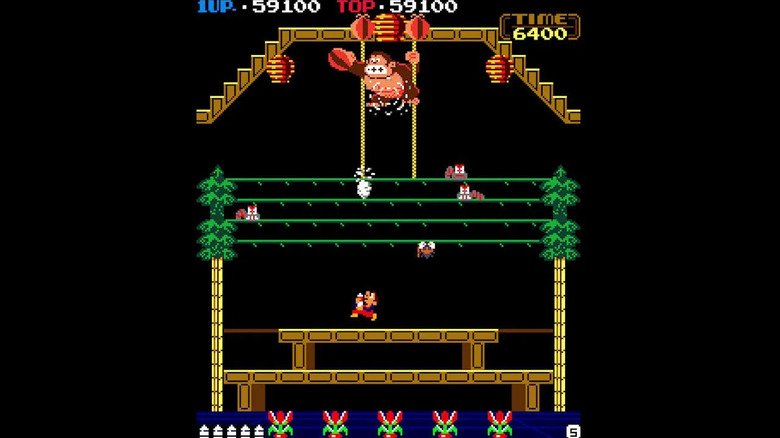
1981's "Donkey Kong" cemented Nintendo's place in the American video game market, with its enormous profits even triggering an unsuccessful lawsuit from Universal. The following year, Nintendo released the similarly well-received "Donkey Kong Jr.," changing up the gameplay and repositioning Mario as the antagonist. Looking to go three-for-three, Nintendo released "Donkey Kong 3" in 1983, with the game directed and designed by increasingly influential developer Shigeru Miyamoto. Returning Donkey Kong to his antagonistic role, the game replaced Mario with a new protagonist, Stanley, who uses bug spray to ward off the ape and kill swarms of insects.
While not one of Shigeru Miyamoto's biggest mistakes, the tepid response to "Donkey Kong 3" broke the franchise's hot streak. Even though the successful "Donkey Kong Jr." was a departure from the original game, the 1983 sequel took these stylistic and gameplay deviations a step too far. Though Nintendo produced NES ports of all the "Donkey Kong" games, including the spin-off "Donkey Kong Jr. Math," it wouldn't produce an all-new franchise title until 1994. While swapping out Stanley for Mario likely wouldn't have improved reception to "Donkey Kong 3," it definitely couldn't have hurt.
Balloon Fight
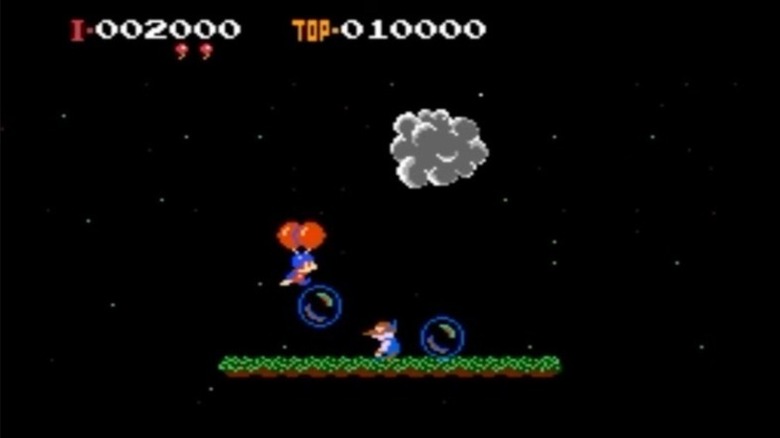
Another Nintendo game that started out as an arcade title was 1984's "Balloon Fight," which would be ported to consoles the following year. The game's premise is as simple as its title — players control a person strapped to a cluster of balloons over a set of platforms hovering above water. The player eliminates rival balloon fighters by stomping their balloons and getting them to fall into the water, while avoiding having their own balloons popped. The player also has to watch out for the occasional lightning bolt and floating too close to the water, where they can be eaten by leaping fish.
While "Balloon Fight" has been acknowledged in everything from "WarioWare" to "Super Smash Bros.," the franchise itself hasn't continued beyond the 1990 sequel "Balloon Kid." While there isn't much depth to the game, it remains enduringly fun, though floating around the stage can be frustrating. The game works best in the multiplayer mode, sharing the awkward navigational mechanics with friends rather than progressively more difficult computer opponents. A foundational game from the NES' early library, "Balloon Fight" is a cult classic from a bygone era yet to be fully revisited.
Devil World
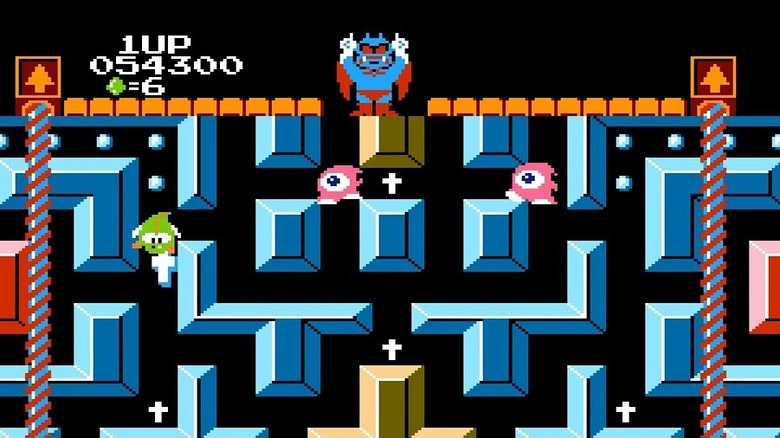
"Devil World" was Shigeru Miyamoto's first game designed specifically for the NES and was initially banned in the U.S. Despite its console-centric release plan, the 1984 game feels very much in the mold of a typical contemporary arcade game, with a core gameplay presentation reminiscent of "Pac-Man." The game has players controlling dragons that are navigating mazes and consuming dots while avoiding various hellish monsters, though they can temporarily fight back if they pick up religious items. Standing on top of the maze is a devil who periodically points in directions that shift the camera, forcing players to scramble accordingly and avoid being crushed by the moving screen.
Because of its extensive use of Judeo-Christian iconography, including the prominent appearance of a demon, Nintendo of America opted not to give "Devil World" a North American release. It wouldn't be until Halloween 2023 that the game received an official U.S. release, albeit through the Nintendo Switch's digital NES library service. Because of this lengthy absence, American gamers weren't really exposed to the game or its imagery outside of a trophy item in "Super Smash Bros." Though not a particularly innovative experience, "Devil World" is a fun little game from the NES' earliest days and a curious blip in Miyamoto's larger career.
Kung Fu
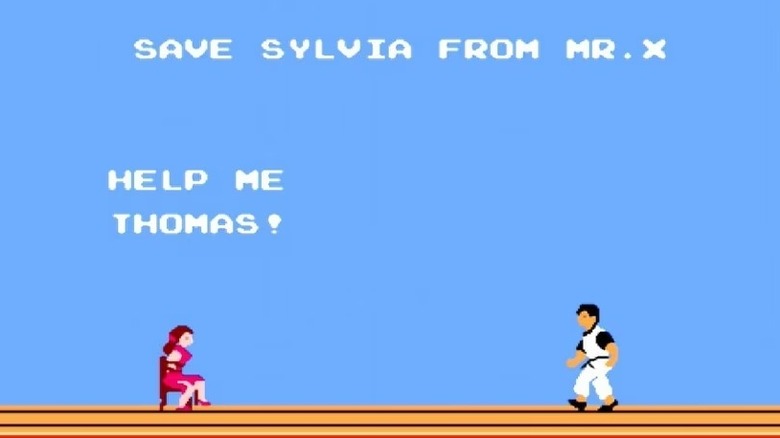
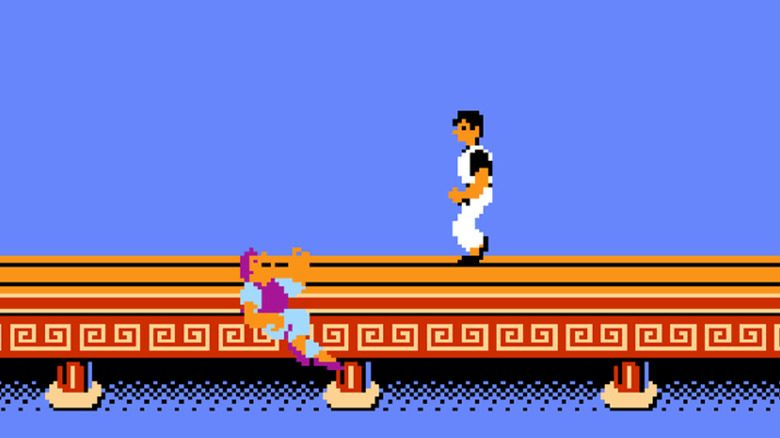
Originally titled "Kung-Fu Master" for its arcade release, 1984's "Kung Fu" came to the NES in June 1985. Nintendo was closely involved with the console port, with Shigeru Miyamoto serving as the port's director and designer, joined by longtime collaborator Koji Kondo as its composer. In a plot straight out of the Bruce Lee movie "Game of Death," players control a martial artist who has to ascend a five-level pagoda. Players battle through waves of enemies before confronting a boss waiting at the foot of each staircase taking them to the next level.
The NES version of "Kung Fu" was markedly different from its arcade predecessor, primarily in terms of its character designs. The side-scrolling action is still very much intact and the controls are relatively intuitive for its time. But as the NES' lifecycle progressed, similar side-scrolling action games quickly grew more sophisticated as developers increasingly took greater advantage of the NES hardware. This meant "Kung Fu" rapidly felt more and more dated, especially in the wake of the release of "Super Mario Bros." just months later.
Ice Climber
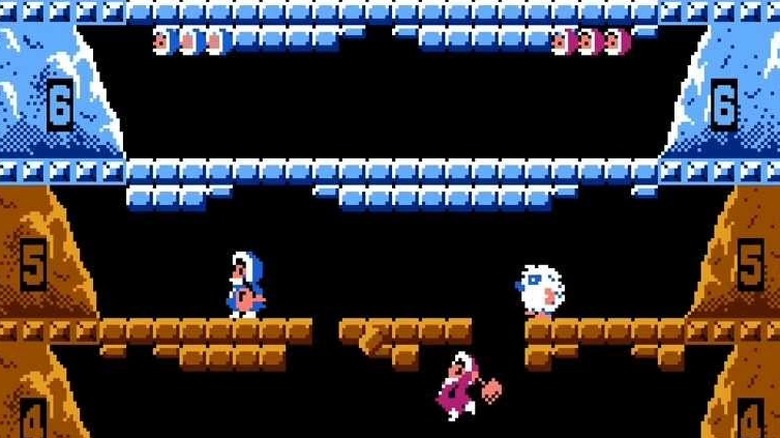
Aside from being among the cheapest characters in "Super Smash Bros.," the Ice Climbers starred in their own title in 1985. Released eight months before "Super Mario Bros.," the game has players control parka-clad protagonists Nana and Popo as they climb a wintry mountain. In addition to the vertical platforming, the duo have to contend with a variety of beasts hampering their climb. Both climbers are armed with large mallets that they use to defend themselves and break holes in the icy ceilings above them to continue their ascent.
Though "Ice Climber" was a launch game for the NES in North America, it was quickly overlooked in the face of flashier subsequent titles. Looking back, the game does feel like a product of the arcade scene, like so many early Nintendo games, with a simple gameplay premise and a bare-bones narrative. Even after joining the "Super Smash Bros." roster, "Ice Climber" hasn't enjoyed the reappraisal that its counterparts "Kid Icarus" and "Fire Emblem" have. Instead, Nana and Popo are best known as guest characters or Easter eggs in other Nintendo titles, leaving their sole starring adventure by the wayside.