
5 Most Controversial Retro Video Games Of All Time
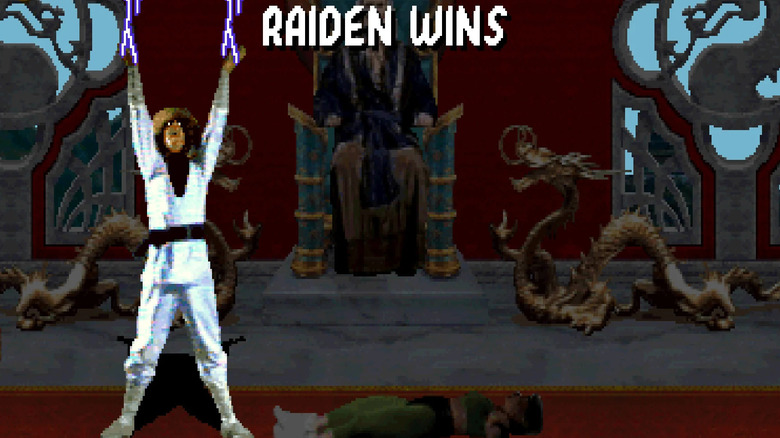
With parents and special interest groups always disproportionately protective about content that could affect younger audiences, video games have been subject to controversy since the medium's early days. Whether it's the inclusion of risque content and religious imagery or gameplay tasking players to engage in brutal violence, there have always been games that have raised discerning eyebrows.
In some cases, the federal government has intervened to launch its own formal inquiries and investigations into the types of video games available to the public. This furor and backlash can not only affect a game's wider perception but visibly impact sales, affect its release and retail availability, and even lead to tangible changes in the industry.
Simply put, gentler sensibilities have long been ruffled by video game content, even if the objectionable elements — particularly from retro games — are laughable by today's standards. What we're counting as retro games for this list are titles that were produced before the year 2000, because even as far back as the '80s, games have attracted controversy and vitriol. With that in mind, having gained widespread notoriety around their production and release, here are the five most controversial retro video games of all time.
Custer's Revenge
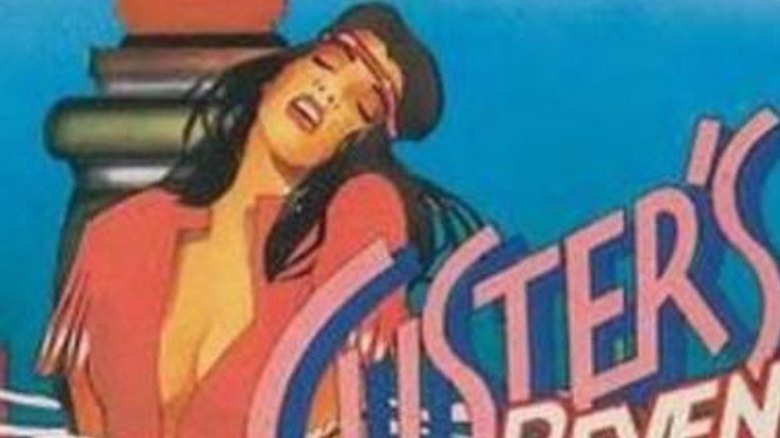
One of the vilest games ever made, 1982's "Custer's Revenge" revolves around a thoroughly despicable premise. The game has players control 19th American General George Armstrong Custer, who navigates a stretch of desert visibly naked. On the other side of the level is a similarly nude Native American woman tied standing up to a tall cactus. While dodging arrows flying in from the top of the screen, Custer moves across the screen to the woman, whom he then sexually assaults to conclude the level.
Even with the crude technical presentation on an Atari 2600, "Custer's Revenge" is just a horrifyingly vulgar and offensive concept. Numerous organizations, including women's rights and Native American groups, understandably condemned the game while Atari sued the developers in an effort to block the game's sale. When the game did move forward for distribution, several municipal authorities across America voted to ban the video game from hitting the market.
After constant and growing backlash, along with many retailers refusing to carry the title, "Custer's Revenge" was voluntarily withdrawn from wide commercial circulation in 1983 by the publisher.
If you or anyone you know has been a victim of sexual assault, help is available. Visit the Rape, Abuse & Incest National Network website or contact RAINN's National Helpline at 1-800-656-HOPE (4673).
Chiller
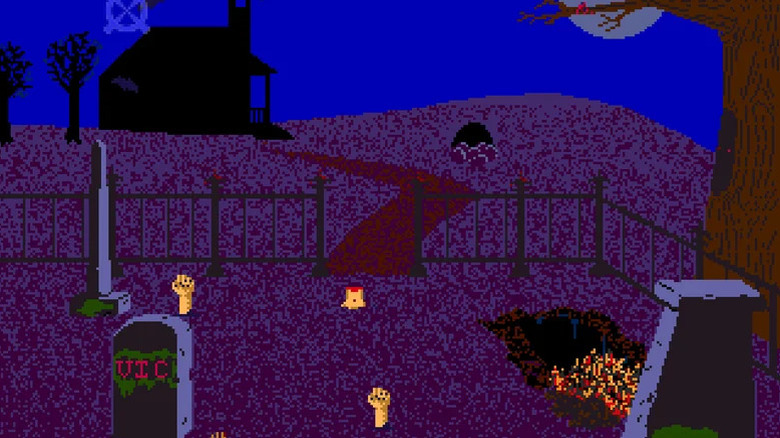
Another '80s game that stirred up considerable controversy, both in the arcade and home console markets, was 1986's "Chiller." An early light gun shooter, players control an unseen torturer who, for the first two levels, maims defenseless and restrained victims in a torture chamber. Players can blast these characters, revealing vital organs and other gory bits, but are encouraged to find more creative ways to kill the victims for a higher score. Subsequent levels offer more traditional horror-themed shooter thrills, with players destroying monsters in creepy tunnels and a graveyard.
"Chiller" was quickly identified as a horror game that was too disturbing for kids, particularly because of its first two levels. Though Nintendo successfully blocked an official release of the game for the Nintendo Entertainment System, unauthorized versions were produced by third-party manufacturers in North America and Australia. Arcade operators were also uncomfortable ordering units of the game, leading its publisher to focus on overseas markets instead. An early demonstration of overt video game sadism, "Chiller" revels in gruesome violence that's apparent even with its pixelated display.
Mortal Kombat (1992)
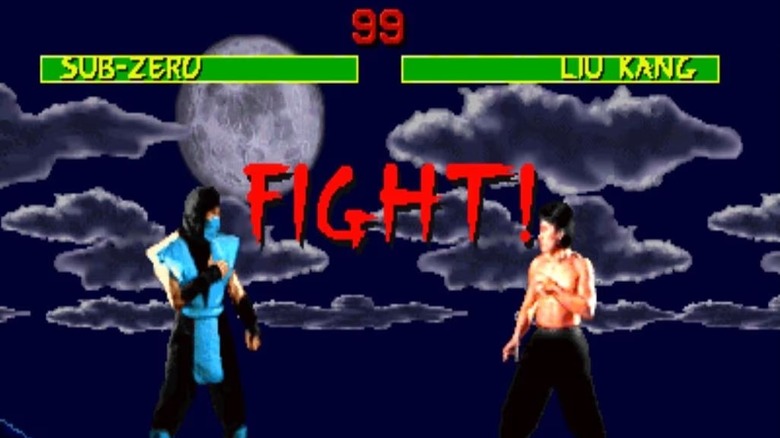
The original "Mortal Kombat" made a huge splash on the arcade scene when it debuted in 1992, with its digitized characters and bloody spectacle. The fighting game centers on a mythical martial arts tournament run by Shang Tsung and his monstrous champion Goro, with the fate of Earth in the balance. Players choose from a roster of fighters to progress through the tournament, including ninjas Sub-Zero and Scorpion and Shaolin monk Liu Kang. Triumphant players can execute their defeated opponents with brutal finishing moves known as Fatalities as they advance to confront Goro and Shang Tsung.
While a big success in the arcades, the signature Fatalities in "Mortal Kombat" placed it under federal government scrutiny over the efficacy of violence in video games. This controversy led Nintendo to cut the R-rated content from its Super Nintendo port of the game, though other platforms retained the blood and gore. Ultimately, consumer response ended the controversy, with this attempt to censor the game backfiring for Nintendo as the SNES version was significantly outsold by its Sega counterpart. Moving forward, Nintendo ports of subsequent "Mortal Kombat" sequels kept the graphic violence — and the franchise has thrived for over 30 years.
Night Trap
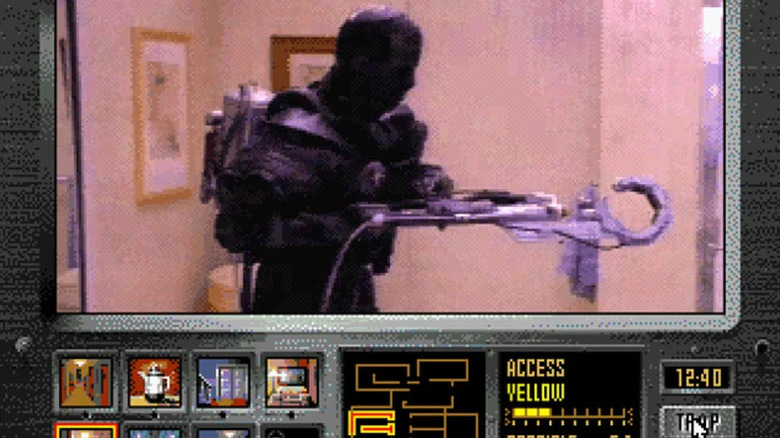
Sega extended the life cycle of the Genesis/Mega Drive by launching peripherals to boost the performance of the console, including the Sega CD. The most infamous Sega CD game was 1992's "Night Trap," a sort of precursor to "Five Nights at Freddy's" that had players checking the security cameras for a mansion. From this perspective, players observe a teenage slumber party taking place on the premises targeted by bloodthirsty vampires. Players then use booby-traps installed around the home to stop the vampires from claiming any victims.
"Night Trap" was another game called out by the federal government in Senate hearings focused on video game violence. Controversy arose not only around the implication of misogynistic violence, but accusations of voyeurism given the game's camera surveillance premise. Given how terribly this '90s video game aged, this controversy seems laughable now, but any title that was subjected to a Senate grilling warrants a mention. For its part, the Senate hearings gave "Night Trap" plenty of unintentional publicity, helping fuel sales of what should have been a forgettable Sega CD title.
Thrill Kill
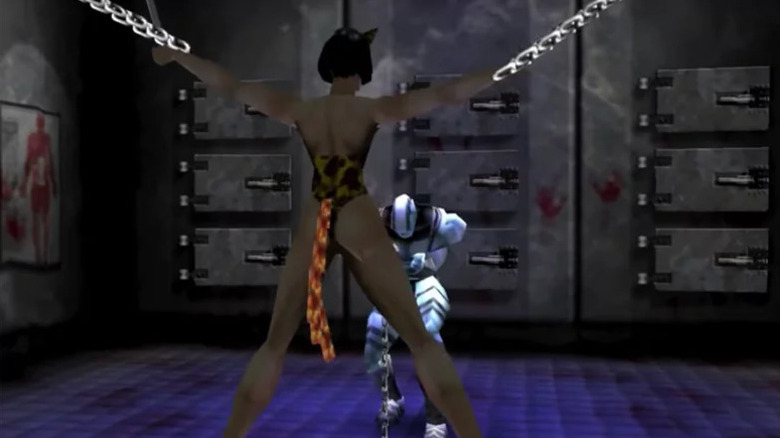
The controversy around the planned 1998 fighting game "Thrill Kill," intended for the original PlayStation, was so vitriolic that the release was eventually canceled altogether. The game was a 3D fighter in the tradition of "Tekken" or "Virtua Fighter," with the innovation of allowing up to four players simultaneously through the PlayStation Multitap. The game's roster featured a group of characters condemned to Hell, viciously fighting each other with the winner trying to return to Earth. The graphic lengths players could go to emerge victorious ranged from ripping off limbs and beating opponents with them to complete dismemberment.
When details surrounding "Thrill Kill" became public as it neared its release date, it attracted plenty of controversy. This culminated in the game receiving an "Adults Only" or AO rating from the ESRB, effectively the kiss of death for a wide commercial release. In response, game publisher Electronic Arts scrapped the launch weeks before the game was to be shipped. Though the game was banned in the U.S., bootleg versions of "Thrill Kill" have since leaked online, giving it a second life underground.