
'80s Video Games That Would Be Banned If Released Today
While the 1980s was an immensely formative period for the video game industry, many titles that launched then just don't hold up decades later. And, given evolving audience sensibilities, several titles from that decade likely couldn't even secure an official release in today's market — and for good reason. The core concept behind these games and the content are simply too off-putting and offensive, with many of these titles shocking audiences even in the '80s.
We're not just talking about games from the '80s that aged terribly, but titles that wouldn't get a modern release in the first place. These are games that barely got a release back then, and, in some cases, were even banned in America in response to the backlash. The industry pays much more scrutiny to video game content now than it did 40 years ago, and that's definitely a good thing when you take a look back at some of the most controversial games of yesteryear. There's no doubt that these '80s games would be banned if released today.
This article covers games that feature sexual assault. If you or anyone you know has been a victim of sexual assault, help is available. Visit the Rape, Abuse & Incest National Network website or contact RAINN's National Helpline at 1-800-656-HOPE (4673).
Custer's Revenge (1982)
Arguably the most controversial retro video game of all time is 1982's "Custer's Revenge" for the Atari 2600, one of several so-called "sex games" that were released during the early part of the decade. It's baffling that this heinous game ever saw the light of day. The player controls a nude Lieutenant Colonel George Armstrong Custer (remembered for the Battle of Little Bighorn, aka Custer's Last Stand) as he advances through a desert while dodging arrows. At the other end of the screen is a Native American woman bound to a post — the goal of the game is to reach the woman and rape her.
With its appallingly misogynistic and racist content, "Custer's Revenge" stirred up widespread controversy upon its launch. In response, various municipal jurisdictions nationwide, including Los Angeles County, voted to ban sex games from being available for purchase. By 1983, the game was no longer in circulation due to the mounting controversy surrounding it. It goes without saying that this vile game would be banned in an instant if someone tried to release it today.
177 (1986)
If "Custer's Revenge" is the vilest video game made in the United States, "177" is the most heinous produced in Japan. Developed and published in 1986 by Macadamia, the game is named for the penal code for rape in Japan. It was released for the NEC PC-8801, an early personal computer that also supported numerous games. This highly offensive and disturbing game has players jump over hedges and stumps as they pursue a woman and remove items of her clothing so they can rape her. If the woman reaches her home before this can happen, the player "loses."
"177" was met with outrage upon its release. The game was recalled and re-released after a reprimand from the Japanese government with its most infamous sequences removed from later versions. Unsurprisingly, the game did not receive a release in the United States. While ROMs have emerged overseas in the subsequent decades, the game officially remained confined to the Japanese market. "177" is a gross reminder that offensive games certainly aren't limited to American developers.
Chiller (1986)
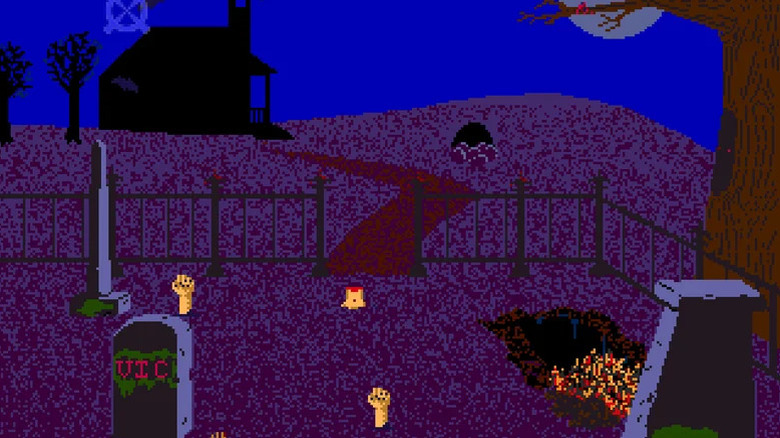
As light gun games like "Duck Hunt" took off in the mid-1980s, one title that stirred controversy was 1986's "Chiller." Developed and published by Exidy, the game has players control an unseen sadist maiming their defenseless victims in a torture chamber. Using the light gun, players can blast away the skin and body parts from the restrained targets, gruesomely exposing their insides and skeletons. Later levels feature a much more conventional horror-themed shooting experience, with players fighting off monsters appearing in a castle and graveyard.
"Chiller" doesn't just focus on players torturing and killing unarmed prisoners, it actually rewards them for doing it in inventive ways. In response to the unsavory content, many arcade operators in the United States refused to buy a cabinet for their businesses. The game received an unlicensed port on the Nintendo Entertainment System in America, letting players use the NES Zapper to engage in the sadistic gameplay. It's one of several '80s horror games that were too disturbing for kids, and there's no way it would get made today.
Raid Over Moscow (1984)
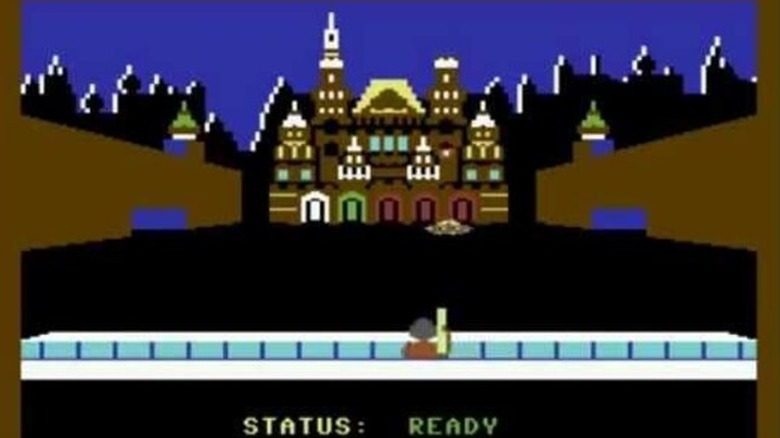
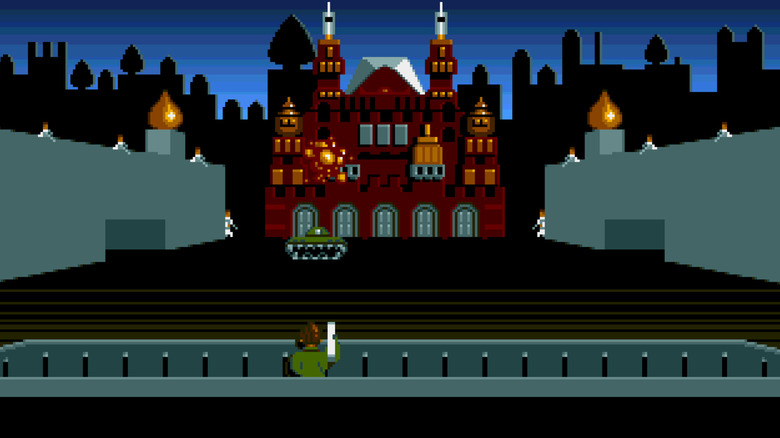
In the midst of the Cold War, one game that capitalized on global tensions was 1984's "Raid Over Moscow." Released for a variety of gaming personal computers of the era, like the Commodore 64 and ZX Spectrum, the game revolves around the threat of nuclear warfare. After intercepting Soviet nuclear warheads targeting American cities, the player takes the fight directly to Moscow. This culminates in a raid on Red Square, triggering a meltdown at a nuclear reactor hidden in the Soviet capital.
"Raid Over Moscow" just wouldn't fly with modern audiences. Not only does the game revolve around the idea of open nuclear warfare, it climaxes with the player effectively nuking a world capital. Yes, many modern war games touch on similar topics (some of the best ever "Call of Duty" games have Russia storylines), but they're nowhere near as overt or ludicrous as "Raid Over Moscow." Given the events of the first half of the 2020s, there's just no way that a game like "Raid Over Moscow" could be released today.
The Great Giana Sisters (1987)
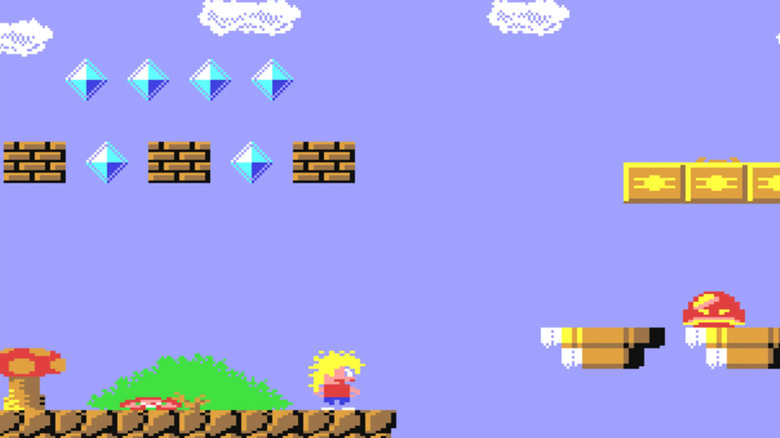
In the wake of the global success of "Super Mario Bros.," countless video game companies tried to replicate the success of Nintendo's side-scrolling platformer. Perhaps the most overt rip-off was the German game "The Great Giana Sisters," with its title alone hinting at how much its developers copied Nintendo. Sisters Giana and Maria navigate a strange fantasy world in their dreams to search for a magical diamond capable of waking them up. This involves side-scrolling through a series of levels complete with mushrooms and pipes, and you even defeat enemies by jumping on their heads.
Time Warp, the developers, were instructed to create a game like "Super Mario Bros." but legally distinct enough from the Nintendo title to avoid legal repercussions. This proved to be unsuccessful, with Nintendo apparently issuing a warning to publisher Rainbow Arts after the game made it to the British market with the phrase "The brothers are history" on the cover. The publisher complied and subsequent entries in the franchise downplayed its Nintendo inspirations significantly to avoid similar legal action. One of the worst video game rip-offs ever, "The Great Giana Sisters" would be even less likely to survive Nintendo's lawyers today.