
5 Video Games That Were Canceled Right Before Release
It should go without saying, but developing and publishing a video game is a lot of hard work. It can be a very rewarding experience for everyone involved, but not always — sometimes, all that hard work is for nothing. It's not unheard of for video games to be canceled, even when the planned release date is right around the corner. There are times when it just makes more sense for a company to withhold a game, even if it's largely finished.
The thing about pulling a game this close to go-time is that titles that have been canceled right before they were expected to launch often take on a legendary status in the gaming community. Some of these titles have since leaked in an early build to the public, and one has even subsequently gotten a quiet release thanks to fans never giving up on it. All of the games that we've covered on this list had the plug pulled on them with the finish line in sight, but details about why they were shelved have since gone public.
Star Fox 2
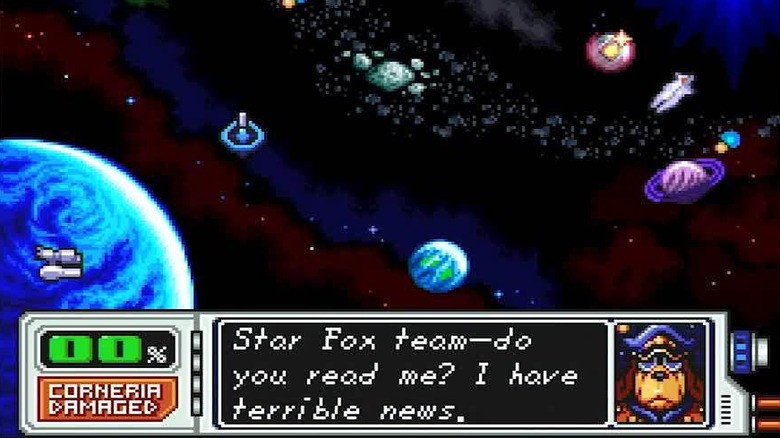
1993's "Star Fox" made a big splash on the Super Nintendo, yet "Star Fox 2" sat in Nintendo's archives for 20 years. Completed in 1995, the game has Fox McCloud and his squadron defending the planet Corneria from a renewed attack by the villainous Andross. Rather than featuring a linear path like most titles in the franchise, players defeat Andross' forces throughout the solar system while regularly repelling any attacks on Corneria. In addition to the franchise's usual Arwings, players can use other vehicles to battle enemy forces.
Despite pushing the SNES hardware as far as it could go with a more ambitious experience than the first game, "Star Fox 2" was quietly canceled. Nintendo felt that the game didn't measure up to similar 3D titles being published by the SNES' more powerful competitors, the PlayStation and Sega Saturn. That meant only a single official "Star Fox 2" cartridge was produced for its development team as priorities shifted to a Nintendo 64 sequel, "Star Fox 64." "Star Fox 2" eventually saw the light of day as a game on the SNES Classic and on the Nintendo Switch's Virtual Console.
Resident Evil 1.5
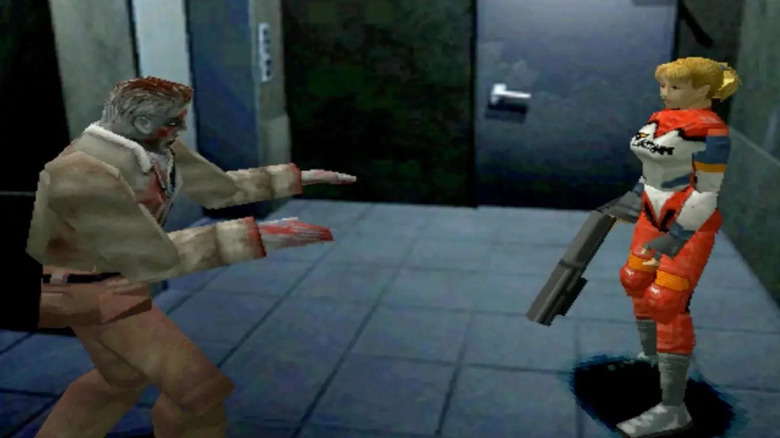
After the success of 1996's "Resident Evil," Capcom fast-tracked a sequel with an intended May 1997 release date. The follow-up was set primarily in the Raccoon City Police Station and featured scrapped protagonist Elza Walker and rookie police officer Leon S. Kennedy. Early builds and demos of the planned sequel were shown at various trade shows, including the 1997 Tokyo Game Show. A preview disc was also included with the Japanese release of "Resident Evil: Director's Cut" showcasing imagery from the project, including monsters ultimately left on the cutting room floor.
Internally, Capcom felt this initial version of "Resident Evil 2" wouldn't live up to fan expectations and decided to restart the project, with the new version released in 1998. What became the final "Resident Evil 2" retains the broad narrative from the scrapped version, but it swapped out Elza for Claire Redfield as a nod to the first game. Since its cancellation, this scrapped project has since been informally branded by the fans as "Resident Evil 1.5." Acknowledging its own history and the fan interest in the cancelled version, Capcom included Elza's costume as an alternate costume for Claire in 2019's "Resident Evil 2" remake.
Thrill Kill
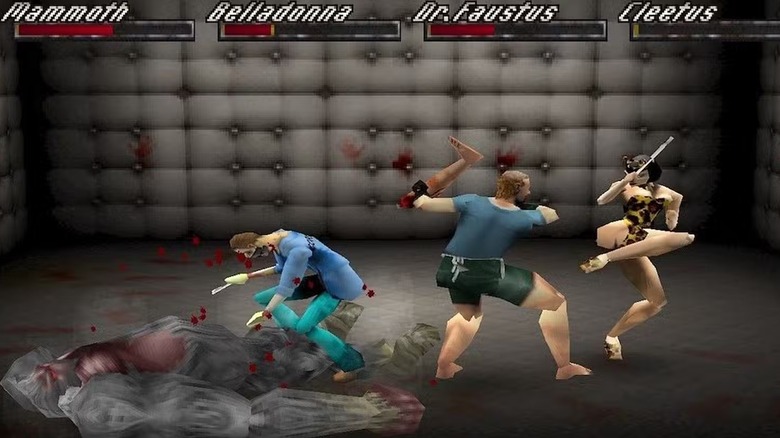
As fighting games moved into 3D with titles like "Virtua Fighter" and "Tekken," developer Paradox tried to put its own gory spin on the genre with "Thrill Kill." Players could choose between 10 characters condemned to Hell for various heinous acts and lifestyles on Earth. The motley crew is given the opportunity to battle to the death with the winner being offered a chance at reincarnation. The game allowed for up to four players duking it out simultaneously and the ability to brutally dismember and execute defeated opponents.
Because of its extreme content (which not only included violence but also sexual acts), "Thrill Kill" received a rare Adults Only, or AO, rating from the Entertainment Software Rating Board. With this content rating virtually ensuring the game would be banned in America by major retailers, publisher Electronic Arts decided to cancel the title's release. The game was two months away from its planned launch date, though its ROM has since leaked to the public. The specter of violent fighting game controversy still loomed in the '90s, likely informing "Thrill Kill" getting shelved.
Primal Rage II
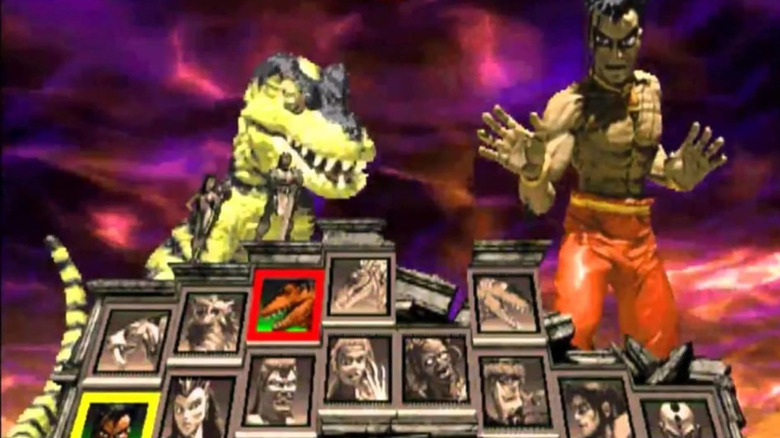
One of several '90s video games that tried to copy "Mortal Kombat," "Primal Rage" is a post-apocalyptic monster brawler. The 1994 game was successful enough to warrant creator Atari Games developing a direct sequel. "Primal Rage II" was targeting a September 1996 release window for its initial arcade version. The idea behind it was that none of the original characters managed to win the war — they were all beaten by the space god Necrosan and imprisoned. Players would take control of human avatars selected by the defeated gods to fight Necrosan and his followers in their stead.
As Atari faced financial issues in the '90s, it decided to cancel the development of "Primal Rage II" in a cost-saving measure. Production had progressed as far as the testing phase for the game, including the production of two working prototype cabinets. This early build of the game has also leaked online while the prototype arcade cabinets have been located, with one at Galloping Ghost Arcade in Illinois. "Primal Rage" was something of a cult favorite in the '90s and the cancellation of its sequel has kept it that way.
Capcom Fighting All-Stars
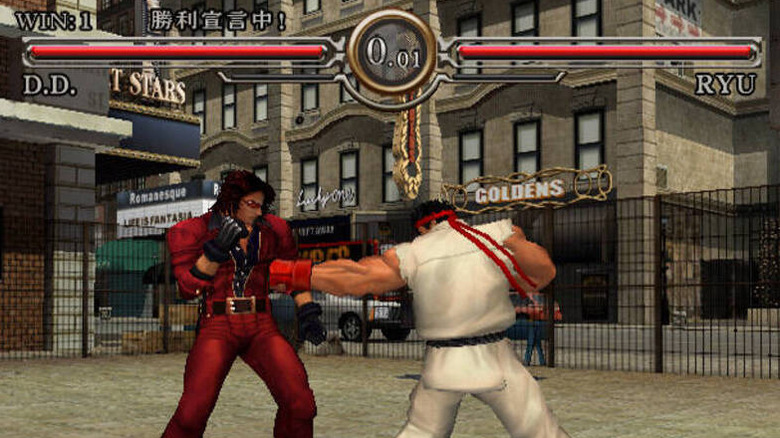
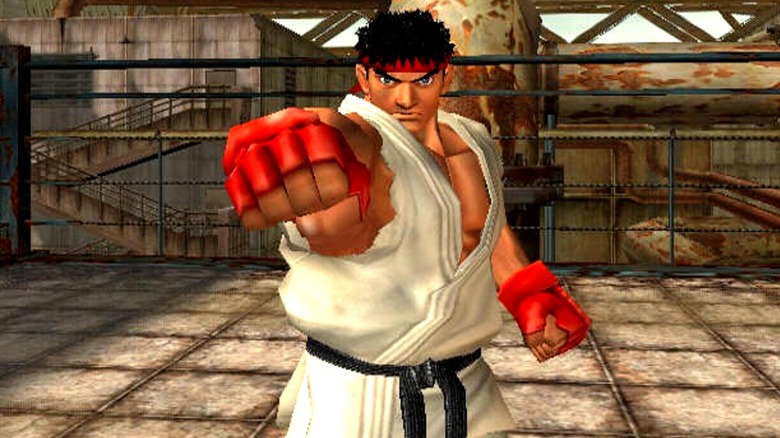
After developing and publishing two titles in the crossover fighting game series "Capcom vs. SNK," Capcom started work on a third entry. For this planned project, the game was intended to be a 3D fighter instead of a side-scroller like the preceding two games. However, after SNK declared bankruptcy, the game was repurposed into a 3D fighting game bringing together Capcom's various gaming properties. Titled "Capcom Fighting All-Stars," the game primarily featured playable characters from "Street Fighter," "Final Fight," and "Rival Schools," along with a handful of new characters.
The commercial viability of fighting games began to steadily decrease in the early 2000s, as did the worldwide arcade market. This, coupled with poor public reactions to early images and previews for "Capcom Fighting All-Stars" led Capcom to cancel the project. Elements of the game resurfaced in 2004's "Capcom Fighting Evolution," a traditional 2D fighter, including the appearance of the original character Ingrid. Capcom has acknowledged the legacy of "Fighting All-Stars" in other Easter eggs moving forward, but the game remains unreleased.