
5 Video Games From The '90s That Would Never Be Made Today
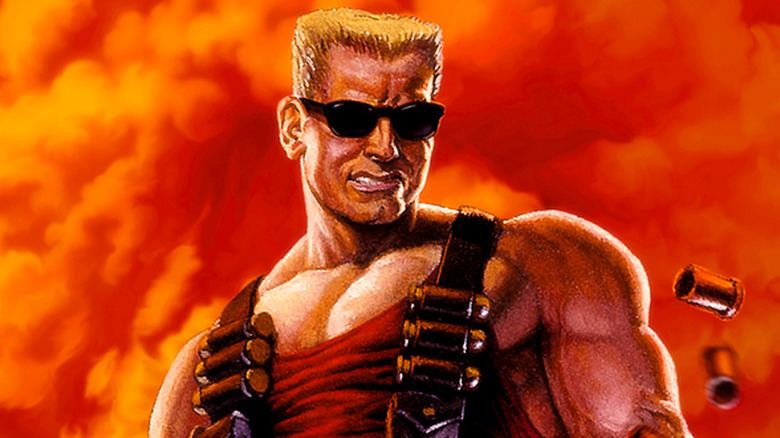
As pop culture trends and societal interests evolve over time, it's a given that video games made decades ago won't hold the same appeal now. This can come down to drastically different senses of humor between time periods or even technical progression within the medium. Moreover, given the costs of producing a game for a wide launch, many of these titles wouldn't stand a chance in getting a developmental green light from modern publishers.
To be clear, we're not specifically talking about video games from the '90s that aged terribly. We're delving into titles with dated styles and gameplay that wouldn't appeal to contemporary gamers like they did 30 years ago. This isn't to say that we don't like the games listed here — they just wouldn't see the light of day if someone tried to make them now. Here are five video games from the '90s that would never be made today given modern sensibilities.
Primal Rage
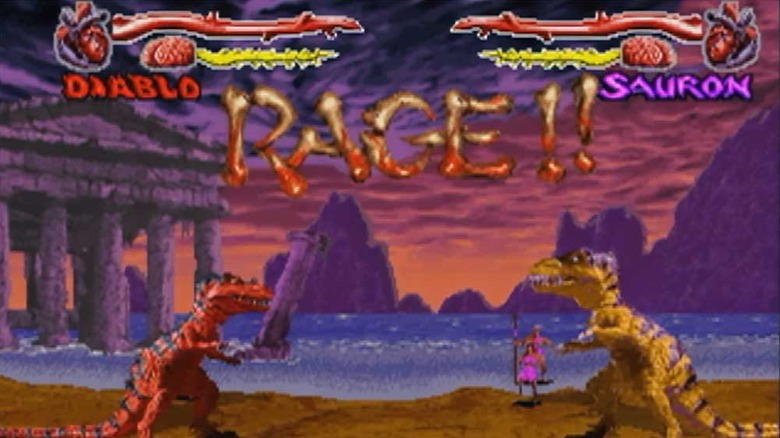
One of several video games from the '90s that tried to copy "Mortal Kombat," "Primal Rage" is a brutal fighting game that debuted in arcades in 1994 and was then ported to the major home platforms of the era, including the Super Nintendo and Sega Genesis. The game is set on a post-apocalyptic Earth, with monstrous titans resembling prehistoric beasts emerging to rule over primitive society. These creatures viciously fight to the death for the right to be recognized and worshipped as the planet's new god.
Where "Primal Rage" falters in its appeal to modern audiences is the game's overreliance on scatological humor. Among the special moves available to some of the playable characters include farting, urinating, and vomiting on opponents. While this overabundance of toilet humor kept in line with other '90s games and cartoons, it definitely makes the game feel dated now. Gross-out gags still exist in the 21st century, of course, but rarely are they as crude or distractingly delivered as they are in "Primal Rage."
Ballz 3D
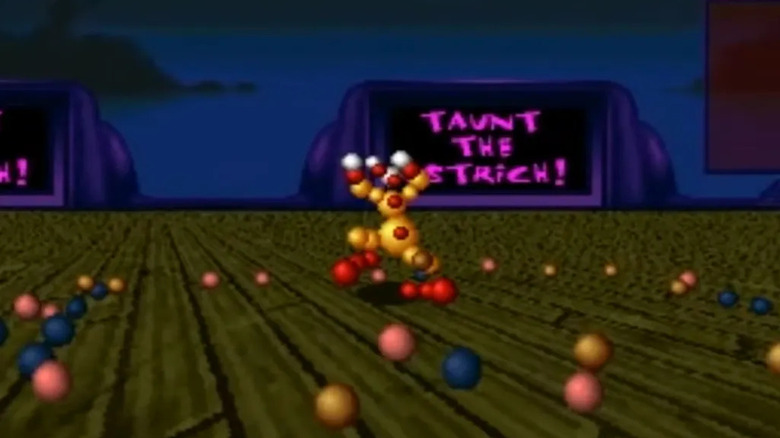
A much less gruesome but no less bizarre fighting game from 1994 was "Ballz 3D" for the Super Nintendo, Sega Genesis, and 3DO. The game features fighters that are a collection of conjoined spheres battling each other, with each having their own oddly quirky personality. Through the use of pre-rendered animation, the game gives the illusion of 3D, like "Donkey Kong Country" or "Vectorman." In between fighting the other playable characters, players take on a variety of bosses, culminating in a showdown with the tournament's organizer, the Jester.
"Ballz 3D" came out during a period when many game developers were trying to bring the medium into 3D gameplay — the title capitalized on that trend. But any wow factor that the game might have possessed in 1994 with its art style has completely evaporated over 30 years later. "Ballz 3D" also has an incredibly weird sense of humor to it, from its eclectic roster to its vaguely inappropriate opening song. More of a nonsensical tech demo than anything else, "Ballz 3D" is a showcase for an obsolete art style.
Earthworm Jim
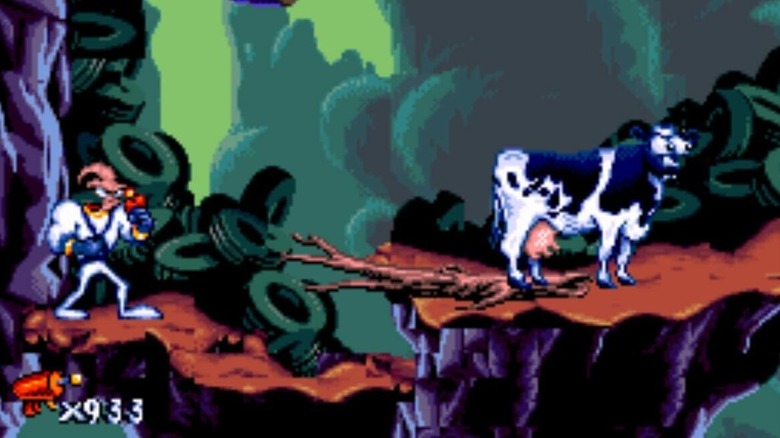
With animated shows like "Ren & Stimpy" and "Rocko's Modern Life," cartoon humor definitely got weird and arguably less kid-friendly in the '90s. Those comedic sensibilities with a penchant for the scatological and the bizarre were front and center when it came to "Earthworm Jim." Coming out in 1994 for virtually every major gaming platform of the era, the game starred Jim, an earthworm in a super suit armed with a blaster. In both the original game and its 1995 sequel, Jim navigates surreal stages in run-and-gun fashion.
"Earthworm Jim" is another one of those gaming franchises that could only exist in the '90s, particularly with its sense of humor. The first game leans into toilet gags, with Jim exploring levels like Snot a Problem and Buttville (the latter features a soundtrack consisting of steady flatulence). For whatever reason, cows serve as recurring punchlines throughout the games, particularly with the first two titles' twist endings. The fact that "Earthworm 4" was cancelled after its announcement in the late '00s shouldn't come as a surprise because the joke had run its course by then.
Comix Zone
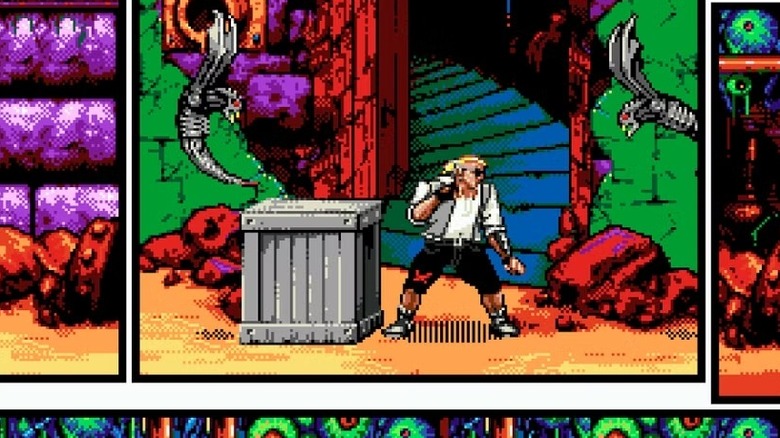
Comic books saw a resurgence in the early '90s, led by popular superheroes like the X-Men and Spider-Man. The medium's popularity served as the backdrop for "Comix Zone," released in 1995 for the Sega Genesis. Players control comic book creator Sketch Turner after his comic book villain Mortus escapes from the printed page and traps Sketch in his own story. Working with freedom fighter Alissa in the comic book world, Sketch defeats Mortus and escapes back to the real world.
Right down to his hip name, Sketch Turner is a walking, talking '90s archetype that felt dated not long after the game's release. To make matters worse for modern audiences, "Comix Zone" possesses a high difficulty level – video games are a lot easier today. Even in 1995, the game needed some additional polish, particularly when it came to its gameplay mechanics and difficulty scaling. That said, while it couldn't get made today, "Comix Zone" is a '90s video game flop that's actually worth playing, outdated archetypes and all.
Duke Nukem 3D
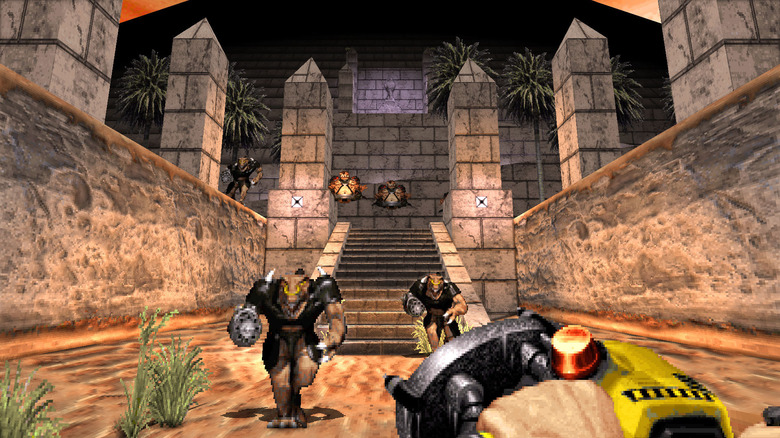
Duke Nukem is the type of cigar-chomping, ultra-sexist character that could only headline a video game franchise in the '90s. This was exemplified in the 1996 first-person shooter "Duke Nukem 3D," with the creators doubling down on the violence and vice as the series made the leap to 3D. After Los Angeles is invaded by hostile extraterrestrials, Duke becomes a one-man army to drive them back before killing the Alien Queen. Along the way, Duke encounters plenty of exotic dancers and other scantily clad women, leading to a lot of crude humor.
Given its overt misogyny, "Duke Nukem 3D" really wouldn't thrive 30 years after its debut. The game had some R-rated scenes cut from it when it was ported on the Nintendo 64, toning down its raunchier elements, but even that version wouldn't fly today. Duke's one-liners are more cringe-worthy than ever in this game and the failure of "Duke Nukem Forever" in 2011 proved that the franchise should be kept on a shelf. Duke was a beloved video game character once upon a time, but in a more socially progressive society, he now stands as a relic.