
5 Hit Video Games That Sold Millions Of Copies Despite Bad Reviews
Not every critically acclaimed video game makes a fortune, and the opposite is also true — over the decades, there have been many cases of poorly-reviewed titles selling very well. At the end of the day, a review is just another opinion, one that will sometimes be overshadowed by flashy marketing or contrasting word-of-mouth. For as long as there have been video game reviews, there have been titles that have performed well commercially despite critical backlash.
For this list, we're focusing on games that sold at least a million copies in the face of negative reviews. We're including a few games that saw middling critical reception, though, in some cases, the games we've covered here were trashed by critics with an overwhelmingly negative response. Here are five hit video games that sold over a million copies despite receiving bad reviews from professional critics.
Cruis'n USA
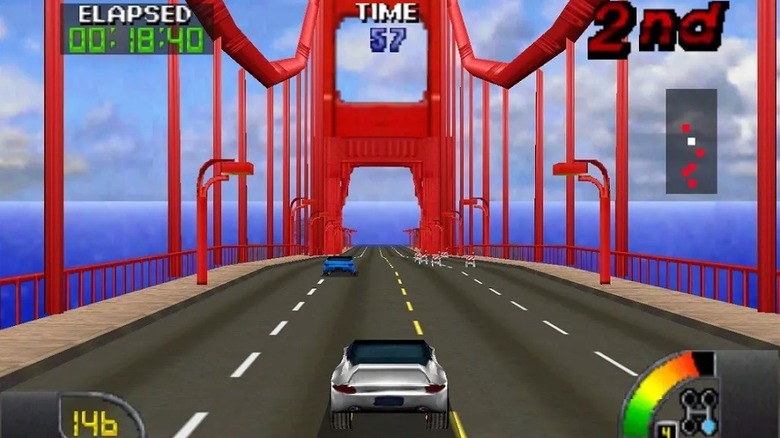
The racing game "Cruis'n USA" was an arcade staple in the mid '90s, placing players on race tracks that drew from different North American environments. The only home console that the game was ported to during the decade was the Nintendo 64, released in time for the 1996 holiday season. In contrast to the arcade version, the N64 port was much more negatively received by critics, who dismissed it as an inferior version. This didn't stop the game from becoming a commercial success even as more acclaimed racing games like "Mario Kart 64" and "Diddy Kong Racing" were released.
In particular, critical reviews lambasted the N64 version's poor frame rate and sound compared to its high-octane arcade counterpart. In its review, IGN noted that the game was a poor showcase for the N64's technical capabilities and that its performance was noticeably worse in its multiplayer mode, stating that "the odd impact detection makes pushing someone off the road a matter of luck, not of skill." Despite this, "Cruis'n USA" was an early strong seller for the N64 and sold almost 1.7 million copies in North America alone. The N64 received much better racing games across its lifecycle, but "Cruis'n USA" certainly left an impression in the console's early days.
Crash Bash
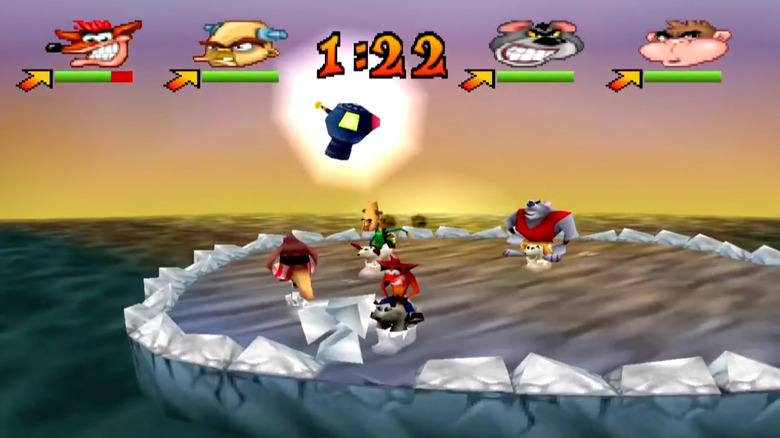
PlayStation's "Crash Bandicoot" found its inspiration from the Super Nintendo's "Donkey Kong Country" and Nintendo's influence can still be felt in the franchise today. Like Mario, Crash made the leap to kart racing for a line of spin-offs, while "Mario Party" also inspired Crash's own minigame-driven spin-off title "Crash Bash." Released in 2000 for the PlayStation, the title had players advance through a variety of minigames with familiar characters from the franchise. Using the console's multitap peripheral, the game supported up to four-player multiplayer modes, with minigames unlocked by playing through the title's adventure mode.
Critics found "Crash Bash" to be repetitive and largely uninspired, particularly in comparison to "Mario Party" and its minigames. In its review, GameSpot dismissed the game as being a "thoroughly mediocre" experience, with any enjoyment to be had from it quickly wearing thin. This did not deter the title from selling over a million copies in the United States and receiving a platinum certification for its sales performance in the United Kingdom. Apart from the 2006 Nintendo DS title "Crash Boom Bang!," however, the franchise has not returned to the party game genre.
Sonic the Hedgehog (2006)
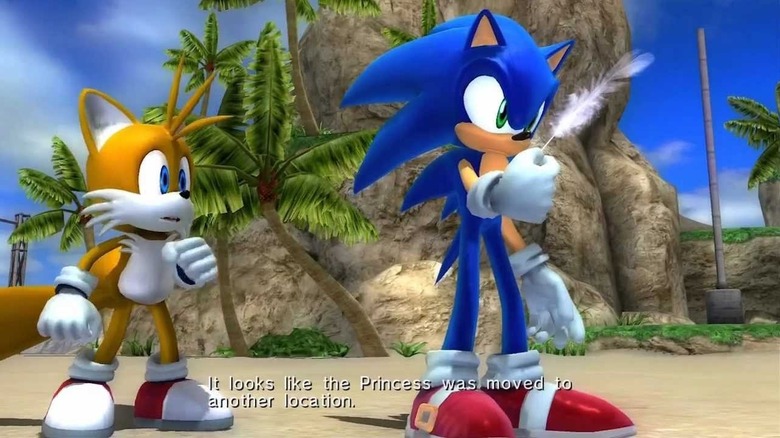
Though "Sonic the Hedgehog" made a well-received leap to 3D with the "Sonic Adventure" titles, the Sega franchise struggled to establish itself on the Xbox 360 and PlayStation 3. The series' 2006 title sought to reposition the franchise for a new generation, but suffered from a lengthy and troubled development. The game was released in time for the 2006 holiday season, featuring a story that had Sonic and his friends racing to rescue Princess Elise of Soleanna from Doctor Eggman. This is complicated by the arrival of Silver the Hedgehog, who is tricked into thinking that Sonic is responsible for a post-apocalyptic future.
Critical response to "Sonic '06," as it's commonly referred to, was largely negative. It holds a shaky reputation among fans as an unpolished game released to meet its deadline. Game Informer said that only hardcore franchise fans would enjoy the title, and this sentiment was by GameSpot, which observed that the game was a complete mess from beginning to end. In a scathing review, PSX Extreme said that the game would have players "wishing for the good ol' 16-bit days." Yet, despite all the backlash, "Sonic '06" managed to sell over 2.6 million copies across multiple platforms, making it a commercial success.
Wii Play
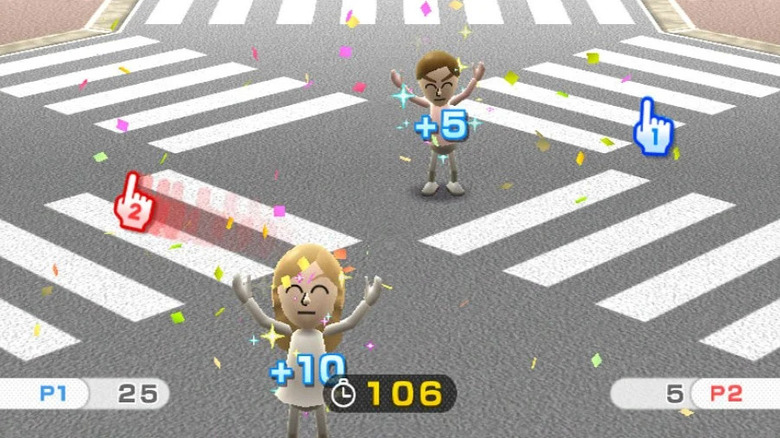
"Wii Sports" stands as the favorite Wii game for three out of four surveyed players, with the 2006 game taking full advantage of the console's motion control hardware. It was one of the launch titles for the console, as was "Wii Play," which also revolved around minigames utilizing the motion controls. The nine minigames you can play on the latter title include billiards, table tennis, and a shooting range. However, critics weren't as impressed by this game, with "Wii Play" receiving mixed reviews across the board compared to the more acclaimed "Wii Sports."
In its review of the game, Eurogamer dismissed "Wii Play" as little more than a commercial tutorial on how to use the Wii's motion controls. This comparison was shared by several other outlets. "It lacks depth, meaning that you'll grow tired of it within minutes — even with a friend," said Nintendo World Report. However, this didn't deter gamers from purchasing "Wii Play." By July 2009, the game had sold over 18 million copies worldwide in sharp contrast to the middling critical reception. The financial success of the game likely had a lot to do with Nintendo offering it as part of a bundle with a Wii Remote for just a fraction more than a controller cost by itself.
Human: Fall Flat
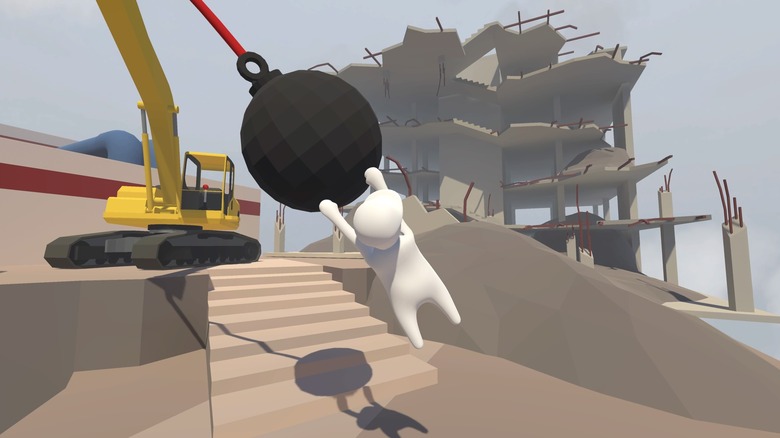
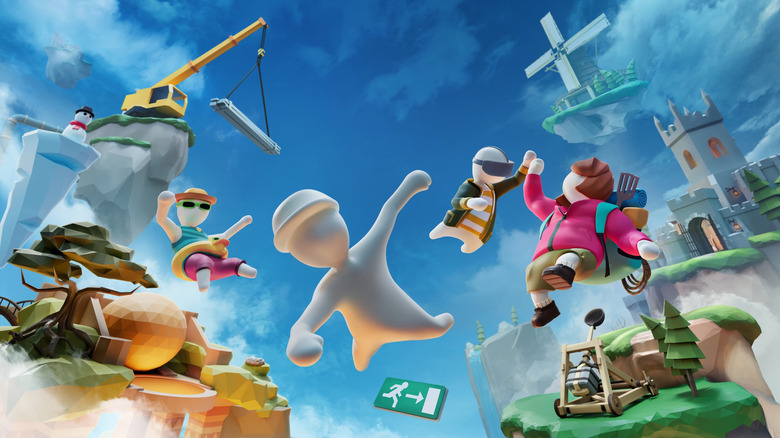
The 2016 indie release "Human: Fall Flat" is a puzzle game heavily driven by its in-game physics. Players control an amorphous white figure named Bob, whose appearance they can customize with accessories, as he climbs through various environments. Through a set of levels, Bob climbs ledges and other surmountable surfaces, with multiple solutions to complete each level. The game features both single player and cooperative multiplayer modes, and it has been released across virtually every major contemporary gaming platform.
"Human: Fall Flat" scored middling reviews across the board – only 39% of verified critics actually recommend checking out "Human: Fall Flat" according to OpenCritic. Common criticism surrounding the game is that it's too unpolished and simplistic for what it's trying to accomplish. Paying customers don't seem to mind its presentation or level of ambition, however, as the title had sold a whopping 58 million copies worldwide by the end of 2025. A sequel is currently in development, anticipated for a release on PC and the Nintendo Switch 2.