
5 Forgotten Console Launch Games From The '80s
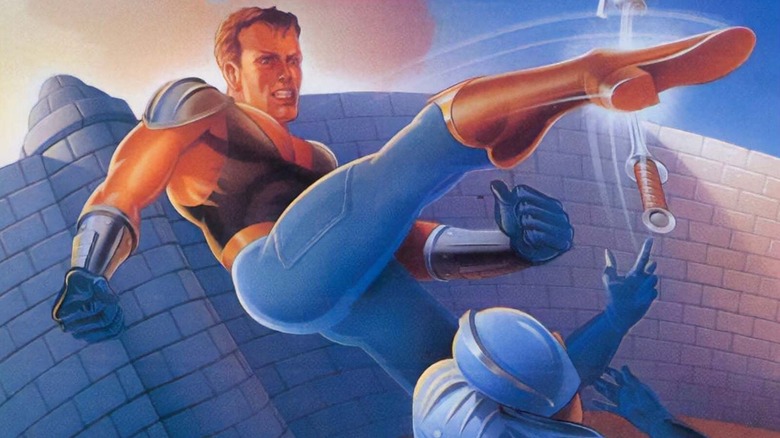
As pivotal as the decade was for the industry, there are plenty of hit '80s video games that no one remembers today. This extends to home consoles, which saw a big, enduring boom after the industry rebounded from the video game crash of 1983. Nintendo put out its first home console with the Nintendo Entertainment System, as did Sega with its Master System. Atari was still very much a major presence in home gaming platforms, releasing two different consoles during the '80s.
While companies obviously want to put their best foot forward with the launch library for a given console, not every title present during a hardware debut is memorable. Like any other game, launch titles can get lost in the shuffle of more prominent counterparts or flashier follow-ups. This isn't a dig at their quality, of course, but does reflect how mercurial and fast-paced the industry can be. Here are five forgotten console launch games from the '80s, lost to enduring cultural relevance despite their pivotal release window.
Food Fight
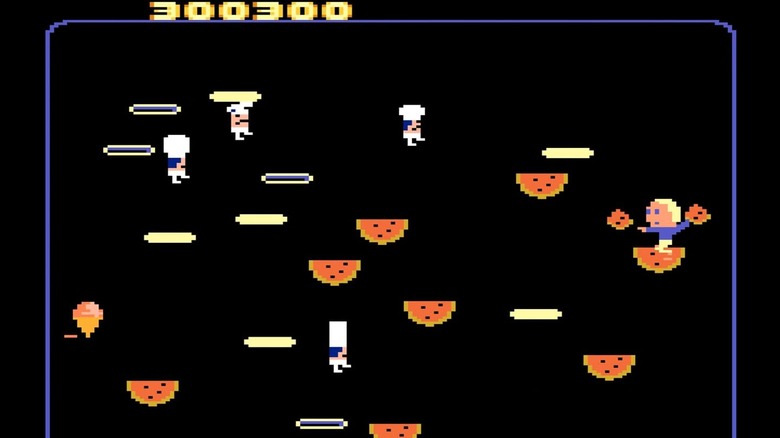
After the Atari 5200 ultimately failed, with Atari Games discontinuing support for the home console two years after its launch, the company looked to replace it with a new console. This led to the arrival of the Atari 7800 in 1986 with its own library of launch titles, while being backwards compatible with Atari 2600 cartridges. Among these was the first home console port of the arcade game "Food Fight," which had debuted in 1983. The game's protagonist is Charley Chuck, a boy trying to avoid chefs flinging food at him while he tries to get to an ice cream cone before it melts.
The Atari 7800 version of "Food Fight" faithfully retains much of the presentation and fun gameplay of its arcade source material. Unfortunately, the game, along with the rest of its launch counterparts, didn't keep the Atari 7800 from becoming a huge failure. By 1986, Nintendo was already putting out games like "The Legend of Zelda" and "Metroid" on its competing console. Arcade ports from earlier in the decade, like "Food Fight," just couldn't give the Atari 7800 the strong start it needed to survive.
Clu Clu Land
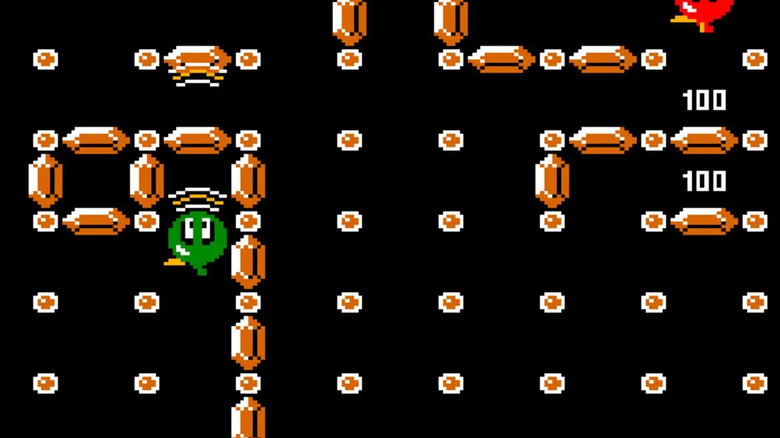
Though "Super Mario Bros." was a launch title for the Nintendo Entertainment System when it debuted in North America in October 1985, Nintendo produced earlier titles for its Japanese Famicom. This included 1984's "Clu Clu Land," a puzzle game that was also an NES launch title in North America the following year and for the console's European debut in 1987. The game's protagonist is a red balloonfish named Bubbles who navigates around a system of poles, using her fins to grab and spin around them. Gameplay involves using these mechanics to recover gold ingots around the level while avoiding spiky sea urchins.
"Clu Clu Land" is definitely one of those forgotten Nintendo games from before Mario took over and became the face of the company. The gameplay experience is built around an early arcade mentality, chasing high scores while playing over the same broader level design repeatedly. Since then, the game has been referenced in titles like "Super Smash Bros." and "Animal Crossing," but without having a prolific franchise of its own like its contemporaries. Decades later, Nintendo released "Clu Clu Land" as an online title for the Switch, providing modern audiences with a chance to play this obscure launch game.
Gyromite/Stack-Up
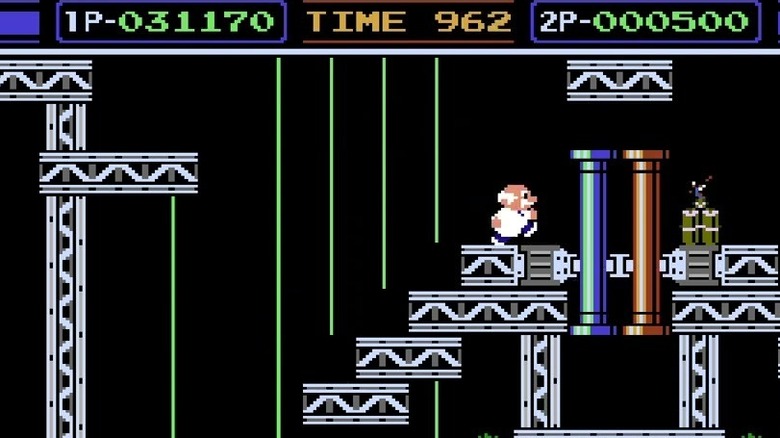
The most audacious peripheral for the NES that launched alongside the console in North America was the Robotic Operating Buddy, or R.O.B. A battery-powered robot that received commands from the NES through flashing lights on the screen, R.O.B. was designed specifically to interface with two launch titles. These games were "Gyromite" and "Stack-Up," with R.O.B. assisting the player in progressing as they controlled both titles' protagonist, Professor Hector. Responding to commands, R.O.B. functioned as a second player, helping Hector advance through the puzzle levels.
Either "Stack-Up" or "Gyromite" earns a spot on this list, so we're lumping them together since they both function as a software extension of R.O.B. One of the untold truths of R.O.B. the Robot was that it was an elaborate marketing gimmick to better position the NES to toy companies. Even with a functional R.O.B., both "Gyromite" and "Stack-Up" are better experienced with a human second player if they're experienced at all. Ultimately, the two games are just a pair of novelties associated with the NES' clunky peripheral.
Hang-On
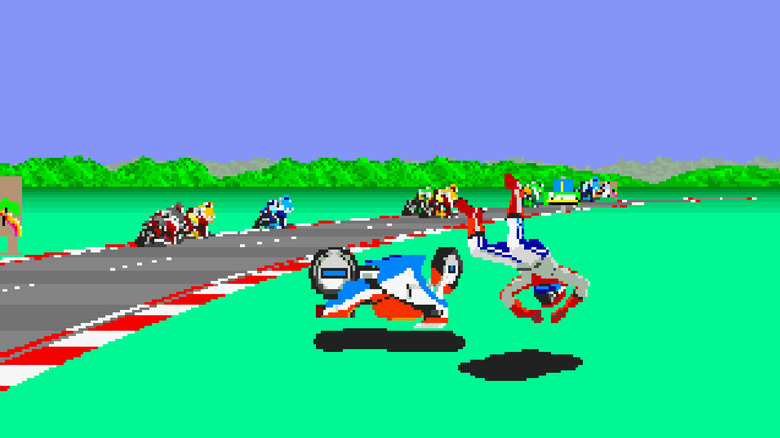
While Sega's first home console, the SG-1000, was a Japanese-exclusive release in 1983, the company went global with its hardware follow-up. The Sega Master System saw wide releases in North America, Europe, South Korea, and Brazil, in direct competition with the NES. Among the Master System's launch titles was the first home console port of the arcade game "Hang-On," which had been released several months earlier in 1985. The title is a motorcycle racing game, with the name derived from the gameplay's core leaning mechanic to make sharp turns.
These days, the Master System is more fondly remembered for Sega's earliest franchises, including the side-scrolling platformer series "Alex Kidd." Though "Hang-On" was a success in arcades, becoming one of the most popular North American arcade releases of 1985, it's barely remembered now. "Hang-On" would occasionally get sequels on Sega's later consoles, specifically on the Sega Genesis and Sega Saturn. But while it helped Sega expand its global presence through the Master System, "Hang-On" doesn't get the continued recognition that it deserves.
Last Battle
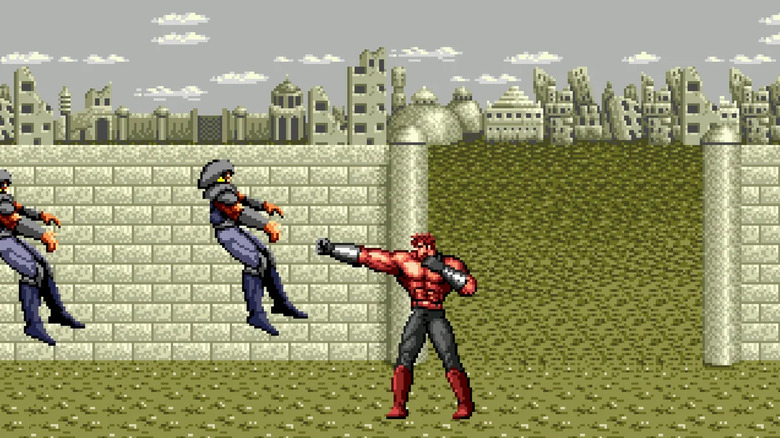
Among the first games for Sega's Mega-Drive/Genesis console was a beat-'em-up based on the popular manga and anime series "Fist of the North Star." For its original Japanese release, the 1989 game debuted under the title "Fist of the North Star: The New Legend of the Post-Apocalyptic Messiah." As Sega prepared the console for North America the following month, under its Genesis branding, the anime's lack of familiarity in the region led to it being redesigned and rebranded. Now titled "Last Battle," the localized game's protagonist, Aarzak, battles hordes of enemies in a post-apocalyptic wasteland.
Compared to the Genesis' other launch titles — "Golden Axe," "Ghouls 'n Ghosts," and "Altered Beast" — "Last Battle" got lost in the shuffle. The title's unbalanced difficulty level and repetitive gameplay failed to impress contemporary critics, resulting in middling reviews and scores at best. Worse yet, much of the game's violence, reflecting the manga and anime, had been heavily censored for its North American release. Little more than a funny story of localization completely ditching the licensed source material that it's based on, "Last Battle" is the weakest link in the Genesis launch library.