
5 Retro Video Games That Were Actually Huge Commercial Failures
Getting a video game to connect with an audience is a lot of hard work, even for some of the most recognizable franchises and developers in the industry. Games regularly fail to meet publishers' sales expectations and there are several different reasons for this happening — sometimes the games are just bad, but it can also come down to ill-conceived marketing and overinflated budgets.
Throughout its long history, the industry has seen its fair share of big gaming flops that have impacted companies and the wider video game medium. This is also true of the retro era — video games broke into the mainstream and became a household presence back then, but lessons were certainly learned from some high profile flops.
With that in mind, we're going to look back at some of the most noteworthy retro games that ended up bombing commercially (for the purposes of this article, "retro" refers to games released in the year 2000 or earlier). Here are five retro video games that were huge commercial failures for their respective publishers.
Radar Scope
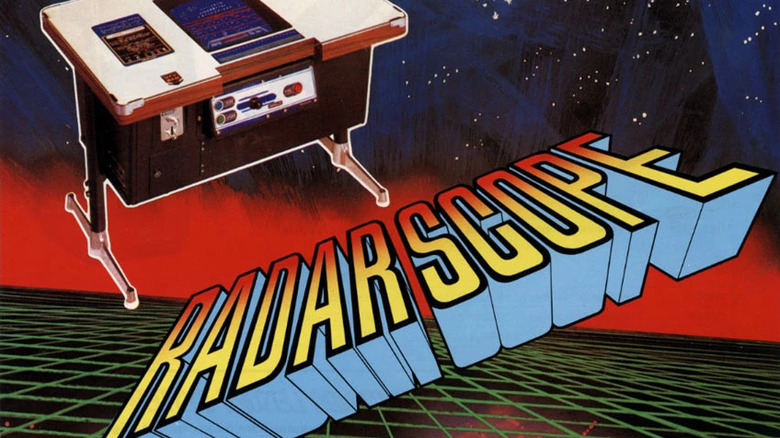
Before focusing on home and handheld consoles, along with their associated software, Nintendo developed and published arcade games. As the company moved to expand its presence in North America, it endured a major stumbling block with its 1980 game "Radar Scope." The game was a space shooter in the tradition of "Space Invaders" or "Galaxian," albeit from a tilted perspective across a visible grid. Players had to defend a space station at the bottom of the screen from descending enemy ships as an added wrinkle to the familiar gameplay.
Nintendo was sure "Radar Scope" was going to be a hit, but it nearly ended the company's prospects in North America. The game only sold roughly a third of its 3,000 unit production total, leaving Nintendo of America with thousands of unwanted arcade cabinets. In desperation, the developers salvaged the hardware to create "Donkey Kong," which became Nintendo's breakout hit in 1981. "Radar Scope" itself was a commercial failure but it set up Nintendo for greater things in the near future.
E.T. the Extra-Terrestrial
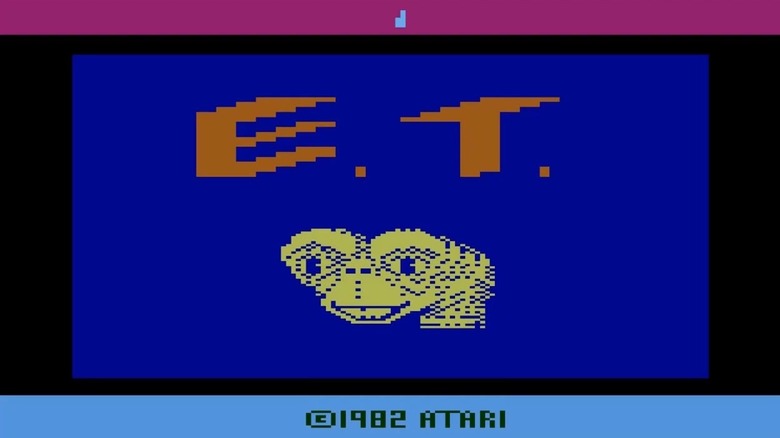
The 1982 Steven Spielberg film "E.T. the Extra-Terrestrial" was a critical and commercial smash hit, surpassing "Star Wars" to become the highest-grossing film of all time. Given this enormous success, the movie received a tie-in game for the Atari 2600, released in December 1982 in time for the holiday season. The game has players control E.T. as he searches for pieces of an interstellar communication device to reassemble and phone home. After contacting his race, E.T. has to make it to a pick-up point in a limited amount of time before he's left behind again.
With its rushed production resulting in a rudimentary presentation, coupled with the obtuse handling and progression, "E.T. the Extra-Terrestrial" gained a reputation as the worst video game in history. It was actually a strong seller out the gate, likely due to the popularity of its cinematic source material, but quickly disappointed fans. Word of mouth killed the buzz and millions of copies went unsold, with many ending up in a landfill in New Mexico. Given the money involved — the game cost Atari around $21 million in licensing fees – it was a total disaster. Since then, "E.T." has been associated with Atari's downfall in the industry.
Donkey Kong Jr. Math
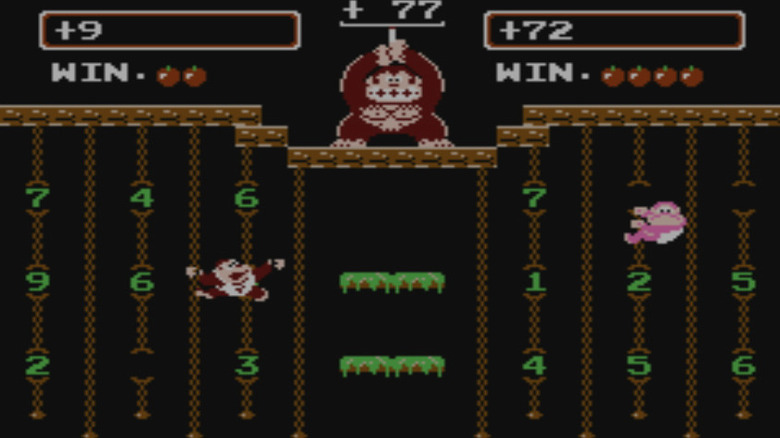
1981's "Donkey Kong" was such a smash success on the arcade scene that it led to Universal suing Nintendo for the profits, claiming the character was too close to King Kong. With the lawsuit completely backfiring, Nintendo not only retained its growing prominence in the North American market but began producing follow-ups to the game. The most forgettable of these was 1983's "Donkey Kong Jr. Math," which saw its American release two years later. The game combined the vine-climbing mechanics of 1982's "Donkey Kong Jr." with puzzles, having players advance by solving math equations shared between the vines.
Despite featuring the familiar faces of Donkey Kong and the game's titular protagonist, "Donkey Kong Jr. Math" failed to impress players. The Nintendo Entertainment System was still in its first year on the market in North America during the game's launch, and the educational title proved to be an early bump in the road. "Our first year, the worst game we released was 'Donkey Kong Jr. Math' — it was the worst game we ever sold," former Nintendo of America executive Bruce Lowry told Time Extension. "We thought it'd be great for kids' education, but we couldn't give it away."
Shenmue
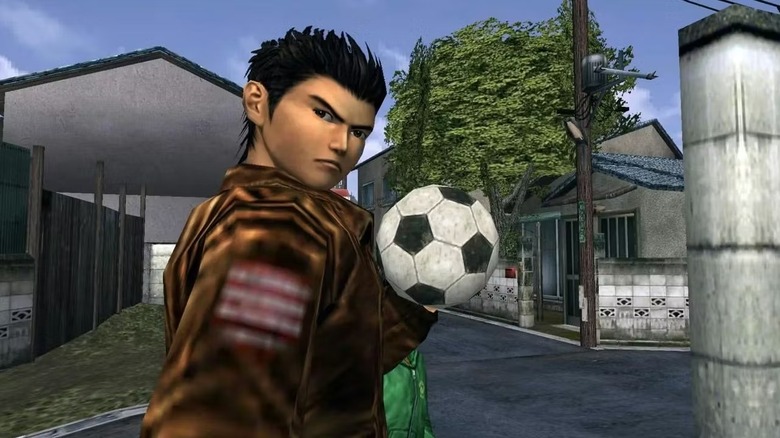
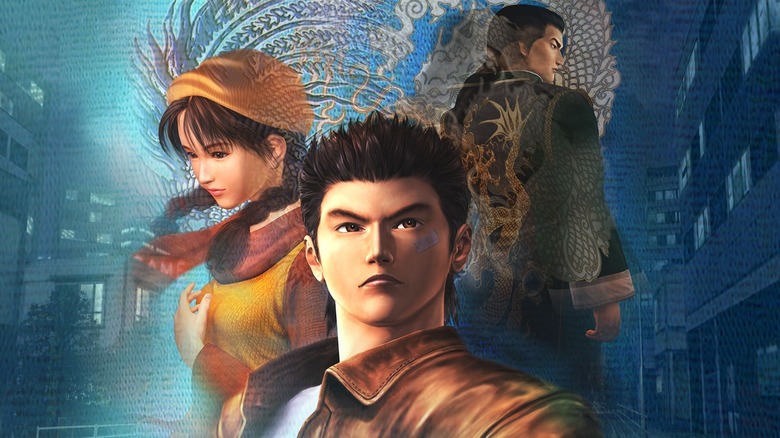
In trying to restore Sega's relevance in the console hardware market, the Dreamcast completely failed, leading Sega to focus on producing games for its former competitors. The most ambitious title Sega produced for the Dreamcast was 1999's "Shenmue," a passion project for director Yu Suzuki. Set in the '80s, the game follows teenager Ryo Hazuki who hunts for Lan Di, the man who murdered his father in front of him in the family dojo. While gathering clues and battling Lan Di's criminal associates, Ryo works to gather enough money to pay for a trip to Hong Kong, where the villain has fled to.
"Shenmue" sold 1.2 million copies on its original platform worldwide, making it one of the best-selling titles for the Dreamcast. However, the game carried a then-exorbitant price tag of anywhere from $47 million to $70 million, meaning "Shenmue" was always destined to fail despite being a good game. It's been estimated that every Dreamcast owner, at the time, would have needed to buy at least two copies of "Shenmue" to make it profitable. It would become a cult classic and spawn two direct sequels ("Shenmue 3" came many years later after a crowdfunding campaign finally made it possible). Suzuki still wants to make "Shenmue 4," but don't hold your breath.
Daikatana
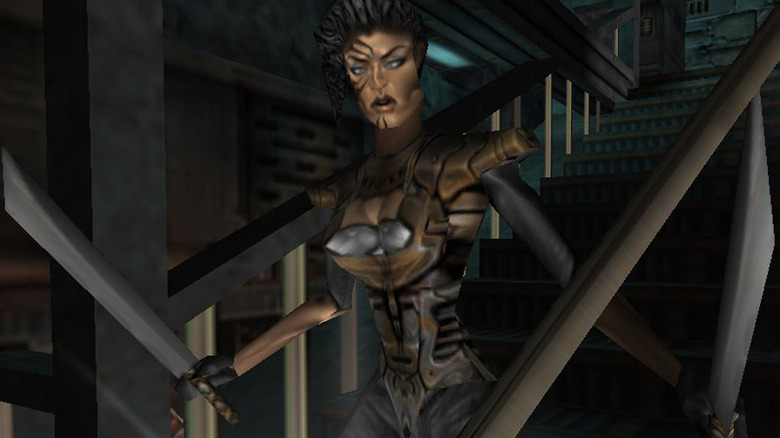
After leaving id Software, influential game designer John Romero started his own game studio called Ion Storm in 1996. One of the studio's earliest projects was the first-person shooter "Daikatana," named for the game's magical sword and featuring a blend of genres. The game's protagonist is Hiro Miyamoto, a 25th century warrior who moves to topple his timeline's dictator Kage Mishima, who used the time-traveling properties of the Daikatana to seize power. Stealing the sword, Hiro and his friends travel through history to prevent Mishima's rise to power, with Hiro mastering the blade's extensive abilities.
Looking back at the warning signs, John Romero's "Doom" follow-up was always going to be a disaster. With a production budget of approximately $40 million, a development window that stretched three years past its intended release date, and controversially tone-deaf marketing (the poster carried the tagline "John Romero's About to Make You His B***h"), the project called Ion Storm's future into question. The bloated budget meant that "Daikatana" needed to sell 2.5 million units to make it profitable... it sold 200,000 copies. Ion Storm's Dallas office where the team was based was quietly shuttered and, years later, Romero apologized for ads.