
5 Nintendo Games From 1985 That Defined An Entire Generation
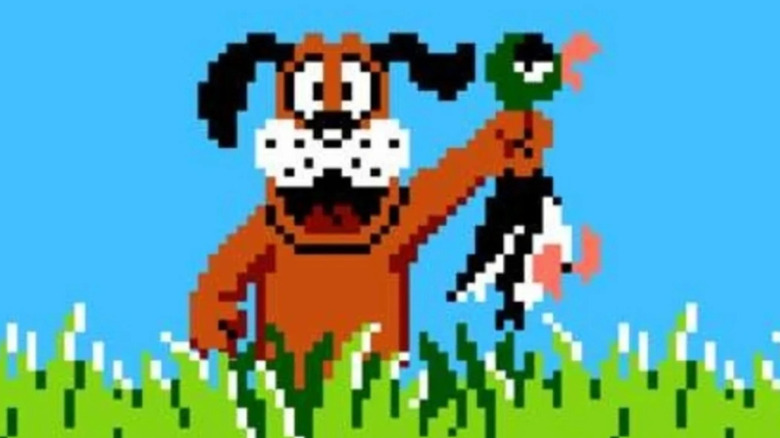
Following the video game crash of 1983, it was Nintendo that led the charge to completely reinvigorate the industry in North America. Though the company entered the home console market in 1983 with the Famicom in Japan, it wasn't until 1985 that it brought the console to the United States, where it was released under the name Nintendo Entertainment System. To mark this pivotal launch, there were plenty of memorable NES games that helped the console gain traction in the American market. Many of these titles came to define the NES era and '80s console games in general, looming above a crowded market.
With this article, we're highlighting the games released in 1985 for the NES that captured the core appeal of early titles for the console. To clarify, several of the games included here were originally released in Japan earlier for the Famicom. But, as far as American gamers who didn't get access to the NES until 1985, these are the games that embodied the console's successful launch year in the region. Here are five Nintendo games from 1985 that defined an entire generation and cemented the company's place in the industry.
Super Mario Bros.
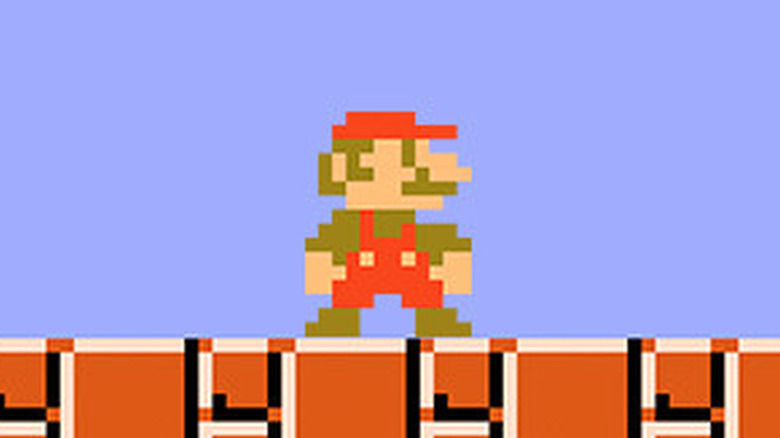
Mario first appeared in 1981's "Donkey Kong" and the 1983 arcade game "Mario Bros." gave him his own platform, but it was the little moustachioed plumber's starring role in 1985's "Super Mario Bros." that cemented him as the face of Nintendo. Unlike the arcade-style repeating levels from his prior appearances, the NES game sends Mario and his brother, Luigi, on a side-scrolling adventure. The two siblings traverse the Mushroom Kingdom to rescue Princess Toadstool from the fire-breathing villain Bowser. The game unfolds across eight worlds, each with four levels in them culminating in a showdown against Bowser before the princess is finally saved.
If there's any single 1985 game that defined the NES era, it's "Super Mario Bros.," which kicked off its own franchise. The title saw the medium advance considerably from its arcade roots, though a version of the game was eventually released in arcades the following year. The game introduced many essential elements of the franchise, including a timeless original score that helped Nintendo make music history. Going on to sell over 40 million copies, "Super Mario Bros." played a huge role in the NES finding a thriving audience in America. To this day, test market copies of it are actually the most expensive Mario game in the world.
Excitebike
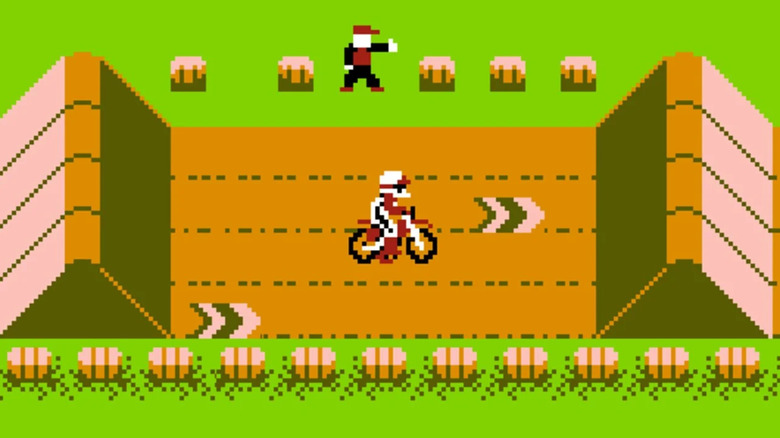
"Excitebike" actually received a Japanese release in 1984 for the Famicom but it wouldn't be localized for the North American market on the NES for 11 months. The game is an early racing title for the console, with players controlling motocross racers on a circular track in an arena setting. The track contains several obstacles, including bumps, jumps, and rough patches of road for players to avoid as they complete a set number of laps. Players can choose between a competitive mode or solo time trial mode as they try to set the best time for a given track.
"Excitebike" was the first racing game released for the NES in North America and it remained one of the best in the console's library. The game showcased what was capable in the genre on home consoles, couched within a warmly rendered 8-bit presentation. One of the more exciting innovations in the game was the ability to design and race on player-designed tracks, a feature that many console racing games still don't have. Simple but incredibly fun to play, "Excitebike" embodied racing games for home consoles during the 8-bit generation.
Duck Hunt
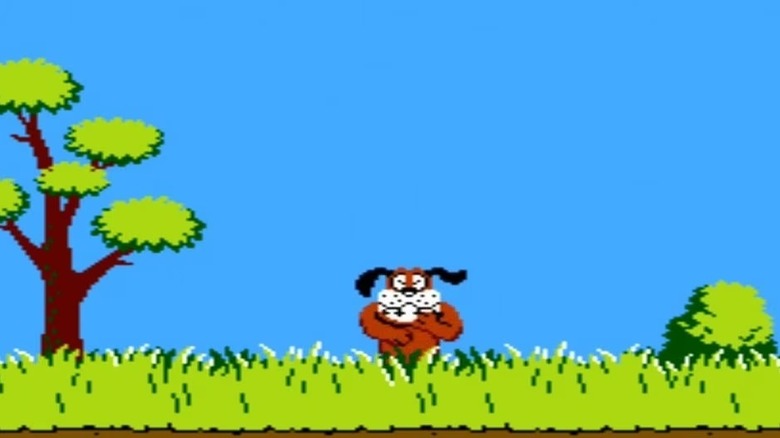
"Duck Hunt" is another one of those Nintendo games that saw a Japanese release before 1985, but it wasn't localized for North America until October 1985. A launch game for the NES in that market, the title required the NES Zapper peripheral in order to play it. Each round has players use the light gun controller to blast ducks as they fly above a small field full of tall grass. The player's hunting dog holds up ducks that have been successfully shot down and taunts his owner if the player misses his targets.
While not the only light gun game for the NES released in North America in 1985, "Duck Hunt" stands as the most recognizable one from the console's entire library. The sight of the dog pointing and laughing at the player is one that is burned into many an NES gamer's mind, becoming a frustrating core memory. Expert players may even be aware that "Duck Hunt" has a secret ending, which requires enduring the 99 regular levels. An effective showcase for the fun that the NES Zapper was capable of delivering, "Duck Hunt" is an enduring gallery shooter and a generation-defining title.
Kung Fu
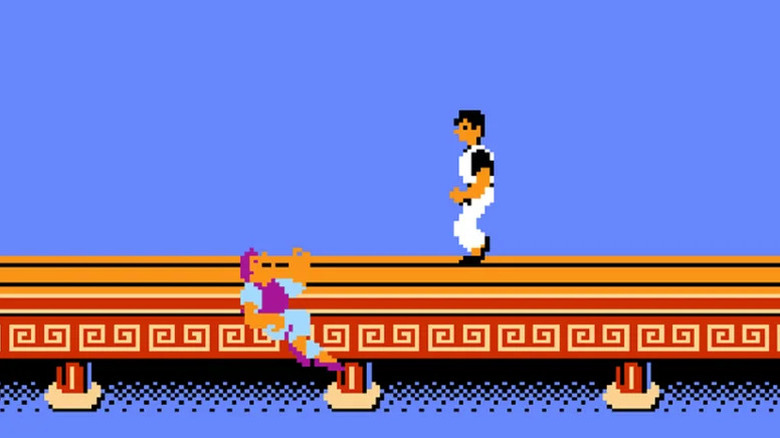
Initially a Japanese arcade game before being ported to the Famicom and NES, "Kung Fu" is a seminal side-scrolling beat'em-up game. The protagonist is Thomas, a martial artist who learns his girlfriend Sylvia has been kidnapped and held in a multi-level criminal hideout known as Devil's Temple. Thomas progresses through each level of the hideout battling waves of enemies before facing a boss guarding the stairs to the next level, a premise inspired by the Bruce Lee film "Game of Death." Thomas can jump, duck, punch, and kick as he steadily defeats all opponents standing in his way to rescue his beloved Sylvia.
Nowadays, "Kung Fu" is a forgotten Nintendo game from the time before Mario became the face of the company, but those who owned a NES at the time remember it fondly. Released years before the first "Double Dragon" game, this side-scroller was the hardest-hitting launch title for the NES. While players were confined to simply moving left or right, the controls felt more intuitive than other fisticuff-driven games of the era. "Kung Fu" went on to become a top-seller for the NES in North America into 1986, giving gamers the early beat'em-up action that they craved.
Golf
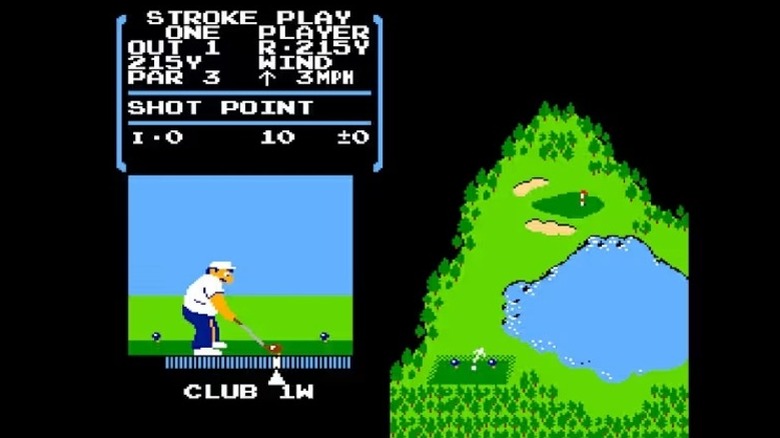
After making its debut on the Famicom in 1984, "Golf" was localized for the North American market to become an NES launch title. Players progress through 18 holes at a verdant golf course either alone or competing against another golfer. A power meter determines how hard players hit the ball as they navigate across the course and plan their swings. In competitive mode, players can either take on computer-controlled opponents or a friend using the second controller.
The NES launched with several sports games in 1985, including "Tennis," "Baseball," and "Soccer." But "Golf" brought several innovations to the genre, including being the first golfing game to feature a power and accuracy meter to gauge the distance and direction of the ball. This feature became a staple for golfing games moving forward, including titles on other platforms. "Golf" went on to sell over four million copies worldwide, becoming the tenth-best selling NES game. It rose above the standard 8-bit sports fare of the time to become a defining game of the early NES era.