
5 Arcade Games From 1991 That Still Hold Up Today
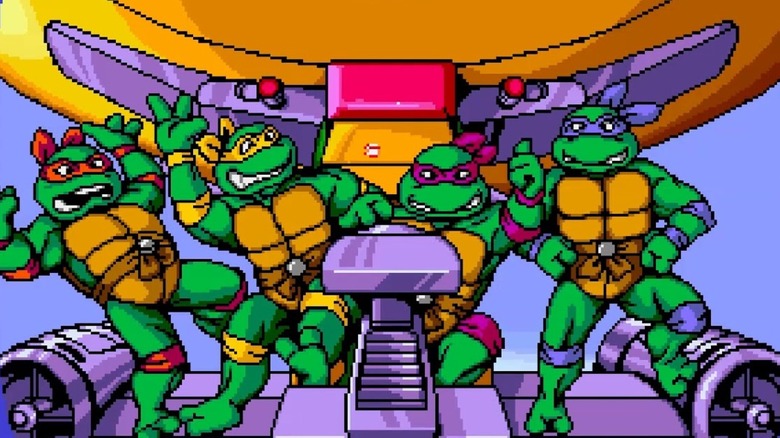
Arcade games used to dominate the industry before home gaming technology became more sophisticated and widely available. There were arcade games that changed gaming forever, offering a growing array of gameplay experiences and advancing technological innovations. This distinction continued into the '90s, the last wide burst from the arcade scene before home consoles and PCs steadily overtook arcade cabinets' technical capabilities. There are many arcade titles from the '90s that still play beautifully today, retaining their overall fun factor with modern gamers.
This time around, we're focusing specifically on beloved arcade titles that were first released in 1991. From classic fighting games to definitive side-scrolling beat'em-ups, the arcade scene remained a healthy presence throughout 1991. Fortunately, many of these games are available to play through various remasters and official re-releases on modern platforms, ready to entertain new generations of players. Here are five arcade games from 1991 that still hold up today, proving their enduring appeal.
Street Fighter II: The World Warrior
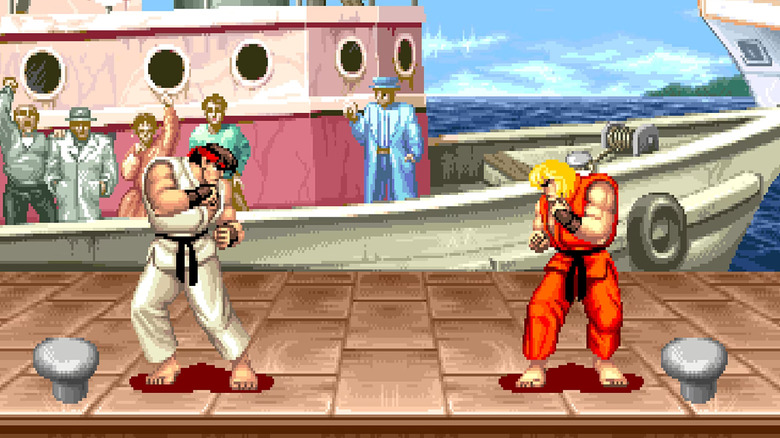
After debuting in 1987, the "Street Fighter" franchise underwent a stunning transformation with its sophomore installment "Street Fighter II: The World Warrior." Returning fighters Ryu and Ken are joined by six additional playable characters in the original version of the game, battling each other in a global martial arts tournament. This culminates in fights against the leaders of a terrorist syndicate headed by the sinister M. Bison. In addition to the single-player mode, the game offers a versus mode, letting two players go head-to-head in a frenetic duel.
Whereas the original 1987 "Street Fighter" only featured Ryu and Ken as playable characters, the vanilla version of "Street Fighter II" gives players a choice of eight. Every character, including the four bosses, gets a vibrant stage reflecting their international origins, along with a memorable musical theme composed by Yoko Shimomura, and unique moves.
This ambitious increase in scope and refinement of gameplay propelled "Street Fighter II" to widespread commercial success worldwide, especially in Japan and America. "Street Fighter II: The World Warrior" not only sets the template for the franchise, taking it to new heights, but still stands as a foundational title in fighting games overall.
Teenage Mutant Ninja Turtles: Turtles in Time
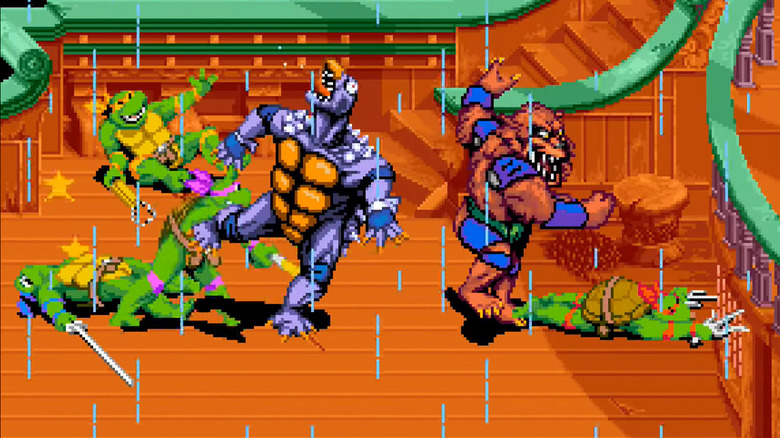
Konami had been making video games based on the Teenage Mutant Ninja Turtles since 1989, taking things to the next level with "Teenage Mutant Ninja Turtles: Turtles in Time." Maintaining its source material aesthetics from the 1987 animated series, "Turtles in Time" opens with the heroes in a half-shell battling Shredder and Krang in their latest plot. However, Shredder surprises the turtles by sending them through a time portal, with Shredder and Krang's army waiting for them throughout history. Battling the Foot Clan and other familiar foes in the past and future, the time-displaced turtles search for a way to return to their own time and defeat Shredder.
"Turtles in Time" takes all the side-scrolling beat'em-up fun from the 1989 "Teenage Mutant Ninja Turtles" game and subtly revamps it. This iteration provides smoother and more intuitive gameplay, including a greater variety and increased detail for the in-game animation. And after providing players with the familiar New York environments for the opening levels, the game takes full advantage of its imaginatively designed levels across history. Both the arcade and SNES versions of "Turtles in Time" are in "Teenage Mutant Ninja Turtles: The Cowabunga Collection," bringing them to modern platforms for the first time in years.
The Simpsons
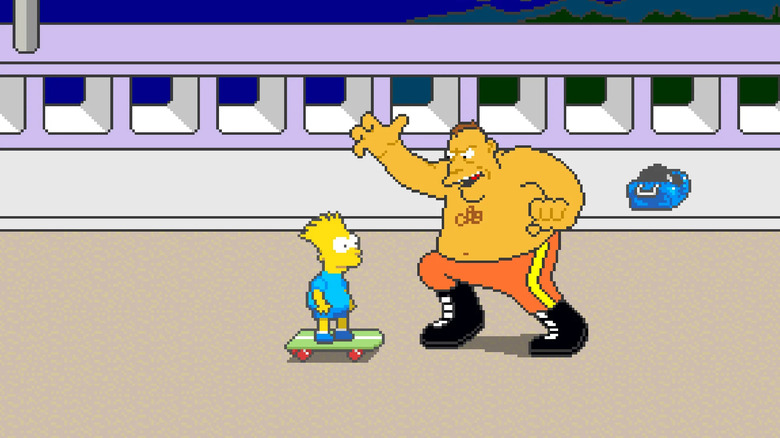
Another Konami arcade beat'em-up released in 1991 is based on a fan-favorite cartoon that maintains its hard-hitting appeal: "The Simpsons." Up to four players can choose between Homer, Marge, Bart, and Lisa Simpson, with the show's voice cast reprising their respective roles. After Mister Burns and Smithers kidnap Maggie Simpson for a diamond that accidentally came into her possession, the family battles Burns' private army to rescue her. This battle takes them across the town of Springfield, with plenty of familiar faces from the show surfacing along the way.
Of all the video games based on the long-running animated franchise, "The Simpsons" arcade game stands as the best. The presence of the show's voice cast helps link the game to its source material while the game provides a surprisingly robust exploration of Springfield. But the translation of the cartoon to a beat'em-up gameplay experience felt more effectively realized than preceding attempts to make platformers based on the property. After a limited time release on home consoles in 2012, "The Simpsons" has since received an emulated re-release through Arcade1Up.
Sunset Riders
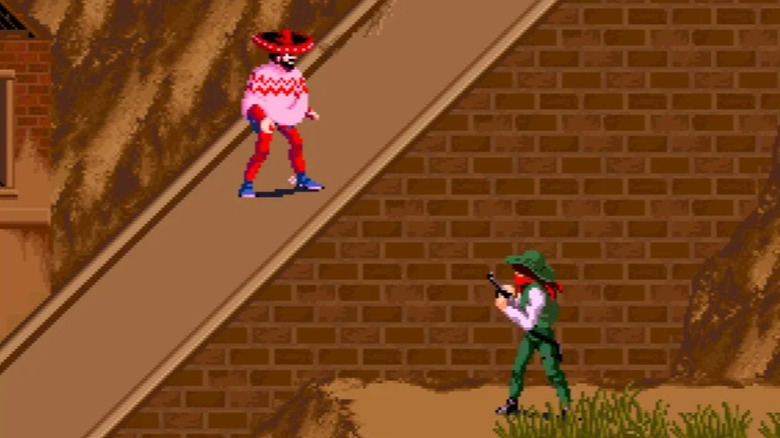
Konami was also the game studio in the '80s behind the popular run-and-gun franchise "Contra," launching another property for the genre with "Sunset Riders." The Wild West shooter came in two-player and four-player variant cabinets, letting gamers choose between four heroic gunslingers. Each of the playable characters features their own distinct weapons, affecting the rate and pattern of their gunfire gameplay. The characters set out to bring down the most notorious outlaws across the frontier, taking on enemies in everything from dusty towns and deserts to rollicking trains and stampedes.
"Sunset Riders" uses its Western tropes well, creating a freewheeling and fun arcade shoot'em-up that's enjoyable alone or with friends. While still possessing a pronounced difficulty, the game is much more accessible than titles in the "Contra" series, mitigating the frustration. After being ported to the Super Nintendo and Sega Genesis, the original arcade version received a digital re-release in 2020. An overlooked Konami run-and-gun property, "Sunset Riders" is still a blast to play 35 years after its initial release.
Fatal Fury: King of Fighters
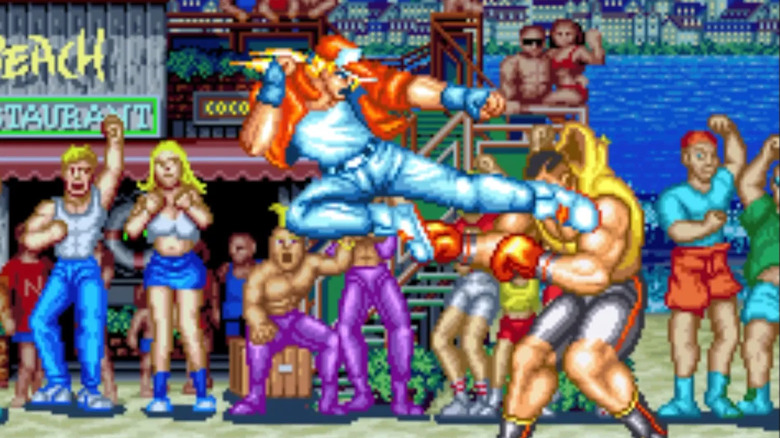
After leaving Capcom, "Street Fighter" creator Takashi Nishiyama moved to SNK where he created its premier fighting game series "Fatal Fury." The game introduces brothers Terry and Andy Bogard who, along with their friend Joe Higashi, enter a martial arts tournament in South Town. As the trio take on waves of formidable fighters, their true target is the competition's organizer, the local crime lord Geese Howard, who murdered Terry and Andy's adoptive father. Players can flit between the background and foreground rather than fighting on a single 2D plane, adding a level of strategy and timing to the gameplay.
Through "Fatal Fury," Nishiyama was able to bring a greater emphasis on the story and characters than he had with the original "Street Fighter." In addition to the lane-switching mechanic, the gameplay also focused more on timing and special moves, compared to the combo-driven gameplay of "Street Fighter II." The game also boasted particularly detailed sprites and environments, helping it maintain an enduring relevance among games today. "Fatal Fury" became more popular outside of the United States, but its success fueled a line of sequels, as well as sister series' "Art of Fighting" and "King of Fighters."