
5 Video Games From The '90s That Tried To Copy Street Fighter
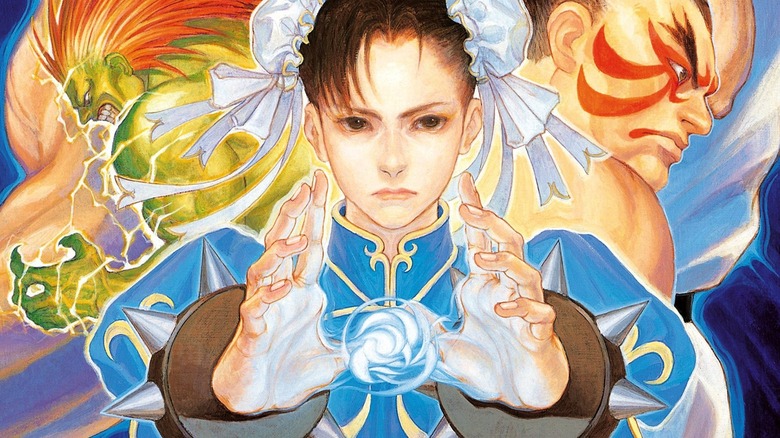
1991's "Street Fighter II" is one of those retro games that everyone needs to play at least once, forming the template for the modern fighting game genre. The game featured an eclectic cast of playable characters, each with their own distinct fighting styles, engaged in fast-paced, 2D combat driven by special moves and combos. The game proved to be an incredible commercial triumph, with earnings pushing past $1.5 billion in 1993 alone. Capcom created a whole line of updated versions, ports, spin-offs, and sequels as "Street Fighter" blossomed into one of its biggest franchises.
Given that widespread success, many other companies tried to produce fighting games of their own to capitalize on the growing interest in the genre. Several of these attempts became franchises in their own right while others saw a more muted reception. Whatever the response, the fighting game genre definitely exploded in the wake of "Street Fighter II," despite its dominance. Here are five video games from the '90s that tried to copy "Street Fighter" — with varying levels of success.
World Heroes
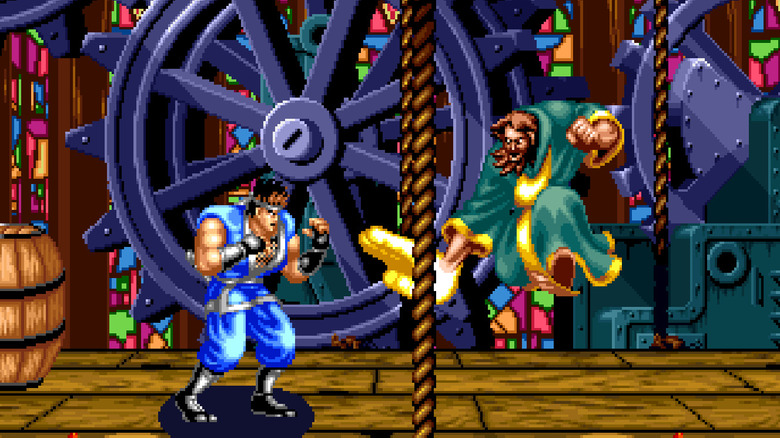
The 1992 arcade game "World Heroes" put a time traveling twist on its international martial arts tournament premise. The game has futuristic scientist Sugar Brown obsessed with determining who is the strongest fighter in human history. To put this debate to rest, Brown recruits fighters from across history to participate in a tournament, with Joan of Arc, the legendary ninja Hattori Hanzo, and Rasputin among the combatants. However, the competition is crashed by the synthetic warrior Geegus, who is programmed to kill and conquer anyone who stands in his way.
With its international stages and combatants from all over the globe, "World Heroes" certainly evokes "Street Fighter" in terms of premise and presentation. Contemporary critics also took notice of the similarities, with some opining that it was an effort to get a "Street Fighter II" type experience on the Neo Geo. The Capcom title was never ported to the SNK console, with the company making its own fighting games to fill the void. "World Heroes" went on to spawn three direct sequels, coming to a close in 1995 but not before providing some of gaming's most ridiculous one-liners with its laughable localization.
Art of Fighting
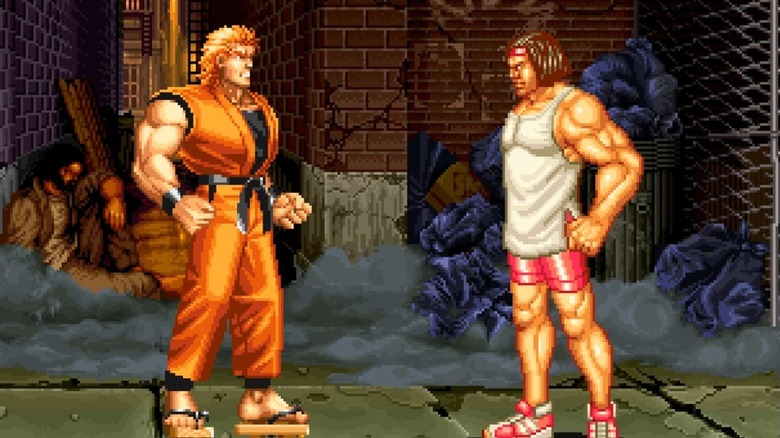
While ADK developed "World Heroes," Neo Geo publishers and arcade mainstays SNK developed several fighting game properties of their own. This includes "Art of Fighting," which hewed closer to "Street Fighter II" than SNK's other franchise, "Fatal Fury." A prequel to "Fatal Fury," taking place years before in the shared setting of South Town, "Art of Fighting" follows martial artists Ryo Sakazaki and Robert Garcia. Rather than the story revolving around a fighting tournament, it involves Ryo and Robert venturing into the city's criminal underworld to rescue Ryo's sister Yuri.
Whereas "Fatal Fury" featured the ability for characters to jump between the background and foreground and emphasized timing and special attacks, "Art of Fighting" went in a different route. The 1992 game is set on a strict 2D plane like "Street Fighter" and incorporates the mechanic of building up a meter to unleash super moves. Even the game's art style more closely resembles "Street Fighter," with characters like Ryo designed as an homage to the Capcom franchise. SNK built up its own impressive library of fighting game franchises, but titles like "Art of Fighting" underscores Capcom's widespread influence on the genre.
Fighter's History
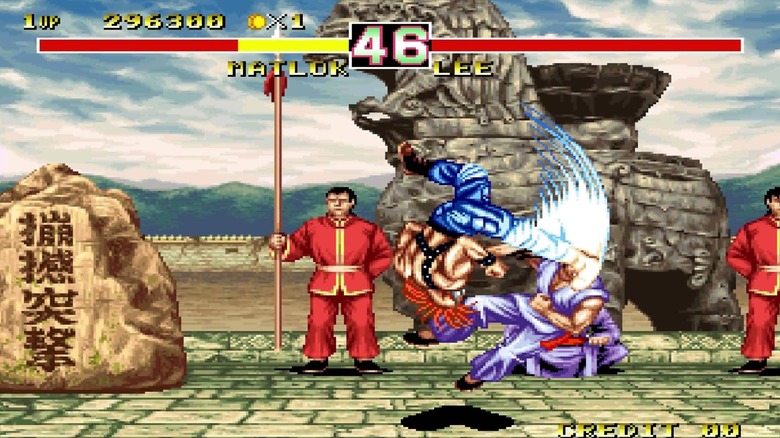
1993's "Fighter's History" is a game so similar to "Street Fighter II" that Capcom took legal action in response. The game revolves around a martial arts tournament attracting fighters from around the world, with the competition organized by the powerful Karnov, who is also the final boss. Like "Street Fighter," the game has a six-button input divided across punches and kicks of varying power levels. What makes "Fighter's History" stand out is a weak point mechanic, with each character having visible spots that players can target to stun and inflict heavier damage.
In 1994, Capcom filed a legal motion for an injunction on Data East and its "Fighter's History" property, alleging it infringed on copyrights for "Street Fighter II." Capcom cited the Data East title's control layout and the fighters' appearances and fighting styles of being overly derivative from its game. The case revealed that Data East directly referenced "Street Fighter II" 22 times in "Fighter's History" development, though the injunction was denied citing both games utilized common tropes to the genre. "Fighter's History" got its own trilogy of games, eventually ending with the 1995 game "Fighter's History: Mizoguchi Kiki Ippatsu!!," which received a Japanese-exclusive release.
Teenage Mutant Ninja Turtles: Tournament Fighters
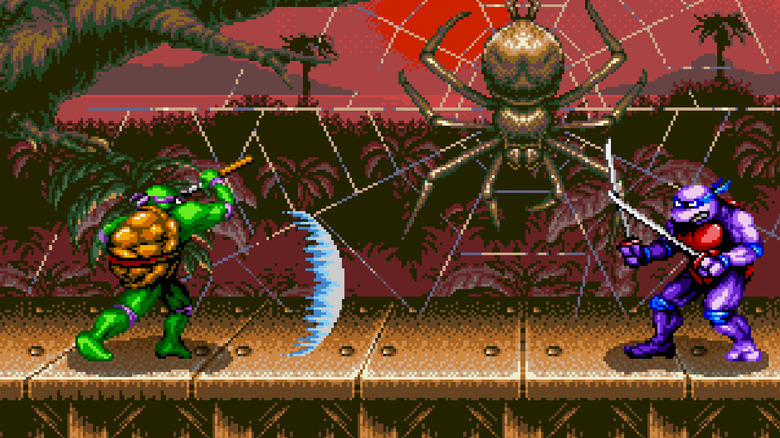
The "Teenage Mutant Ninja Turtles" franchise had maintained a prominent video game presence since the late '80s, primarily for its side-scrolling beat'em-up titles. The franchise pivoted to the fighting game space for its 1993 home console title "Teenage Mutant Ninja Turtles: Tournament Fighters." The game was released for the Nintendo Entertainment System, Super Nintendo, and Sega Genesis, with each version distinctly different from one another in terms of levels, story, and rosters. At their core, the versions are 2D fighters featuring the Ninja Turtles, Shredder, and a selection of other allies and enemies testing their martial arts prowess against each other.
A fighting game title for the Ninja Turtles isn't completely out of bounds, but it is a sharp departure from the types of games that the franchise had been releasing. The gameplay and presentation itself is actually surprisingly effective, with the NES version pushing its console's technical capabilities as far as they could go. All three versions of "Tournament Fighters" are included in the 2022 compilation "Teenage Mutant Ninja Turtles: The Cowabunga Collection." This gives players the chance to revisit the odd fighting game experience in the franchise and directly compare them with each other as one of the series' big experiments.
Double Dragon V: The Shadow Falls
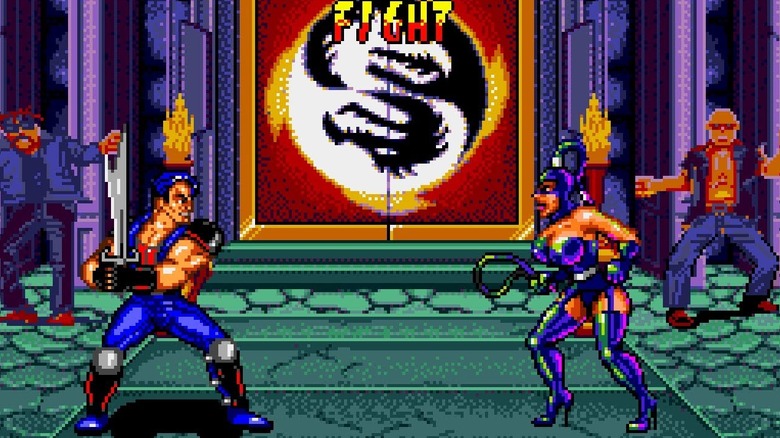
The Ninja Turtles aren't the only beat'em-up characters to make the leap to the fighting game genre, with "Double Dragon" also trying their hand at a 2D fighter experience. Despite its title, the game isn't a sequel to 1992's side-scroller "Super Double Dragon," but a fighting game based on the "Double Dragon" animated series. The gameplay mirrors the eight-directional input and six-button attack mechanics of "Street Fighter II," with four different game modes to choose from. The game follows brothers Billy and Jimmy Lee as they face the villainous Shadow Master and his Shadow Warriors in a fierce martial arts melee.
With an art style reflecting its animated series source material, "Double Dragon V" at least has a more vibrant and distinctly rendered roster than most "Street Fighter" clones. Where the game faltered was its more frustratingly executed mechanics and forgettable sound design, along with its soundtrack. Between this and the following year's "Double Dragon '95," the classic franchise ended in the '90s. A misguided attempt to cash-in on fighting games' success, "Double Dragon V" strayed too far from the property's roots to connect with a wider player base.