
5 Video Games From 1990 That Set The Tone For The Decade
Just as the '80s had seen tremendous growth and revolutionary innovations in the gaming medium, 1990 signaled even greater audiences and advances to come. The arcade scene was in its last prolonged gasp of commercial viability, at least in North America, while home gaming platforms continued to proliferate. This included new consoles, both home and handheld, from Nintendo and Sega, while its eventual competitors waited in the wings. Personal computers also saw significant advances, both in terms of households using them and the technical capabilities that they possessed.
All of this promising change and growth was apparent right from 1990 across these seemingly disparate gaming platforms. Nintendo was making great strides throughout the year, but they certainly weren't alone in influencing the industry. We've gathered the titles released across 1990, some debuting overseas that year, that informed video games well into the '90s. These are five video games from 1990 that set the tone for the decade moving forward.
Fire Emblem: Shadow Dragon and the Blade of Light
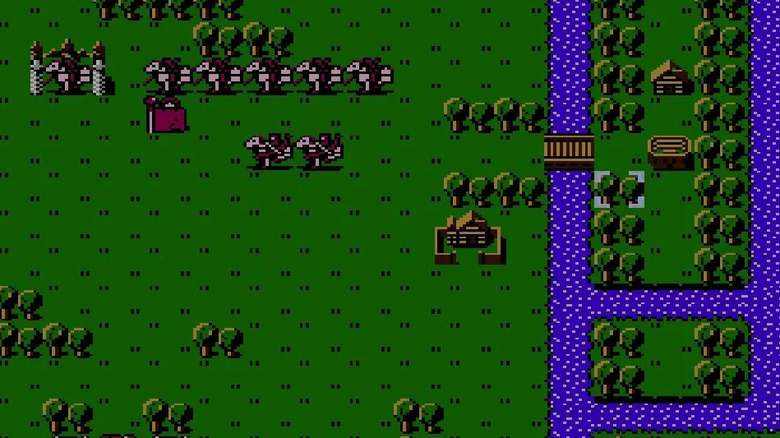
Even as Nintendo started to shift its focus to the Super Nintendo to develop its 16-bit library, it still had some first-party gems for the Nintendo Entertainment System and Famicom. Among these was the fantasy turn-based tactical game "Fire Emblem: Shadow Dragon and the Blade of Light," kicking off another long-running franchise for the company. Released exclusively in Japan for decades, the game has Prince Marth defend his kingdom from a fiendish alliance between a dragon and an evil wizard. Marth can recruit other heroes to join his cause, divided across three character classes, navigating tile-based battlefields and engaging in turn-based combat.
So many of the "Fire Emblem" franchise hallmarks are present in the inaugural game, while also influencing other tactical RPGs like "Final Fantasy Tactics" and "Tactics Ogre." The game has a surprisingly steep difficulty curve, including a permanent death mechanic affecting the story if any character other than Marth is killed in battle. After 32 years, the classic tactical RPG finally came to the United States as a digital release on the Nintendo Switch, albeit for a limited time. Informing subsequent turn-based strategy games, the original "Fire Emblem" proved that Nintendo wasn't quite done with the Famicom yet.
Pit-Fighter
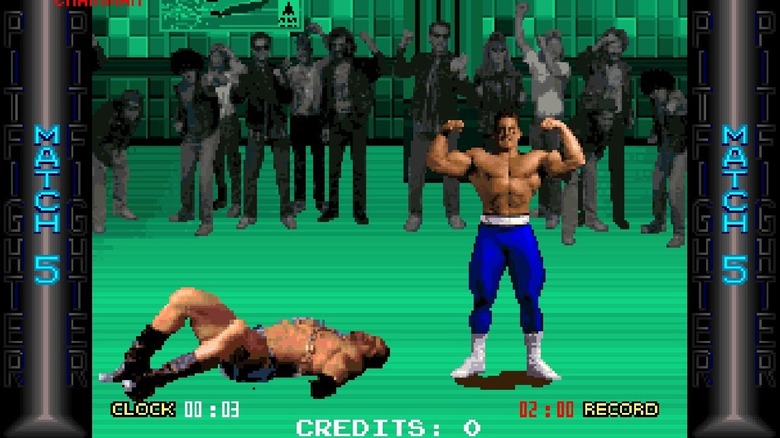
Two years before "Mortal Kombat," there was "Pit-Fighter," which also used digitized sprites and live-action actors in a fighting game context. Far less graphically violent than Midway's 1992 arcade classic, "Pit-Fighter" also featured a much more grounded premise. The fighting game is set in an underground fighting circuit, with players given a choice of three combatants to choose from as they brawl against a set of challengers. One particular innovation in the game was its three-player simultaneous combat, with this multifaceted melee often descending into absolute chaos.
Looking back, "Pit-Fighter" isn't a particularly good game, and its home platform ports, especially for the SNES, fared even worse. But quality aside, the game still managed to sell over 5,000 arcade units in the United States, enough to warrant early — but eventually cancelled — development on a sequel. The concept of using digitized actors for fighting game sprites was further popularized by "Mortal Kombat," albeit in a fantasy narrative. But whereas "Mortal Kombat" underwent a stunning transformation and still endures today, "Pit-Fighter" has since fallen by the wayside as a footnote in '90s gaming history.
Wing Commander
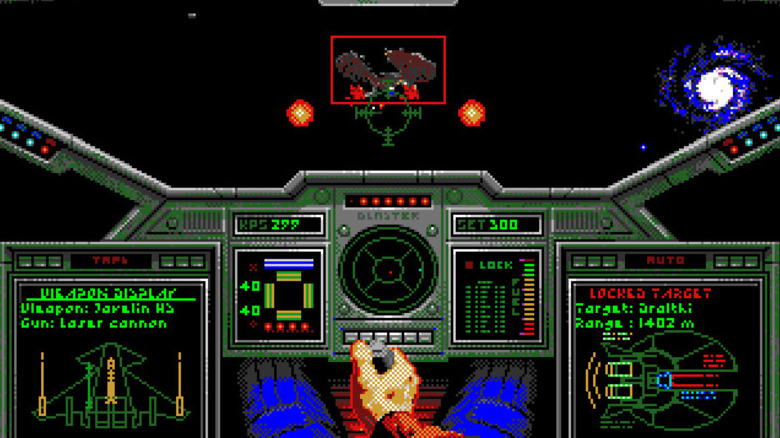
One of the more prolific space combat simulators of the '90s was "Wing Commander," which featured its own cosmic sci-fi mythos. The game takes place in the 27th century, with humanity gripped in a fierce interstellar conflict against a warrior feline race known as the Kilrathi. The protagonist is hotshot pilot Christopher Blair, who leads his starfighter squadron on important missions throughout the war. The players' performance on various assignments, including the successful completion of in-game objectives, dictates the course of the campaign.
Years before "Star Wars: X-Wing" or "TIE Fighter," there was "Wing Commander" as the premier space combat PC game. The then-innovative starfighter handling and palpable sense of consequence helped elevate the game from the space shooters that had come before it. Unfortunately, nowadays, "Wing Commander" is better known for inspiring one of the worst video game movies of all time. But beyond its rueful tie-in media, "Wing Commander" still stands as a groundbreaking franchise that helped pave the way for titles like "Star Fox" while forging its own legacy.
The Secret of Monkey Island
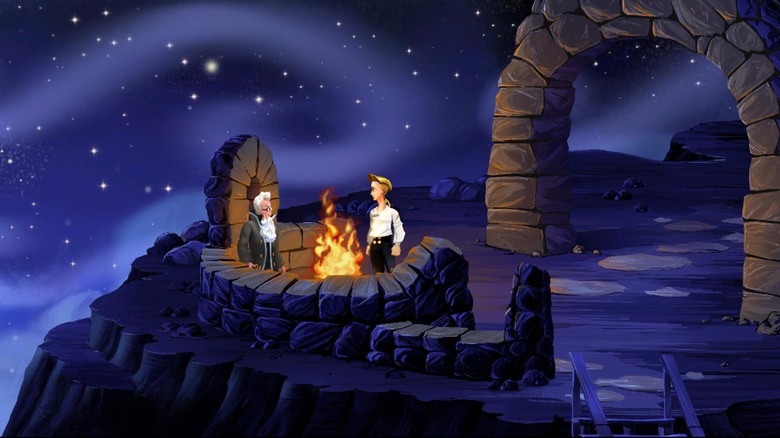
Lucasfilm Games had previously delved into point-and-click games with "Maniac Mansion" and "Indiana Jones and the Last Crusade: The Graphic Adventure." The swashbuckling title "The Secret of Monkey Island," meanwhile, offered a seafaring tale that significantly refined the game engine that had been created for those earlier titles. The game's protagonist is Guybrush Threepwood, who dreams of becoming a pirate captain in the Caribbean and is given three tasks to be recognized as a worthy outlaw. This incurs the wrath of the notorious ghost pirate LeChuck, pitting Guybrush on the adventure of his life.
The point-and-click system Lucasfilm Games had employed in prior titles is much more intuitive, accessible, and easy to navigate in "The Secret of Monkey Island." This makes the whole experience immensely more enjoyable while the story is much more richly realized than "Maniac Mansion" had been. The game's puzzles are imaginatively staged and the developers' penchant for self-aware humor remains firmly and welcomingly intact. Setting the standard for point-and-click games to follow, "The Secret of Monkey Island" remains a swashbuckling delight.
Super Mario World
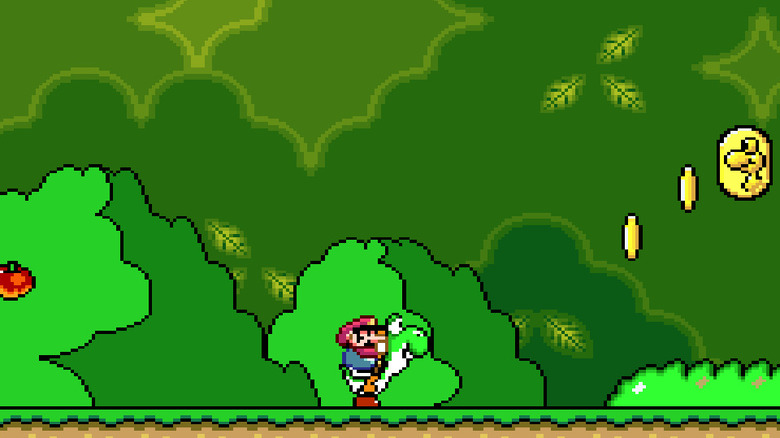
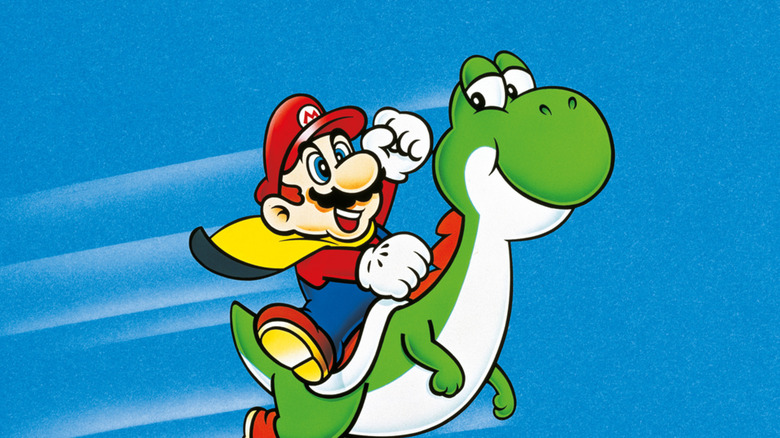
While American audiences finally got their hands on "Super Mario Bros. 3" in 1990, Japanese gamers got to experience its Super Nintendo sequel later that year with "Super Mario World." The 16-bit adventure saw Mario, Luigi, and Princess Toadstool vacationing in Dinosaur Land, only to discover Bowser and the Koopalings had since taken over the archipelago. Teaming up with the rideable dinosaur Yoshi, the brothers traverse exotic lands to rescue the princess after she's kidnapped yet again. In addition to Yoshi, the game boasts a new power-up with the Cape Feather, which allows Mario and Luigi to fly and glide.
"Super Mario World" went on to become the best-selling game for the SNES, in no small part because Nintendo packaged the game with new consoles after its release. This cemented Mario's status as Nintendo's flagship franchise well beyond the NES era, as console gaming jumped to 16-bit presentation. The game itself went deeper than "Super Mario Bros. 3," with more engrossing level design, including numerous secret exits and levels for players to discover. "Super Mario World" is a '90s video game that aged flawlessly, as Nintendo built upon the foundations of the franchise without compromising its appeal.