
'80s Video Games That Made Arcades Crowded
The '80s was the last full decade where the arcade scene prominently drove the video game industry forward. Many '90s arcade games almost vanished overnight compared to the enduring success of titles released just a decade prior. Even as gaming grew increasingly more sophisticated in the face of advancing technology, '80s games retained endless replay value beyond their simple designs. These titles had gamers form crowds around popular arcade cabinets, each waiting for the chance to pour in their quarters and play.
Whether it's games that continue on as iconic franchises today or one-and-done titles that wowed players years ago, there are loads of successful '80s arcade games. These games had notable staying power with arcade patrons, encouraging them to come back and keep the thrilling gameplay going. Going back to them now, over 40 years later, they still largely retain the overall fun factor that made them such big hits in the first place. Here are the '80s games that made arcades crowded, keeping the scene thriving commercially for years.
Pac-Man
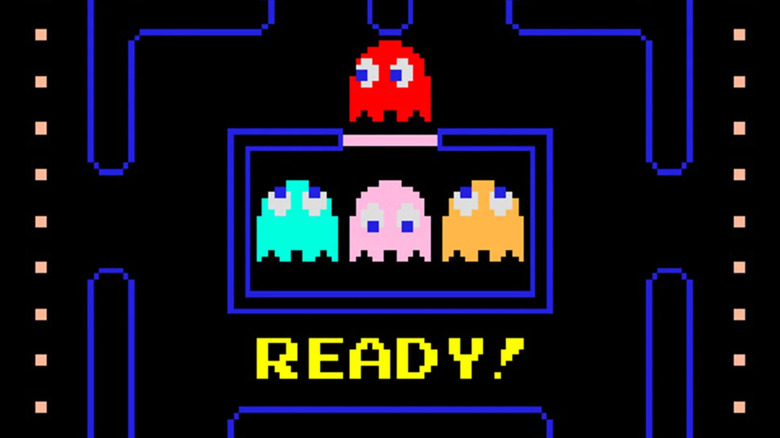
Let's get one of the most obvious titles out of the way first, because "Pac-Man" has become a franchise worth billions. The 1980 game popularized the entire maze genre, with the titular sentient mouth navigating a blue labyrinth to consume all the dots strewn throughout each level. Pac-Man is pursued by a colorful set of ghosts that grow faster and more aggressive as players progress. Players can temporarily fight back by eating power pellets in the maze, which allows them to eat the ghosts while it's active.
"Pac-Man" was an incredible success worldwide, going on to sell over 350,000 arcade cabinets and becoming an absolute commercial juggernaut. By 1981, the game was reportedly earning over $8.1 million weekly in arcade revenue in the United States alone. In addition to its own line of sequels and spin-offs, the '80s saw plenty of arcade games that tried to copy "Pac-Man," ensuring the game became a modern legend. In that sense, "Pac-Man" was crowding arcades in more ways than one throughout the decade. The little yellow gobbler is still a globally recognized powerhouse.
Defender (1981)
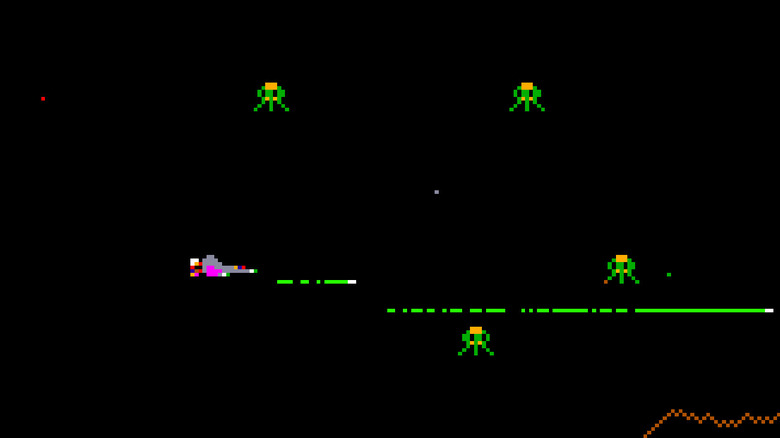
While many space shooters, like "Space Invaders" and "Galaxian," featured a top-down perspective, the 1981 title "Defender" opted to go horizontal. With this change in perspective, the arcade cabinet's joystick controls the player's elevation, while its buttons operate direction and firing weapons. The object of the game is to destroy all the alien ships that are trying to kidnap humans on the ground. If an enemy ship carrying a kidnapped human is destroyed, the player needs to catch the freed individual before they return to Earth via rapid impact.
"Defender" predated other, more prolific, side-scrolling shoot'em titles, including "Gradius" and "R-Type," that would carry the genre into the '90s. Taking space shooters to a new perspective, the Williams Electronics title proved immensely popular with arcade patrons. The game rivaled "Pac-Man" in terms of arcade popularity in the North American market throughout 1981, and earned over $1.5 billion in arcade revenue by 2000. While it may not have had the same enduring recognition as subsequent space shooters, "Defender" definitely experienced widespread success.
Donkey Kong
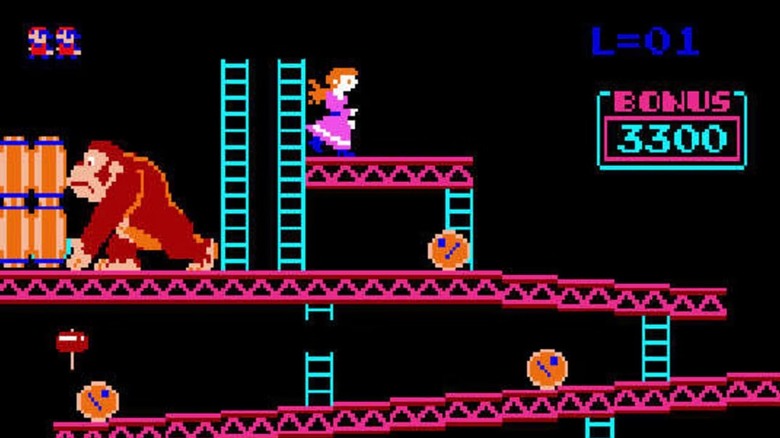
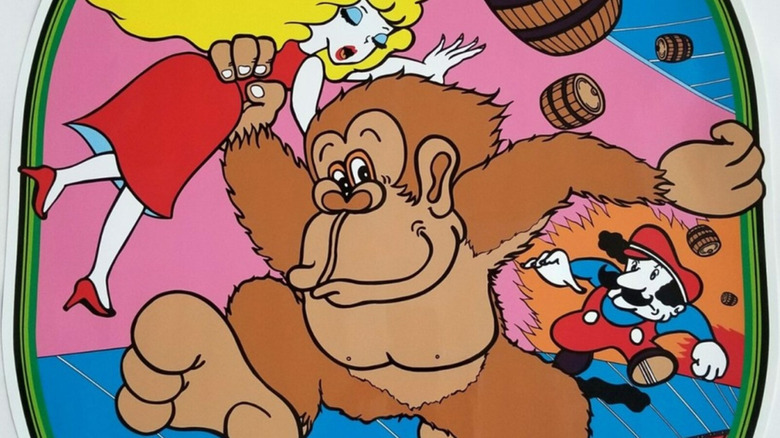
The game that established Nintendo in North America was 1981's "Donkey Kong," an early four-level platformer. The titular gorilla kidnaps a woman named Pauline and climbs to the top of a construction site with Mario, originally referred to as Jumpman, out to rescue her. While dodging obstacles flung down at him by Donkey Kong, Mario navigates to the top of each level. After completing the fourth level, the game repeats itself, giving players the chance to add to their score.
"Donkey Kong" was such an arcade cash cow that Universal tried to sue Nintendo over it, feeling it infringed on the King Kong copyright. The game became a top weekly arcade earner throughout 1981 and was still one of the highest-earning arcade titles of 1983. Nintendo eventually parlayed this success into developing its own home gaming consoles, which subsequently galvanized the entire industry. A pivotal arcade title that signaled the arrival of one of the biggest power-players in gaming, "Donkey Kong" inadvertently changed the world.
Frogger
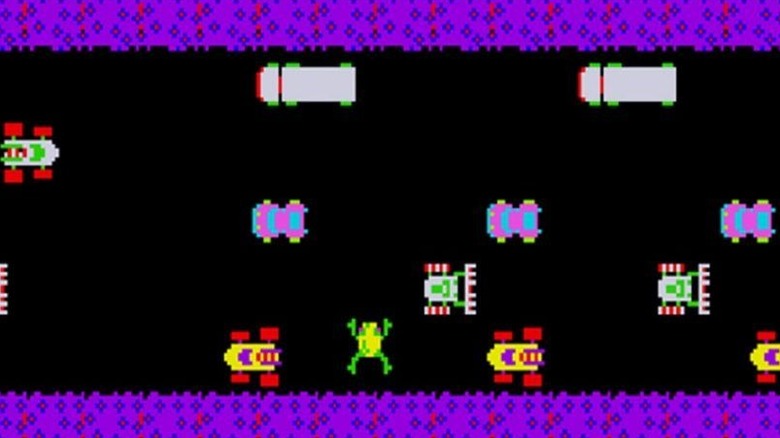
Immortalized by an episode of "Seinfeld," the 1981 Konami game "Frogger" put players on a roadside gauntlet. The game's objective is to navigate one frog at a time across a busy street and a flowing river to the top of the screen. Players have to avoid being crushed by cars, predatory animals in the river, and falling into open water, or they'll lose lives. The difficulty increases across five levels before the game restarts, which allows players with remaining lives to continue adding to their score.
"Frogger" is one of the early '80s arcade games that defined the scene's golden age, offering a more varied selection of sprites than most of its contemporaries. The game is a simple matter of getting from the bottom to the top of the screen, but with an engaging speed and amount of obstacles to overcome. The game was one of the highest-earning arcade games of 1981, which is particularly impressive given its competition. This success spread to the home console ports, with the Atari 2600 version selling over four million copies by the end of 1982, reflecting its overwhelming popularity.
Centipede
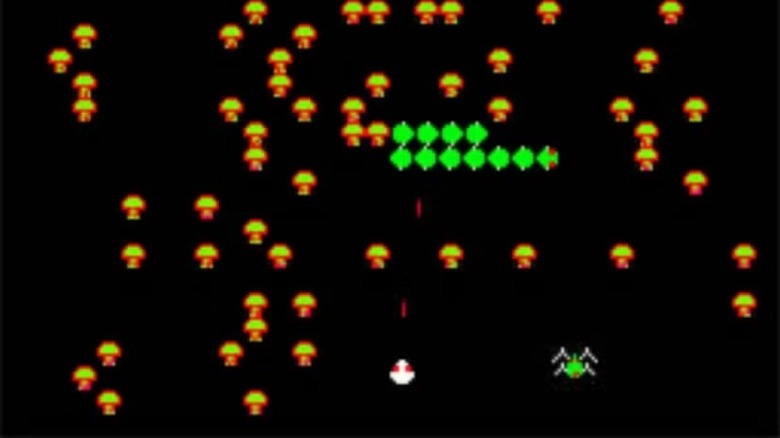
Atari was still a major presence in the arcade scene, of course, even as it divided its focus to its home gaming platforms. One of its biggest arcade hits in the '80s was "Centipede," a fixed shooter that had players moving along the bottom of the screen like "Space Invaders." Using a track ball to move, players blast all sorts of bug-like enemies, including the multi-sectioned centipede. The centipede steadily works towards the bottom of the screen, darting between a field of mushrooms which the player can also shoot to give themselves a wider field to fire.
"Centipede" went on to sell nearly 60,000 arcade cabinets, reaffirming Atari's position in the arcade market in the face of increased competition. The game played at a much faster pace than "Space Invaders" and provided players with a more varied and vibrant display of sprites. Atari immediately followed up the game with a sequel, "Millipede," in 1982 while porting the title to its home consoles throughout the decade. A tremendous success, "Centipede" helped bolster Atari and the arcade market before its implosion with the video game crash of 1983.